The Little Killers of the Russian Empire: New Armament for the Gunboats “Mina” (“Opyt”) and “Yorsh”

In addition to the “Dozhd”-class gunboats, an alternative refit is being proposed for two other gunboats that were part of the Baltic Fleet: the “Opyt,” renamed “Min,” and the “Yorsh”. These vessels also had outdated armament, but their hulls remained in service for quite some time. To extend the active service life of these ships, it is proposed to rearm them with rapid-firing, medium-caliber artillery This artillery will be capable of firing farther, faster, and more accurately than the systems originally installed on these ships.
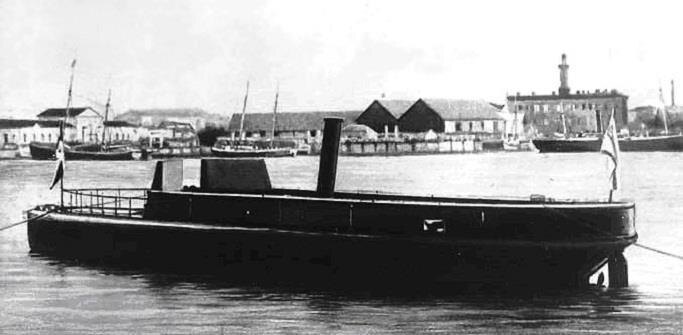
The seagoing gunboat “Opyt,” also known as “Mina”
“Oпыт” (renamed “Mina” on April 20, 1883). The vessel had a displacement of 270 metric tons, a length of 39 meters, a beam of 6.8 meters, and a draft of 1.83 meters. The hull was made of iron. The engine had a power output of 70/200 nominal/indicated horsepower. It was propelled by a single propeller. Its speed was 8.5 knots. Its cruising range was 1,100 miles. The thickness of the deck armor was 114 mm.
The Original Form of “The Experiment”
On April 7, 1861, Major General Stepan Ivanovich Chernyavsky, a naval engineer, submitted to the Shipbuilding Technical Committee (STC) a design for an iron gunboat equipped with a 196-mm smoothbore gun, one of the most powerful of its time. The armor protection on this first Russian armored vessel was designed in a very interesting way. It was impossible to cover the small gunboat with armor on all sides. Therefore, to protect the single gun, an armored traverse—a V-shaped parapet—was constructed to shield the gun, rising above the deck. The armor was 114 mm thick. Below the slope of the parapet, the gun was protected by 65 mm armor laid over a 305 mm teak wooden backing, which was intended to absorb the impact of enemy shells. The bomb magazine was located behind the bulwark and was shielded on the sides by tanks of drinking water.
On July 22, 1861, the gunboat was added to the Baltic Fleet’s list of vessels, and on August 8, 1861, its keel was laid at the “Carr & McPherson” (Baltic) shipyard in St. Petersburg. Launched on September 27, 1861, it entered service on May 11, 1862, as part of the Guards crew. As early as June 26, 1862, tests were conducted on the gunboat *Opyt* using pole mines designed by Major General Evgeny Bogdanovich Tizengausen. The purpose of the tests was to determine the minimum length of the pole that would be safe for the attacking vessel, as well as to verify the design of the pole and the mine. These tests concluded on September 15, 1862, at the Oranienbaum Shoal in the Southern Roadstead, when the gunboat “Opyt” detonated a mine that struck the schooner “Meteor,” causing it to sink rapidly.
And in 1863, the Shipbuilding Technical Committee decided to conduct tests on the Hirsch-type propeller, which was widely used on ships in the British and French navies. It was decided to conduct the tests on the *Opyt*. As a result, on June 15, 1863, a two-bladed propeller sent from England was installed on the *Opyt*, which was replaced three months later with a four-bladed one. The speed increased by 0.6 knots, but the ship was unable to demonstrate satisfactory reverse thrust; therefore, the Hirsch propeller was deemed unsuitable for use on gunboats.
On February 9, 1866, the gunboat was disarmed, struck from the Baltic Fleet’s ship registry, and transferred to engineer Nikolai Leontyevich Euler for use as an icebreaker. The *Opyt* was converted into an icebreaker—its bulwark was removed, additional frames were added to the bow, and the deck was relaid. In Kronstadt, at the end of the 1866 navigation season, the *Oпыт* awaited the first ice. In early November, it set sail for Oranienbaum, but failed to achieve the expected results—the low-powered engine installed on the *Opyt* could not even break through broken ice. Engineer Euler’s complex and unreliable invention failed to live up to expectations. For a long time, Euler’s icebreaker remained in the port of Kronstadt.
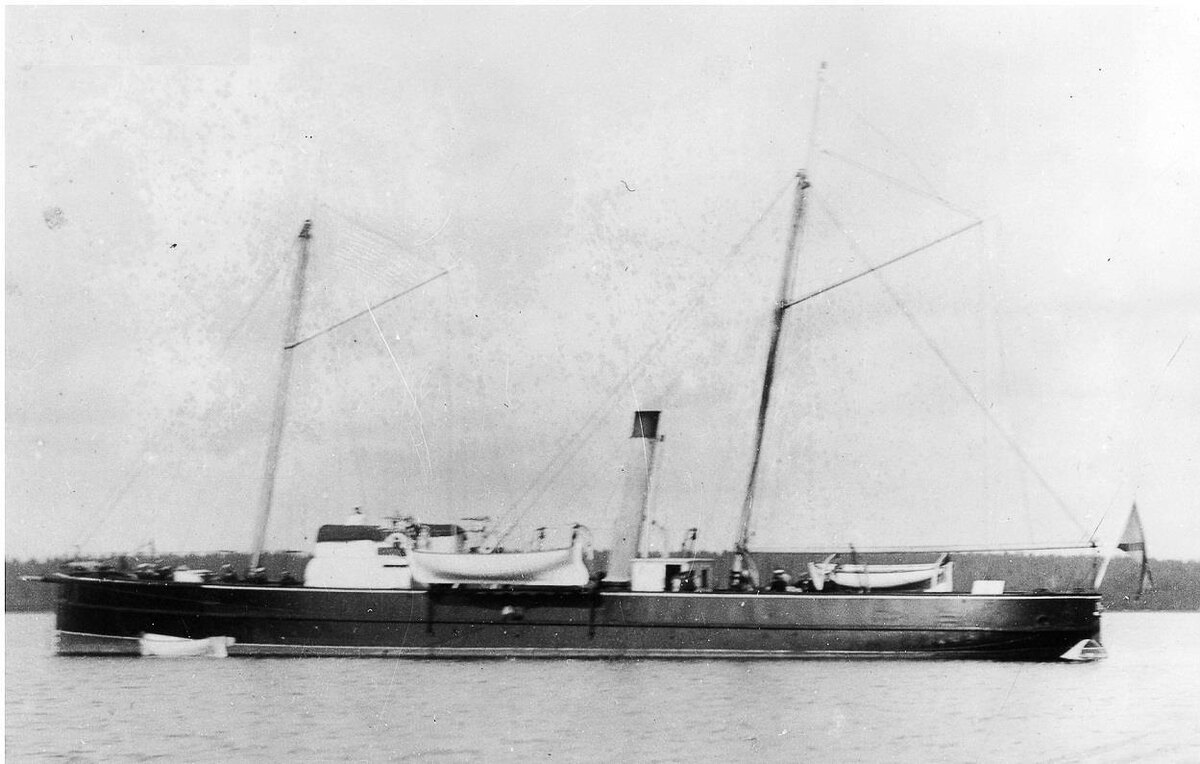
What “Opyt” looks like after the renovation.
But on January 31, 1870, an order was issued to add the *Oпыт* to the fleet’s register of ships, after which it was used in tests of various types of pole-mounted and towed mines. And during the 1875 campaign, testing began on the automatic fire-control devices designed by Alexei Pavlovich Davydov. From October 3 to 25, 1875, the gunboat *Opyt* conducted firing tests with a 196-mm smoothbore gun. Davydov’s device significantly improved firing accuracy and was recommended for installation on turreted ships. Afterward, the gunboat’s armament consisted of two 44-mm rapid-fire cannons of the Engström system.
On April 20, 1883, the gunboat “Opyt” was renamed “Mina,” and on February 1, 1892, it was classified as a coastal defense gunboat and used for testing torpedoes and barrier mines. It was used to test electro-impact and spheroconical mines, various types of fuses, minefield protection devices, and numerous auxiliary systems.
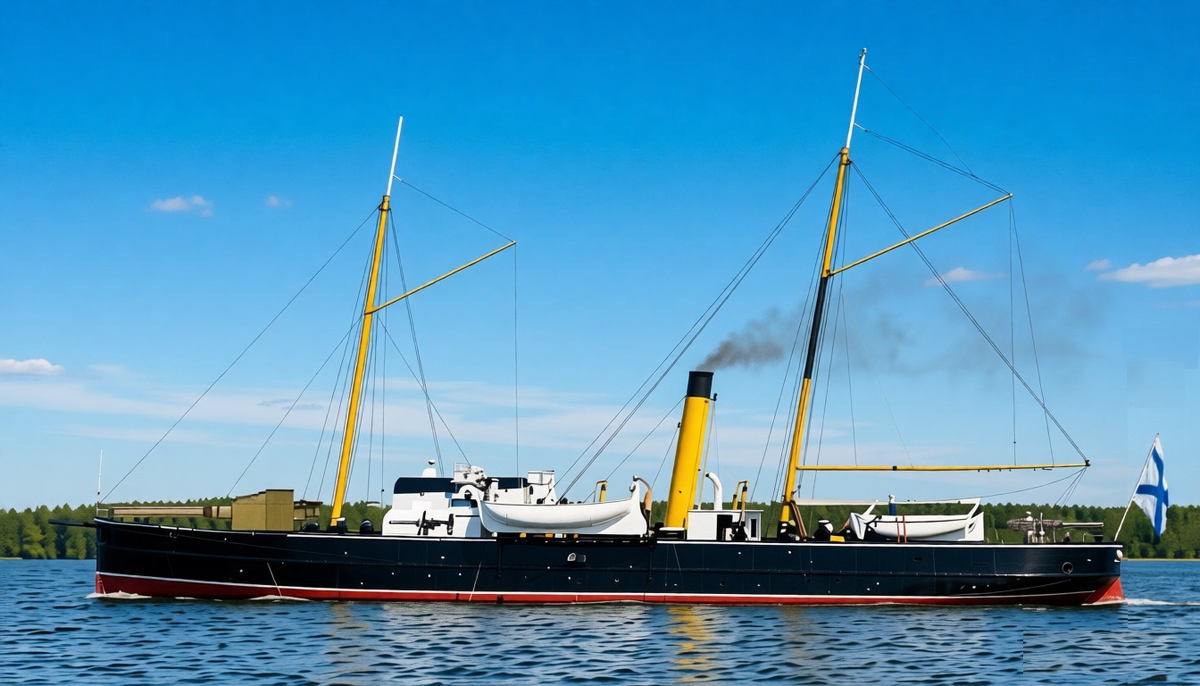
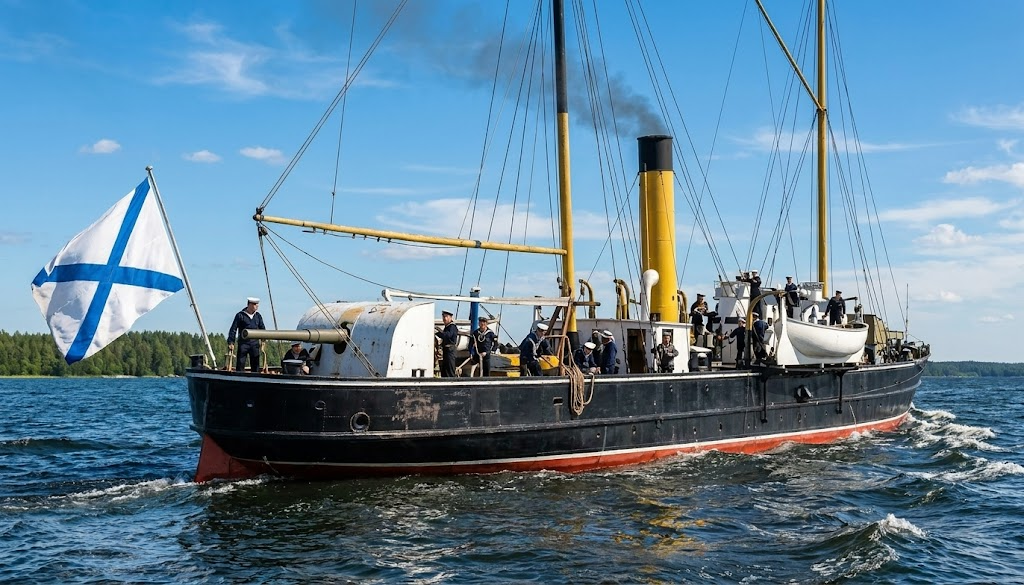
An attempt to generate an image of the gunboat “Mina”
In 1900, the “Mina” underwent a major overhaul. In 1901, as part of a training mine squadron, the gunboat “Mina” participated in Alexander Stepanovich Popov’s first experiments to establish radio communication between ships. On January 5, 1906, the *Mina* was decommissioned, disarmed, and turned over to the St. Petersburg Military Port for storage. But as early as August 9, 1907, she was taken out of storage, initially converted into a harbor vessel, and then, on July 16, 1915, into a hydrographic vessel, and placed at the disposal of the commission for surveying the Finnish skerries. During World War I, she ensured the navigational safety of ships and vessels in the Gulf of Finland. On March 11, 1918, it was placed at the disposal of the Finnish Soviet Workers’ Republic. On April 13–21, 1918, it was captured by the White Finns in Helsinki. In 1922, under the terms of the Treaty of Yuriev, it was to be returned to the RSFSR, but, having become completely obsolete, it was sold for scrap in Finland.
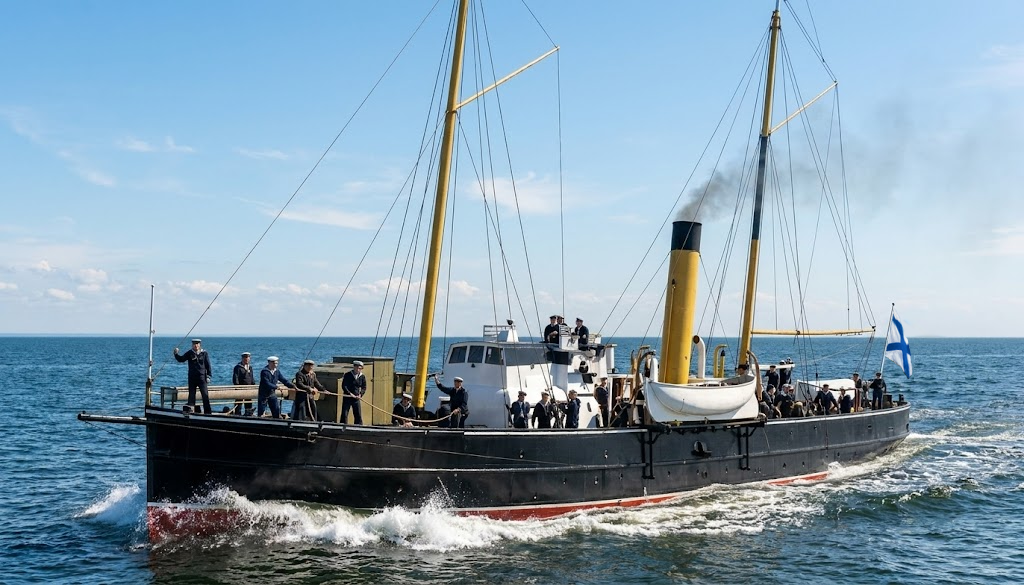
The “Yorsh” Seagoing Gunboat
The “Yorsh” had the following specifications: length 30.1 meters, beam 8.7 meters, draft 2 meters. Displacement 305/358 metric tons. Built by V.F. Pushkarev. The engine, rated at 240 indicator horsepower (as designed), was manufactured at the Penn factory in England. Its speed during trials was 8 knots. The *Yorsh* was armed with the first domestically produced 11-inch (280-mm) rifled gun of the 1867 model. From 1900 onward, the gunboat was armed with four 4-pound (87-mm) rifled guns of the 1867 model.
The screw-propelled gunboat *Yorsh* was conceived as part of the Baltic Fleet’s coastal defense system. The “Yorsh” and its subsequent variants replaced the steam-powered boats that had served since the Crimean War. As the age of ironclads dawned, these small, shallow-draft vessels, armed with powerful rifled artillery, were seen as vital components of the coastal defense system, alongside turreted ironclad boats (monitors), turreted frigates of the “Admiral Spiridov” class, and the batteries of the Kronstadt forts. According to Admiral N. K. Krabbe, head of the Ministry of the Navy (November 1872), the new boats were to meet “ordinary port and hydrographic needs” in peacetime and, at the same time, be capable of “providing real benefit in wartime.” The British gunboat “Skardge” was adopted as the model; however, unlike the prototype, which had an all-iron hull, the commission opted for a composite construction with an iron framework and thick wooden outer plating, which was considered to provide more reliable protection against damage when navigating rocky shallows. Based on a specified speed of at least 8 knots, the total power of the two engines was set at 240 l. s. For financial reasons, the commission opted for engines from the English Penn factory.
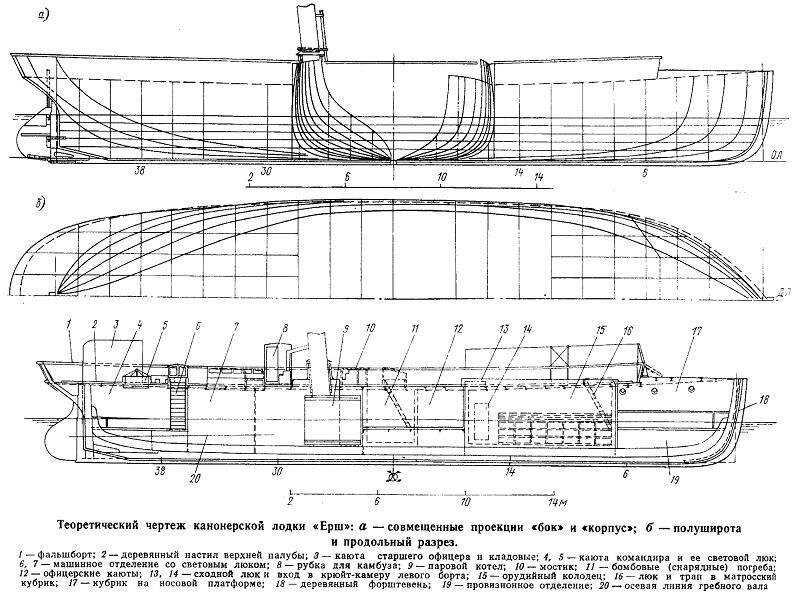
Theoretical drawing of the “Ersha.”
Construction of the hull began on December 3, 1873, in the wooden dry dock of the New Admiralty. The hull had a shallow keel and was nearly flat-bottomed (mid-frame fullness coefficient of 0.8, overall fullness coefficient of 0.58, and length-to-width ratio of 3.4). To improve the ship’s stability, the 11-inch gun with its mount on the *Yersha* was mounted on a special lifting table that could be lowered into the hold. The table moved vertically up and down along guides fixed to the side walls of the well, driven by the rotation of four vertical lifting screws with worm gears. The rotation of the lifting screw was transmitted from an auxiliary steam engine via two shafts with worm gears.
The official keel-laying ceremony took place on March 23, 1874. The hull was completed by the end of April. The launch was postponed due to delays in the delivery of machinery and outboard fittings from the Penn Shipyard, as well as the steering gear, anchors, and tanks from the Izhora Shipyard. The launch took place on August 5, 1874. Mooring trials were conducted on August 31, 1874. On September 28, the canal boat made a trial run to Kronstadt and back at a speed not exceeding 5 knots. On October 17, with winds up to force nine and a sea state of seven, the ship sailed past the Tolbukhin Lighthouse. On October 19, in calm seas, the ship still failed to reach its full design speed, despite the use of select Newcastle coal and the efforts of the Baltic Fleet’s best stokers. The range (40 hours total) was limited by the 23-metric-ton capacity of the coal bunkers, and the already low speed, with standard coal and in calm weather, reached only 6–6.5 knots, and in a fresh wind, the speed dropped to 3–4 knots. At the same time, it became apparent that the ship’s tendency to yaw—caused by its disproportionately short hull—made navigation through narrow passages difficult, and in shallow water, the ship was completely unresponsive to the rudder. However, as artillery platforms, these ships were quite effective.
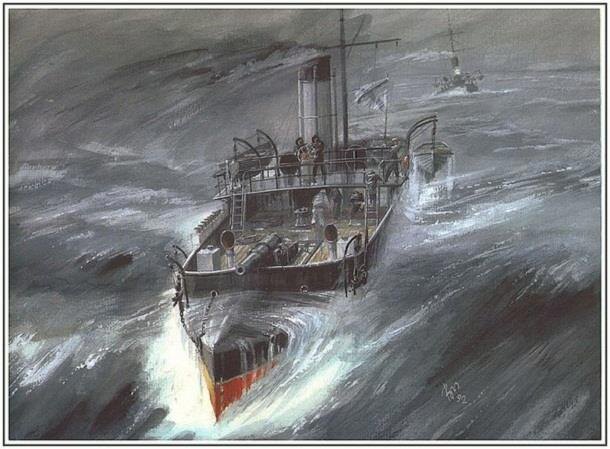
The gunboat “Yorsh” on a mission.
Be that as it may, the gunboat “Ersh” remained in service for over three decades. For many years, along with similar vessels (classified as coastal defense gunboats as of February 1, 1892), it participated in combat training exercises and cruises in the Baltic Sea. To protect against attacks by torpedo boats, the *Ersh*’s armament was reinforced in 1878 with a 16-mm Gatling gun, later replaced by two 44-mm rapid-fire Engström guns. In 1900, all of the boat’s artillery, including the 280-mm gun, was replaced with four rifled 87-mm guns. On January 5, 1906, it was withdrawn from active service, disarmed, and handed over to the port for storage. On August 1, 1907, the gunboat “Yorsh” was struck from the fleet’s register and soon sold for scrap.
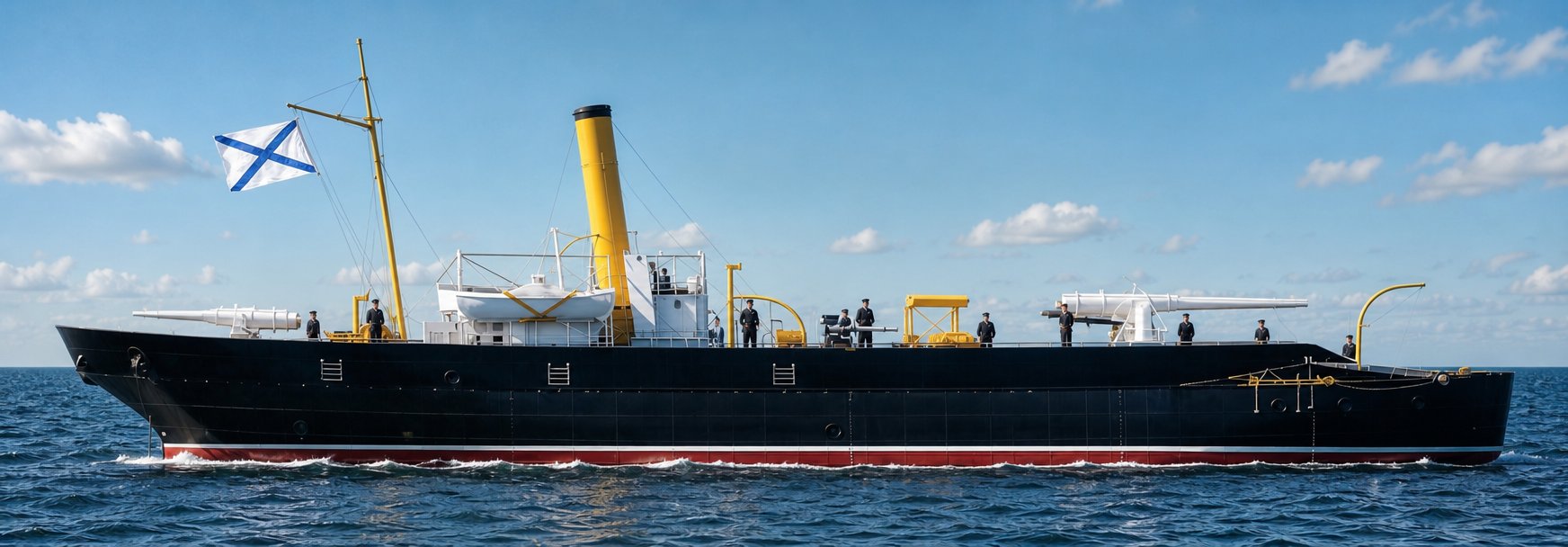
An attempt to generate an image of the gunboat “Yorsh” at sea
It is planned that, by the end of the 19th century, both of these ships will be rearmed with rapid-fire artillery—consisting of 120-mm and 75-mm Kane guns and 47-mm Hotchkiss guns. Mine rails were also to be installed on them, which would extend the active service life of these ships—even until World War I. They would be used for patrol duty, laying mines, defending the mine-and-artillery positions of the Peter the Great Fortress, and supporting ground forces.