The new Javelin is lighter, smarter, and has a longer range: For the first time in decades, the U.S. is carrying out a major modernization of the West’s leading anti-tank missile system

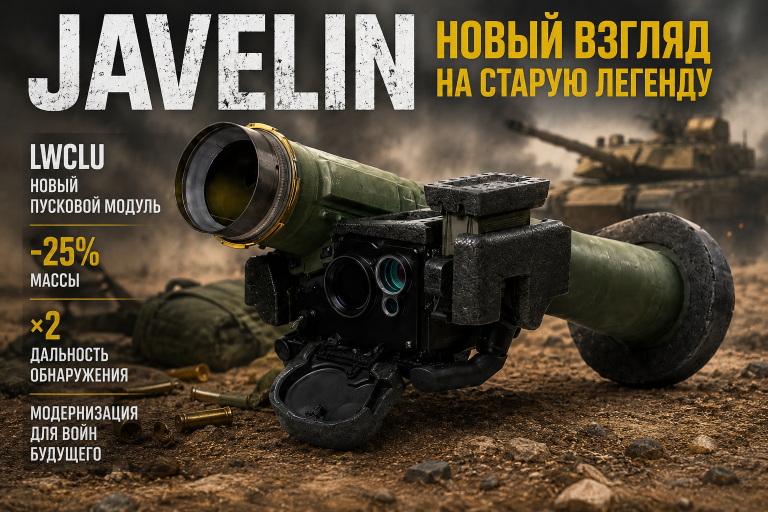
At first glance, the news seems rather unremarkable. The U.S. Army has received its first new LWCLU (Lightweight Command Launch Unit) launch modules for the FGM-148 Javelin anti-tank system. The manufacturers—Raytheon and Lockheed Martin—claim a 25% reduction in weight, a 30% reduction in size, and a twofold increase in target detection range.
Against the backdrop of hypersonic missiles, drones, and talk of robotic warfare, this kind of modernization may not seem all that impressive.
But in reality, the story is much more interesting.
Because the LWCLU demonstrates one very important thing: despite the drone revolution, the Americans have no intention of abandoning the Javelin. On the contrary—the Pentagon is, in fact, preparing the system for service at least until the middle of the 21st century.
And to understand why this is important, we first need to recall what the Javelin was like and why it became one of the most famous anti-tank systems in the world.
Javelin was developed in response to a Cold War challenge
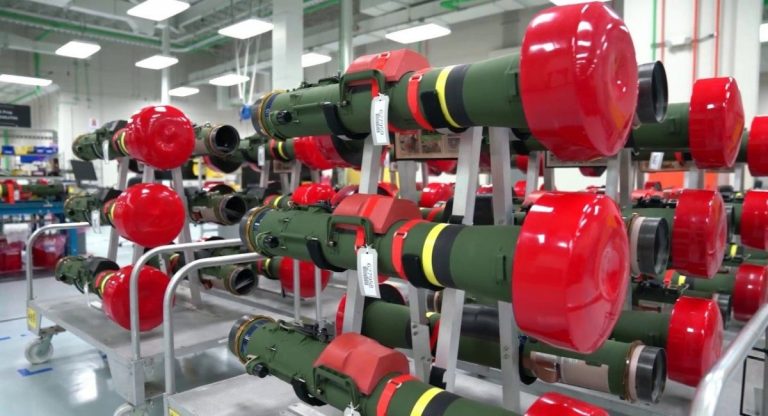
The complex’s history dates back to the 1980s.
At that time, the U.S. Army was looking for a replacement for the aging M47 Dragon anti-tank system. The military was no longer satisfied with the M47’s range, reliability, and probability of hitting modern Soviet tanks.
The main problem with most anti-tank guided missile systems of that era was the need to guide the missile all the way to the target.
The operator was, in effect, tied to that position.
For a war in Europe against massive Soviet armored formations, this seemed dangerous.
That is why the Americans wanted a next-generation system with the following features:
— a “fire-and-forget” capability;
— automatic guidance;
— a high probability of hit;
— and the ability to attack a tank from above.
That’s how Javelin came to be.
And when it first appeared, it seemed almost revolutionary.
Why Was the Javelin So Dangerous?
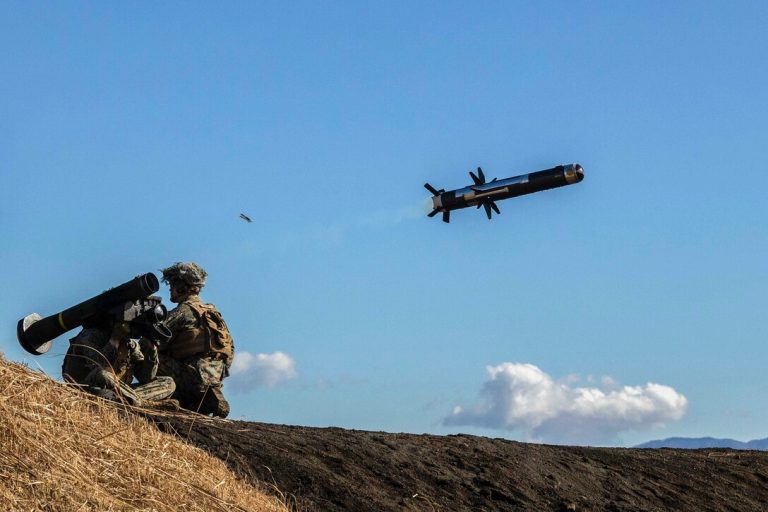
The main advantage of the system lay not only in the rocket itself.
The system’s overall architecture has become a key feature.
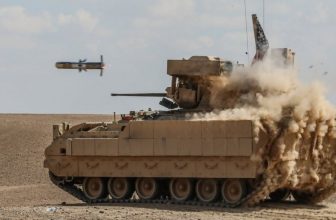
The operator locked onto the target using the CLU’s thermal imaging unit, after which the missile autonomously tracked the target.
Once the calculation was started, the position could change immediately.
For the late 1980s, that was a huge step forward.
The “Top Attack” trajectory made the Javelin particularly dangerous.
Most tanks traditionally have their strongest armor on the front.
However, the tower’s roof and the upper part of the building are usually much less well protected.
That is exactly where the Javelin missile heads after gaining altitude.
In fact, the Americans were developing a weapon to destroy Soviet main battle tanks, but ended up with one of the most famous anti-tank systems of recent decades.
Wars have changed, but the Javelin remains the same
Something else is particularly interesting.
When the Javelin was adopted, it was designed with the scenario of a large-scale tank war in Europe in mind.
However, after the collapse of the Soviet Union, the complex unexpectedly began to be involved in entirely different conflicts.
It was used:
— in Iraq;
— in Afghanistan;
— against fortified positions;
— against buildings;
— and even against individual firing positions.
In other words, the system has gradually evolved not only into an anti-tank weapon but also into a versatile, high-precision tool for supporting infantry.
And then came the year 2022.
It was then that the Javelin unexpectedly became one of the most recognizable symbols of modern warfare.
In fact, it has become such a phenomenon that a distinct cultural phenomenon has effectively emerged around the complex.
But at the same time, new problems began to arise.
The old CLU is starting to show its age
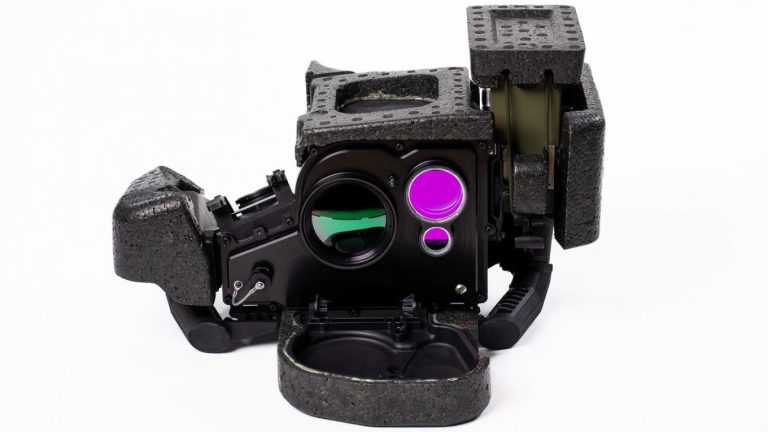
Interestingly, the rocket itself turned out not to be the primary candidate for modernization.
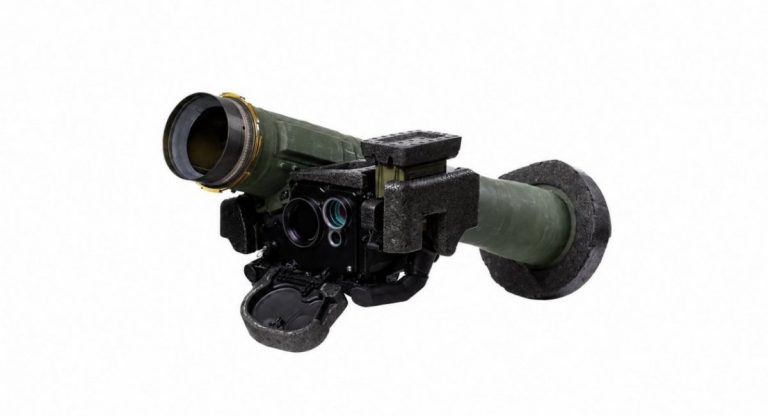
It was the Command Launch Unit that began to raise the most questions.
When the original CLU was developed, thermal imaging technology was quite impressive.
But nearly thirty years have passed.
During this time, the following have emerged:
— new image sensors;
— modern infrared cameras;
— digital image processing;
— more compact electronics;
— and significantly better displays.
Against the backdrop of new technologies, the old launcher gradually began to seem heavy and cumbersome.
But it is often the CLU that has to shoulder the burden.
And this is where the story of the LWCLU begins.
LWCLU is essentially the new “brain” of the Javelin
At first glance, the changes don’t seem all that dramatic.
25% lighter.
30% smaller.
But in reality, the modernization runs much deeper.
The new LWCLU features:
— a state-of-the-art infrared camera;
— upgraded electronics;
— a higher-quality display;
— an updated operator interface;
— and significantly improved target detection capabilities.
In fact, it is precisely the latter that is the program’s main achievement.
According to the developers, the range for detecting and identifying targets has roughly doubled.
And that is an extremely significant change.
Because in modern warfare, victory often does not go to the one who fired the first shot.
And the one who spotted the enemy first.
The new CLU is becoming a full-fledged reconnaissance device
This is where the most interesting part of the story begins.
Even older versions of the Javelin were still actively used as portable thermal imagers.
Many units used CLUs not only to launch missiles but also to conduct surveillance of the area.
And that makes perfect sense.
The complex’s thermal imaging system made it possible to detect targets at much greater distances than conventional optics.
With the advent of LWCLU, this role has become even more important.
In fact, the new system is gradually evolving not merely into a missile sight, but into a standalone reconnaissance system at the squad or platoon level.
In modern conflicts, this may prove to be no less important than the system’s anti-tank capability itself.
Why Is the U.S. Investing So Heavily in the Javelin?
There’s something else about this whole story that’s particularly interesting.
After 2022, American industry faced a very unpleasant reality.
It turned out that the production of high-precision weapons takes considerably longer than previously thought.
The delivery of thousands of Javelins to allies made it necessary to sharply ramp up production.
Against this backdrop, Raytheon has invested approximately $22 million in modernizing its LWCLU production facilities. (RTX)
And this highlights a very important trend.
The U.S. does not consider the Javelin to be an obsolete system.
On the contrary.
The system remains one of the key elements of the U.S. Army’s anti-tank defense.
Not a new rocket, but a new philosophy
The most interesting thing is that the LWCLU is not primarily upgrading the complex’s firepower.
He is upgrading its “vision.”
For decades, the development of anti-tank systems has typically been associated with:
— range;
— armor penetration;
— missile speed;
— and new warheads.
LWCLU shows a different trend.
Modern warfare is increasingly becoming a competition between sensors.
Who spotted the target first.
Who processed the information faster.
Who relayed the coordinates first.
That’s exactly why the new Javelin isn’t so much getting a new missile as it is getting new eyes.
And perhaps this will turn out to be the most significant modernization of the complex in the last thirty years.