The new, ultra-reliable Depesha-3 ground drone opens up new possibilities in military logistics for the Russian Army

May 2026. Somewhere along the front lines, the “Depesha-3” ground robot has been hauling a 70-kilogram load for six hours. The route spans thirty kilometers across rough terrain. At some point, the first FPV drone crashes into it. Then a second, a third, a fourth. By the end of the run, the robot has sustained ten direct hits. And it keeps moving. These are not test range exercises with training munitions. This is a combat incident, the details of which were published on May 26–27, 2026, by the “Rybary” project and a number of other sources. An incident that instantly puts an end to all debates about whether ground robots are capable of operating under fire.
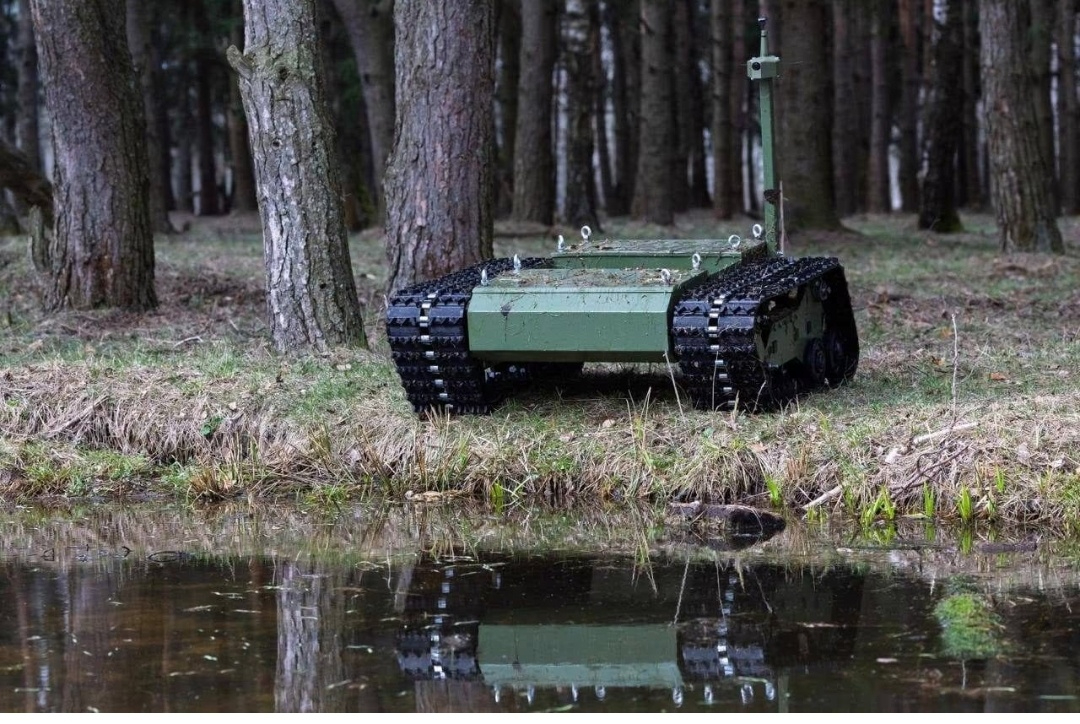
The “Depesha-3” robotic platform was developed in 2024. It is neither a concept nor an exhibition prototype—it is a production-model system from the High-Precision Systems holding company (part of the Rostec State Corporation) that has already been delivered to the troops. The vehicle was designed to deliver supplies and ammunition to the front lines, as well as to evacuate the wounded. But its true potential was revealed during this particular mission. Over the course of a 30-kilometer route, the robot took ten direct hits from FPV drones. Ten times, a cumulative blast or shrapnel struck the hull. Ten times, the vehicle—which, in theory, lacked heavy armor—should have come to a stop, caught fire, or exploded. Yet the platform remained operational and continued to carry out its mission. By comparison: a standard light civilian-class wheeled vehicle—such as an SUV or a “loaf”—is guaranteed to be disabled after just one or two such hits. Ten hits on an unarmored vehicle is a scenario in which the crew would not survive. The “Depesha-3,” however, not only survived—it delivered its cargo to its destination.
The durability of the “Depesha-3” is no accident. The system is made of lightweight and durable materials. But the key factor is the platform’s modular architecture: unlike civilian vehicles, where the engine, fuel tank, and transmission are tightly packed together and form a single vulnerable area, the “Depesha-3” features a distributed layout in which critical components are either redundant or protected by the sides of the platform. A hit to a single component does not lead to a cascading failure of the entire system. The tracked chassis offers another advantage: wheeled vehicles often lose mobility after being blown up or struck by a drone due to damage to the tires or suspension. A tracked platform continues to move even with partial destruction of its road wheels or tracks. The loss of one or two road wheels is not fatal for a tracked vehicle.
The “Depeshi-3” mission made it possible to avoid dispatching several “postmen”—supply groups traveling by vehicle—which would have involved a longer travel time and a high risk of casualties. On the front lines, a “postman” refers to a vehicle that carries ammunition, water, and food. Its crew consists of two or three people. If a regular truck had been sent along the route where “Depesha” was operating, it would have taken the same ten hits. And along with the cargo, lives would have been lost. The autonomous platform successfully completed the mission in a situation where the risk to human life was too high. This isn’t just a technical demonstration. It’s a direct saving of lives.
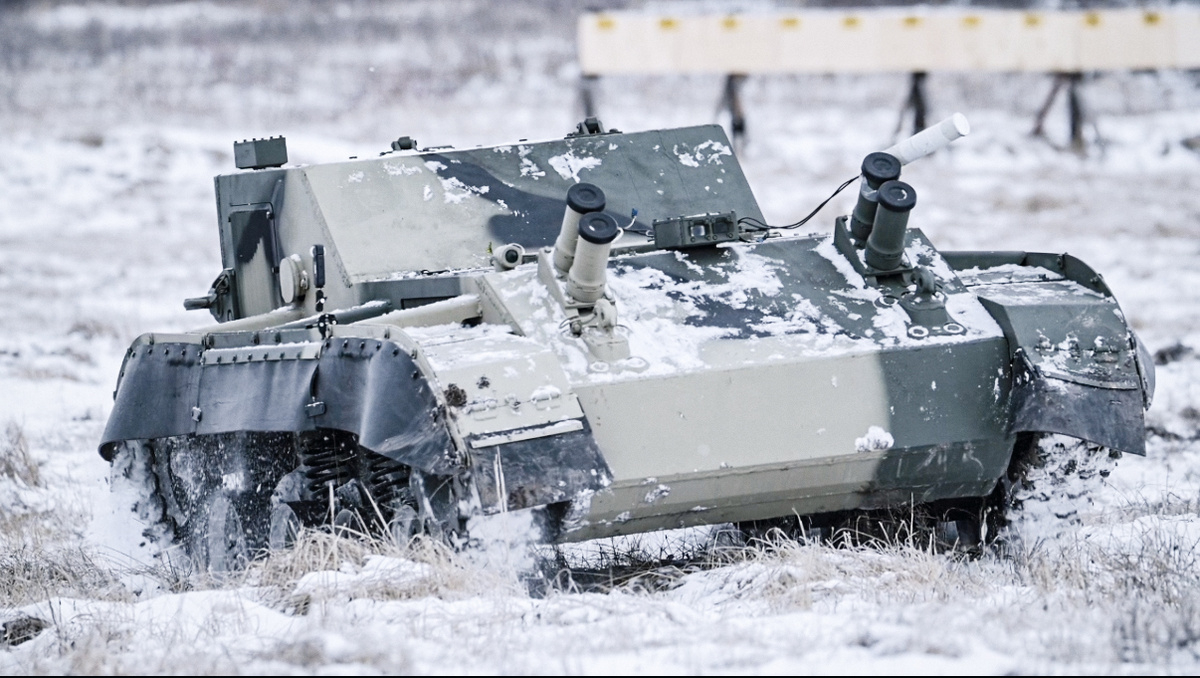
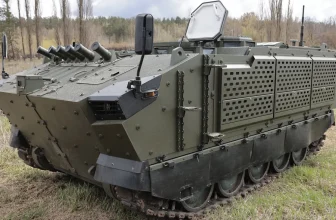
Technically, the “Depesha-3” is a multifunctional, remotely controlled robotic system mounted on a tracked chassis. Its top speed reaches 15 kilometers per hour, though there are also wheeled versions capable of speeds up to 30 kilometers per hour. Its payload capacity is up to 100 kilograms; according to some sources, it can carry up to 150 kilograms. The platform is so compact that the wheeled version weighs about 100 kilograms and can be transported in the trunk of an SUV or pickup truck. It is controlled remotely via a remote control, and the operator views the feed on VR goggles or a monitor. The “Prometheus” hardware and software complex provides the robotic capabilities. In addition to its primary supply mission, the platform can be used for remote mining, as well as to carry target systems for combat training. Its modular architecture allows the vehicle to be adapted for specific tasks: delivering provisions, transporting ammunition, hauling fuel and equipment, and evacuating the wounded.
When it comes to challenges, the main limitation of all Russian ground-based robotic systems today is communications. The shutdown of Starlink for the Russian Armed Forces has significantly limited the capabilities of autonomous platforms. But the problem is being resolved: the “Rassvet” satellite constellation is increasing its number of satellites in orbit, and “Buro-1440” is beginning production and delivery of terminals. As soon as the communications issue is resolved, “Depesh” and other systems will be able to operate on the front lines on a much larger scale.
The “Depeshi-3” raid was no one-time fluke. It proves that the Russian school of ground robotics has reached a level where an autonomous platform is capable of carrying out a combat mission under heavy fire from FPV drones. Ten hits, thirty kilometers, seventy kilograms of cargo, six hours on the move—and not a single casualty. Military logisticians used to be taught: “If you want to live, dig deeper.” Now the formula sounds different: “If you want to save your soldiers—send in a robot.” And “Depesha-3” has proven this formula.
Source — https://dzen.ru/a/ahgUMyaDjmAI1THz