Part Two: A Turning Point—The Russian Navy’s Adoption of 7-Inch Guns
This alternative outcome was made possible by a strategic decision made in St. Petersburg long before hostilities began. In those years, Russian admirals watched with growing alarm as Japan rapidly expanded its fleet, the backbone of which consisted of British-built light cruisers and destroyers. Fast and highly maneuverable, they excelled at reconnaissance, laying minefields, and torpedo attacks. Russian ships, armed with standard 120-millimeter guns, had sufficient rate of fire but were outmatched by the enemy in destructive power, forcing commanders to either avoid battle or take unjustified risks. A solution was found across the ocean. The Imperial Navy acquired a license from the United States to manufacture, as well as a large shipment of 7-inch artillery systems. These guns were purchased specifically for installation on cruisers in order to gain at least some advantage over their British counterparts, which formed the backbone of the Japanese fleet. The guns were designed to achieve an optimal balance between shell weight, muzzle velocity, and the gun mount’s resistance to recoil. As analyzed in detail in the article “Balanced Cruisers for the Russian Imperial Navy,” it was precisely this caliber that made it possible to build versatile ships capable of confidently engaging the enemy’s medium cruisers and destroying destroyers even before they closed to torpedo range. The decision to abandon the standard 120-millimeter guns in favor of 7-inch artillery was a risky but carefully considered move aimed at shifting the tactical balance in the Pacific Ocean.
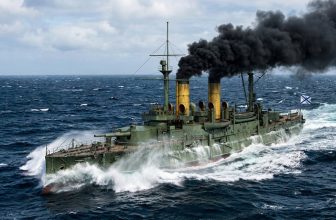
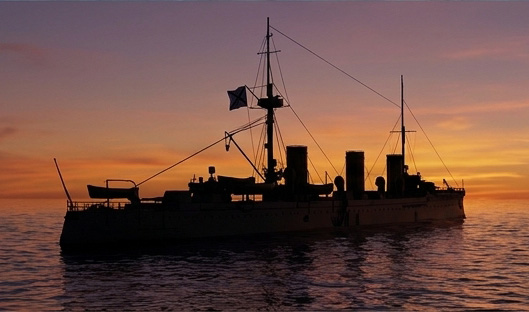
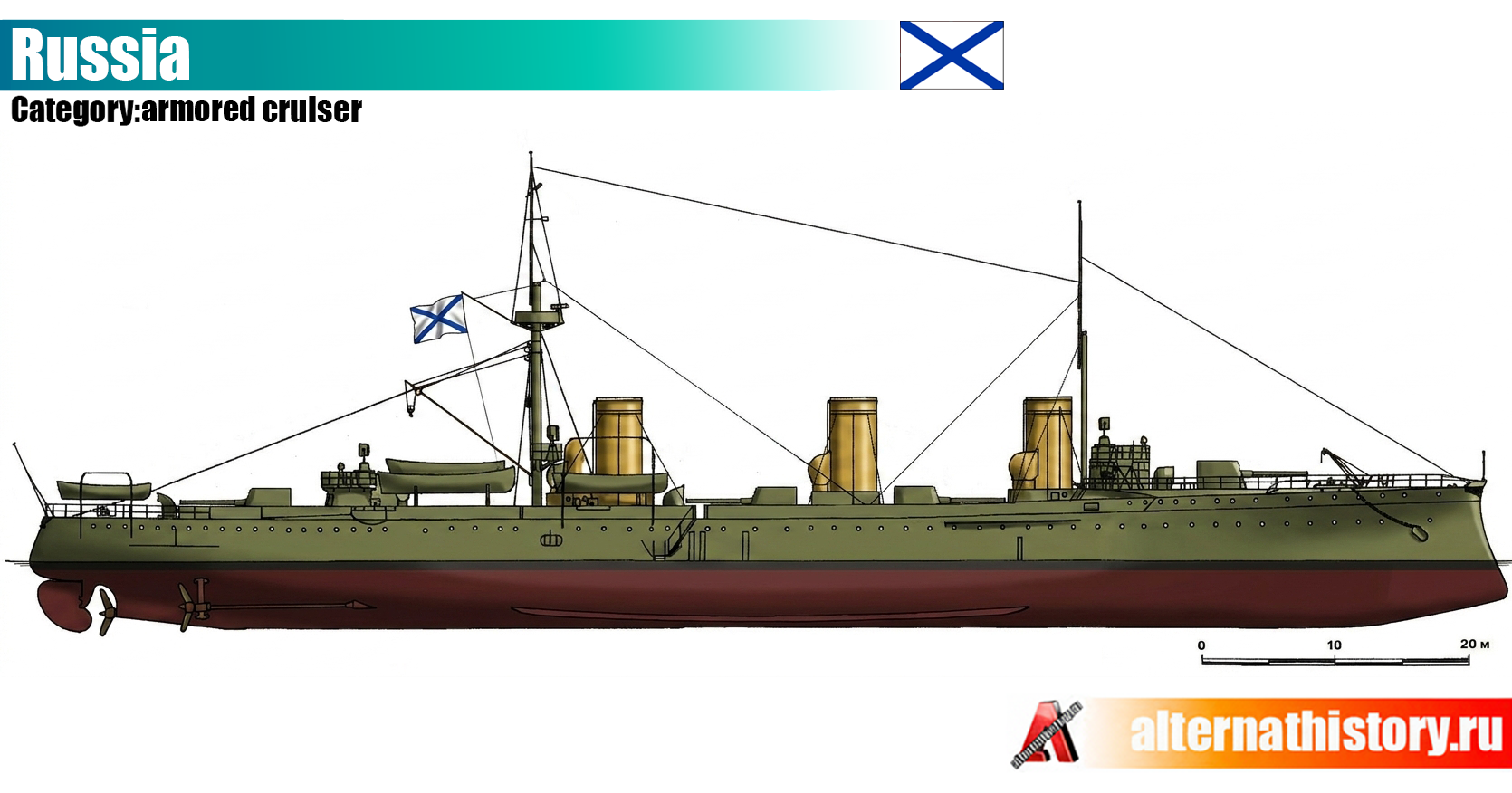
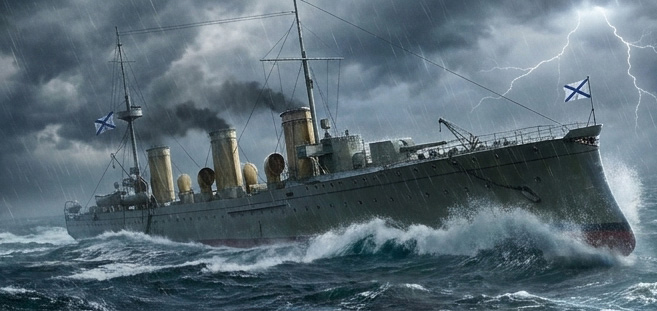
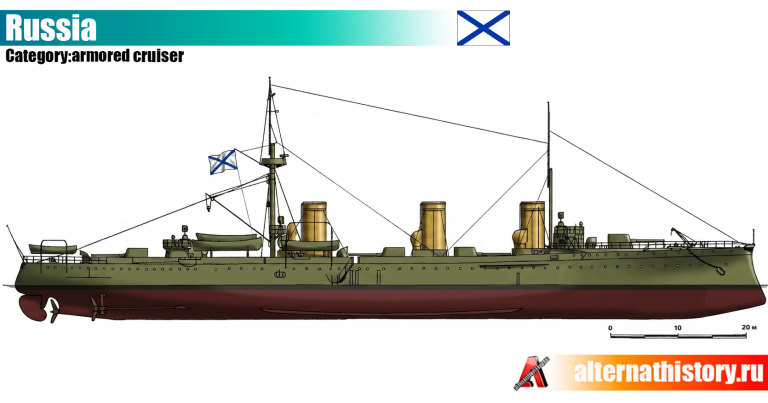
In 1902, it was decided to equip the cruiser Novik with four 178-mm guns instead of six 120-mm guns. The design documentation required significant revision, as the heavy barrels and reinforced mounts necessitated a different weight distribution and the reinforcement of the deck structures. The guns were shipped to Germany and installed at the Schihau shipyard, which delayed the ship’s construction by a year. Engineers had to redesign the ammunition supply systems, reinforce the barbettes, and adjust the ventilation system for the turret compartments. In this version of the story, the ship joined the fleet in 1902 and immediately set sail for the Far East. The ship lost some of its original rate of fire at close range, but each of its hits carried enough destructive power to sink a Japanese destroyer with just two or three shots. The squadron command gained a weapon that had been sorely lacking in actual combat, and the cruiser transformed from a high-speed scout into an independent strike unit.
Tactical and Technical Specifications:
- Displacement – 3,125 metric tons (3,080 in the original)
- Length – 109.86 m
- Width – 12.20 m
- Draft – 5.03 m (depth)
- Engines – 3 vertical triple-expansion engines,
- 12 Schulz-Tornikroft boilers
- Power: 17,000 l.s. (12.5 MW)
- Propulsion: 3 propellers
- Speed: 25 knots (46.3 km/h)
- Cruising range – 3,500 miles at 10 knots;
- 2,370 miles (at 12 knots)
- Economy run—8 days; 660 miles
- (25 uz) – 1 sut.
- Crew: 12 officers,
- 316 conductors and lower-ranking personnel
Weapons;
- Main caliber – 4 × 178 mm,
- Medium caliber – 6 × 47-mm Gockis (43 calibers),
- Anti-mine armament—2 × 37-mm Gockis guns (23-caliber) on the boats,
- Machine guns – 2 × 7.62-mm Maxim machine guns
- Mine and torpedo armament – 5 × 1 × 381-mm mine (torpedo) tubes
Epilogue: The Unwon War
If history had taken this course, the Japanese navy’s tactics would have required a radical overhaul. The light ships, nicknamed “puppies” by Russian sailors, would no longer have been able to close in with impunity to launch torpedo attacks. A 7-inch high-explosive shell would have turned their armored decks into Swiss cheese, and the Novik’s accurate fire at medium ranges would have created an impenetrable exclusion zone. The cruiser demonstrated that the Russian Imperial Fleet had the potential to create balanced combat units where firepower was not sacrificed for speed. Of course, a single ship does not change the outcome of an entire campaign, which depends on logistics, the number of ships, and strategic miscalculations. However, a modified “Novik” would have revealed a different facet of naval art: a ship designed not for passive observation, but for actively disrupting enemy formations. In a world of alternative histories, it is precisely such ships that could have become the very barrier against which the wave of attacks would have crashed, transforming the coastal waters not into a place of forced retreat, but into a monument to engineering ingenuity and naval valor.