The pinnacle of the evolution of air bombs with UMPC. The Russian “Grom-E2” gliding air bomb

For decades, conventional aerial bombs remained a simple and reliable—but extremely risky—weapon. To hit a target, pilots had to descend, exposing their aircraft to anti-aircraft fire, and the bombs themselves followed a strictly fixed ballistic trajectory, leaving no possibility of course correction in flight. The solution to these limitations was the Universal Planning and Correction Module, or UPCM. Essentially, it is an aerodynamic “envelope” with folding wings and an electronics unit that transforms a conventional unguided bomb into a precision gliding weapon. The emergence of such systems was not a random invention but a natural stage in the development of military aviation. Modern conflicts require a balance between strike effectiveness, ammunition cost, and crew safety, and the UMPK fits perfectly into this logic, allowing targets to be attacked from a safe distance. A new variant, the “Grom-E2,” holds a special place in this lineup; it focuses not on record-breaking range but on guaranteed destructive power.
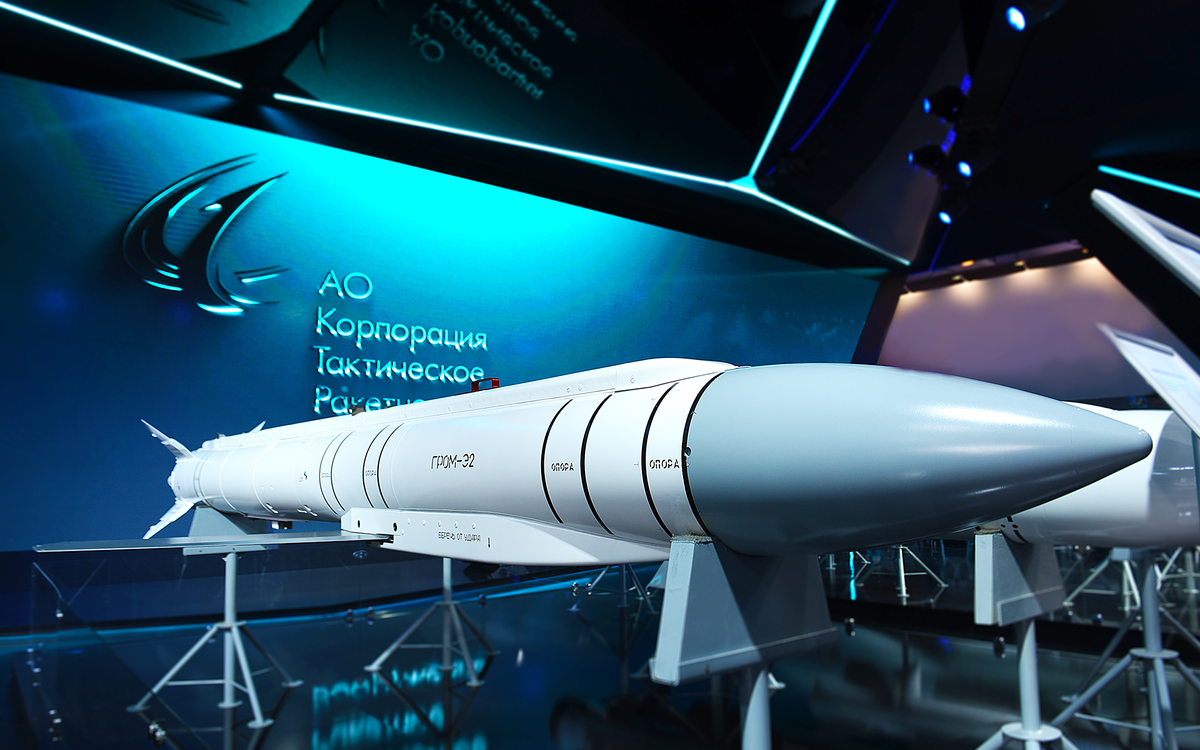
Design Features
Engineers developed the “Grom-E2” based on the proven design of its predecessor, the “Grom-E1.” Externally and in terms of dimensions, the new model is virtually identical to the prototype: the length, wingspan, and fuselage diameter remain the same. However, the key change lies within. The new version completely does away with its own engine. At first glance, this may seem like a step backward, but in practice, this decision frees up a significant amount of space and mass inside the fuselage. All of this space has been allocated for explosive material. As a result, the warhead’s weight has reached an impressive 480 kilograms. The total weight of the projectile at the moment of release is nearly 600 kilograms, which preserves its versatility and allows it to be deployed from a wide range of aircraft platforms. Replacing the engine with a more powerful charge directly increases its destructive capability. This approach is particularly effective when targeting fortified positions, underground structures, and other targets where the decisive factor is not the approach speed but the concentration of energy at the point of impact.
Technical Specifications
- Total weight: 598 kg.
- Warhead weight: 480 kg (two high-explosive fragmentation warheads weighing 315 kg and 165 kg).
- Maximum launch range: up to 50 km.
- Flight speed: 140 to 445 m/s.
- Navigation system: a combination of inertial and satellite guidance that ensures maximum accuracy in striking targets.
Purpose and Areas of Application
The primary mission of the “Grom-E2” is to carry out operations requiring the guaranteed destruction of well-protected targets. Its heavy warhead makes this bomb an effective tool for neutralizing command posts, weapons depots, long-term defensive fortifications, and concentrations of armored vehicles. Thanks to its gliding wings and guidance system, the carrier can release the bomb well before entering the range of most short-range air defense systems. This is particularly relevant in the context of modern, intense conflict, where every kilometer of distance from the front line directly affects the crew’s survivability. The versatility of the suspension system allows the bomb to be integrated onto both frontline bombers and fighter jets, giving commanders flexibility in planning combat sorties. Essentially, the product fills the niche of a heavy tactical weapon capable of turning any fortified position into an open field without the need to deploy expensive cruise missiles.
Technological Advances and Prospects
The product’s main technological advantage is its proven guidance system, which combines satellite signals with an independent internal orientation system. This combination allows the bomb to maintain a precise course even when navigation signals are partially jammed, which is a common occurrence in modern conditions. Eliminating the motor has simplified the design, reduced production and maintenance costs, and increased the overall reliability of the munition. Looking ahead, developers may focus on optimizing the wing shape to increase glide range, implementing jamming-resistant correction algorithms, and adapting the bomb for use with next-generation unmanned platforms. Integration with machine vision systems is also possible, which would allow the munition to independently recognize the target’s contours during the terminal phase of flight and adjust the point of impact in real time.
Disadvantages
Despite its obvious combat advantages, the “Grom-E2” has a significant limitation that stems directly from its design. The lack of its own engine prevents the projectile from accelerating on its own or maintaining thrust in flight. As a result, its maximum launch range is limited to fifty kilometers. This forces the carrier aircraft to fly quite close to the line of contact, where the risk of encountering modern air defense systems remains high. In the context of a layered defense system or when targeting deep-rear targets, this range may prove insufficient, which narrows the range of tactical deployment scenarios and requires careful planning of flight routes and air cover.
Conclusion
The Russian “Grom-E2” guided bomb occupies an important and strategically well-considered place in the arsenal of the Aerospace Forces. It is not merely another modification of an older weapon, but a carefully considered engineering compromise in which accuracy and crew safety are balanced against immense destructive power. In situations where conflict demands rapid, precise, and cost-effective solutions, such weapons become an everyday tool for frontline aviation. The “Grom-E2” clearly demonstrates that the evolution of weapons does not always follow the path of endless complexity and the addition of new systems. Sometimes progress lies in removing the superfluous, strengthening the essential, and giving pilots the ability to deliver devastating strikes while remaining outside the direct kill zone. For the Aerospace Forces, this means maintaining tactical initiative, reducing losses, and being able to effectively carry out missions to suppress fortified areas for the foreseeable future.