The range they’ve always dreamed of. What opportunities does the new KS-172 ultra-long-range missile offer the Russian Aerospace Forces?

News has circulated online that the KS-172 ultra-long-range missile has been added to the Russian Air Force’s arsenal; it can be deployed on upgraded MiG-31BM fighters. Let’s try to figure out below where it came from and what benefits it will bring to the Russian Air Force.
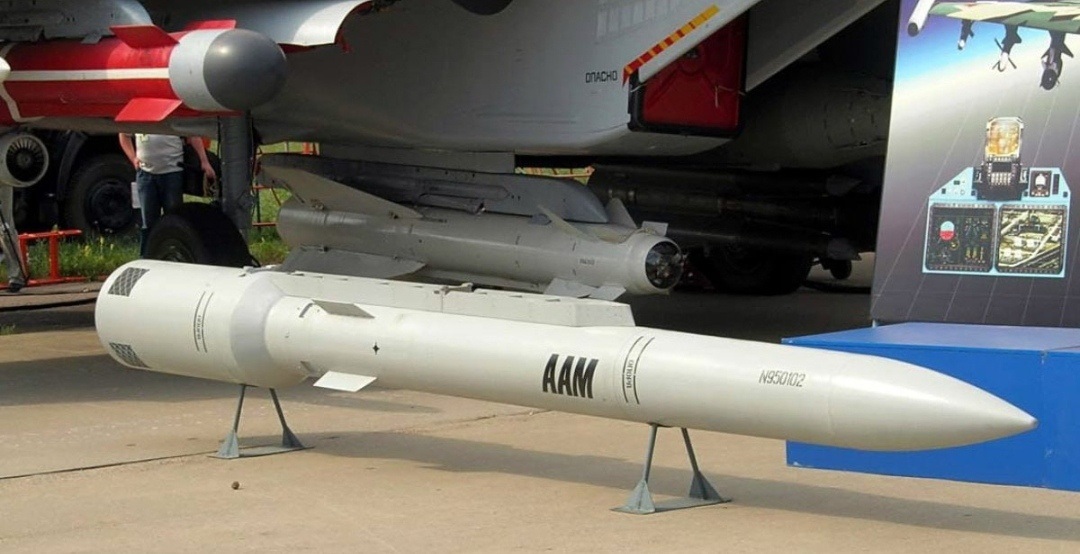
The Birth of a Legend: The Story Behind Its Creation
The program to develop the KS-172 ultra-long-range guided missile was launched in the USSR as early as the early 1990s at the “Novator” Scientific and Production Association. The development was based on the well-proven 9M83 anti-aircraft guided missile from the S-300V air defense system, which allowed for the use of proven technical solutions and reduced the design timeline. The initial tactical and technical specifications, formulated by the Soviet Air Force, called for the creation of a munition capable of engaging air targets at ranges of up to 400 kilometers and altitudes of up to 30 kilometers.
In the mid-1990s, the project faced serious financial difficulties related to the collapse of the Soviet Union, and work on the rocket was virtually put on hold for an entire decade. The program was revived only in the early 2000s thanks to interest from foreign partners, particularly India, which viewed the KS-172 as a promising weapon for its Su-30MKI multi-role fighters.
Design and Technical Features
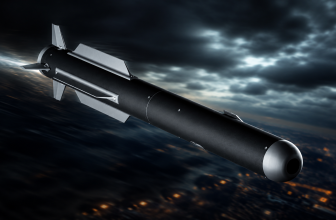
In terms of design, the KS-172 rocket is a two-stage, dual-caliber design, in which the first stage functions as a solid-fuel booster and has a diameter approximately one and a half times larger than that of the second, main propulsion stage. This design allows the rocket to quickly gain speed and reach its optimal flight path. The absence of traditional wings and stabilizers is compensated for by full-motion aerodynamic control surfaces with a span of 0.75 meters, ensuring high maneuverability throughout all phases of flight.
The KS-172 guidance system combines inertial navigation during the cruise phase of the trajectory with a 9B-1103M active radar homing seeker during the terminal phase. At a range of 80–100 kilometers, the missile switches to active target search mode, ensuring a high probability of hit even in a complex jamming environment. To enhance its operational effectiveness, the KS-172 can receive target designation not only from the carrier’s onboard radar but also from A-50 AWACS aircraft or ground control stations via secure communication channels.
Firepower and Tactical Advantages
The primary purpose of the KS-172 is to destroy enemy strategic bombers, long-range radar detection aircraft, airborne command posts, and high-altitude reconnaissance aircraft at a considerable distance from the front line. The 50-kg high-explosive fragmentation warhead with directional action is capable of disabling a large aerial target even with an imprecise hit, and the non-contact radar fuse ensures detonation at the optimal point along the trajectory.
With a launch range of up to 400 kilometers, the KS-172 is unrivaled among modern air-to-air missiles. By comparison, the American AIM-120D missile has a maximum range of about 180 kilometers, while the latest Chinese PL-15 has a range of up to 300 kilometers. This allows Russian fighter jets to launch preemptive strikes against key elements of the enemy’s air force without entering the range of its air defense systems and fighter escort.
Delivery Systems and Integration into the Weapons System
The KS-172 was originally developed as the standard armament for the Su-57, a next-generation fifth-generation fighter, with two missiles intended to be housed in internal bays. However, during the modernization process, the missile was adapted for mounting on external pylons of the Su-30MK, Su-35/Su-35S fighters, and MiG-31BM interceptors. The AKU-172 ejection device was developed specifically for the KS-172 to ensure the safe release of the missile from the carrier at high speeds and under high g-forces.
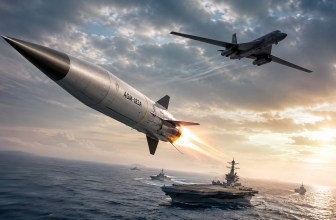
The integration of the KS-172 into the MiG-31BM’s arsenal opens up new tactical capabilities for the Russian Air Force. This high-speed interceptor, capable of reaching speeds exceeding Mach 2.5 and operating at high altitudes, is an ideal platform for deploying ultra-long-range missiles. The “MiG-31BM + KS-172” combination allows for control of airspace within a radius of up to 400 kilometers from the launch point, creating a zone for the enemy entry into which carries a high risk of losing expensive aircraft.
Comparison with Foreign Equivalents
To date, the KS-172 remains the air-to-air missile project with the longest claimed range in the world. The only potential competitor is the American AIM-174B, developed on the basis of the SM-6 anti-aircraft missile; however, its actual combat performance and the status of the program remain a subject of debate among experts. The Chinese PL-17 missile, which also belongs to the ultra-long-range class, is, according to analysts’ estimates, inferior to the KS-172 in terms of range and guidance system capabilities.
A key advantage of the Russian design is its two-stage configuration, which ensures that high speed and maneuvering energy are maintained during the final phase of flight. This is critically important when intercepting high-speed targets capable of performing anti-missile maneuvers with g-forces of up to 12g. In addition, the KS-172’s modular architecture allows for the future modernization of individual missile components without requiring a complete redesign.
Development Prospects and Export Potential
Although the KS-172 has not yet been officially adopted by the Russian Aerospace Forces, flight tests of the prototypes have confirmed the operational capability of the missile’s key systems. The export variant, the KS-172S-1, which has been showcased at international exhibitions, has a slightly reduced range—up to 300 kilometers—in accordance with restrictions imposed by missile technology proliferation control regimes.
Interest in the KS-172 is being shown not only by Russia’s traditional partners but also by new potential customers seeking ways to counter modern airborne threats. The possibility of licensed production of individual missile components within the territories of the purchasing countries makes the project even more attractive amid growing geopolitical tensions.
Technical Specifications of the KS-172 Rocket
- Type: ultra-long-range air-to-air guided missile
- Developer: Novator NPO
- Launch range: up to 400 km
- Target altitude: 3 m to 30,000 m
- Maximum target speed: 4,000 km/h (1,100 m/s)
- Maximum g-force on the target: 12 g
- Rocket length: 7.4 m
- Housing diameter: 0.51 m
- Wing span: 0.75 m
- Curb weight: 750 kg
- Warhead weight: 50 kg
- Warhead type: high-explosive fragmentation with directional effect
- Guidance system: inertial + active radar GSN 9B-1103M
- Number of stages: 2 (solid-fuel engines)
- Flight speed: up to 4,800 km/h
- Possible platforms: Su-30MK, Su-35/Su-35S, Su-57, MiG-31BM
The KS-172 ultra-long-range missile symbolizes a new stage in the development of Russia’s airborne weapons, where the emphasis is shifting from close-range maneuver combat to the preemptive destruction of key enemy targets at maximum ranges. The successful completion of the program and the missile’s entry into service have the potential to radically alter the balance of power in the air, providing the Russian Aerospace Forces with a strategic deterrent that has no direct analogues anywhere in the world.