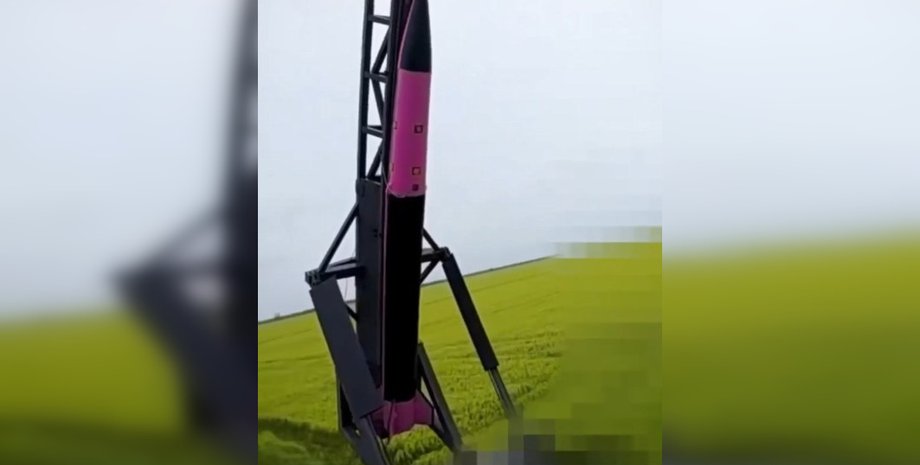
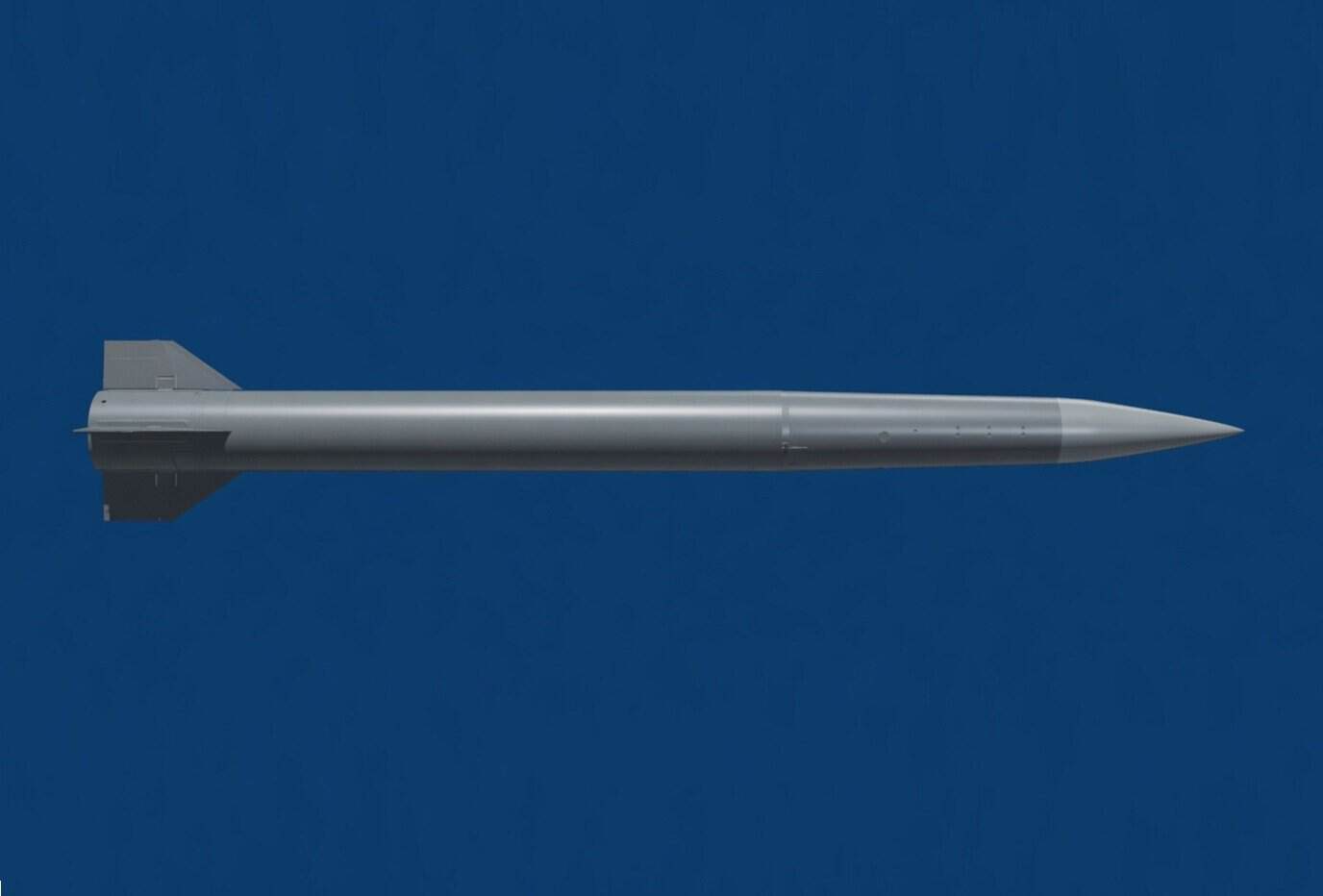
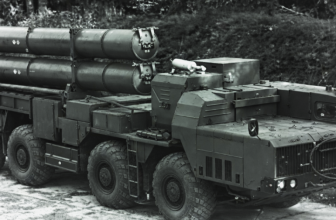
The Ukrainian company Fire Point continues to work actively on the development of advanced air and missile defense systems. As part of the “Freya” project, the company is developing and testing a new FP-7.x interceptor missile designed to destroy ballistic targets. The main objective of this ambitious project is to create a unified, pan-European air and missile defense system. The developers themselves make no secret of the lofty goals of their work. Denis Shtilerman, co-owner and chief designer of Fire Point, stated outright in an interview that Ukrainian engineers had created a clone of the Russian S-400 anti-aircraft missile system, designated the FP-7. At the same time, the Ukrainian missile has a number of design advantages thanks to the use of modern composite materials. The missile’s body is made of carbon fiber, making it significantly lighter than its Russian counterpart. According to the chief designer, this will allow the missile to fly farther and be more maneuverable than the S-400.
End-of-Line Interception and Production Considerations
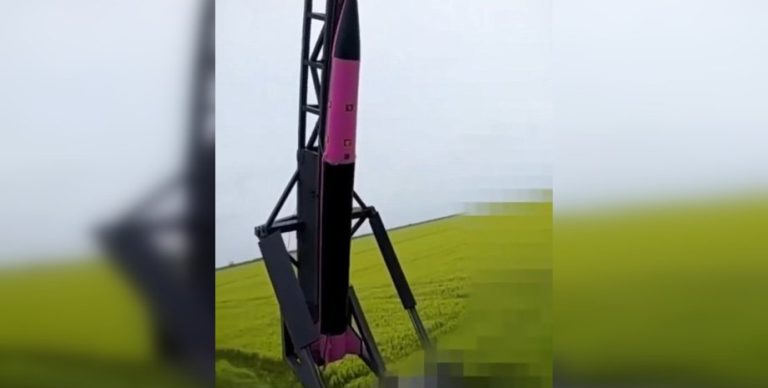
The FP-7.x missile was designed specifically to intercept ballistic missiles during the terminal phase of their flight at altitudes of up to twenty kilometers. Unlike the FP-5 cruise missile, which faced a so-called “bottleneck” due to the need to import and manage the supply of turbojet engines, the production of the FP-7.x is organized entirely differently. The chief designer emphasized that absolutely all components of the new interceptor missile are manufactured directly in Ukraine. The only exception was a single specific part that is not manufactured at Ukrainian facilities. However, this issue has already been fully resolved: the part has been procured in the required quantity and is already at the company’s disposal, ensuring a complete and uninterrupted production cycle. It is also noted that the interceptor is planned to be equipped with either an infrared or a semi-active radar homing head to reliably engage high-speed targets.
Architecture and Components of the Anti-Aircraft System
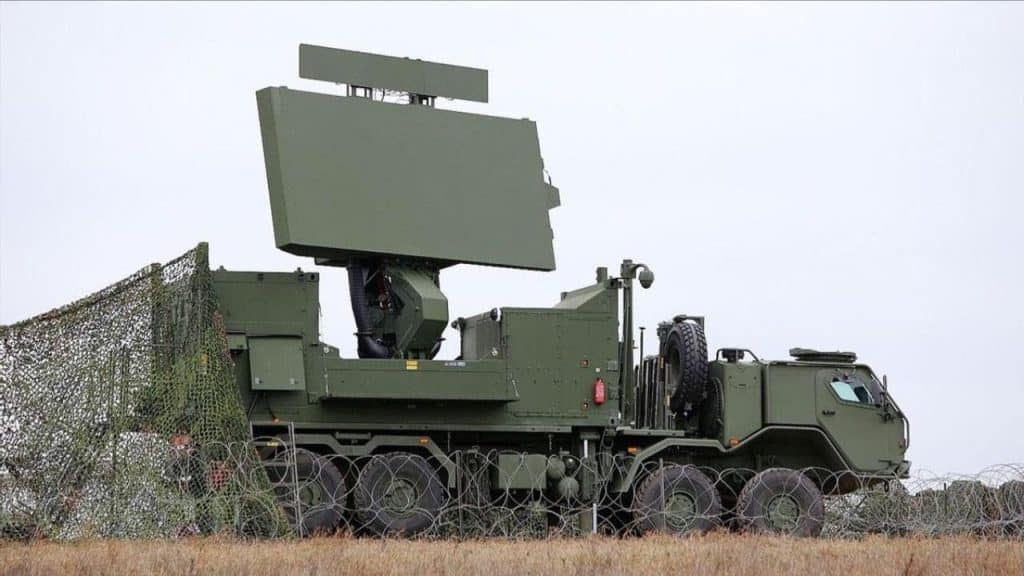
The “Freya” complex is a high-tech network of diverse assets integrated into a single command-and-control and data exchange system. To detect air targets at long ranges, three options for foreign long-range radar systems are proposed. These include the Swedish SAAB Giraffe 8A/4A station, the French Thales Ground Master 400 radar, and the German Hensoldt TRML-4D radar. A specialized Weibel GFTR-2100/48 radar station is used specifically for target illumination and missile guidance. All components of the system are controlled via the state-of-the-art Kongsberg Fire Distribution Center, which features an open architecture and utilizes Network Access Nodes. A lightweight, mobile launcher of the company’s own design has been developed as the launch platform, ensuring high mobility for the entire system and the ability to deploy rapidly in the field.
Tactical and Technical Specifications of the System and the FP-7.x Missile
- Purpose: to intercept ballistic missiles during the terminal phase of their flight path.
- Maximum target engagement altitude: up to 20 km.
- Maximum rocket speed: 1,500 to 2,000 m/s.
- Housing material: carbon fiber.
- Homing head type: infrared or semi-active radar.
- Long-range radars: SAAB Giraffe 8A/4A, Thales Ground Master 400, Hensoldt TRML-4D.
- Illumination and guidance radar: Weibel GFTR-2100/48.
- Командный центр: Kongsberg Fire Distribution Center.
- Launch system: a lightweight, mobile system manufactured in-house.
- Manufacturer: Fire Point (Ukraine).