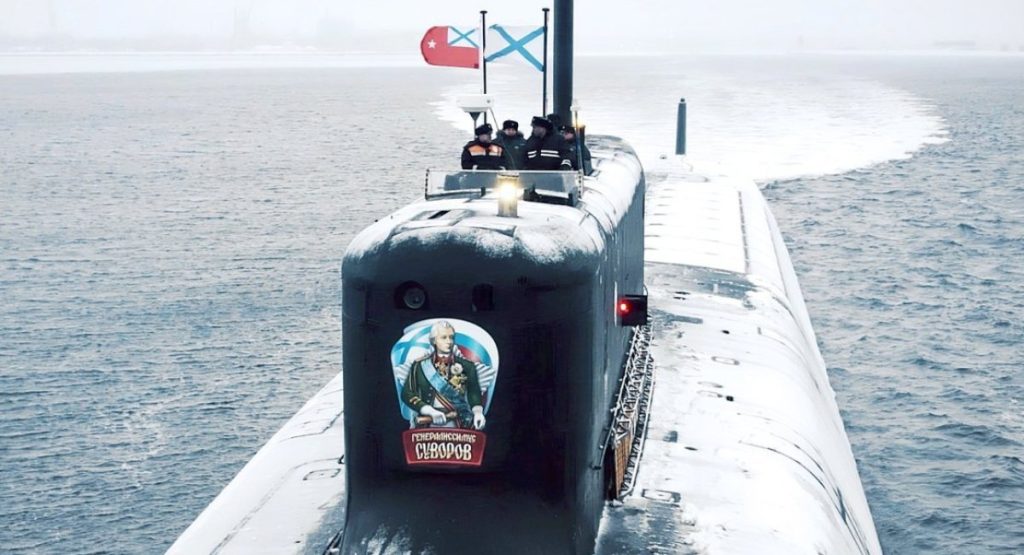
On October 28, 2026, the nuclear-powered submarine Generalissimus Suvorov launched an R-30 Bulava ballistic missile from beneath the waters of the Sea of Okhotsk. The missile crossed almost the entire country and delivered its training warheads to the Chizha test range in the Arkhangelsk region. The launch attracted attention primarily because of the missile, which had endured a long and difficult development program. Yet the vessel that fired it is arguably the more interesting part of the story.
K-553 Generalissimus Suvorov is one of Russia’s newest strategic ballistic-missile submarines. Its purpose is not to hunt aircraft carriers, engage enemy submarines or break through defended sea lanes. Its true mission is to disappear into the ocean and remain there, carrying enough nuclear weapons to guarantee retaliation even if events on land have already taken the worst possible turn.
Paradoxically, the perfect mission for such a submarine is one in which nothing happens. It leaves its base, vanishes beneath the surface, remains hidden for weeks and returns without firing a single missile. If Generalissimus Suvorov ever has to use its main armament in an actual war, the system of deterrence it was built to support will already have failed.
A submarine built around sixteen missiles
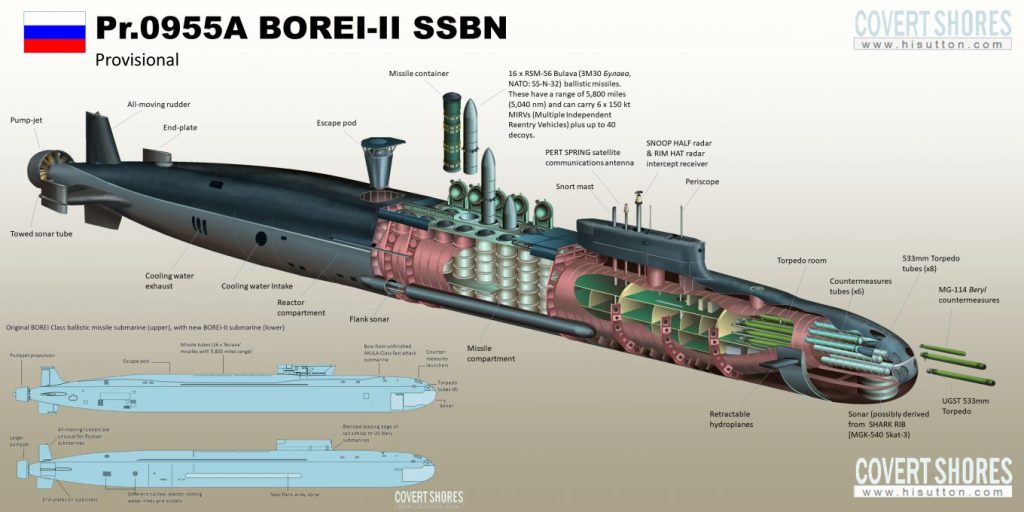
Generalissimus Suvorov belongs to Project 955A Borei-A, the improved version of the Borei-class strategic submarine. It is the third Borei-A and the sixth submarine of the wider Borei family. Its keel was laid at Sevmash in Severodvinsk on December 26, 2014. The boat left the construction hall in December 2021, began sea trials the following year and entered service on December 29, 2022. In October 2023, it completed the transfer to its permanent base at Vilyuchinsk on the Kamchatka Peninsula.
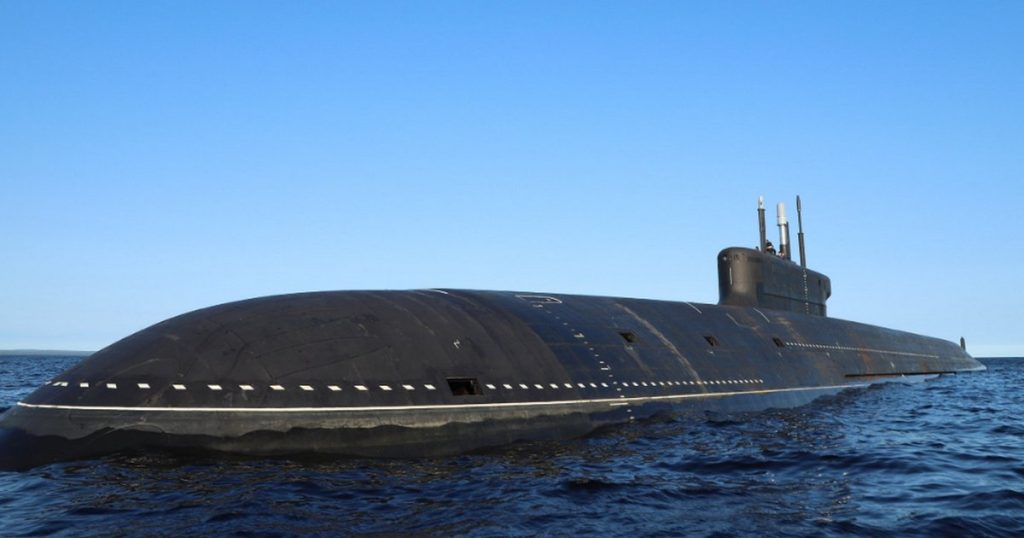
The submarine is approximately 170 meters long and displaces around 24,000 tonnes when submerged. In other words, it is longer than one and a half football fields and heavier than many surface warships. Yet almost everything in this enormous vessel is subordinated to sixteen vertical launch tubes positioned behind the sail.
Each tube carries an R-30 Bulava submarine-launched ballistic missile. The boat also has six 533 mm torpedo tubes, but its torpedoes are primarily defensive weapons. They may be used against an enemy submarine that has already discovered and approached the Borei-A, but reaching that point would mean that the strategic submarine had already lost its main advantage: invisibility.
Why Borei-A is more than another Borei
The first three Project 955 submarines were created during an extremely difficult period for Russian shipbuilding. Their construction made use of components and hull sections originally produced for unfinished Soviet attack submarines. This helped keep the program alive, but it also imposed limitations on the design.
Borei-A was an opportunity to remove those compromises. It was not merely an existing Borei filled with newer electronics. The hull was redesigned, its hydrodynamic form was refined and the distinctive raised missile deck — the “hump” characteristic of many older Soviet strategic submarines — was blended more smoothly into the hull.
The sail, stern and control surfaces were also changed. The vertical rudders received a new arrangement, while the diving planes were moved from the sail to the hull. The missile compartment retained sixteen launch tubes despite early speculation that the number could rise to twenty. The result was a cleaner silhouette that reduced hydrodynamic disturbance and made it easier for the submarine to maintain its depth quietly.
These alterations matter because water is unforgiving. Every protrusion produces turbulence. Every pump, turbine and rotating mechanism creates vibration. At low speeds, even a minor mechanical sound may travel many kilometers through the sea and give a listening submarine the first clue that something large is moving nearby.
Borei-A was therefore designed not simply to move through the ocean but to disturb it as little as possible.
A reactor that must remain quiet
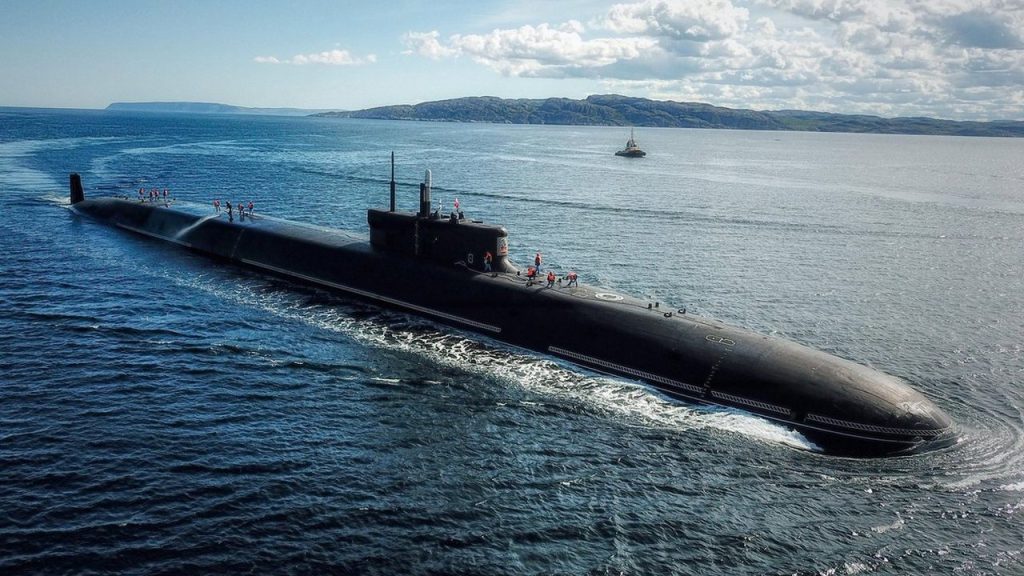
Public sources generally attribute a reactor of the OK-650 family to the Borei-A class, with thermal output usually given as approximately 170 megawatts. The reactor generates steam for turbines that drive a single pump-jet propulsor rather than a conventional exposed propeller.
A pump-jet encloses its rotor within a duct. This arrangement can reduce cavitation — the formation and collapse of vapor bubbles around propeller blades. Cavitation produces a characteristic noise and has betrayed submarines since the earliest days of high-speed underwater operations. It becomes especially serious when a submarine accelerates.
A pump-jet does not make the vessel silent, nor is it equally efficient at every speed. Its principal advantage is that it allows a large submarine to move more quietly across a useful range of operating conditions. Borei-A became the first Russian nuclear-powered submarine class to use this type of propulsion in regular service.
Published figures give the Borei-A a maximum submerged speed of about 29 knots, with an operating depth of roughly 400 meters and a maximum depth sometimes claimed to be close to 480 meters. Such numbers are impressive but secondary. A strategic submarine does not survive by constantly operating at maximum speed or depth. High speed produces additional noise, while great depth cannot compensate for poor acoustic discipline.
Its ideal operating mode is a slow, controlled patrol in which machinery works at its quietest settings and the crew avoids unnecessary maneuvers. For Generalissimus Suvorov, speed is an emergency resource, not the basis of survival.
The submarine’s most important weapon is its hearing
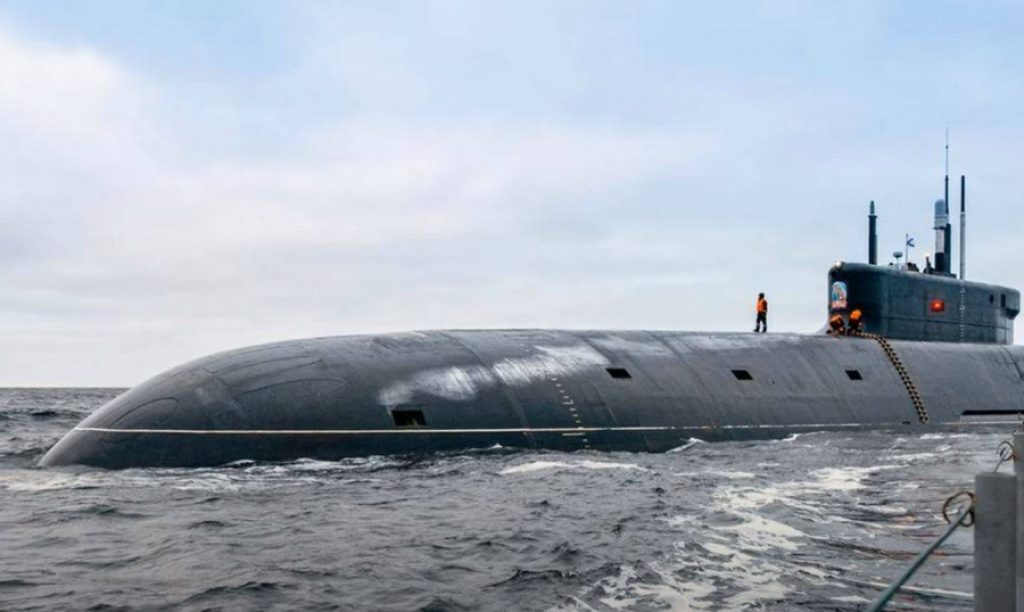
The Borei-A is equipped with the MGK-600B Irtysh-Amfora-Borei sonar complex. Its large bow antenna occupies the space where torpedo tubes would traditionally be placed on many submarines, which explains why the launchers were moved to the sides of the forward hull.
The sonar system is not limited to a single bow array. Open-source analysis points to additional flank antennas and a towed array, allowing the submarine to listen across different frequency ranges and directions. Their exact characteristics remain classified, but the principle is clear: the submarine must detect the hunter before the hunter detects it.
This is where the size of a ballistic-missile submarine becomes both an advantage and a problem. A large hull provides room for powerful sonar equipment, acoustic insulation, weapons, supplies and comparatively tolerable living conditions for a crew of approximately 107. At the same time, the submarine presents a larger acoustic and hydrodynamic signature than a compact attack boat.
The crew therefore fights a continuous battle against sound. Pumps can be used only when necessary. Machinery must be isolated from the hull. Course and speed changes have to be carefully planned. Even routine maintenance may affect the acoustic signature. A strategic submarine patrol is less like an underwater chase and more like a prolonged attempt to remain unnoticed in a dark room filled with unseen listeners.
Sixteen Bulavas — and no need to approach the enemy
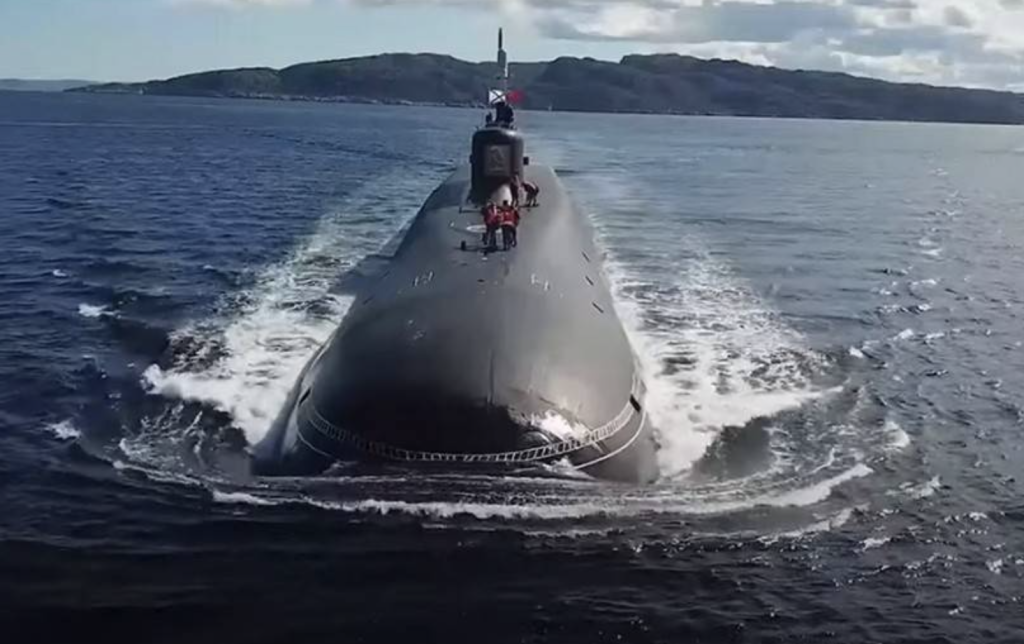
The R-30 Bulava was created specifically for the Borei family. It is a three-stage solid-fuel ballistic missile with an estimated maximum range of around 9,000 kilometers, depending on its payload and flight profile. It can carry multiple independently targetable warheads as well as penetration aids intended to complicate missile-defense interception.
Its range means that Generalissimus Suvorov does not have to approach the coast of a potential adversary. The submarine can launch from waters relatively close to Russian territory, where friendly surface ships, aircraft and attack submarines can make it more difficult for an opponent to search for it.
This dramatically changes the task. A Cold War submarine might have been required to cross heavily monitored areas before its missiles could reach their targets. The Borei-A can remain inside a defended maritime “bastion” and still threaten targets thousands of kilometers away.
The Bulava program was far from smooth. A series of failures during development repeatedly raised questions about the missile’s reliability. By the time Generalissimus Suvorov entered service, however, the system had passed into serial deployment. The submarine conducted its first Bulava launch in November 2022 during state trials, firing from the White Sea toward the Kura range in Kamchatka. Four years later, it performed the reverse strategic geography: launching from the Sea of Okhotsk toward the Chizha range in northern European Russia.
The second launch was important not because it demonstrated an unknown capability, but because it confirmed the entire chain: the submarine, its crew, the missile complex, communications, navigation and targeting procedures were able to function from the boat’s actual Pacific operating area.
The fortress of the Sea of Okhotsk
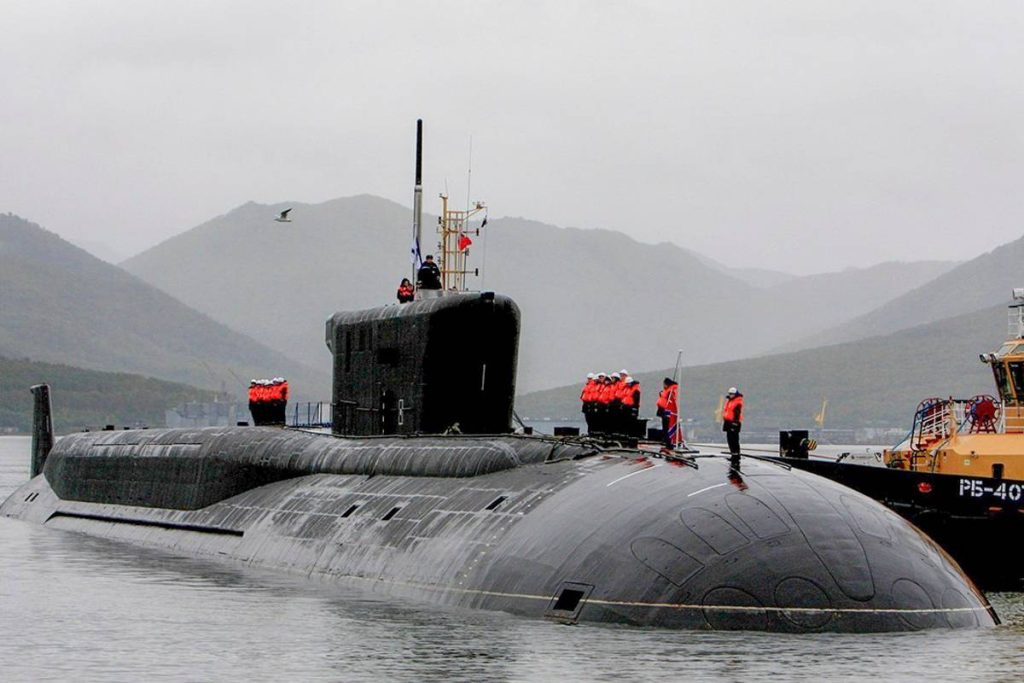
Generalissimus Suvorov serves with the Pacific Fleet’s 25th Submarine Division at Vilyuchinsk. Its natural patrol area is the Sea of Okhotsk — a vast but comparatively enclosed body of water bordered by Kamchatka, the Kuril Islands, Sakhalin and the Russian mainland.
During the Cold War, the Soviet Navy developed the idea of protecting strategic submarines inside such areas rather than sending every boat into the open ocean. Geography turned the Sea of Okhotsk into a maritime fortress. Access routes could be monitored, while naval aviation, surface forces and attack submarines searched for foreign vessels attempting to enter the patrol zone.
The principle remains relevant. The Borei-A’s missiles have sufficient range to reach their targets from inside the Sea of Okhotsk. This allows the submarine to spend much of a patrol in waters where supporting forces are close and where an adversary faces a difficult search problem. The modernization of Vilyuchinsk and the arrival of successive Borei-A boats have restored the Pacific Fleet’s ability to maintain a significant sea-based nuclear deterrent in this region.
That does not make the bastion impenetrable. The entrances through the Kuril chain can be observed. Foreign attack submarines may attempt to penetrate the area. Satellites, seabed sensors, patrol aircraft and unmanned underwater vehicles can all contribute to the hunt. Ice, temperature layers and the complex acoustics of the North Pacific may conceal a submarine, but they can also make it harder for its own sonar operators to understand what they are hearing.
The defense of a bastion is therefore not a wall. It is a contest of incomplete information in which both sides search for a faint acoustic trace without revealing too much about their own position.
A weapon whose value lies in uncertainty
The real power of Generalissimus Suvorov is not the number of missiles visible in technical tables. It is the uncertainty surrounding the submarine’s position.
If an adversary knows exactly where the boat is, it can be tracked and possibly destroyed before receiving a launch order. If the submarine disappears into the Sea of Okhotsk and cannot be reliably located, those sixteen missiles remain a threat that no strategic planner can ignore.
That uncertainty forces an opponent to devote attack submarines, aircraft, satellites, intelligence networks and sonar systems to a search that may never produce a confirmed contact. Even then, detecting a Borei-A once is not the same as maintaining continuous track of it for weeks.
This is why the most significant characteristic of Generalissimus Suvorov is not its maximum depth, speed or even the published range of the Bulava. It is the distance at which the submarine can be detected — a figure that neither side will disclose and that changes with speed, depth, weather, ocean temperature and the skill of the crews involved.
Generalissimus Suvorov was not built to win a naval battle in the traditional sense. It was built to make such a battle irrational. Its sixteen missiles are supposed to remain hidden beneath the water as a final guarantee: even a successful first strike cannot eliminate the ability to retaliate.
The submarine’s greatest success would therefore be a long career without a single combat launch. It would leave Vilyuchinsk, dissolve into the dark waters of the Pacific and return weeks later with all sixteen missiles still inside their tubes.
For a strategic submarine, silence is not merely a tactical advantage. It is the mission itself.