The T-30, the first Soviet heavy tank. An unrealized alternative in domestic tank design

At the turn of the 1920s and 1930s, the design bureau at the Bolshevik Plant developed a heavy tank project designated the T-30. The development was notable for its depth of detail and progressed to the stage of building a full-scale mockup; however, it was suspended due to a change in strategic requirements for heavy breakthrough tanks. This article explores an alternative branch of Soviet tank development: what would have happened if the original requirements had remained in place and the factory had managed to bring the design to mass production. This scenario allows us to assess the potential of a vehicle capable of changing the course of history for armored forces.
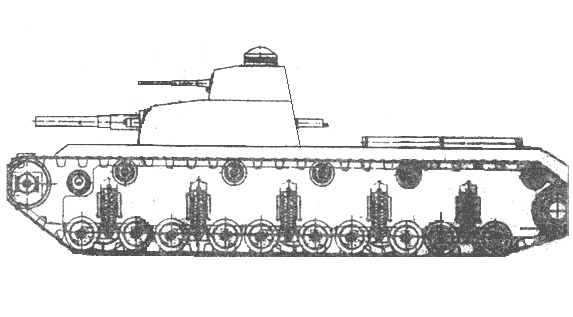
Blueprint of the actual T-30
The Evolution of Design: From Blueprints to Metal
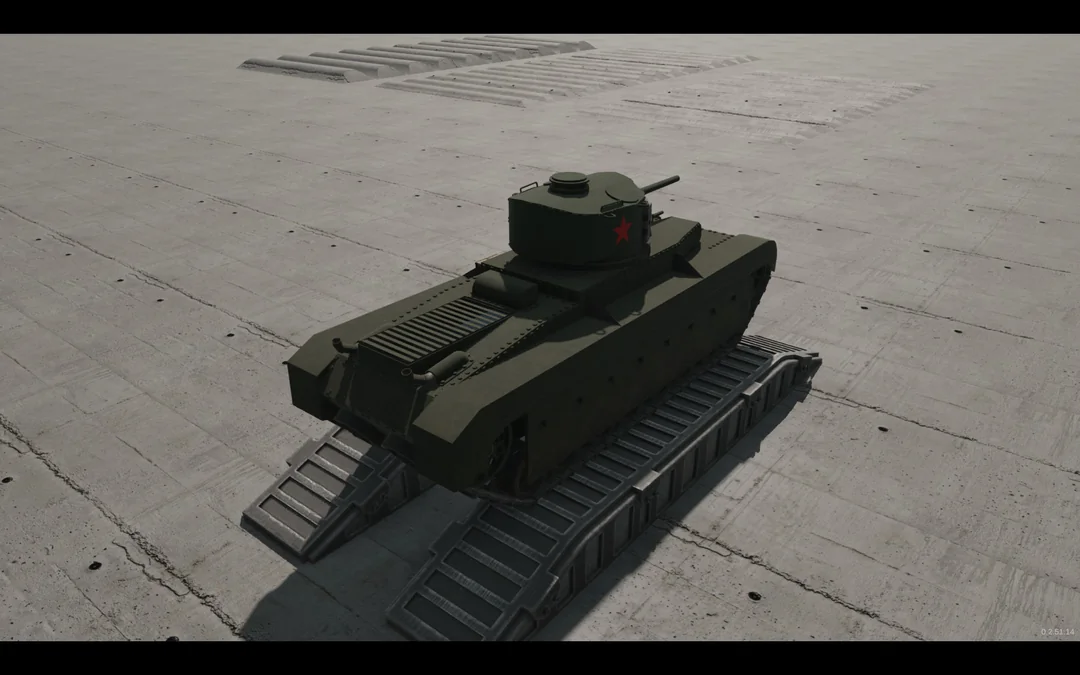
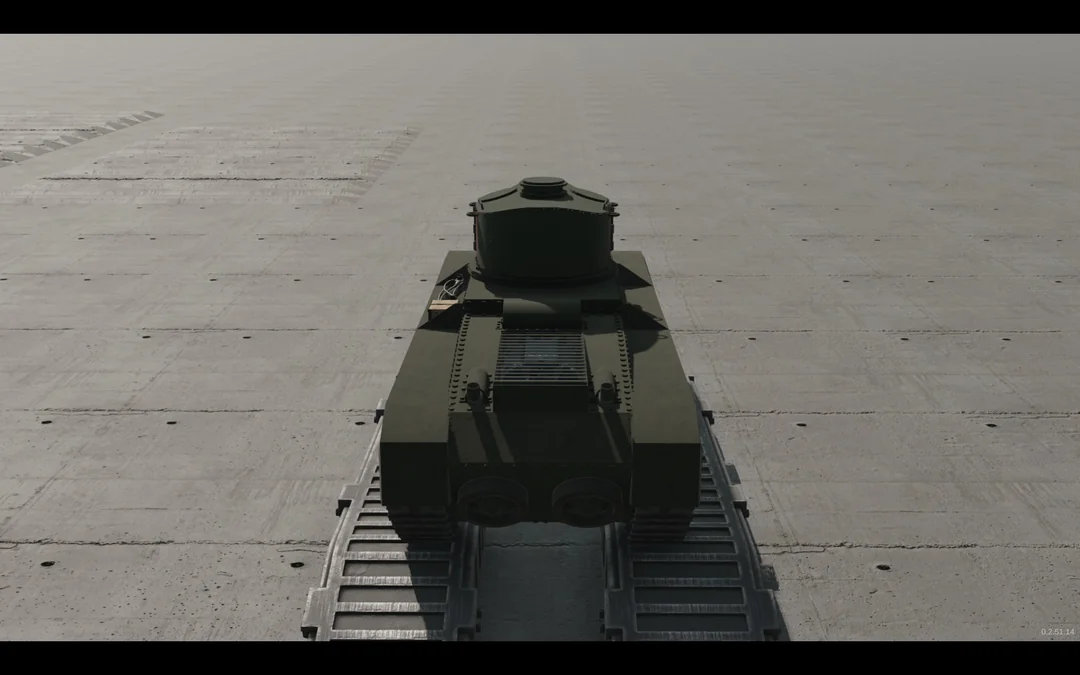
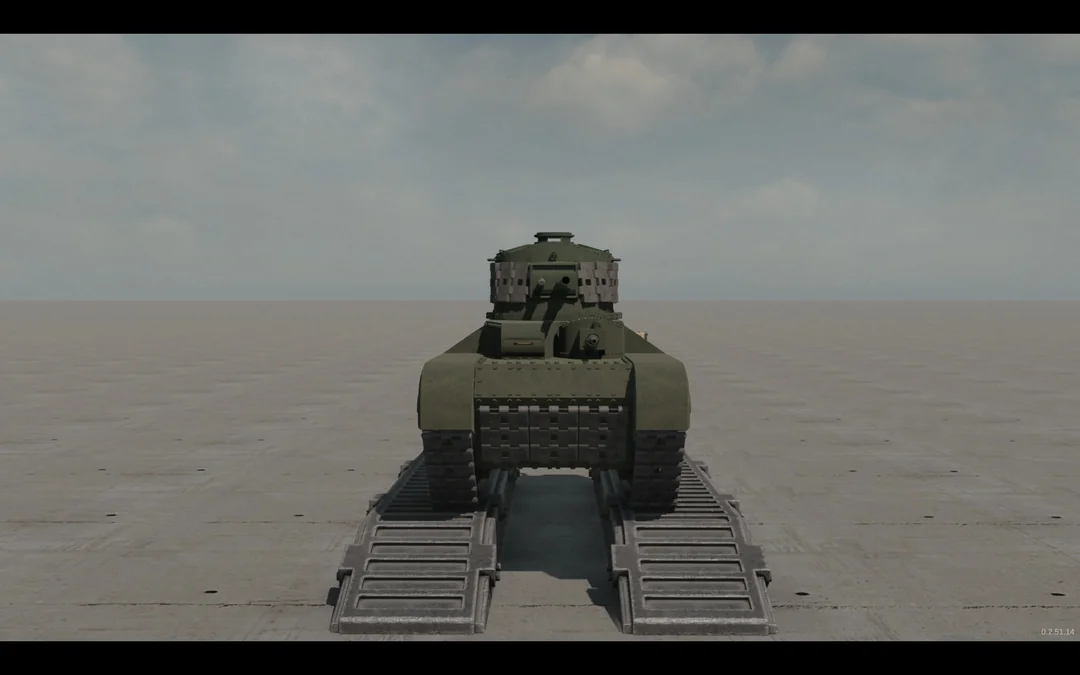
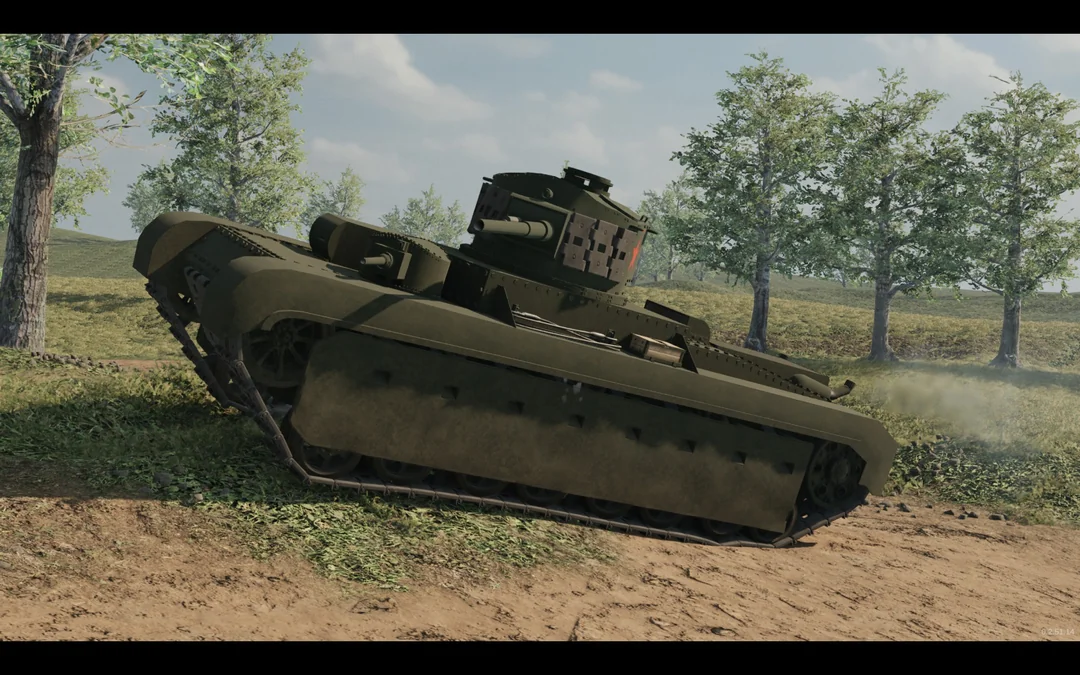
The tank’s final design differed radically from the early sketches. The initial design, featuring a two-tier turret, revealed critical flaws: the upper tier significantly increased the weight, complicated the casting and assembly processes, and it proved practically impossible to accommodate the ammunition load for the 37-millimeter gun in such a confined space. The engineers decided to abandon the multi-tiered design and return to the classic armament layout. The second 37-mm gun was moved to a separate small turret mounted at the front of the hull, in front of the main fighting compartment. The vehicle’s extended wheelbase made it possible to implement this layout without compromising interior space. This design choice gave rise to a well-known tactical issue: the field of fire to the right was restricted due to the driver’s position, which required precise coordination among the crew and well-calibrated maneuvering tactics on the battlefield.
Armor, Armament, and Production History
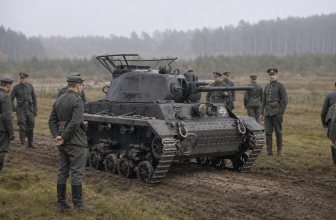
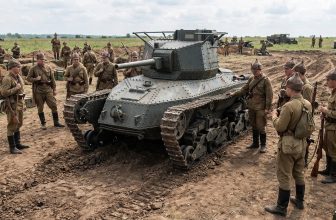
The tank’s main gun was housed in a large, fully rotating turret. It was equipped with a 76.2-mm divisional gun of the 1902/30 model, whose powerful high-explosive shell was designed to destroy permanent firing positions, dugouts, and field fortifications. A 37-mm PS-1 gun in the front turret was used to counter enemy armored vehicles. The vehicle’s total weight reached fifty metric tons, which allowed the designers to ensure exceptional protection. The 60-millimeter-thick frontal armor plates of the hull and turret, angled optimally, remained invulnerable to most anti-tank weapons of the early 1930s, including the widespread 3-inch field guns. The side armor of the hull and turret was 40 millimeters thick, while the rear of the hull was protected by a 20-millimeter plate. This design made the T-30 an ideal vehicle for breaking through deeply echeloned defensive lines.
In 1932, the prototypes successfully passed field tests and were recommended for adoption into service. Starting in 1933, mass production began at the Kharkiv Locomotive Plant and the Bolshevik Plant in Leningrad. The plan called for the production of twelve tanks annually at each plant. Over the course of six years of production, 144 tanks rolled off the assembly lines, 140 of which were delivered to combat units, where they were used to form separate heavy-armored battalions. The range of primary armament was constantly adapted to keep pace with the development of Soviet artillery. The first production batches, manufactured in 1933–1934 (42 units), were equipped with the standard 76-mm gun of the 1902/30 model. In 1935–1936, 50 tanks were fitted with a modernized tank version of the same system featuring a reinforced recoil assembly. The mid-production batch (28 units) was equipped with the new KT-28 76-mm gun with improved ballistics. The final batch of 24 tanks, produced in 1938, was built in a modernized variant: the crews were equipped with a cast conical turret and the advanced 76-mm L-10 gun, which significantly increased the vehicles’ anti-tank capabilities and overall combat survivability.
Technical Specifications
- Combat weight: 50 metric tons
- Crew: 6 people
- Hull length: 8.4 m
- Width: 3.2 m
- Height: 3.6 m
- Ground clearance: 0.45 m
- Front hull armor: 60 mm
- Hull side armor: 40 mm
- Aft hull armor: 20 mm
- Front turret armor: 60 mm
- Turret side armor: 40 mm
- Main armament: 76.2-mm rifled gun (1902/30, KT-28, and L-10 variants)
- Additional armament: one 37-mm PS-1 cannon, three 7.62-mm DT machine guns
- Engine: carbureted, 12-cylinder, V-type, liquid-cooled (licensed version of the BMW VI)
- Engine power: 650 l. s.
- Maximum speed on the highway: 30 km/h
- Speed over rough terrain: 18 km/h
- Range on the highway: 180 km
- Specific pressure on the soil: 0.85 kg/cm²
- Maximum climbing angle: 35°
- Vertical wall to be scaled: 1.2 m
- Crossable ditch: 3.5 m
- Depth of the ford: 1.4 m
Baptism by Fire in the North
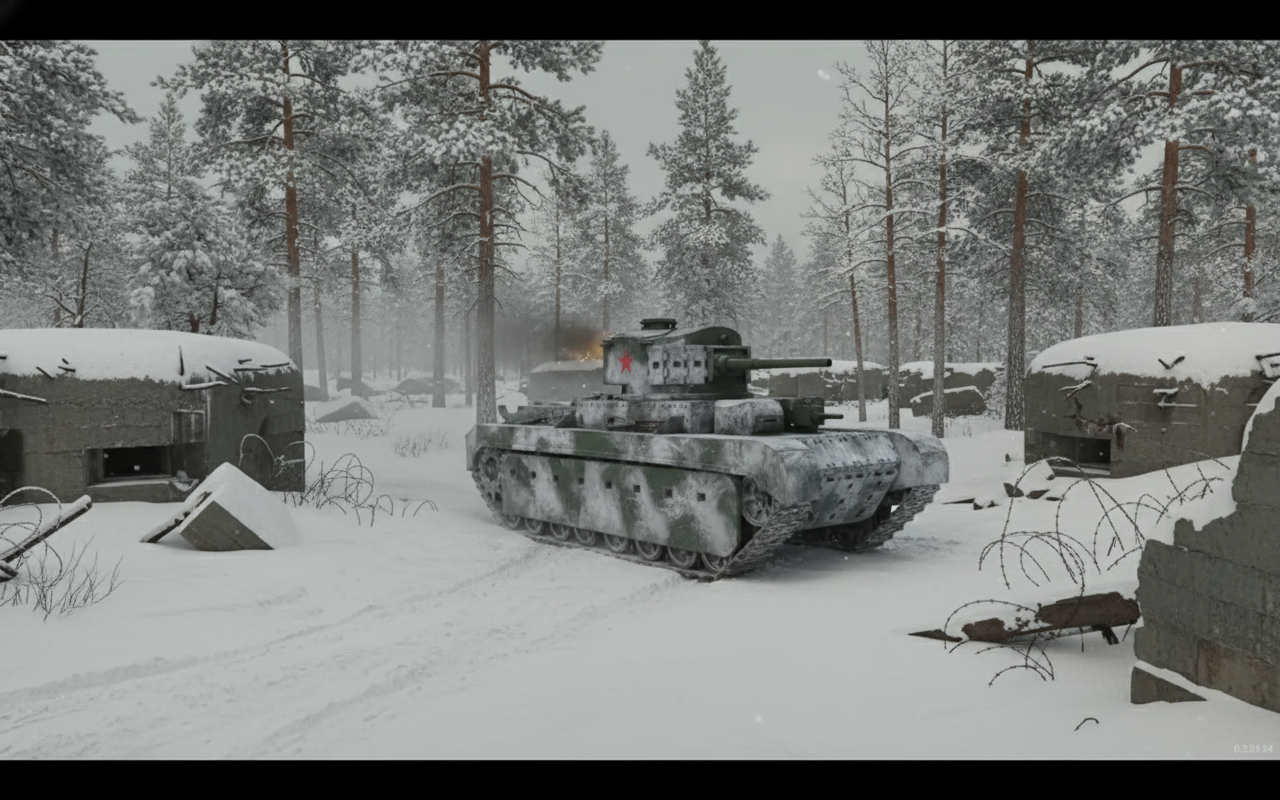
The T-30 heavy tanks came into their own in the winter of 1939. A concentrated assault by battalions equipped with these vehicles ensured a rapid breakthrough of the Mannerheim Line. The tanks’ massive armor and the powerful high-explosive shells fired from their 76-mm guns allowed them to ignore fire from Finnish anti-tank weapons and systematically destroy pillboxes, clearing the way for infantry and mechanized units. The successful deployment of the T-30 on the Karelian Isthmus not only hastened the conclusion of the winter campaign but also influenced the postwar structure of the region. As part of the peace treaty and subsequent political reforms, the Karelian-Finnish Soviet Socialist Republic was established, which became the sixteenth constituent republic of the USSR. This status granted the region special economic and defense significance, and the experience of operating the T-30 in harsh winter conditions formed the basis for new training guidelines for heavy equipment crews.
A Mark in the History of the Great Patriotic War
The presence of elite heavy tanks in the army played a decisive role in the early stages of the Great Patriotic War. T-30 battalions concentrated in the northwestern sector, reinforced with modernized variants, halted the German tank wedges on the outer approaches to Leningrad. The front armor’s invulnerability to 37-mm and 50-mm German anti-tank guns allowed Soviet forces not only to hold their defenses but also to launch a series of successful counterattacks, driving the enemy back from key transportation hubs. The siege of Leningrad never materialized. The city remained a vital industrial and logistical hub, which, combined with the intact production capacity of the Kharkiv and Leningrad factories, enabled the Red Army to accelerate its transition to a strategic offensive. The war ended several years earlier, and the heavy T-30 tanks—which had been equipped with improved observation devices, new track links, and heating systems during the conflict—confirmed their status as the benchmark of pre-war Soviet tank engineering right up to the very last day.
Conclusion
The alternative history of the T-30 demonstrates just how close Soviet tank design came to creating a well-balanced heavy tank as early as the beginning of the 1930s. The rejection of overly complicated designs, a well-thought-out distribution of armament, and rational armor placement would have transformed the project into a reliable breakthrough weapon. Had this concept been realized, it would have altered the course of key events in World War II, saved hundreds of thousands of lives, and strengthened the country’s defensive capabilities. Today, the T-30 remains a symbol of engineering ingenuity, proving that even under constraints and shifting doctrines, it is possible to create military hardware capable of serving as both the shield and the sword of the army.