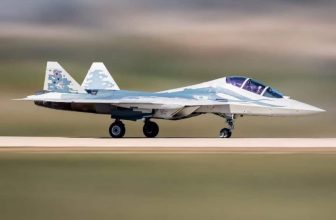
The Tupolev Design Bureau has patented an engine for hypersonic aircraft. When will it be installed in actual aircraft?

Tupolev PJSC has been granted a patent for a hypersonic aircraft with a combined propulsion system that includes two jet engines running on aviation kerosene and one engine running on cryogenic fuel. This invention is designed to solve one of the key problems of hypersonic aviation—the intense heating of the airframe when flying at speeds many times faster than the speed of sound.
This development is not merely a new engine design, but a comprehensive approach to managing thermal loads. When a turbojet engine using cryogenic fuel is operating, the aircraft accelerates to hypersonic speeds. At this point, increased friction between the air and the outer parts of the airframe causes them to heat up intensely, and effective cooling is necessary to sustain a long flight at hypersonic speeds.
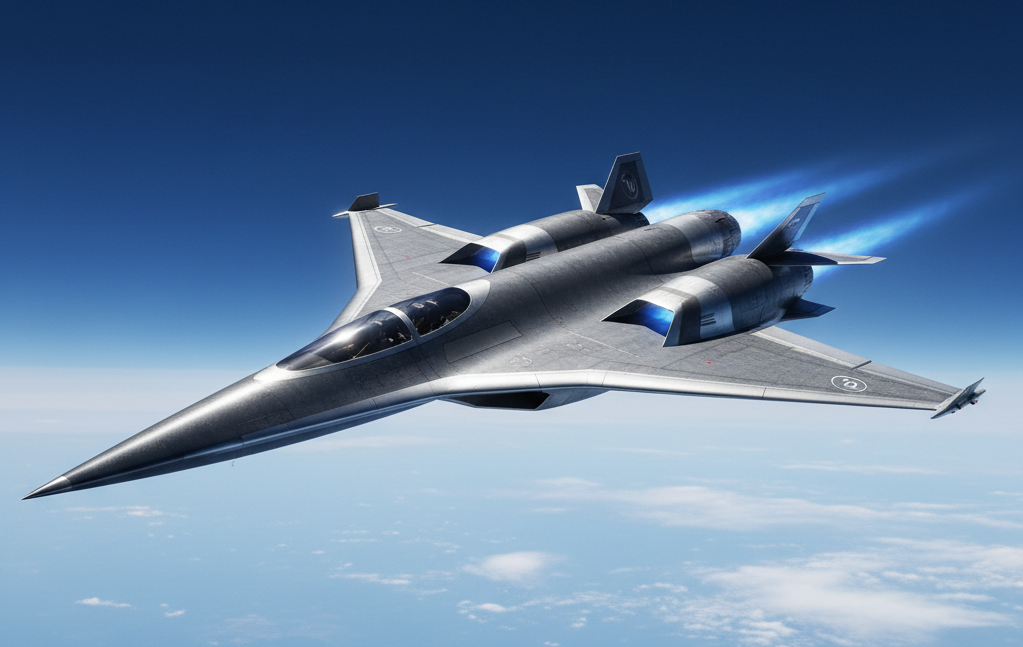
How a Combined Power Unit Works
A key feature of the patented technology is the use of cryogenic fuel not only as an energy source but also as an active heat transfer medium. The cryogenic fuel flows from the tank through pipelines to the hottest parts of the aircraft’s airframe and engine. Intense gasification of the fuel occurs within the pipelines—an endothermic process during which heat is absorbed from the heated structural components.
After passing through the cooling system, the heated cryogenic fuel turns into a gas and is fed into the engine’s combustion chamber and afterburner to generate thrust. Thus, the same fuel serves two purposes: it removes excess heat from critical components and powers the propulsion system.
Fuel Types and Technical Specifications
In a hypersonic aircraft, thermally stable T-6 or T-8V fuel can be used as aviation kerosene. Two options are provided for cryogenic fuel: liquefied natural gas or liquefied hydrogen. The choice of a specific type of cryogenic fuel will depend on flight range requirements, payload mass, and operating conditions.
Among the inventors is Valery Benderov, an Honored Designer of Russia, who from 2012 to 2019 served as program director and chief designer of the LMK-214 multifunctional flight simulation complex, a lead design engineer at the Tupolev Design Bureau. His involvement in the development confirms the high level of conceptual refinement and its connection to real-world projects in the Russian aviation industry.
Technical Specifications of the Power Unit
- Number of engines: 3 turbojet engines
- Fuel type for the two engines: T-6 or T-8V aviation kerosene
- Fuel type for a single engine: cryogenic (liquefied natural gas or liquefied hydrogen)
- Cooling principle: endothermic gasification of cryogenic fuel in pipelines running along the heated elements of the airframe
- Design operating mode: acceleration to hypersonic speed followed by sustained flight
- Temperature of cryogenic fuel: below -259.2 °C for hydrogen, about -162 °C for liquefied natural gas
Connection to Promising Projects: The MiG-41 and Beyond
Experts note that this development could find application in promising Russian aviation projects. In particular, publications often mention the patent’s potential connection to the program to develop the next-generation MiG-41 interceptor (PAK DP). This aircraft, being developed by the Mikoyan Design Bureau, is intended to intercept targets at extremely high altitudes and speeds, including hypersonic ranges.
However, it is important to understand that the patent was granted specifically to the Tupolev Design Bureau, not the Mikoyan Design Bureau, which indicates the possibility of independently developing a hypersonic aircraft within Tupolev’s area of expertise. This could be either a specialized reconnaissance-and-strike complex or a technological platform for testing solutions that will subsequently be used in other projects.
When Can We Expect the Actual Cars: An Estimate of the Timeline
At this point, the patent confirms that the concept is viable based on engineering calculations and laboratory tests. To obtain a patent, it is necessary to demonstrate that the idea is feasible in principle; however, this does not mean that the technology is ready for mass production.
Experience in developing complex aviation systems shows that it typically takes 5 to 10 years from the granting of a patent to the completion of the first prototype. Given that the patent was granted in late 2023, the first flight tests of the technology demonstrator can be expected no earlier than the mid-2030s. Mass production and the delivery of the equipment to the military are an even more distant prospect, tentatively estimated for the late 2030s to early 2040s.
This timeline could be accelerated provided that the project receives priority funding and its developments are integrated into government aviation technology development programs. However, even in an optimistic scenario, hypersonic aircraft with a combined propulsion system will remain next-generation technology designed to address strategic objectives in the context of high-tech conflict.
The Significance of This Development for the Russian Aviation Industry
Obtaining a patent for a combined propulsion system is an important step in the development of domestic hypersonic aviation. This comprehensive solution to the problem of airframe overheating opens up new possibilities for creating aircraft capable of sustaining flight at speeds exceeding Mach 5 for extended periods.
The successful implementation of this concept could secure Russia’s technological leadership in the field of hypersonic aviation systems and lay the groundwork for the development of sixth-generation aircraft. A key factor here remains not only the engineering design but also the industry’s ability to ensure mass production of components capable of operating under extreme temperatures and loads.