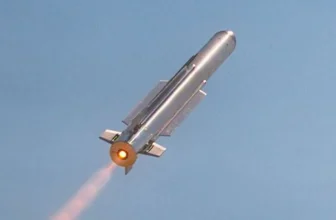
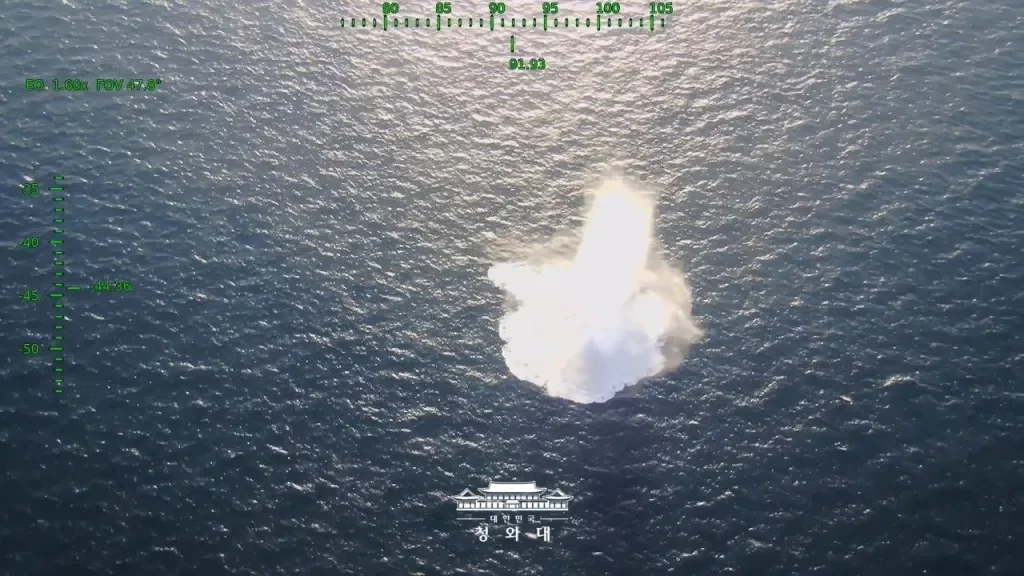
On October 8, 2026, South Korea unveiled a test of its own hypersonic glide vehicle. A rocket carried it to the planned altitude, the vehicle separated and, according to the presidential office, performed maneuvers before striking the designated point. The released images show the flight ending in a splash at sea. Five days earlier, North Korea had announced a launch of its own hypersonic system under Kim Jong Un’s supervision.
A hypersonic arms race is taking shape on the Korean Peninsula, with both sides revealing enough to attract their neighbors’ attention but too little to compare their results confidently. Seoul now has a publicly demonstrated glide vehicle test. Pyongyang is already talking about training missile crews. Much remains unknown between those announcements and the capabilities of a finished weapon.
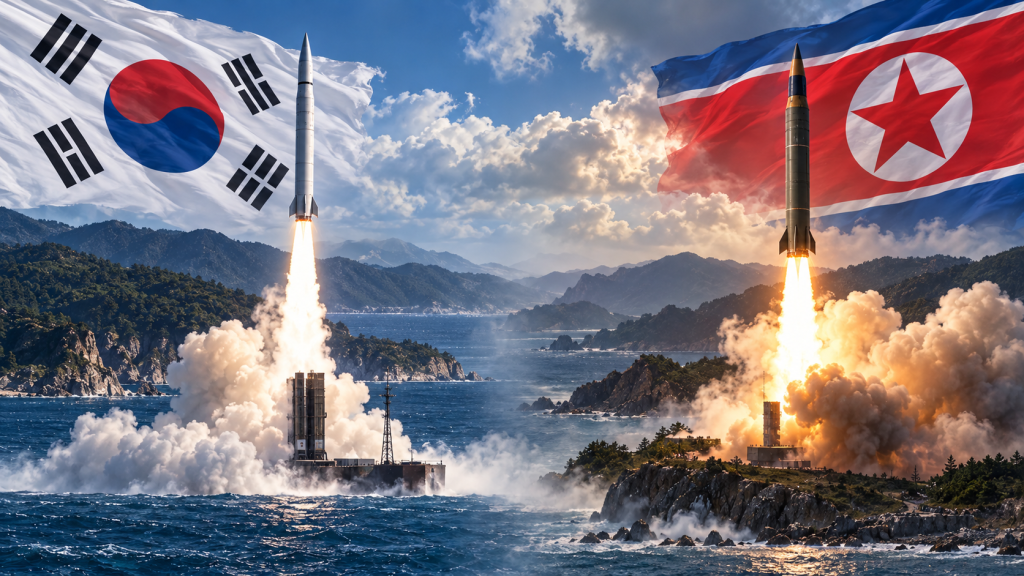
What South Korea Sent into Flight
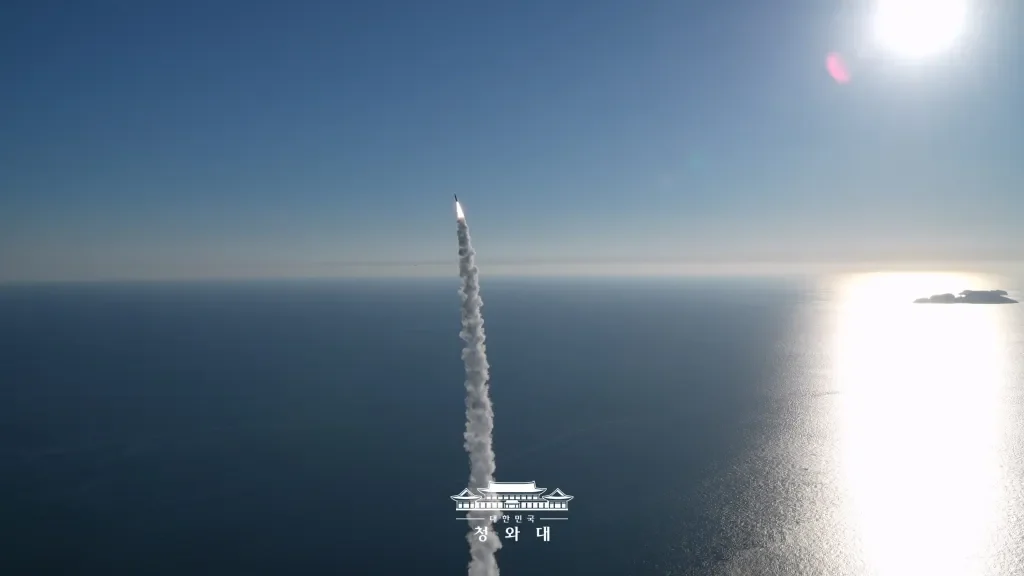
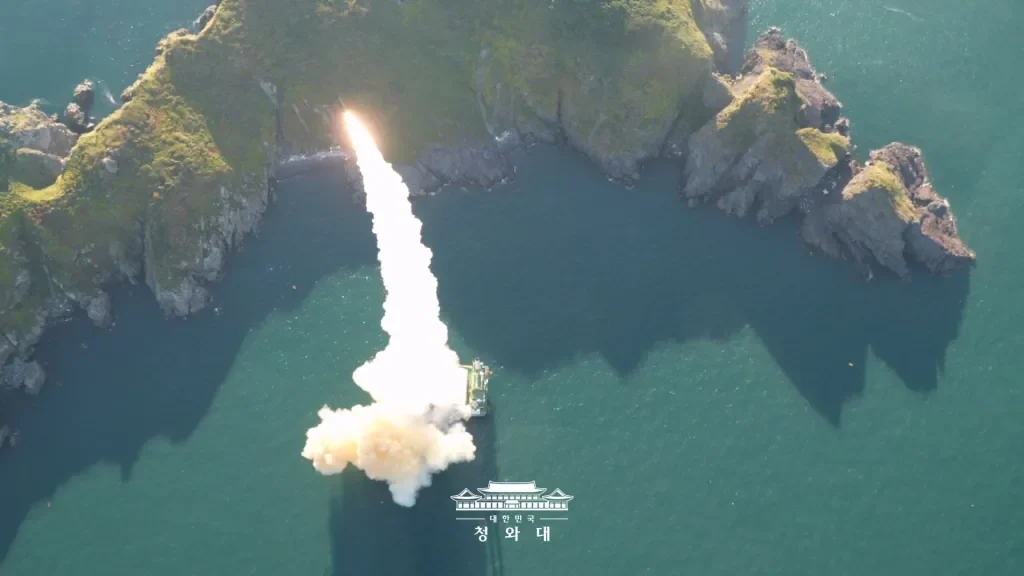
The tested vehicle belongs to the HGV—hypersonic glide vehicle—category. First, a rocket provides speed and altitude. After separating, the vehicle continues flying on the energy it has acquired, using aerodynamic lift. It can change direction and altitude along the way. This arrangement requires no onboard engine to sustain its flight.
To an observer, the rocket takes off in a familiar fashion. The main experiment begins later, once the booster has done its job. The separated vehicle must remain controllable in the atmosphere, withstand heating and follow its intended flight path. South Korea’s statement lists precisely those checks: heat-resistant materials, guidance and control, and maneuvering at lower altitudes. Authorities said the vehicle changed its trajectory vertically and horizontally before hitting the designated point.
That tells us more than an announcement of high speed alone. Yet the published statement gives no numerical figures for range, speed or accuracy. A claimed hit at a designated point cannot be converted into a specific miss distance, nor can “hypersonic” be translated into an invented Mach number.
Even the vehicle’s shape remains open to debate. The images show it shortly before it hits the water, but their quality does not allow its form to be reconstructed confidently. Such photographs can suggest a possible configuration; they reveal much less about aerodynamic performance. The first public launch provided firmer evidence of the program’s direction than of the future missile’s specifications.
Why Maneuver When Missiles Are Already Fast?
Hypersonic generally means speeds of Mach 5 or above. Many ballistic missiles have long reached such speeds. The appeal of a glide vehicle lies in combining that speed with atmospheric flight and the ability to change its trajectory.
Missile defenses must determine where an object is heading and arrange an interception. A conventional ballistic trajectory follows a relatively predictable arc. A glide vehicle can complicate that calculation because its subsequent path depends on aerodynamic control. Flying lower can also reduce the warning time available to ground-based radars. The actual benefit depends on the flight path and the surveillance system; it does not make the vehicle magically invisible.
That capability is particularly attractive on a small peninsula. The neighboring states are already close enough for warning times to be limited. A different trajectory promises to add another difficulty for the defender. This helps explain the interest in the technology even without a contest for record-breaking range.
Maneuvering comes at a price, however. A glide vehicle loses energy as it encounters atmospheric drag, while changes in its trajectory affect speed and range. At the same time, the structure experiences intense heating. Thermal protection must preserve more than the outer body: the equipment inside has to keep functioning as the vehicle steers toward its target.
Calling such a weapon “impossible to intercept” would therefore be premature, even for systems whose capabilities are much better understood. Research by physicists David Wright and Cameron Tracy shows that a glide vehicle’s vulnerability depends on the speed it maintains during flight and the characteristics of the defenses it faces. Simply crossing the Mach 5 threshold does not guarantee that it will defeat missile defenses.
Launches Days Apart, Results Still Unclear
Pyongyang described the October 3 event as training for personnel operating a hypersonic strategic weapon system. KCNA claimed that the missile struck a point at sea 1,000 kilometers away and linked the launch to a test of the reliability of its deterrent forces. That is North Korea’s account; the announcement supplies no independent evidence covering the entire flight.
South Korea officially presented its launch as the first test of its domestically developed HGV. The difference in wording is noticeable: one participant describes crew training, the other the verification of key technologies. That does not establish that the North already possesses a more advanced weapon. A comparison would require equivalent information about maneuvering, accuracy, repeatability and the readiness of the complete systems.
September launches from North Korea provide another reason for caution. Japan’s Ministry of Defense estimated that two missiles launched on September 20 traveled roughly 440 and 590 kilometers. Those observations confirm missile activity, but do not by themselves reveal how long hypersonic gliding lasted or how well guidance performed. Detecting a flight and establishing a weapon’s full capabilities are different levels of knowledge.
The launch calendar should not become a story of instant technical retaliation. Preparing a test of a new system takes far longer than five days. Closely spaced dates provide political context and suggest competition, but do not prove that South Korea’s experiment was organized in response to the latest North Korean launch.
That is what makes this race so murky. Both sides are demonstrating progress toward weapons intended to complicate the other’s defenses. Yet a successful technology test, an announcement of crew training and a reliable production system are different achievements. While Seoul shows a splash at sea and Pyongyang announces a range, the race has participants and a direction. It does not yet have a verifiable scoreboard.