The U.S. Is Scaling Back Drills With South Korea Over Iran. But Who Is Washington Really Punishing?

At first glance, the situation seems almost illogical. The Korean Peninsula contains one of the most heavily militarized borders on Earth. North Korea possesses nuclear weapons, ballistic missiles, and enormous conventional forces. South Korea remains one of Washington’s most important military allies in Asia, while joint exercises have for decades formed the foundation of the two countries’ ability to fight together in the event of another war.
And yet U.S. President Donald Trump has now ordered the Pentagon to substantially reduce American participation in joint military exercises with South Korea.
The reason is not China. It is not some dramatic improvement in the military situation on the Korean Peninsula. And it is not even primarily a dispute directly related to North Korea.
Trump explicitly linked his dissatisfaction with Seoul to South Korea’s refusal to support U.S. military action against Iran. At the same time, he again pointed to his good relationship with North Korean leader Kim Jong Un, complained about the cost of U.S.-South Korean exercises, and argued that they send an unnecessarily hostile signal to Pyongyang. The Pentagon has confirmed that it is working to implement the president’s directive, although it has not yet detailed exactly how much American participation will be reduced.
This creates a remarkably strange situation: Washington is reducing military activity aimed at maintaining readiness against North Korea partly because South Korea refused to participate in an entirely different conflict thousands of kilometers away.
But viewed more broadly, Trump’s decision may be part of something much larger — a fundamental change in how the United States thinks about military alliances.
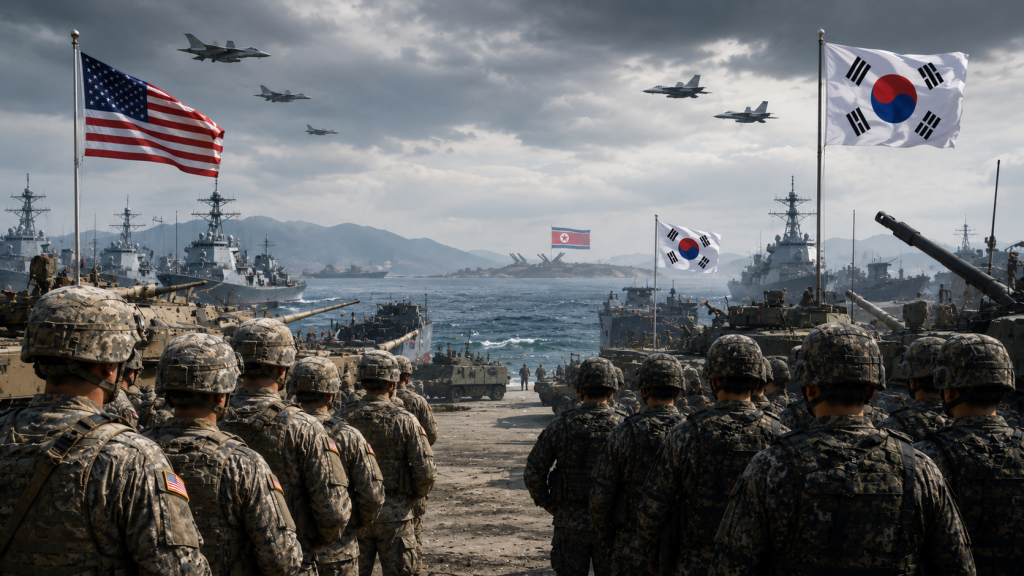
These Exercises Matter Much More Than They Seem
The U.S.-South Korean alliance dates back to 1953. The Korean War itself never formally ended with a peace treaty; the fighting stopped with an armistice, leaving the two Koreas in the unusual position of living with a conflict that has been frozen for more than seven decades.
American military involvement in South Korea is therefore much more than a collection of bases and a political promise of mutual assistance. For decades, Washington and Seoul have been building an integrated defense structure intended to function in the event of another war.
And this is where things become complicated.
South Korea has a large and technologically sophisticated military. The United States possesses the most powerful armed forces in the world. But having two capable militaries does not automatically create one effective coalition force. In a real conflict, American and South Korean headquarters would have to exchange intelligence, distribute targets, coordinate air operations, missile defense, artillery, logistics, communications, and ground operations — all while responding to a rapidly changing battlefield.
That is precisely why large-scale exercises exist.
Ulchi Freedom Shield is one of the most important of them. The 2026 exercise began as scheduled and is due to continue through August 27. Around 18,000 South Korean troops are expected to participate, while approximately 28,500 American military personnel are permanently stationed on the peninsula. The exercise integrates ground, air, naval, space, cyber, logistics, and information operations, and this year’s scenario specifically reflects evolving North Korean capabilities, including drones, GPS disruption, and cyberattacks.
And this creates the first problem.
Military interoperability cannot simply be replaced by an order.
Two Armies Train Together Because Modern War Is Too Complicated to Improvise
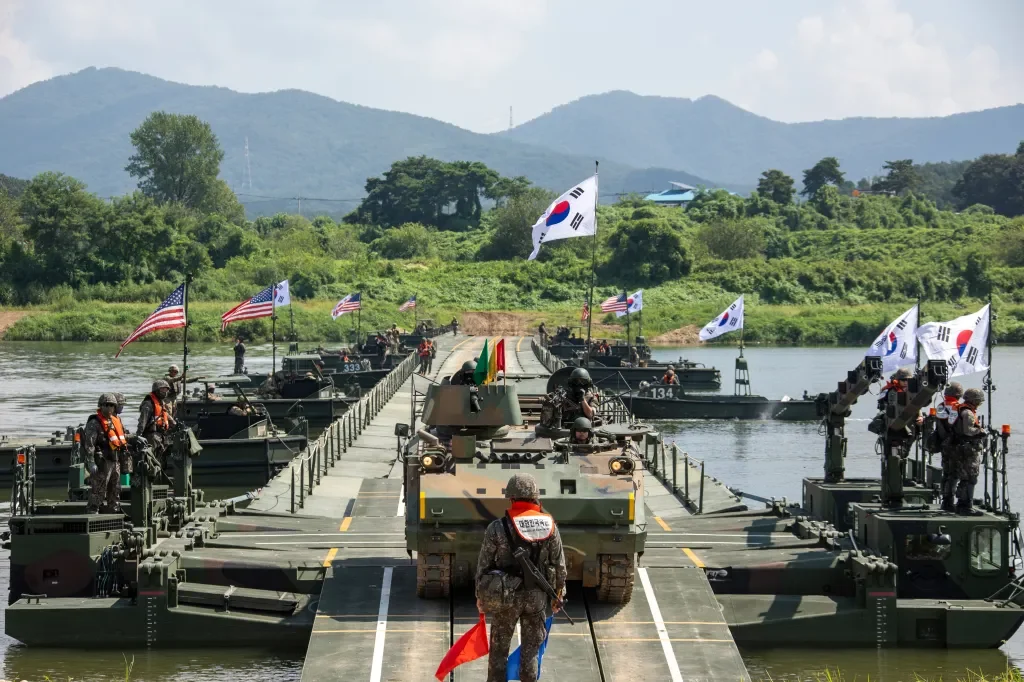
Modern warfare is increasingly about managing information. A fighter detects a target. A reconnaissance drone transmits coordinates. A command center makes a decision. A missile battery receives targeting data. Satellites maintain communications. Tanker aircraft keep combat aviation in the air. Air-defense units simultaneously need to distinguish friendly aircraft from enemy threats.
Doing all of this inside a single military is already extraordinarily difficult.
Doing it between two countries is harder still.
Different communications systems. Different command procedures. Different languages. Different rules of engagement. Different information networks. Even something as basic as allocating airspace can become a serious problem.
Large joint exercises therefore serve not merely as demonstrations of strength toward an adversary, but as repeated tests of whether allies can actually function as a single military mechanism when required.
Reducing those exercises saves money and may lower political tensions.
But it also gradually erodes precisely what makes the alliance militarily valuable — the practical ability of two armed forces to fight together.
The United States Has Already Tried Something Similar
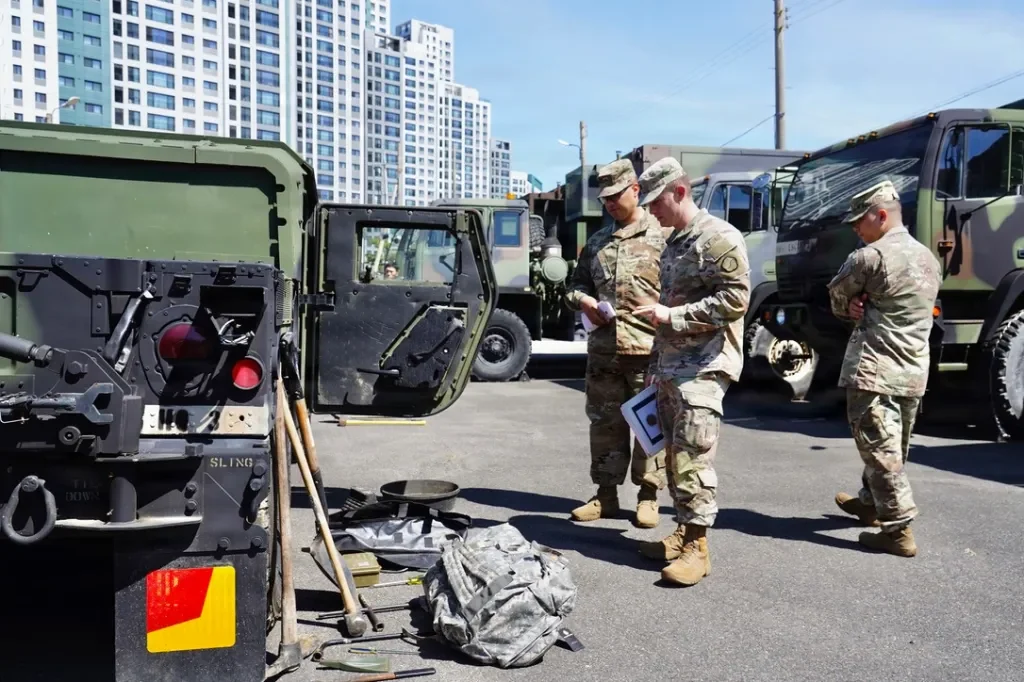
In that sense, Trump’s decision is not entirely new.
Following his historic summit with Kim Jong Un in Singapore in 2018, Trump moved to suspend major U.S.-South Korean military exercises. He described them at the time as both expensive and provocative.
The logic was understandable. Washington was offering Pyongyang a reduction in military pressure in return for a diplomatic process that might eventually lead toward denuclearization.
But the breakthrough did not last.
Trump’s second summit with Kim in Hanoi in 2019 ended without an agreement. North Korea did not abandon its nuclear program, continued developing ballistic missiles, and relations gradually deteriorated again. Large-scale allied training was eventually restored.
Now Trump is returning to a remarkably similar idea. He has again emphasized his relationship with Kim and argued that major military exercises send the wrong signal to North Korea. The difference is that this time the decision is also explicitly connected to South Korea’s behavior toward Iran.
The reduction in exercises can therefore be understood in two ways simultaneously.
It is a punishment for Seoul — and potentially an opening toward Pyongyang.
But What Does Iran Have to Do With Korea?
This is where the story becomes especially interesting.
Traditionally, American military alliances have been organized around particular regions and threats. NATO was created around the collective defense of Europe. The U.S.-Japan alliance became a pillar of American strategy in the western Pacific. The alliance with South Korea exists primarily to deter another major war on the Korean Peninsula.
Trump increasingly approaches alliances differently.
In this view, an alliance is not simply an American security guarantee provided because the survival and stability of an allied country serves broader U.S. strategic interests. It is also a reciprocal transaction in which the ally is expected to assist the United States when Washington itself needs support.
That is why Iran suddenly entered a dispute over military exercises in Korea.
Trump said he recently asked South Korean President Lee Jae-Myung whether Seoul would assist the United States in its military campaign against Iran. According to Trump, Lee declined. Trump then publicly questioned why the United States should remain so deeply involved in South Korea’s defense when Seoul was unwilling to help Washington elsewhere.
That represents a subtle but potentially fundamental change in logic.
The traditional model looks something like this:
The United States helps defend South Korea from threats on the Korean Peninsula because a secure South Korea is an important part of the American strategic system in Asia.
The emerging transactional model looks different:
The United States protects South Korea, therefore South Korea should support the United States in conflicts elsewhere.
The distinction may appear small.
In strategic terms, it is enormous.
Because a Regional Alliance Then Becomes a Global Contract
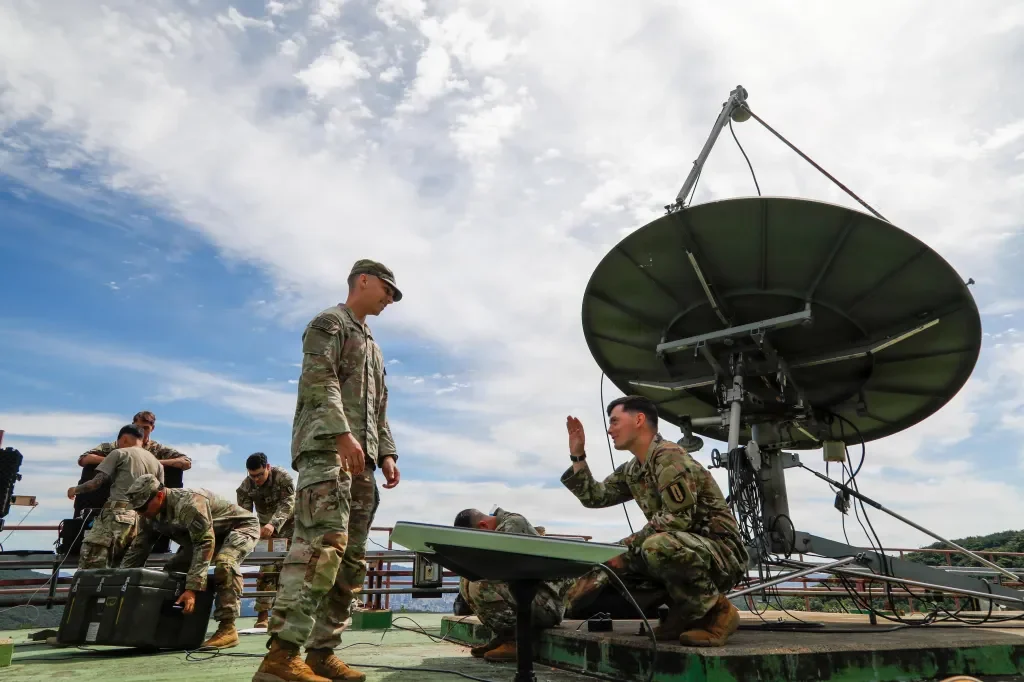
Consider the situation from Seoul’s perspective.
South Korea’s primary military threat is located only a short distance from its capital. It is a nuclear-armed state with ballistic missiles and one of the world’s largest standing armies.
Iran is thousands of kilometers away.
From Washington’s perspective, allied participation in an American military operation may seem like a natural demonstration of solidarity. From Seoul’s perspective, the calculation is considerably more complicated. Significant involvement in a Middle Eastern conflict carries political risks, economic consequences, and the possibility of diverting military resources from South Korea’s own security requirements.
But if refusing to participate in such a conflict leads Washington to reduce military activity on the Korean Peninsula, an uncomfortable question appears:
How unconditional is the American security guarantee in the first place?
And that question extends far beyond South Korea.
Tokyo, Warsaw, Canberra and Other U.S. Allies Are Watching
The American alliance system is unique because of its scale. The United States has treaty obligations and major security partnerships stretching across Europe and much of Asia.
This system functions not only because America possesses aircraft carriers, advanced fighters, nuclear weapons, and hundreds of thousands of deployed personnel.
It functions because of credibility.
An ally must believe Washington will honor its commitments during a crisis.
An adversary must believe the same thing.
That is why using elements of the security relationship as leverage against an ally can have consequences far beyond the immediate dispute.
In South Korea itself, the issue touches an already existing debate about greater strategic autonomy. Seoul has increasingly emphasized the need to strengthen its own defense capabilities while maintaining the U.S. alliance. And every new question about the reliability or conditionality of American support makes that debate more important.
This could ultimately matter much more than the immediate dispute over Ulchi Freedom Shield.
South Korea Has Been Preparing to Rely More Heavily on Itself Anyway
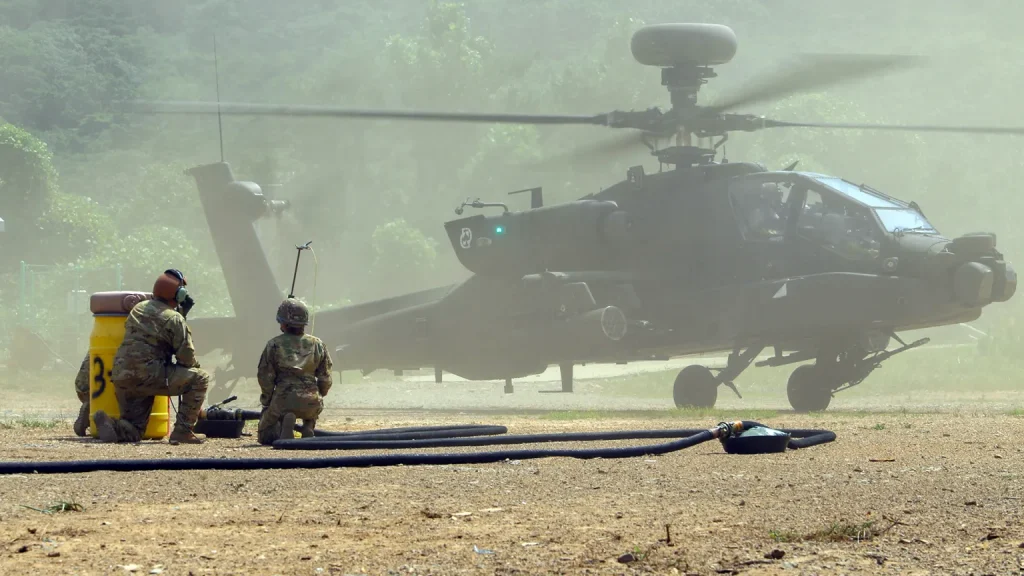
The South Korean military bears little resemblance to the force that fought during the Korean War. The Republic of Korea has become one of the world’s major defense manufacturers, producing K2 main battle tanks, K9 self-propelled howitzers, missile systems, warships, submarines, and military aircraft.
Defense spending is substantial. Domestic missile-defense capabilities continue to expand. Seoul has developed increasingly sophisticated long-range conventional strike systems and is pursuing greater military autonomy.
At the same time, South Korean society has periodically engaged in an even more sensitive debate: whether the country may eventually require its own nuclear deterrent.
Official policy remains firmly based on the alliance with Washington and the protection provided by the American extended nuclear deterrent.
But the existence of the debate reveals something important.
For South Korea, the credibility of American guarantees is not an academic question.
If a country begins to believe that its ally’s security commitment may depend on its willingness to support military operations in completely different parts of the world, the natural response is to increase its own strategic independence.
And that means an American attempt to demand greater allied loyalty could eventually produce exactly the opposite result.
The Strangest Part Is That the Countries the Alliance Was Designed to Deter Could Benefit
North Korea has demanded for decades that Washington and Seoul reduce or terminate their joint exercises, describing them as rehearsals for invasion.
Now Washington is reducing its participation on its own initiative.
And so far, there is no confirmed major North Korean concession in return.
This does not automatically mean the decision is a victory for Pyongyang. If scaling back exercises helps reopen serious negotiations, it could become one component of a broader diplomatic strategy.
But at the moment, the equation is unusual.
There is an American concession.
There is tension between Washington and Seoul.
And there is Kim Jong Un, who can watch the disagreement between the two allies from the other side of the border.
This is particularly striking because North Korea had just fired a ballistic missile toward the sea ahead of the exercise, while South Korean forces also recently fired warning shots after North Korean troops crossed the inter-Korean military demarcation line.
The strategic paradox is difficult to ignore: an instrument of pressure is being directed at an ally, while one of the immediate beneficiaries may be the adversary that alliance was originally created to deter.
There Is Another Problem Hanging Over the Entire Story: American Military Resources Are Not Unlimited
It would be a mistake to explain everything purely through Donald Trump’s personal approach to alliances.
There is a deeper structural problem.
The United States simultaneously maintains major military commitments in Europe, the Indo-Pacific, and the Middle East. Every new crisis requires ships, aircraft, missile-defense systems, munitions, intelligence assets, logistics, and personnel.
Those resources cannot be everywhere at once.
The continuing confrontation with Iran has made those limitations particularly visible. Earlier in 2026, American air-defense assets were moved from South Korea to the Middle East. More recently, the aircraft carrier USS George Washington, normally a centerpiece of the U.S. naval presence in the western Pacific, was ordered toward the Middle East as well. TWZ notes that the strain on American forces caused by operations in that region may therefore be an additional, unspoken factor behind the decision to reduce training in Korea.
This gives the decision another dimension.
Perhaps this is not merely a diplomatic gesture.
Perhaps it is also a symptom of an increasingly overstretched global military system.
And This Is Where the Real Paradox Appears
The United States created its enormous alliance network precisely so that it would not have to confront every threat alone.
South Korea helps contain North Korea. Japan serves as a foundation for American power in the western Pacific. European allies provide the backbone of deterrence in Europe. Middle Eastern partners contribute to the regional balance.
In theory, such a system distributes the burden.
But if participation begins to imply that every ally must support the United States in almost every conflict, the effect may begin to reverse. Governments will increasingly worry that alliances designed to protect them from regional threats could instead draw them into wars only loosely connected to their own security.
And if refusing to participate leads to weaker American security commitments, another incentive emerges: prepare for a world in which Washington cannot always be relied upon.
That produces an almost perfect strategic paradox:
The harder the United States pushes its allies to prove their loyalty, the more reasons those allies have to become strategically independent.
So Who Is Washington Actually Punishing?
Formally, the answer seems obvious: South Korea.
Seoul declined to support the American campaign against Iran, Trump publicly expressed his dissatisfaction, and the United States is now reducing its participation in joint military training.
But look beyond the next few months and the answer becomes much less obvious.
Reducing exercises limits opportunities for the two militaries to practice operating together. It gives Pyongyang something it has demanded for years without an obvious reciprocal concession. It strengthens arguments in South Korea for greater military independence. And it encourages other American allies to ask how separate Washington’s security commitments really are from temporary political disagreements.
South Korea itself is not going anywhere. It will continue to possess one of Asia’s strongest militaries, an enormous industrial base, and a rapidly expanding defense sector. The less confidence Seoul has in Washington, the greater its incentive to invest in precisely those capabilities.
That is why the Ulchi Freedom Shield controversy matters for reasons far beyond the number of American troops participating in one exercise.
It exposes a much deeper problem within the American alliance system.
For decades, the United States persuaded its partners that American military power meant they did not need completely autonomous security systems of their own. Washington is now simultaneously asking those countries to spend more, assume greater responsibility, and provide broader political and military support.
There is nothing inherently irrational about that.
But there is a point at which an ally may reach an unexpected conclusion.
If we increasingly have to provide for our own security anyway, why remain so dependent on a country that may one day link the defense of the Korean Peninsula to our willingness to participate in a war against Iran?
And that question — rather than the fate of one round of military exercises — may prove to be the most important consequence of the current dispute between Washington and Seoul.