The Unpredictable Outcome of Operation "Web." How to Counter Weapons Hidden in Shipping Containers

Today, more and more weapons manufacturers are showcasing weapons housed in shipping containers. Most recently, a container-based launcher for Kara Atmaca missiles was unveiled in Turkey; each missile is capable of striking targets more than 200 km away.


Contents:
What Are the Kara Atmaca Missiles?

Kara Atmaca, which translates as “Black Hawk,” is a cutting-edge development by the Turkish company Roketsan. The project was launched in 2012, and the system entered service in 2021.
This is a modern missile characterized by low radar cross-section, resistance to electronic countermeasures, and all-weather capability.
According to Roketsan, the operator can adjust the target’s coordinates or cancel the missile’s flight mission after launch using the data link. The missile flies at a minimum altitude above the water, making it difficult to intercept.
An inertial navigation system, a GPS module, and a communication channel with the operator are used for guidance.

Features:
-marine version;
- 4.8 m long,
- weight 750 kg,
- range of 250 km,
- weight of the warhead: 220 kg;
-land-based version
- 5.2 m long,
- weight 890 kg,
- range of 400 km,
- The weight of the warhead is 250 kg.
- The missile is subsonic, reaching speeds of 0.8–0.9 M.
Overall, this is a fairly standard design, without any revolutionary innovations, much like most weapons developed in Turkey. A distinctive feature is its size, which allows the missiles to be stored in standard containers.
Turkey has unveiled a new weapons system capable of launching missiles from standard shipping containers, creating a mobile and covert strike platform for use on land and at sea.
The system, developed by the Turkish company Roketsan, was showcased at the IDEF 2025 exhibition in Istanbul.
The Essence of the System
The launch system is integrated into a standard 20- or 40-foot container and is visually indistinguishable from ordinary commercial cargo. A container carrying missiles and support personnel can be loaded onto any commercial vessel, disguised as civilian cargo.

Given the high concentration of shipping traffic in “hot spots” such as the Red Sea or the Persian Gulf, a small vessel carrying containers—one or more of which contain missiles—could go unnoticed.
At the right moment, the container transforms, and the unsuspecting ship is struck suddenly at close range (25–50 km).
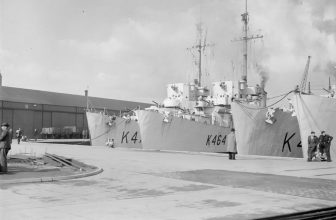
The story of the cruiser *Sydney* and the auxiliary cruiser *Cormorant* serves as an example of the effectiveness of such tactics. An attack from point-blank range can neutralize the capabilities of modern defense systems.
Such platforms provide flexibility in logistics and operations. Containers can be easily transported by land and sea without attracting attention. They are particularly effective for coastal defense as anti-ship systems and for the strategic mobility and concealment of medium-range cruise missiles.
Weapons disguised as mobile platforms are nothing new. The Soviet “Molodets” mobile missile launcher was a nightmare for NATO generals. Russia could have taken the lead in this field, but that opportunity was missed.

Military experts are currently viewing containers as a new type of covert strike capability capable of changing the traditional rules of warfare.
An analysis of maritime traffic patterns shows just how easily a ship carrying missile containers could get lost in this flow of traffic. Just a few such ships could paralyze shipping in the region.
Containers are the ideal means of camouflage at sea, as they constitute the bulk of maritime cargo. Concealing launchers inside commercial containers offers a number of advantages.
This reduces the need for expensive specialized platforms (destroyers, frigates, corvettes). The use of ordinary commercial vessels allows for the covert deployment of missile systems in remote areas.
Placing missile containers on commercial vessels or within coastal infrastructure does not arouse suspicion and can be used to protect harbors or strategic waterways.
Target designation can be performed from any source, ranging from an airplane or helicopter to another vessel located at a distance from the container.
Mobility and stealth are the system’s key advantages. The containers can be easily transported by various modes of transportation, enabling rapid deployment of the missiles without specialized equipment. A commercial truck is inferior to a specialized transporter in terms of off-road capability, but it outperforms it in speed.

weapons in containers
This approach allows for flexible mission planning and makes it more difficult for the enemy to detect and destroy the missiles. In some cases, this can make a response impossible, as demonstrated by the conflicts in Donbas and between Thailand and Cambodia, when Grad rocket launchers fired directly from the road.
Disguising military systems as civilian infrastructure raises questions about the legality of using weapons from civilian vessels or commercial transport. Satellite surveillance and UAVs can provide information, but a truck on a highway or a container ship on its route does not constitute grounds for an attack.
Military lawyers will need to discuss these issues. Nevertheless, Turkey is openly showcasing its development. Experts believe that this approach will be useful for countries with extensive coastlines or those facing maritime threats.
Weapon Capabilities
Modern warfare is becoming increasingly unpredictable, requiring improvisation and rapid decision-making based on real-time intelligence. In an environment of pervasive surveillance from satellites and UAVs, the ability to remain hidden in plain sight can become a critically important asset for any country.

The History of Similar Russian Developments
Unfortunately, Russia could have been a leader in this field.
About 15 years ago, at the MAKS-2011 air show, a concept was presented for storing “Kalibr” cruise missiles in standard 20- and 40-foot containers. Each container could hold between two and four missiles.

However, for reasons that are not entirely clear, the Russian Ministry of Defense rejected this project and, even amid the special military operation, has not revisited it to this day.
In 2011, there were many other projects to which funding could have been directed, such as the “Patriot” Park or pointless exhibitions. Strikes against targets in Ukraine are carried out from a relatively safe distance, which gives the enemy time to prepare.
At the same time, the enemy is actively using camouflage tactics and launching attacks at close range.
Turkey has learned from its experience in the special military operation. Its “Black Hawks,” which are not suited for use as underwing missiles like the “Onyx,” may prove to be just as effective, since the “Onyx” missiles are launched from a greater distance than the camouflaged Turkish “Hawks.”
Now the world will have to rethink its approaches to warfare. It is not always the strongest who wins, but the one who is not bound by principles.
Based on material from — https://topwar.ru/268822-kontejner-golovnoj-boli-dlja-vseh-bez-iskljuchenija.html