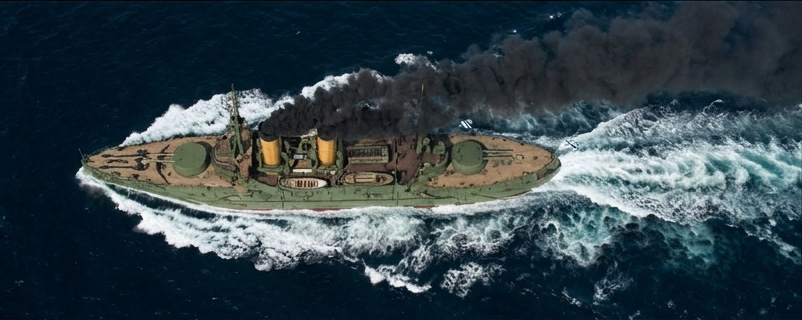
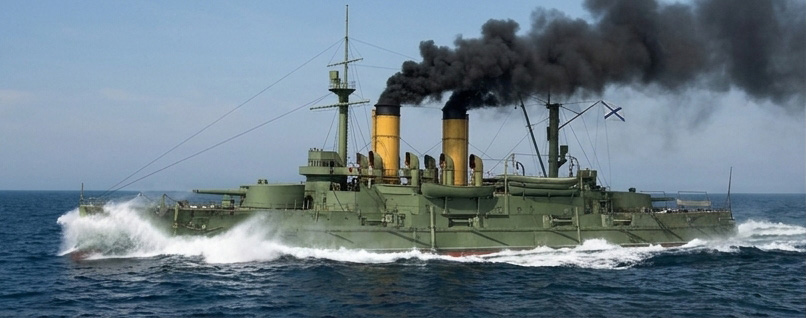
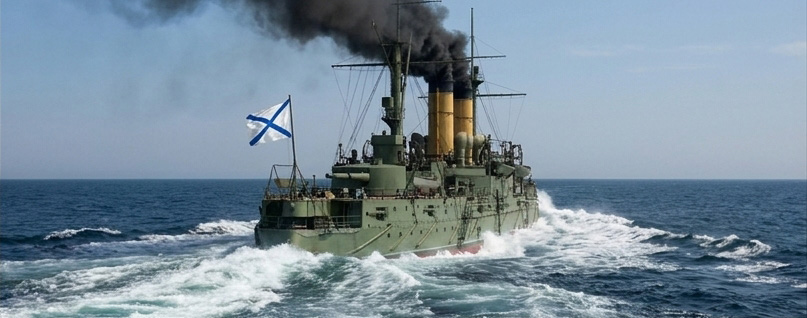
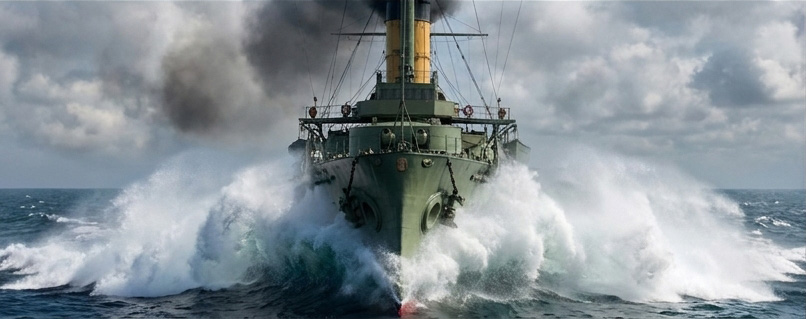
The World of Russian 7-Inch Guns: What the Squadron Armored Cruiser "Sisoy the Great" Might Have Become in This World

Earlier, we explored an alternate world in which the Russian Empire, at the turn of the 1880s and 1890s, adopted 7-inch guns for its navy. For simplicity’s sake, I have called this world “The World of Russian Seven-Inchers.”
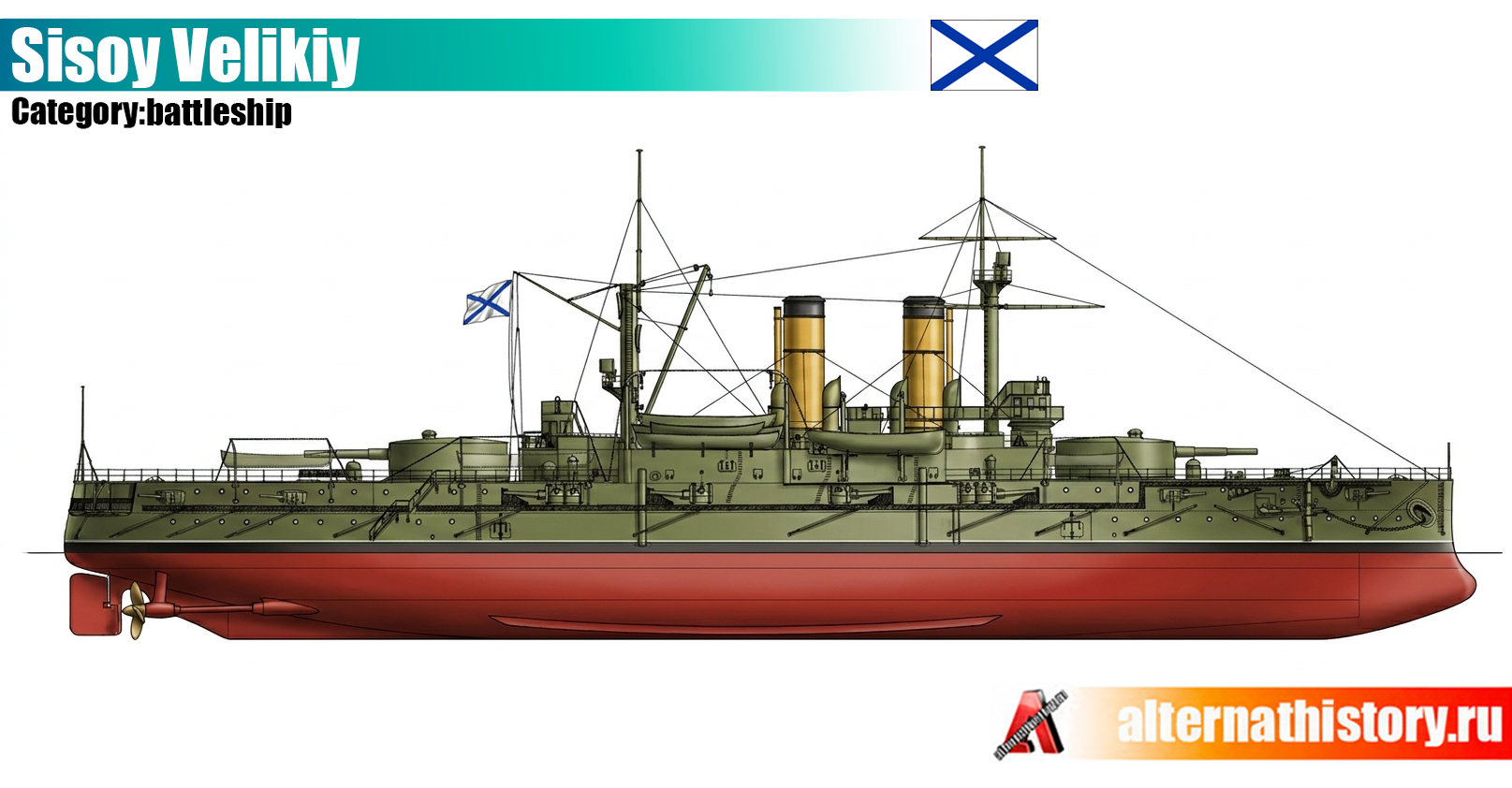
Naturally, this would provide certain advantages in the upcoming Russo-Japanese War. The cruiser *Novik*, for example, with its 7-inch main caliber, became a true nemesis of Japanese small armored cruisers. In previous posts, in addition to the *Novik* mentioned above, we examined virtually all armored cruisers—specifically, what they would look like with a 7-inch main caliber. This post will focus on a squadron battleship—in this case, the “Sisoy the Great”—equipped with a medium-caliber armament consisting of 178-mm guns.
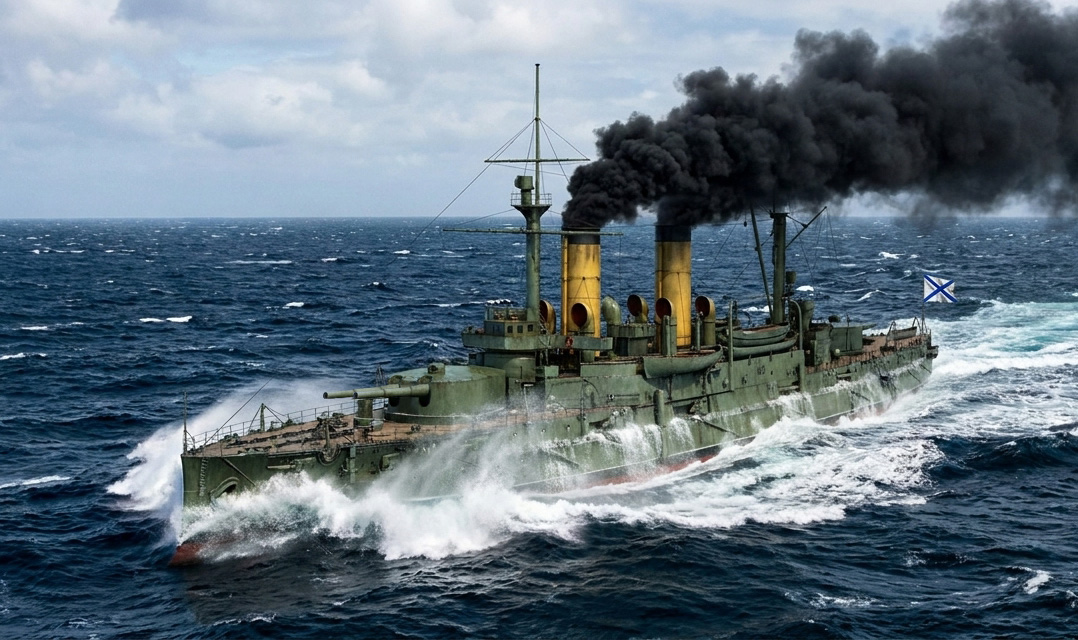
First, according to the design, the “Sisoy” will be one foot wider than the actual vessel—69 feet instead of 68 (21.03 m instead of 20.73 m), and will also have a slightly deeper draft—23 feet instead of 22 (7.01 m instead of 6.70 m). This is necessary both to improve stability as the weight of the artillery cargo on the gun deck increases and to allow for the proper placement of the SK and PMK magazines within the hull, which, due to the increased caliber of the guns, require more space.
Of course, increasing the beam while keeping the length the same will negatively affect the ship’s speed—but the boilers on this ship are also different from those on the real “Sisoy.” They were borrowed from the real “Poltava.” And the need to incorporate them into the planned design is also one of the reasons for the slight increase in the alt-ship’s width and draft.
Nevertheless, given the increase in overall dimensions and individual weights, the ship’s design displacement is expected to be 9,625 metric tons. However, given the state of domestic military shipbuilding at that time—and based on the experience with the *Navarina*, a ship similar in size to the *Sisoy*—it can be expected that construction overburden will add another 600–650 metric tons to that figure.
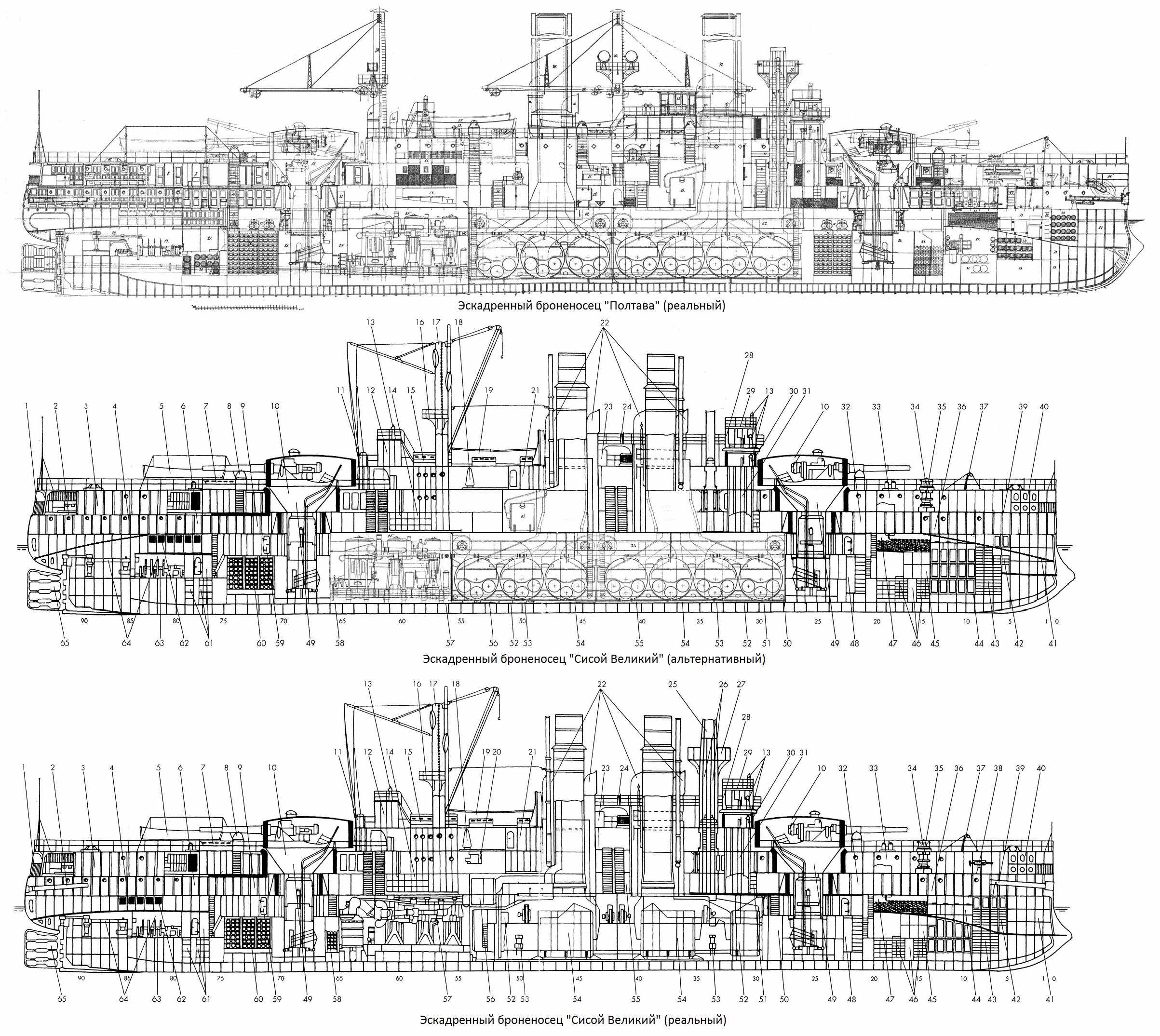
As for the armor, the main changes will be the installation of a continuous belt along the waterline (without cross-beams closing off its central “thick” section), as well as the introduction of a deck with bevels, with the lower edges of the bevels and carapaces adjoining the lower edge of the belt along the waterline. In general, it can be said that, to some extent, this alternative design will incorporate the specific technical solutions that were used in the actual design of the 11,232-metric-ton squadron battleship that preceded the future “Peresvet”. And to some extent, this project has, so to speak, strayed slightly from the “Retvizan.”
The attached image shows an approximate cross-section of the alt-ship, compared to the real-life “Poltava” and “Sisoy”:
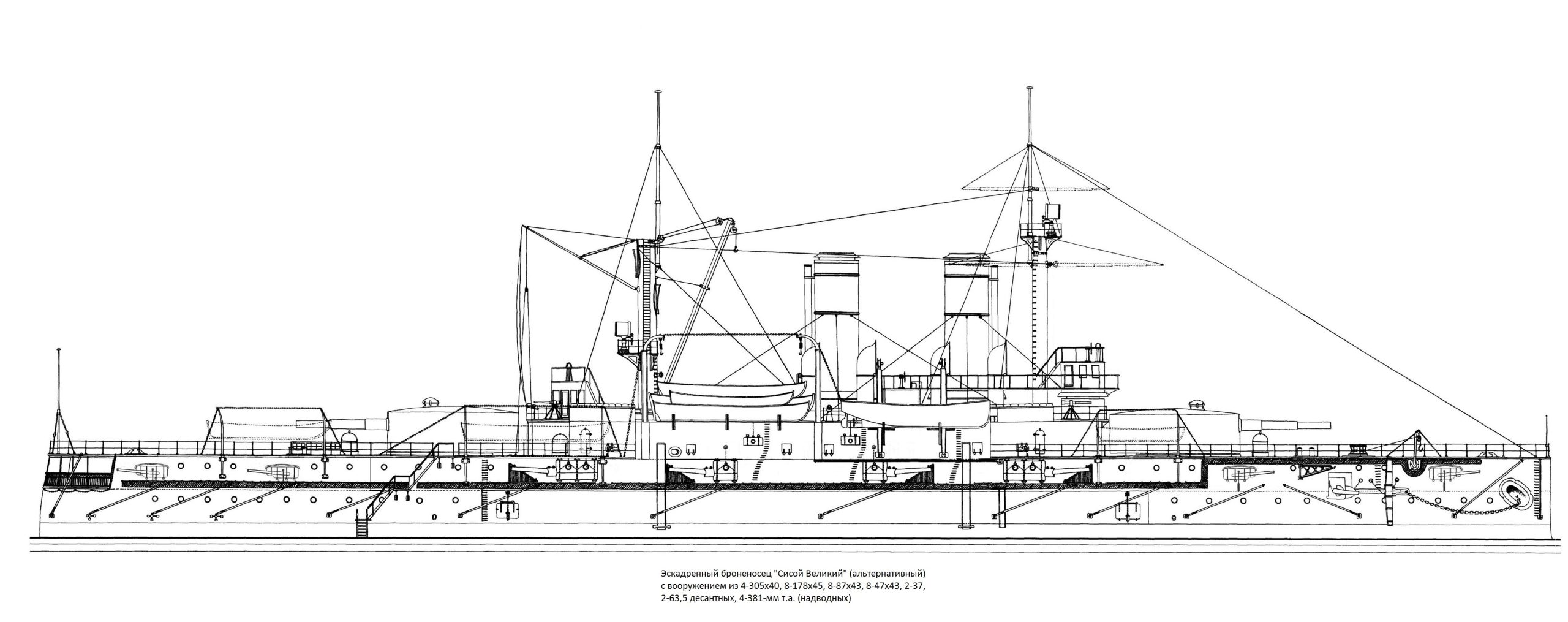
Overall, the technical specifications of the alternative “Sisoy” are expected to be as follows:
Design specifications: standard displacement 9,625 metric tons, 345 feet or 105.16 m (length along the waterline)/352 feet or 107.29 m (overall length)/69 feet or 21.03 m (maximum beam)/23 feet or 7.01 m (draft at standard displacement), 625/1,000 metric tons of coal (standard/full stock), 14 fire-tube boilers, engine power 10,500 l.s. (2 triple-expansion steam engines), speed 17.0 knots, Harvey armor and stainless steel (decks, roofs, and floors of turrets and conning tower), full belt along the waterline (7 feet 6 inches or 2.29 m high) – 254 mm (152 mm at the bottom) (65%)/152 mm (102 mm at the bottom) (35%), incomplete upper belt (7 feet or 2.13 m in height, 45%) and its corner cross-belts adjoining the barbettes of the main battery turrets (with their lower edges abutting the lower armored deck and its slopes) – 152 mm, 178-mm gun casemate (height 7 feet 9 inches or 2.36 m) – 152 mm (side and corner crossbeams adjoining the barbettes of the main battery turrets)/38.1 mm (partition bulkheads in the casemate), 178-mm gun casemate shields – 76.2 mm, lower armor deck (carapace-type with bevels, including 12.7 mm-thick deck plating) – 50.8 mm, battery deck (between the upper belt and its crossbeams and the 178-mm gun casemate and its crossbeams, including 12.7 mm of deck plating) – 38.1 mm, upper deck within the 178-mm gun casemate (casemate roof, including 12.7 mm deck plating) – 38.1 mm, barbettes of the main battery turrets – 254 mm (within the upper belt and its traverses and the 178-mm gun casemate and its traverses – 102 mm), main battery turrets – 254 (side)/50.8 (roof)/76.2 (floor) mm, conning tower – 254 (side)/50.8 (roof)/38.1 (floor)/76.2 (communication tube) mm, armament – 4 × 305 × 40, 8 × 178 × 45, 8 × 87 × 43, 8 × 47, 2 × 37, 2 × 63.5 landing craft, 4 × 381-mm torpedo tubes (surface).
Armor mass composition:
belt along the waterline—750 metric tons;
upper belt along the waterline—330 metric tons;
main battery casemate with crossbeams and bulkheads—330 metric tons;
gun casemate shields—40 metric tons;
combat conning tower with communication tube – 50 metric tons;
main gun turrets and their barbettes – 575 metric tons;
lower deck armor – 500 metric tons;
battery and upper deck armor – 175 metric tons.
Total: 2,750 metric tons.
Sincerely, Stvolyar.