The World's Most Mysterious "Boeing" Has Emerged from the Shadows: Why Was It Needed for the Moon Mission?

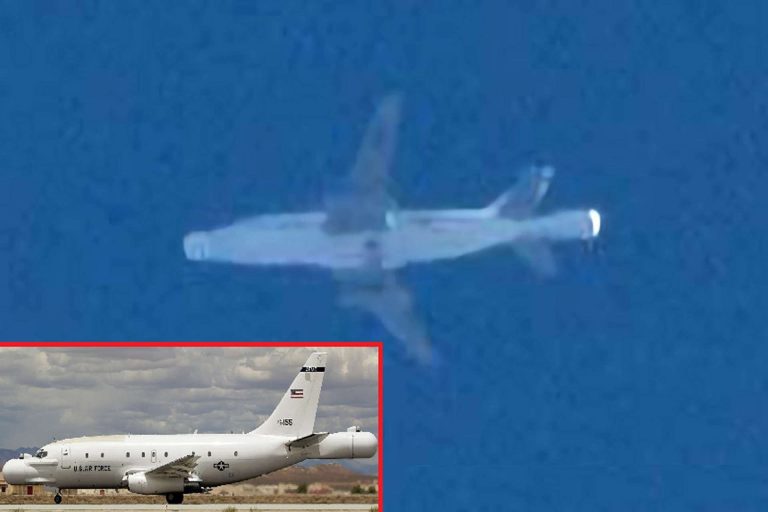
As preparations were underway for the launch of the “Artemis II” crewed mission, all eyes were on the rocket, the spacecraft, and the crew. But another participant appeared in the skies over Florida—one that’s hardly ever mentioned officially—a strange aircraft with protrusions on its fuselage, looking more like an experimental laboratory than a passenger jet.
This is the NT-43A, one of the U.S. Air Force’s most secretive aircraft.
And his involvement in the lunar program is a far more significant detail than it might seem at first glance.
An airplane that shouldn’t be seen
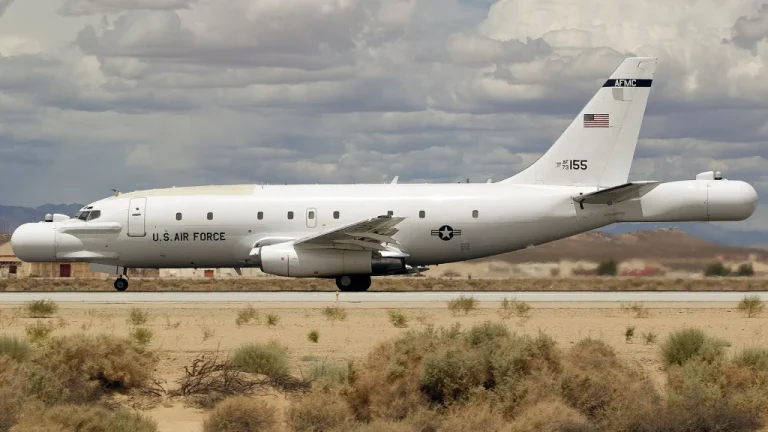
The aircraft is based on an old Boeing 737-200 passenger jet, but only its general shape remains from the civilian aircraft. The NT-43A is a flying measurement platform designed to study radar signature.
This aircraft usually operates far from prying eyes—at test sites in Nevada, near the locations where the most secretive aircraft are tested.
That’s why its appearance over Florida is quite an event.
Why does the “invisible hunter” need a lunar mission?
During preparations for the launch of “Artemis II,” the aircraft flew over the Kennedy Space Center area, following closed-loop routes within a restricted airspace.
And that’s when it all makes sense.
The NT-43A is not just an “observer,” but a fully-fledged flying laboratory capable of:
- record the radar characteristics of objects
- detect thermal radiation
- collect real-time telemetry
- analyze the behavior of a structure under loads
This is critically important for a rocket launch. The highest loads occur during the first few minutes of flight, and any deviations must be monitored from various vantage points—not just from the ground.
The aircraft effectively becomes a mobile measuring station that can take up an ideal position in the sky.
The Moon program is making a comeback—and the demands on oversight are growing
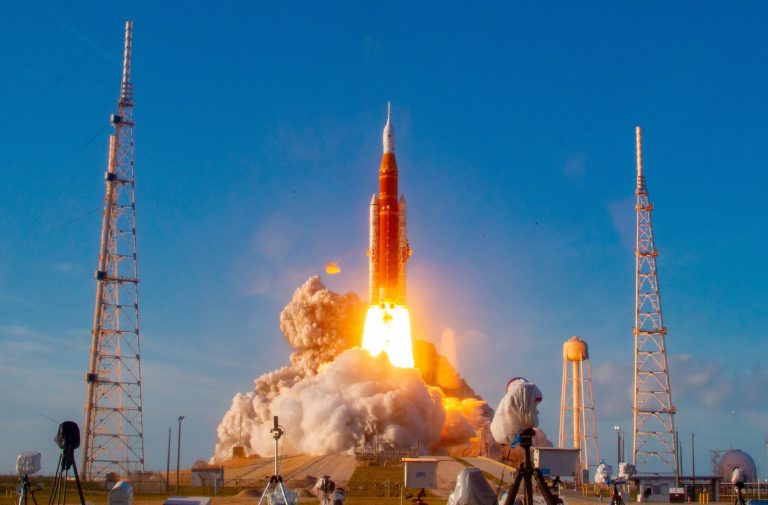
Artemis II launched from Kennedy Space Center on April 1, 2026 at 6:35 p.m. ET (Boeing Photo).
The Artemis II mission is the first crewed flight to the Moon in more than half a century. The last time humans left Earth’s vicinity was as part of the Apollo program.
Now the challenge is not simply to repeat the past, but to take it a step further:
- conduct a long-duration manned flight
- to test the “Orion” spacecraft under real-world conditions
- prepare for a future moon landing
The crew is set to travel a record distance from Earth—further than the Apollo astronauts ever flew.
That is precisely why the control system has become much more complex: ground-based infrastructure alone is no longer sufficient to handle all the tasks.
He’s not the only one in the sky
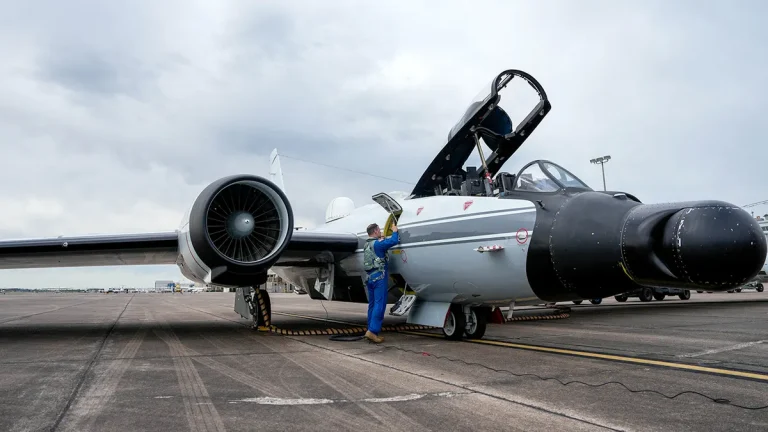
Interestingly, the NT-43A was not operating alone. The operation also involved a WB-57F high-altitude reconnaissance aircraft, which is traditionally used to film launches.
The Return of an Old but Proven Idea
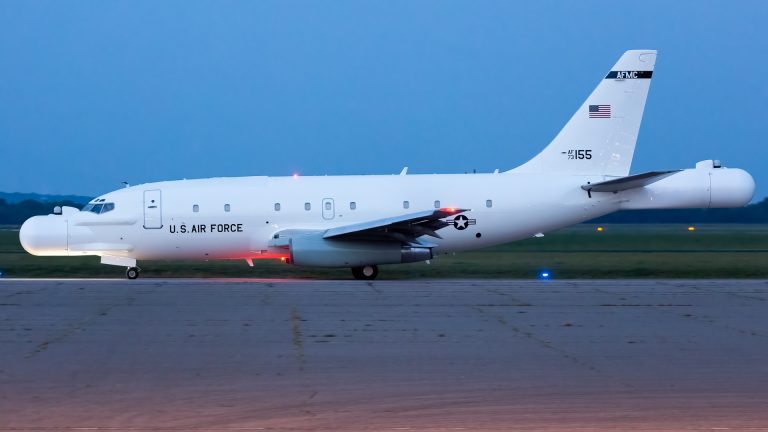
In fact, a similar system has already been used. During the Apollo lunar program, special communications and telemetry aircraft—flying control centers—were used.
The NT-43A is a further development of the same concept, but at a new technological level:
- more accurate sensors
- digital data processing
- flexibility of use
And most importantly—the ability to work with entities whose details cannot be disclosed publicly.
A New Chapter for the “Most Secret 737”
Until recently, this aircraft was associated exclusively with testing stealth technology. It was a tool of “secret programs” that people prefer not to talk about.
But now the situation is changing.
The NT-43A is stepping out of the shadows and taking on a new role—as a participant in the space program. And if it has been selected for “Artemis II,” that means one thing: the requirements for control and measurement have reached an entirely new level.
And perhaps this strange airplane has a much more prominent career ahead of it than ever before.
NT-43A Technical Specifications
Base platform: Boeing 737-200
Purpose: airborne measurement system
Equipment:
- radar antennas
- infrared sensors
- optical surveillance systems
- data collection and processing systems
Design Features:
- large radio-transparent fairings
- modular equipment
- the ability to work in conjunction with other surveillance tools
Conclusion
The story of the NT-43A is a good example of how the line between military and space technologies is becoming increasingly blurred.
The 21st-century lunar program is no longer just about rockets and spacecraft. It is a complex system that even involves machines that for decades were kept hidden from the public.
And it looks like this is just the beginning.