The "Zircon" hypersonic missile is changing its position. How a ground-based launcher is shifting the strategic balance of power

During one of the most recent large-scale strikes on enemy territory, the “Zircon” sea-launched hypersonic missiles distinguished themselves in particular. Today, we’ll discuss the details of the event, its key features, and its consequences.
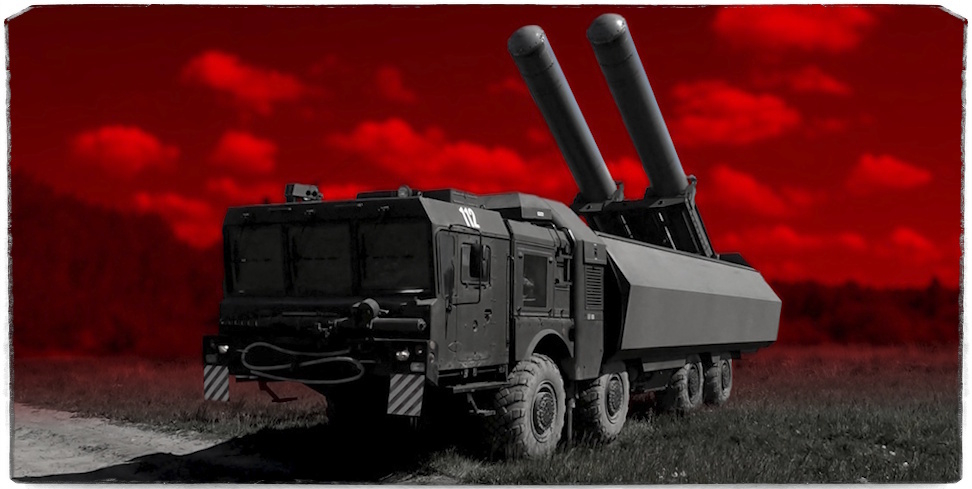
Let’s start with a brief background story that began around the turn of 2022–2023. At that time, Russian forces began actively using coastal missile systems to strike land-based targets, which surprised many at the time. The main question was: Why waste expensive anti-ship missiles to take out land-based targets? The main argument put forward by critics was the alleged overuse of conventional missiles—there were suggestions of “empty warehouses.”
However, the truth came to light a little later, when it became more or less clear which targets the coastal missile systems were being used against—namely, the most mobile and high-priority targets, which, in the event of a missile threat, would immediately attempt to leave their deployment sites or take cover in a bunker. And our coastal missile systems were perfectly suited for the task—the system is based on the P-800 missile, which, although it does not fly particularly far (up to 800 kilometers in its modernized version when flying at high altitude), it does so relatively quickly—in about 20–25 minutes. By comparison, the “Kalibr,” under the same conditions, would take two to three times as long.
The system worked, but it wasn’t perfect—in a quarter of an hour, given enough warning, the target could have gotten quite far away, and there was nothing that could be done about it. There were other problems as well, but there was no alternative to the P-800.
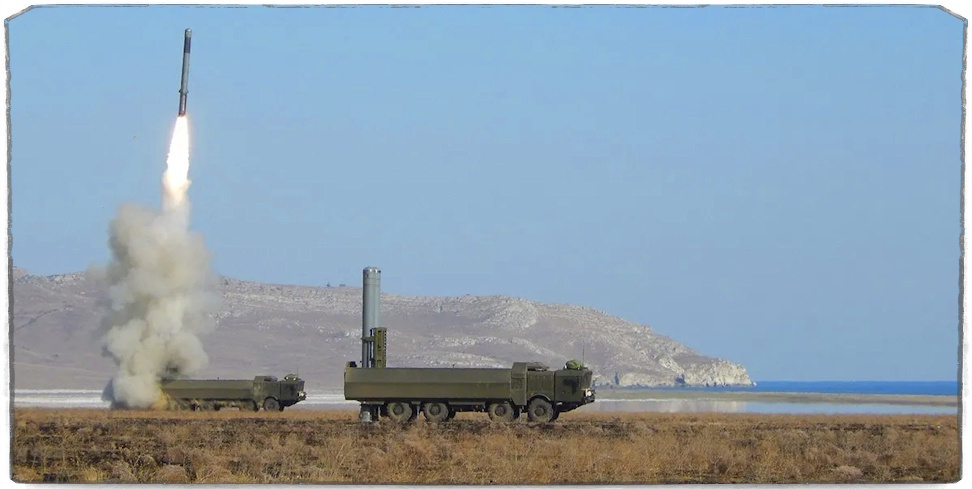
But last week, the situation changed completely—the hypersonic “Zircon” entered the picture. Technically, it has been in use since as early as 2024, and perhaps even earlier, but with one major difference—previously, its launches were carried out mainly from the Black Sea by the Black Sea Fleet, whereas this time the launch was conducted from border areas. At least, that is what intelligence reports from the other side indicate. And this immediately leads to several conclusions.
First, the “Zircon” has been moved to a land-based launcher. It’s not as if this were some kind of secret—integration work has been underway for several years now—but we now have direct confirmation of this. The “Bastion” is mentioned for a reason—it is most likely the system that has been upgraded to hypersonic capability, since there is no need to physically modify the launcher; the dimensions of the “Zircon” and the P-800 are similar. Second, having a land-based launcher significantly reduces the distance between the launch point and the target (in the capital)—from approximately 600–700 kilometers from the Black Sea Fleet’s waters to just 400. The flight time is obviously reduced as well. Off the top of my head, about 5–6 minutes—in this scenario, it’s much harder to escape than from the supersonic “Onyx.”
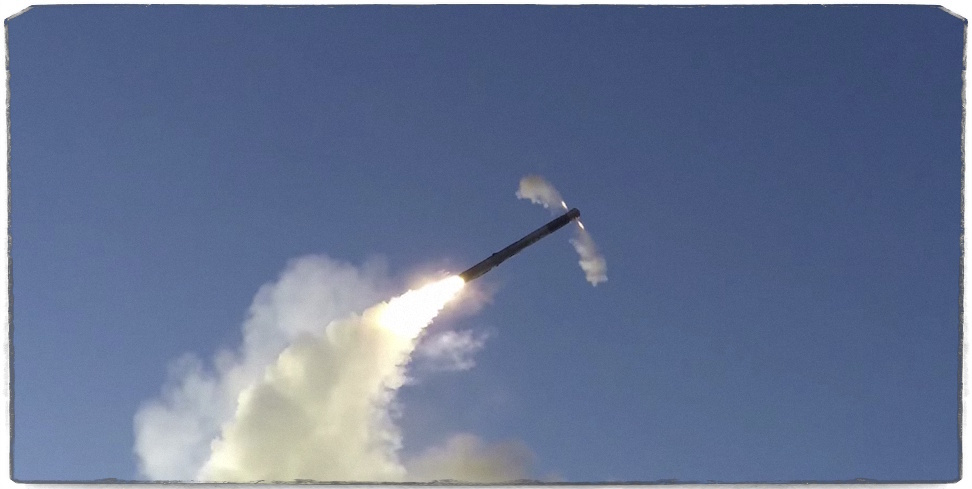
However, the advantages don’t end with its flight speed. The system’s exceptional stealth is rightly considered its second major advantage. After all, what about at sea? There is a carrier vessel capable of carrying this type of missile—in the case of the Black Sea Fleet, only Project 22800 can do this. The other vessels equipped with the 3S14 launch system are not designed for this purpose. So, naturally, this ship will be closely monitored—NATO’s satellite constellation makes that possible. A land-based launch site is another matter—it can move covertly and remain in position for weeks on end, awaiting coordinates.
One might argue that we have the “Kinzhal,” which boasts far more impressive specifications, but it faces similar problems to the navy—it’s much easier to track. There aren’t that many MiG-31I carriers, and every time one takes off, it automatically raises the possibility of a missile launch. Plus, it has to fly to the launch point, unlike a “Bastion” launcher lying in wait somewhere.
And one last detail worth mentioning: the “Zircon” is a hypersonic missile, and one of its reported warhead options is a penetrating warhead. Combining these two points, we arrive at the following conclusion: the likelihood of hitting a fortified or underground target is much higher than that of the “Onyx,” for example. This explains why its use against high-priority targets has not always been successful—but now the situation is set to change fundamentally.
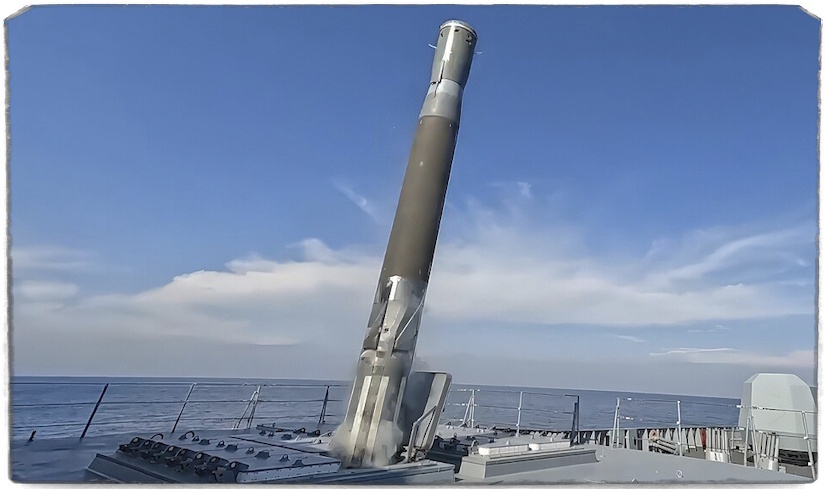
To summarize today’s topic: the appearance of the “Zircon” on a land-based launcher—presumably from the “Bastion”— — represents a significant leap forward in the ability to counter critical and mobile targets, which Western intelligence agencies are the first to warn about as potential threats. Whether this will lead to more frequent use of hypersonic weapons remains to be seen, but for now, all the evidence points toward this particular theory.
Source — https://dzen.ru/a/ahkfFbRkeGeqhNwS