"Tomahawk" in Russian. Why Russia Still Doesn't Have Ultra-Long-Range "Kalibr" Missiles in Service

This article was published on the “Hi-Tech Mail” Zen channel back in early 2023. It discusses an ultra-long-range version of the Russian “Kalibr” cruise missile, which was supposed to enter service very soon. However, the missile is still under development.
It is still unknown when the production version will be released. However, there is some information available about what it will be like.
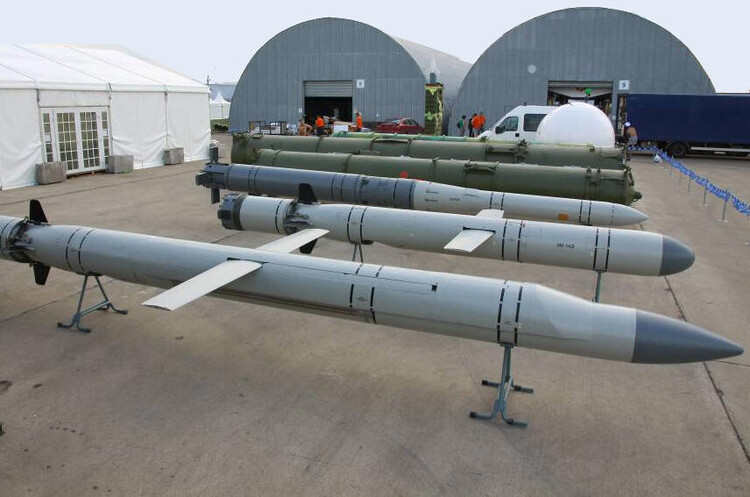
The “Kalibr” Family of Cruise Missiles
After the U.S. withdrew from the INF Treaty, the development of long-range cruise missiles became only a matter of time. However, by the time the Americans denounced the treaty, the Russian military already had something worthy of the attention of potential partners in World War III. In addition to the “Kalibr” naval missiles, capable of striking targets at ranges of 2,000–3,000 kilometers, long-range land-based missiles had been gathering dust in design bureaus for many years; restrictions imposed by the INF Treaty had prevented their further development and production.
The “Relief” complex was designed specifically to neutralize the entire continental portion of Europe’s missile defense system at the right moment. To achieve this, it was decided to use the longest-range missile developed by the late 1980s. The KS-122 missile was capable of destroying targets at a range of up to 3,000 kilometers with a 200-kiloton nuclear warhead—10 times more powerful than the bombs dropped on Japan in 1945.
It is believed that the KS-122 and the “Granat” system with its launch platform were a direct response to the American “Tomahawk” missiles; however, in terms of their performance characteristics, the Soviet systems significantly outperformed their American counterparts. But the system never saw the light of day—the “Relief” was never put into mass production, and the prototypes assembled for testing were cut up for scrap.
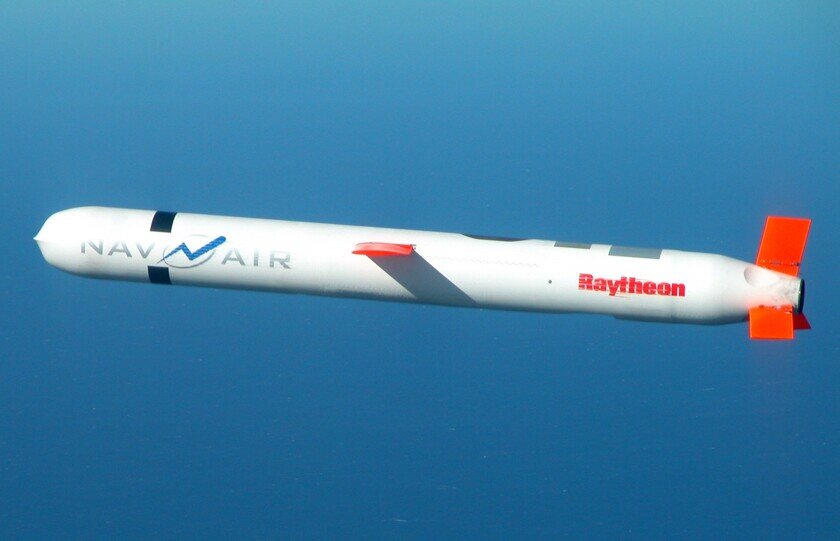
The “Super Kalibr” will be released as early as 2023—all that remains is to decide who will build it.
This information was current as of 2023. Since no further information on this topic has been released, it is likely that no spare production capacity was ever found. This is hardly surprising, given that the hostilities in Ukraine and the need for mass production of proven systems have absorbed all available capacity.
After Russia demonstrated its cruise missiles to its foreign partners, it finally dawned on them that the monopoly on long-range strike capabilities no longer exists. Following the withdrawal from the INF Treaty—which the U.S. turned into quite a spectacle—Russian arms manufacturers finally had a free hand, and work on new weapons began in earnest.
It is too early to discuss specific decisions, but according to unconfirmed reports, the developers of these cruise missiles may unveil a promising missile system as early as 2023. It will differ from the standard “Kalibr” in two key ways. First, the new version of these missiles will be equipped with an advanced passive guidance system, which will eliminate the need for additional illumination of targets during firing. Such a guidance system may first appear in the “Kalibr-NK” and “Kalibr-PL” systems.
Second, this missile will be equipped with a more fuel-efficient engine with a higher thrust-to-weight ratio, combined with a larger fuel tank. As a result of these upgrades, the maximum range of these missiles will increase by nearly 1,000 kilometers to 3,500 kilometers—1,000 kilometers more than the most advanced version of the Tomahawk missile.
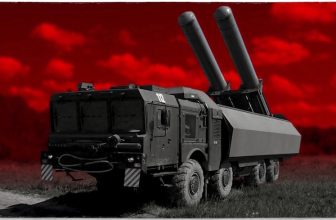
It wouldn’t take much time or resources to develop a counterpart to the American “Tomahawks” in Europe. All it would take is to retrieve the blueprints for the “Relief” system from the archives and decide who to entrust with mass production. From a technical standpoint, there is nothing complicated about adapting the “Kalibr” for wheeled vehicles—the Belarusian MZKT tractor or the Russian “KamAZ” could serve as the platform for the ultra-long-range missile. Like all missile systems, the new version of the “Kalibr-MN” (modernized ground-based) system will be capable of being transported to its combat duty location by military transport aircraft. This means that such weapons can be deployed to any area where Russian armed forces are present in just one day.
Several factors point in favor of the new weapon. First, the “Topol-M” systems, which have served their purpose and are being scrapped, are gradually being removed from combat duty. Russia’s nuclear deterrent forces are becoming increasingly mobile—a significant portion of the arsenal has already been transferred to airborne platforms and mobile launchers, so increasing the number of wheeled vehicles armed with cruise missiles carrying nuclear warheads is a logical continuation of this policy.
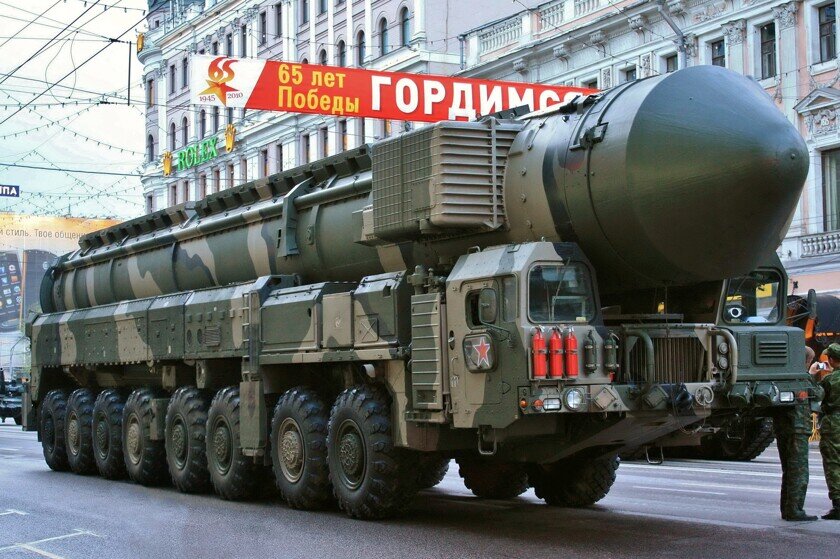
Second, modernizing the nuclear arsenal requires significantly fewer resources. Once the mobile “Topol-M” systems are withdrawn from active duty, they will be replaced by “Yars” missile systems. Due to the characteristics of the latter, the number of launchers can be significantly reduced, and the funds freed up will likely be directed toward the development of stealth weapons.
The current stockpile of “Kalibr” missiles on Russian ships and submarines is classified. Neither the composition of the warheads nor their quantity is known. However, experts believe that following the decision to produce the modernized system, the number of missiles across all platforms could reach several thousand, and production costs should be reduced by at least half. These estimates include both conventional, high-explosive “Kalibr” missiles for counterterrorism operations and special versions of the cruise missiles equipped with nuclear warheads.
Source — https://dzen.ru/a/Y9oi-fDnhAO—sGO