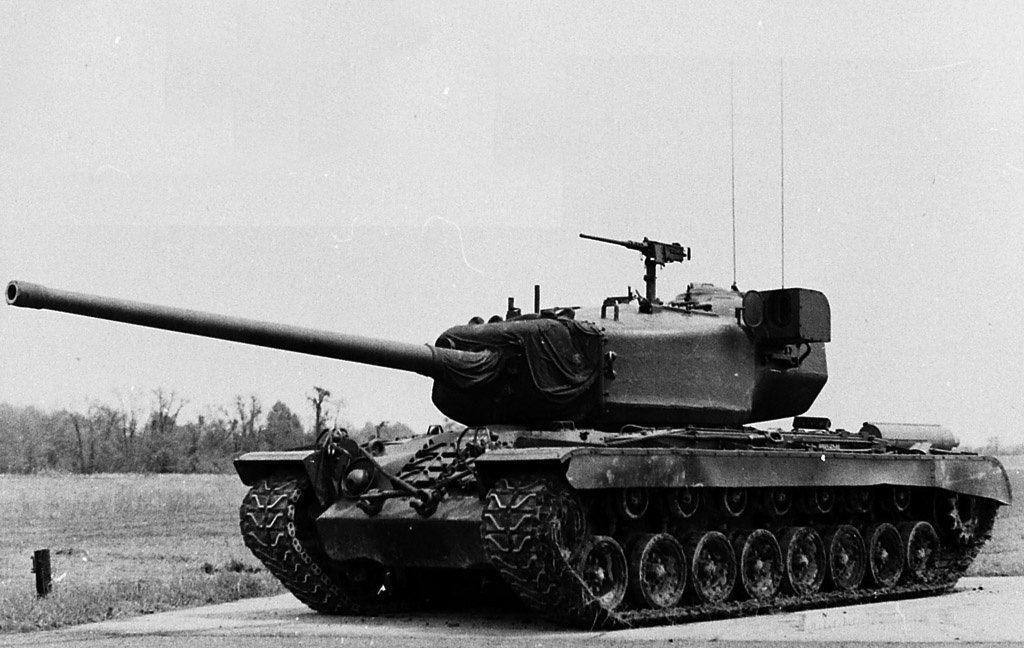
The History of the T29 Heavy Tank, an American heavy tank that never went into mass production
The American heavy tank development program seemed, to say the least, strange. The fairly promising start to the development of the M6 Heavy Tank quickly reached an impasse. The fact was that the first American production tank did not quite meet the U.S. military’s requirements. More precisely, the requirements for a heavy tank had changed, and the M6 no longer met them. By early 1943, the U.S. military had decided that they did not need heavy tanks. A bold statement, especially considering that they had seen the “Tigers.” Their appearance did not go unnoticed: promising medium tanks were equipped with 90-mm guns, and the Medium Tank T26—which later became a semi-heavy tank—received reinforced armor. But this clearly seemed like a half-measure.
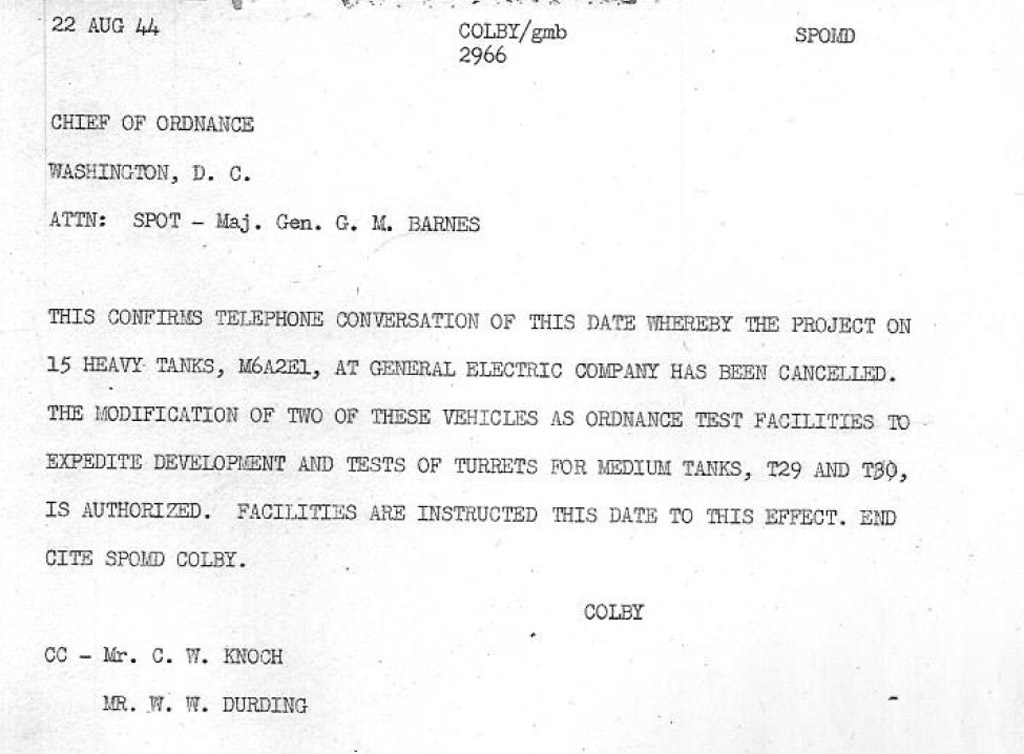
Work on the T29/T30 heavy tank began in August 1944. The reference to a medium tank is surprising
With such a strange assortment of equipment, the Americans managed to hold out until the summer of 1944. Then, in the second half of July, they encountered the Pz.Kpfw. Tiger Ausf. B, the latest German heavy tanks, which were far superior to the Allies’ comparable combat vehicles. The combat debut of the “Royal Tigers” proved highly controversial; nevertheless, it spurred the development of fundamentally new American heavy tanks. First and foremost, this concerned the Heavy Tank T29, whose development officially began on August 14, 1944.
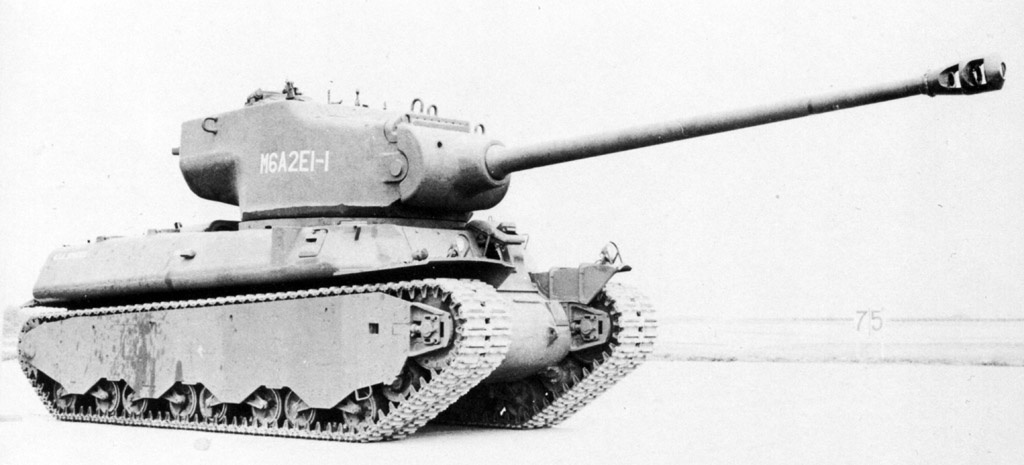
Originally, the T29 tower was supposed to look like this
At the same time, it was decided to halt development of the M6A2E1 Heavy Tank, as it became clear that the modernization would increase its combat weight to 77 metric tons. Shortly thereafter, the decision was reversed: to accelerate the T29 program, work began on modifying two M6A2E1s in order to test the new heavy tank’s turret on them. This gave rise to the myth of an alleged M6A2E1 with a T29 turret. In reality, the M6A2E1 turret is the original T29 turret. Thanks to these tests, the turret was significantly improved, which is why the turrets on the first T29s look different. Moreover, this turret was developed in parallel for yet another tank—the T30 Heavy Tank. Initially, the only difference between these two tanks was the gun.
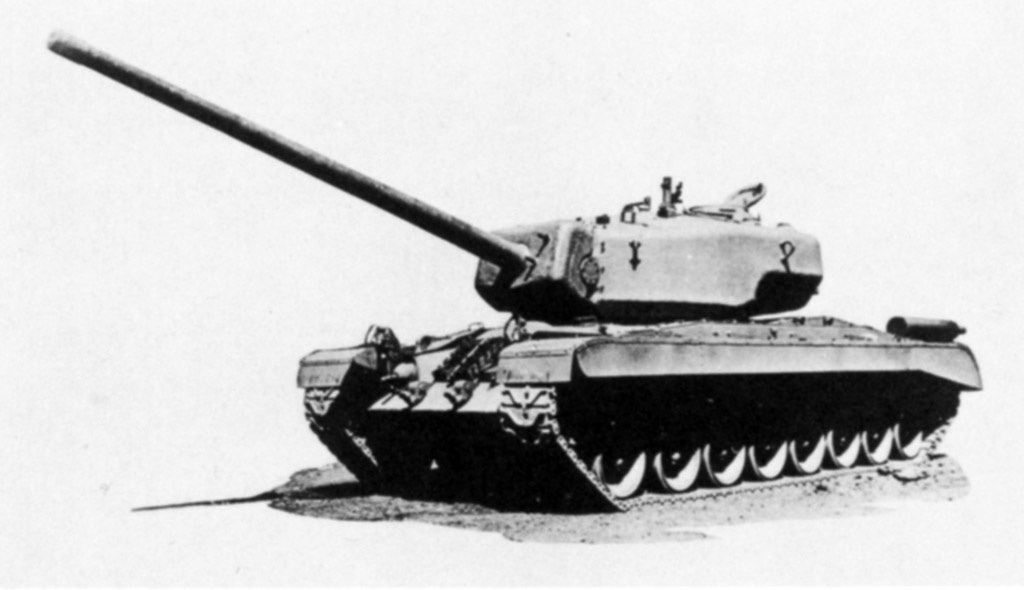
Pressed Steel Car Co. was supposed to produce 1,200 of these tanks
Since the task of developing a new tank was urgent, quick decisions were needed regarding the chassis as well. At that time, work was underway to refine the Heavy Tank T26E1; the production version of the tank was designated the Heavy Tank T26E3. So, it was decided to develop the Heavy Tank T29 by scaling up a medium tank. Naturally, this did not mean that the new tank would be an exact copy of the T26, but the overall concept of the T29’s chassis was based on the T26E1. For the Americans, such decisions were quite common. On September 14, the Armaments Committee authorized the production of two prototypes of this tank. Two more prototypes were armed with 155-mm T7 guns; they were designated the Heavy Tank T30.
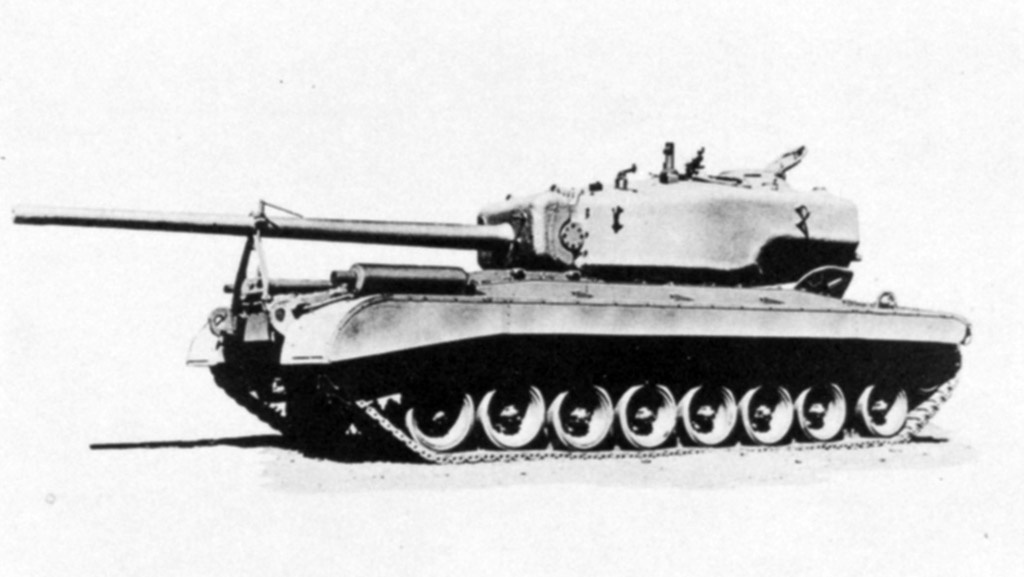
In fact, only two tanks were delivered, only one of which was fully operational
The development of the new tank fell to the Tank and Automotive Center. The plans for producing the Heavy Tank T29 were truly ambitious. On March 1, 1945, the Armaments Committee authorized the production of 1,200 Heavy Tank T29s, even though at that point it still existed only on paper. Pressed Steel Car Co., Inc., based in New Jersey, was selected as the manufacturer of the T29. It was one of the largest contractors in the production of armored vehicles. It is safe to say that, had the war continued, the company would have been able to master the production of the new tanks without any major problems.
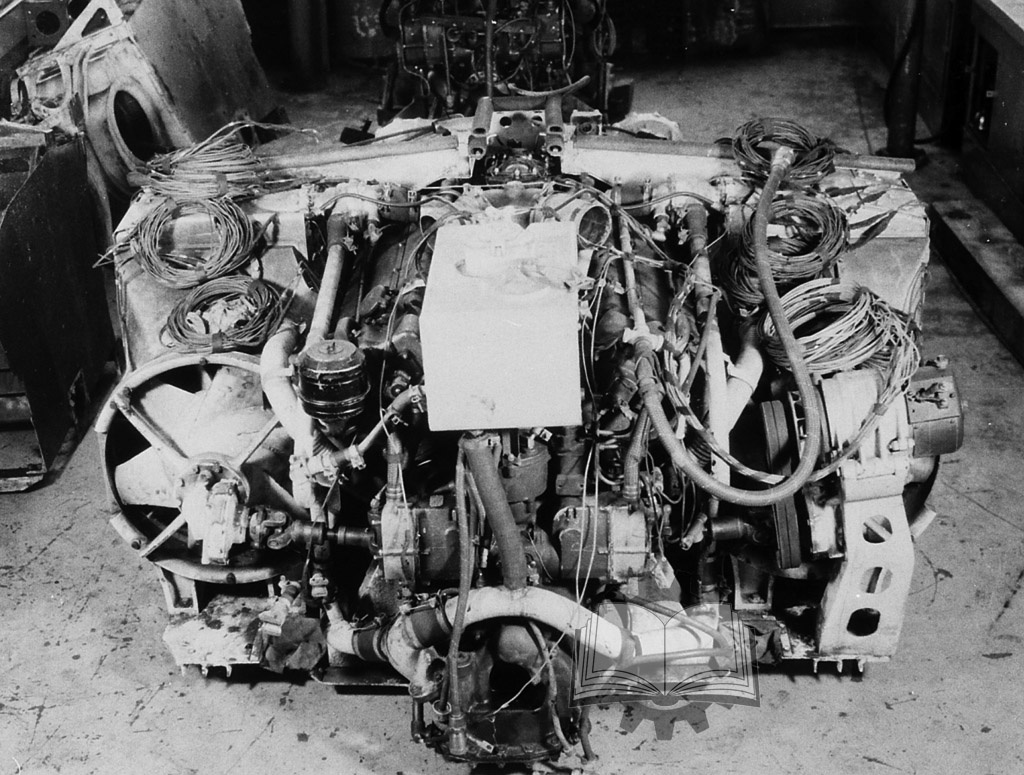
Ford GAC, a 12-cylinder version of the Ford GAA engine
On April 12, 1945, the number of tanks being produced was reduced to 1,152. However, this was due to the fact that additional units had been ordered. Of the four tanks in the additional order, one was equipped with a 120-mm T53 gun with anti-aircraft ballistics. It is worth noting that at this stage, the turret would have been the same as that of the two Heavy Tank M6A2E1 prototypes. However, the situation for the promising heavy tanks was worsening. The main problem was not the German heavy tanks, but the cessation of hostilities. On the night of May 8–9, the German army’s surrender was signed. Subsequently, on August 14, 1945, Emperor Hirohito announced the surrender. Thus, the American heavy tanks arrived too late.
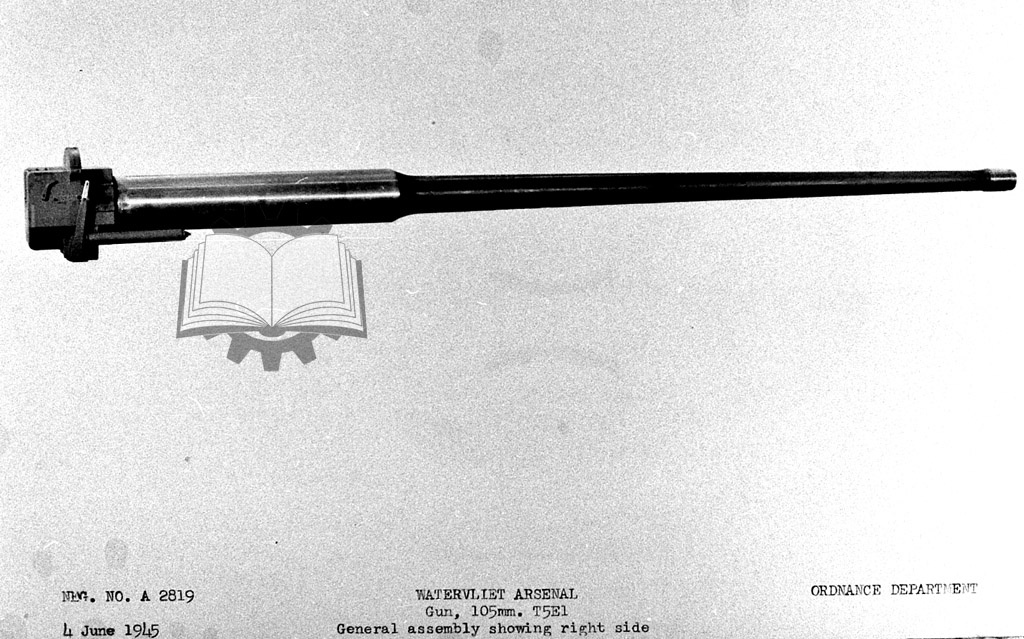
The T5E1 105-mm gun; as tests showed, its armor-penetration capability was insufficient
On August 23, 1945, the Armaments Committee drastically reduced production volumes of new heavy tanks. Pressed Steel Car Co., Inc. manufactured only two T29s. Of these, only one tank was fully built, while the second was only partially completed. Further work on the development and production of heavy tanks was taken over by the Detroit Arsenal. All materials were also transferred there. Moreover, the results of tests on the Heavy Tank M6A2E1 necessitated significant changes to the turret. As a result, the sole T29 prototype was delivered by Pressed Steel in 1947, though it was manufactured more as a formality. Even outwardly, the tanks developed by the Detroit Arsenal differed somewhat. Initially, 10 units were to be produced, but on July 10, 1947, the Armaments Committee reduced the production run of the Heavy Tank T29 at the Detroit Arsenal to 8.
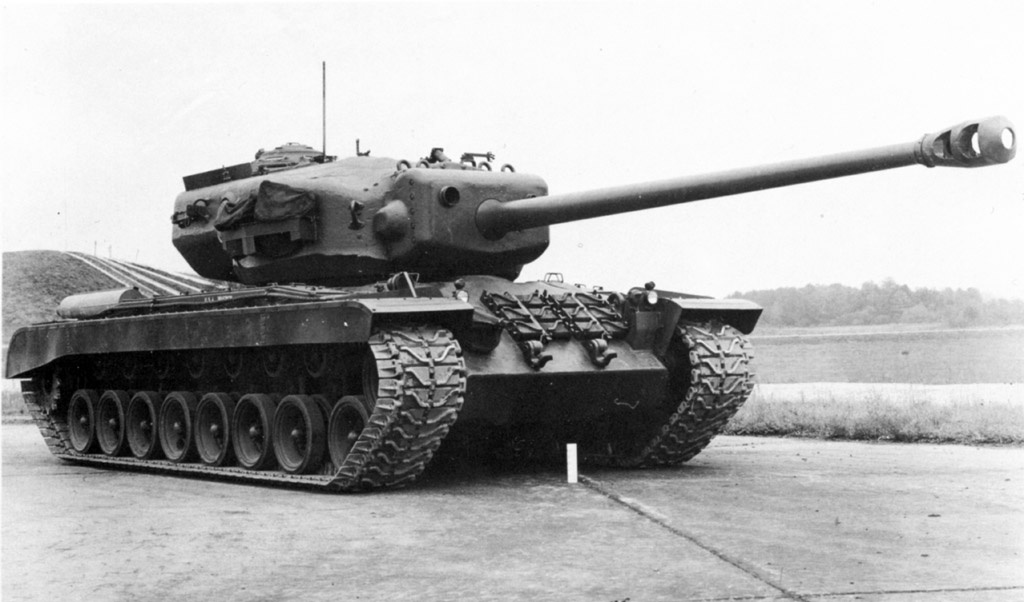
Most of the T29s looked like this
It must be said that, from the perspective of the combat crew, the delay clearly worked to their advantage. The criticism of the original T29 Heavy Tank turret, which was tested on the M6A2E1 Heavy Tank, was justified and led to a significant redesign. The movable armor on the gun mantlet became significantly more robust, and its thickness increased to 203–279 mm. The turret’s overall armor was also impressive—178 mm at the front, 127 mm on the sides, and 102 mm at the rear. The commander’s station, along with the turret, was relocated to the rear compartment, and the number of turret hatches increased to three.
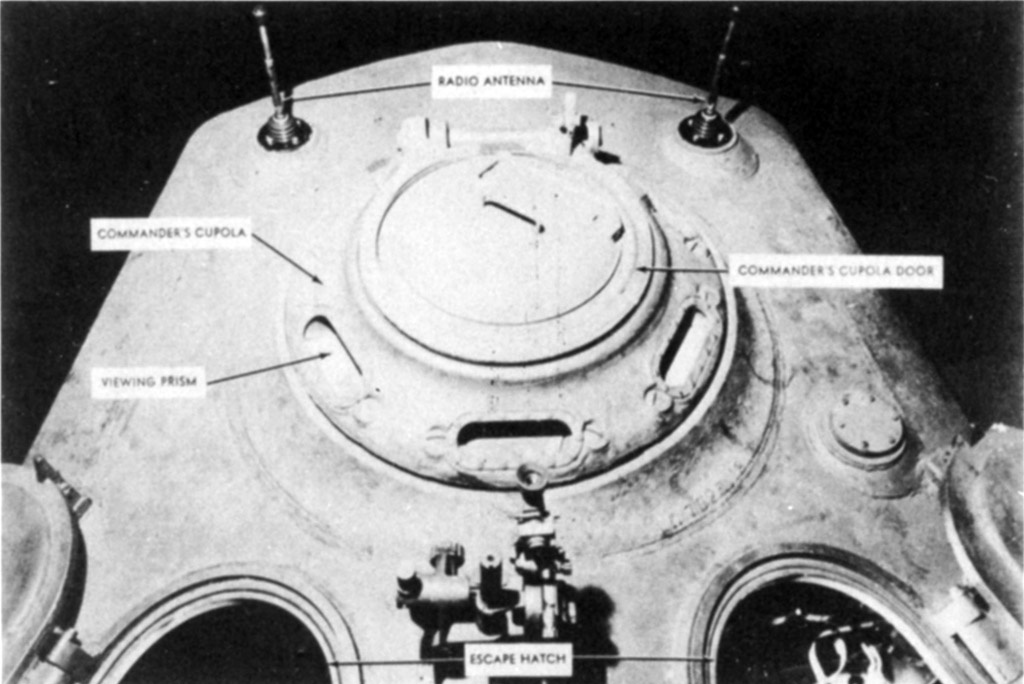
Commander’s Quarters
The turret was, so to speak, built to accommodate future upgrades. It retained the same 105-mm T5E1 gun as before as its primary armament. However, when installed in the new turret, the gun lost its muzzle brake. Meanwhile, as mentioned above, the plan was to install more powerful artillery systems. This resulted in the turret becoming even larger, as separate loading was required. The machine gun armament also changed: instead of a single 7.62-mm Browning M1919A4 machine gun paired with the main gun, two 12.7-mm Browning M2HB machine guns were mounted. Similar ideas, incidentally, were attempted on the M26 Heavy (Medium) Tank, but without success.
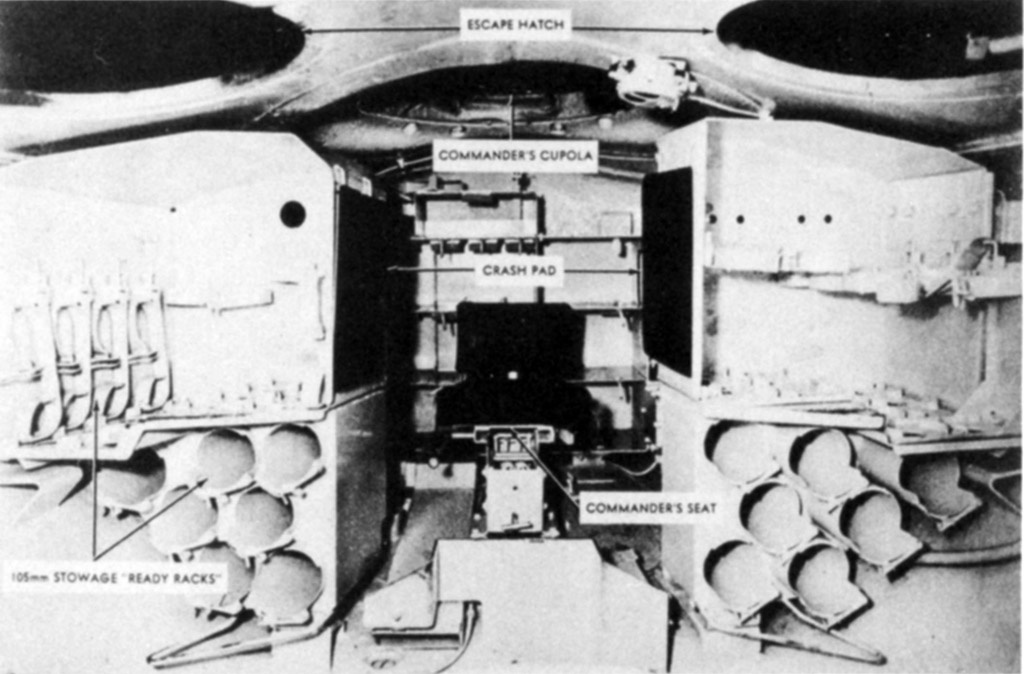
It’s right there inside. It’s not exactly cozy.
While there were no major issues with the turret, the situation regarding the chassis was far from clear-cut. On the one hand, the idea of using the T26E3 Heavy Tank concept as a reference helped speed up development. On the other hand, even with the T26 family, increasing the load on the front of the hull led to problems. As a result, the front of the Heavy Tank T29’s hull was only 102 mm thick. Even in 1944, such a front thickness was insufficient for a heavy tank. And this was the front of a truly massive tank with a combat weight of 64.2 metric tons. If such a vehicle had made it onto the battlefield, the designers of the new heavy tank would have learned a great deal about themselves.
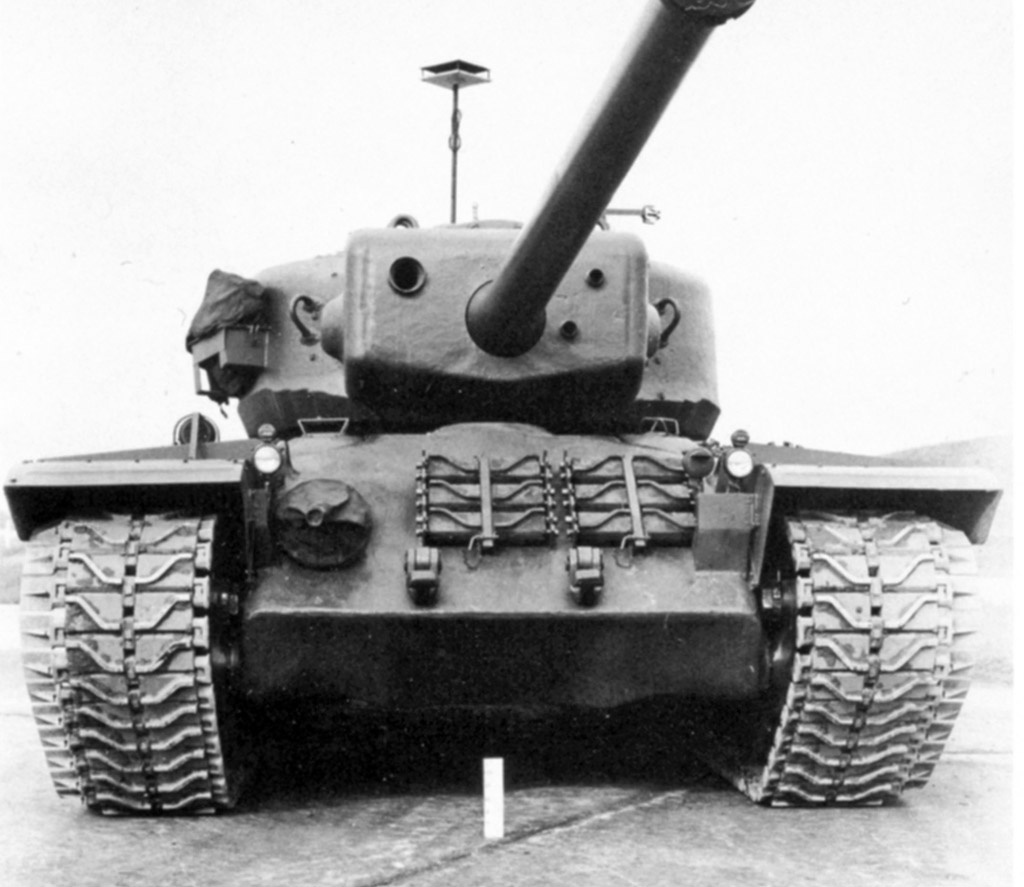
102 mm of frontal armor on the hull is too thin, even for 1945
However, the insufficient armor protection on the front of the hull turned out not to be the main problem. Due to the increase in combat weight, Ford received an order for a 12-cylinder version of its Ford GAA/GAF engine. This variant was designated the Ford GAC; with a displacement of 27 liters, the engine’s maximum power output was 770 horsepower. In principle, this was quite sufficient for a tank with a combat weight of 64 metric tons. Initially, the tank was equipped with the EX-120 electromechanical transmission developed by General Motors. After initial testing, it was replaced with the CD-850-1 hydromechanical transmission developed by Allison.
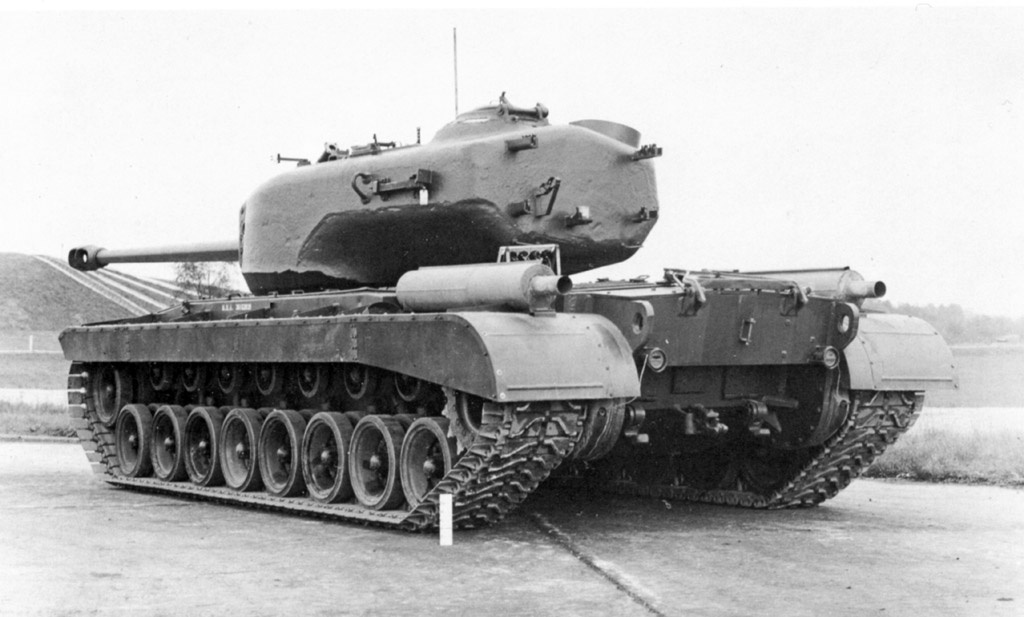
However, tests at the Aberdeen Proving Ground showed that the main problems do not lie with the armor
So, the Heavy Tank T29s from the initial production batch, with serial numbers 30162834–30162841, proved problematic in terms of their engine and transmission assembly. For starters, the Ford GAC engine wasn’t powerful enough. Therefore, the search for a more powerful engine began. One of the options was the Allison V-1710 aircraft engine—more specifically, its tank version, the Allison V-1710-E32. Its maximum power was reduced to 870 horsepower. The engine was paired with a CD-850-1 transmission. Since the new engine was longer than the Ford GAC, the engine compartment had to be slightly lengthened. The modified tank was designated T29E1. Tests of this tank yielded largely negative results. As early as 1946, the U.S. military had indicated that a specialized air-cooled tank engine was required.
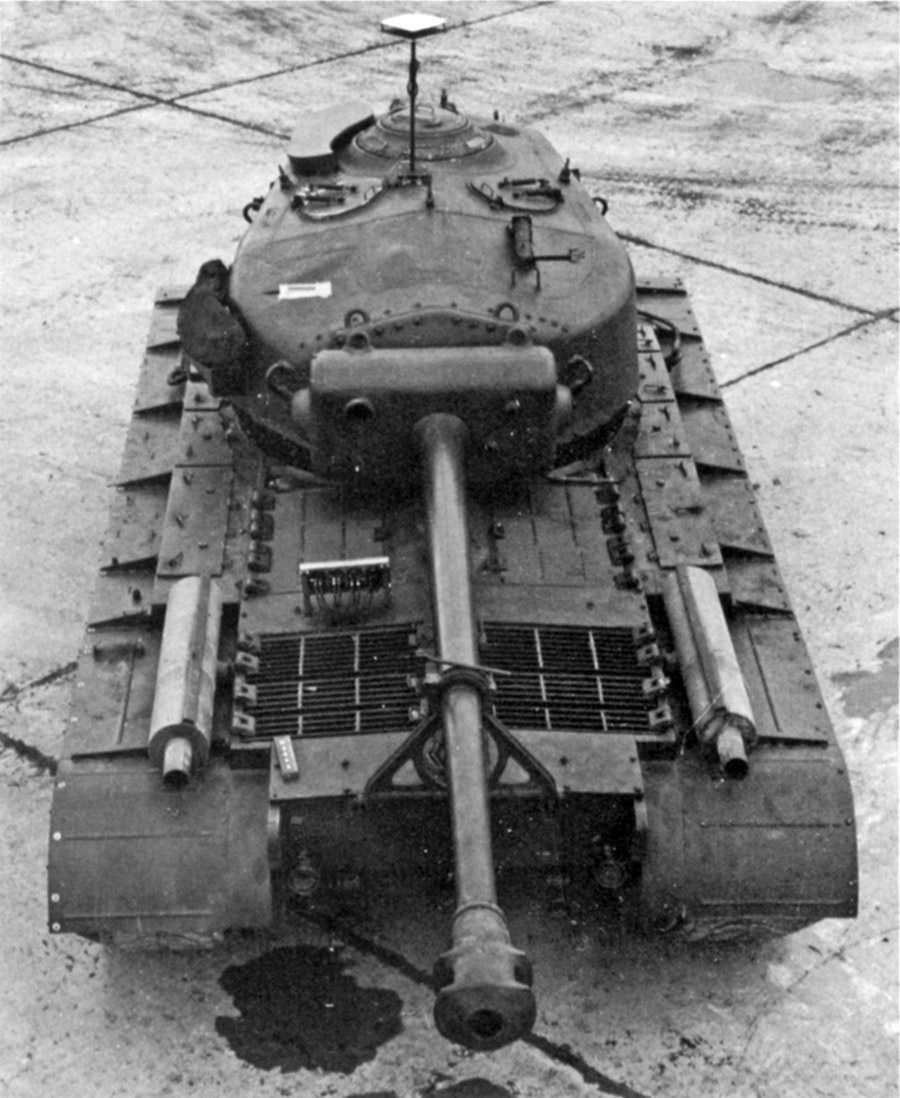
There turned out to be far more problems within the MTO
The fate of the second prototype of the Heavy Tank T29 unfolded in a similar way, but in terms of its armament. Following the modifications, this vehicle was designated the Heavy Tank T29E2. Its main distinguishing feature was the T5E2 system, developed in the summer and fall of 1946. The primary difference from the T5E1 was the inclusion of a two-chamber muzzle brake, which allowed the number of recoil cylinders to be reduced from three to two. Due to the change in the gun, the gun mount—designated T123E2—had to be redesigned. The tank also received a modified turret, designated T5. It was distinguished by a hydraulic drive for the turret rotation and horizontal traverse mechanisms. This development by the Massachusetts Institute of Technology was tested but was not adopted for other tanks.
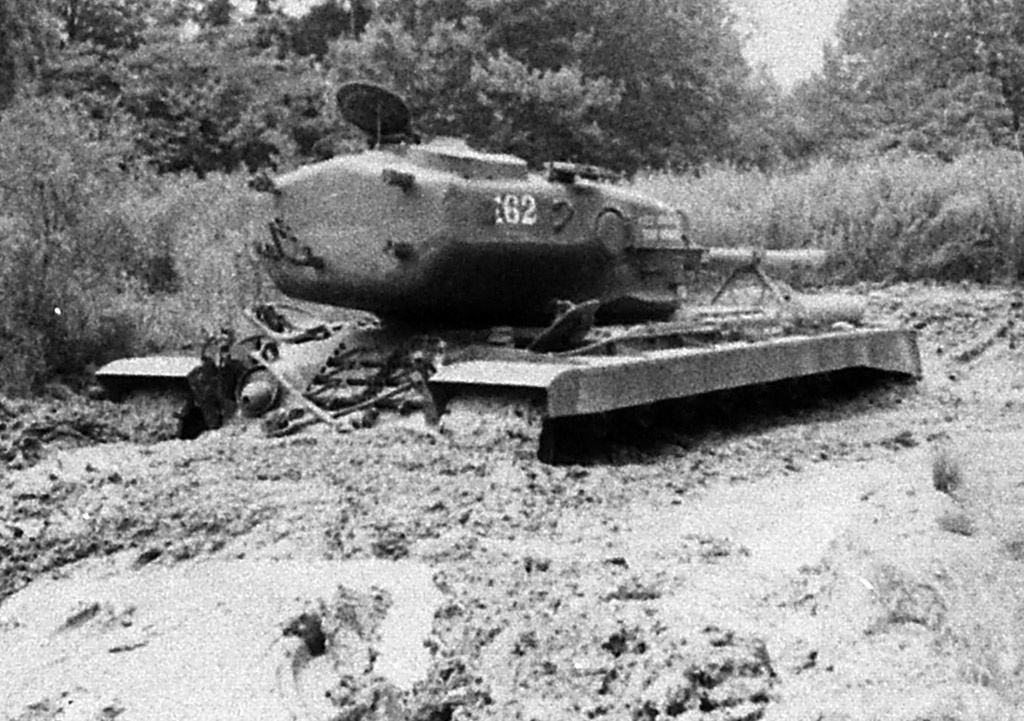
During testing at Fort Knox
It is worth mentioning separately how the testing of these tanks proceeded at the Abredino Proving Ground. A total of three tanks—numbers 3, 4, and 6—were sent there. During the tests, Tank No. 3 covered 2,686 kilometers, Tank No. 4 covered 1,400 kilometers, and Tank No. 6 covered 3,314 kilometers. Tank No. 3, which arrived in late May 1948, underwent its first modifications almost immediately. On July 16, the vehicle set out for off-road and dirt road testing; after traveling 235 kilometers, repairs had to be made to the transmission components. However, the truly serious breakdowns came later. On August 13, after traveling 750 kilometers on a dirt road, a whole host of engine and transmission malfunctions were discovered, causing the tests to stall for 1.5 months. On September 29, the vehicle returned to testing, but not for long. On October 8, after traveling just 309 kilometers, the engine failed, along with some transmission components. As a result, the engine and transmission block had to be replaced. Testing of other tanks proceeded in a similar manner.
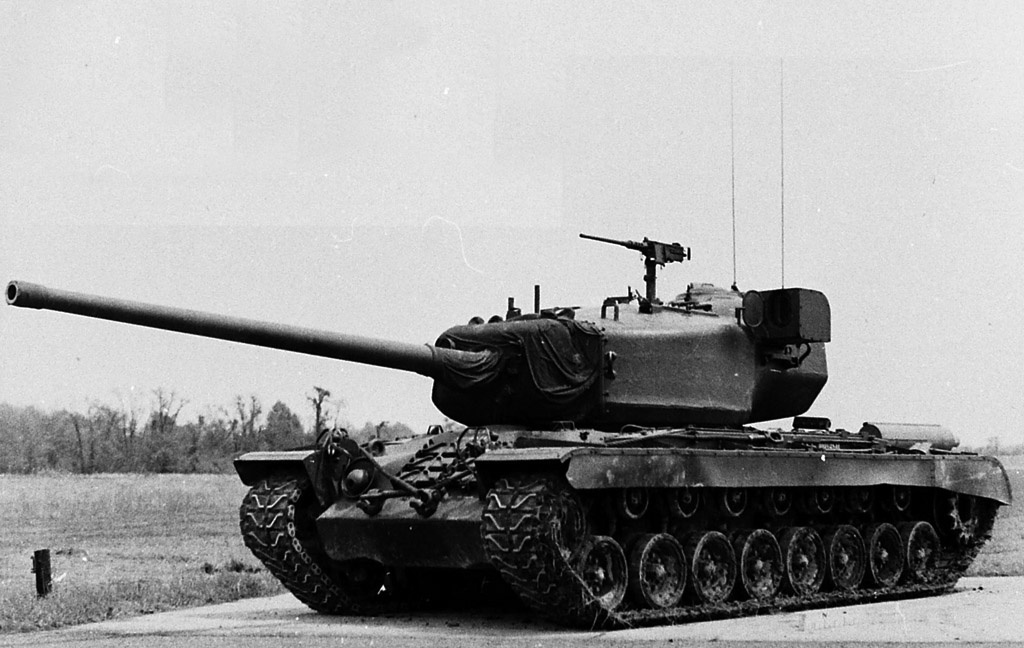
Heavy Tank T29E3, the last T29 model to be produced
It is also worth mentioning Tank No. 8, as it differed the most from the others. This tank was used as a test bed for new models of tank optics. A T31E1 stereoscopic rangefinder was installed in the turret of the Heavy Tank T29E3—the designation given to this model. As a result, the turret acquired its characteristic “ears.” The aiming devices were also modified. A T93E2 telescopic sight was installed, and the T141, T144, and T145 panoramic sights were also tested on the tank. As the tests showed, the concept of a stereoscopic rangefinder was sound, but not in the form in which it was implemented on the T29E3.
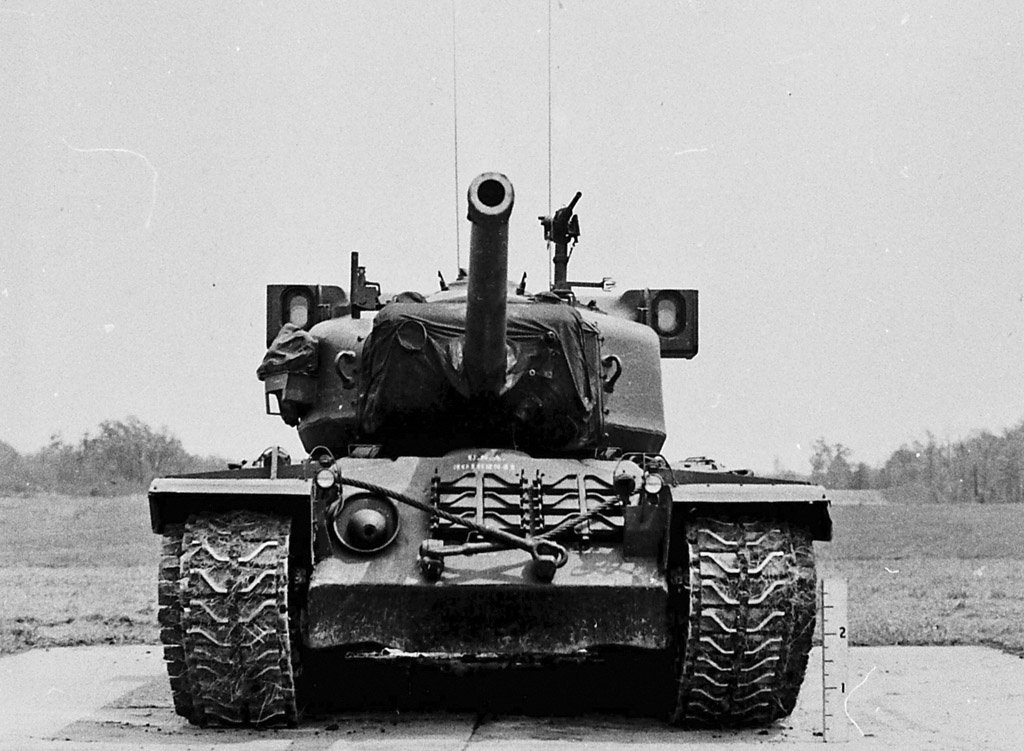
It’s easy to identify by the rangefinder’s distinctive “ears”
The decision made by the Armaments Committee in August 1945 to drastically reduce the production run of the T29 Heavy Tank turned out to be the right one. As it turned out, the T5E2’s 105-mm gun lacked sufficient armor-penetration capability. However, given that the T29’s chassis was still “unrefined,” these were mere trifles. The most these tanks were good for was serving as test beds. In that sense, they were certainly useful. But whether they could have proven themselves on a real battlefield is highly questionable. For even by the spring of 1945, this tank was already obsolete, and its reliability proved to be highly questionable.
List of Sources:
-
-
- US NARA
- Firepower — A History of the American Heavy Tank, R.P. Hunnicutt, Presidio Press, 1988
-