Two “invisible wings” at once: China has revealed its largest stealth drones at a secret base

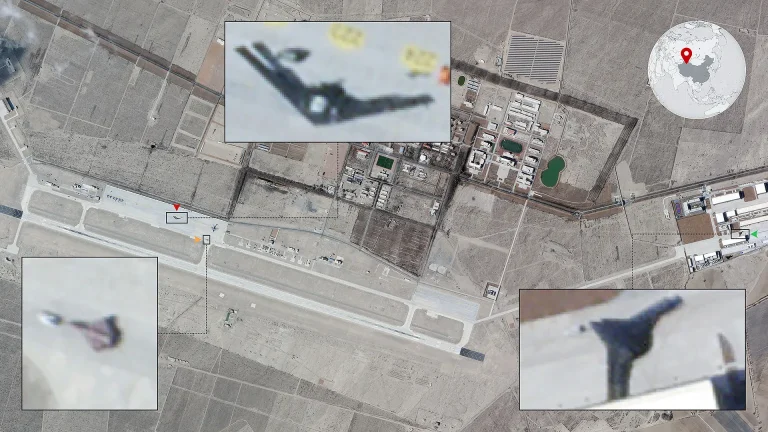
Sometimes a satellite image speaks louder than official statements. In new images from China, two massive “flying wing”-type stealth drones were captured together at one of the country’s most secretive test sites.
And this is no longer an isolated finding—it’s a sign that the program is rapidly gaining momentum.
Trigger: Two Giants on the Same Track
Satellite images published by The War Zone clearly show two previously identified Chinese drones with a low-profile “flying wing” design, stationed at the Malan base—a key testing center for next-generation aircraft.
One of them is a particularly large aircraft, unofficially known as the “Monster of Malanya.” Its wingspan is estimated at approximately 173 feet—the same as that of the B-2 strategic bomber.
The fact that both aircraft are at the airfield at the same time is significant in and of itself:
This is no longer a one-of-a-kind prototype,
but a series of tests.
Malang Base: China’s “Area 51”
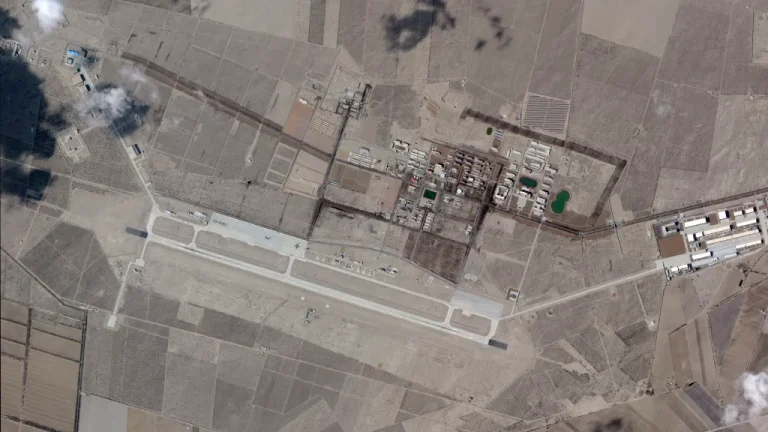
The filming location also plays a key role.
The Malan Base in Xinjiang has long been considered the center of China’s most advanced aviation developments—from past nuclear tests to modern drone programs.
It is here that new types of UAVs regularly appear, including those that have never been officially demonstrated.
What are these devices?
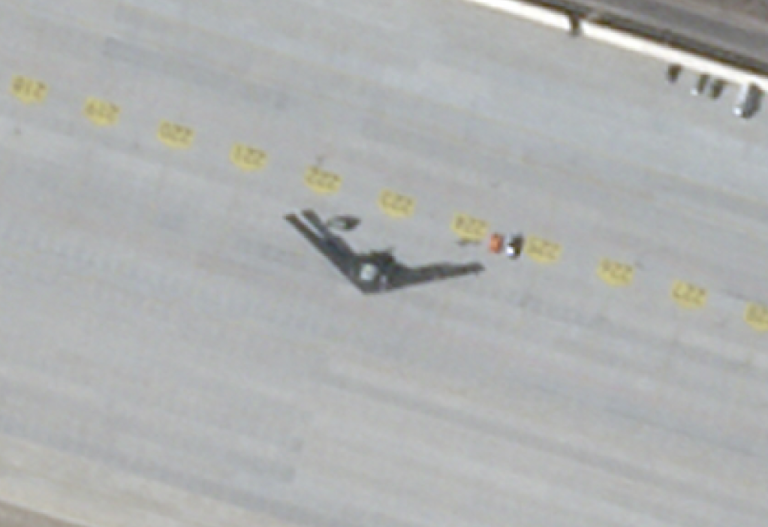
Both drones that were spotted belong to the HALE (high-altitude, long-endurance) class—high-altitude aircraft with long flight endurance.
Their features:
— “flying wing” configuration without a tail—
reduced radar cross-section
— large wingspan
— designed for long-duration missions
Such platforms can perform the following functions:
—
reconnaissance — target
designation —
strikes — operations deep within the enemy’s defensive lines
It’s not just them
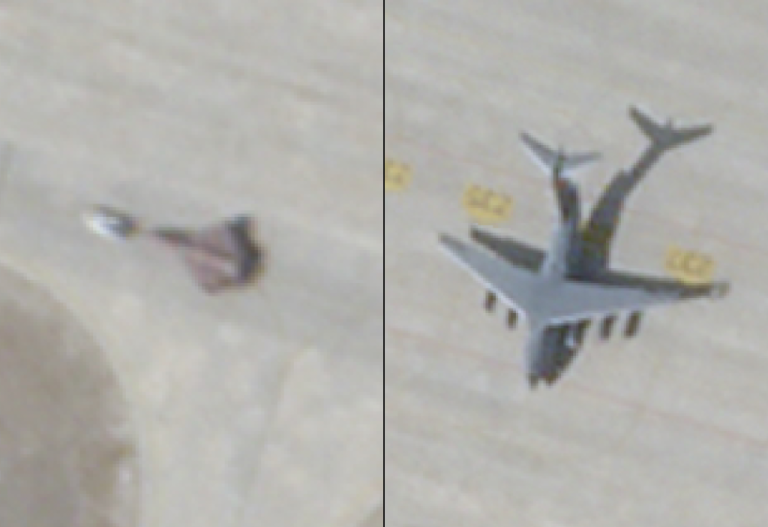
Other cars can also be seen in the same photos:
— a “fighter-type” drone —
the Y-20 transport aircraft
This shows that the facility is not used for a single project, but rather as a full-fledged testing center for various classes of equipment.
And most importantly, testing is being conducted simultaneously in several areas at once.
Trend: The “Flying Wing” Approach
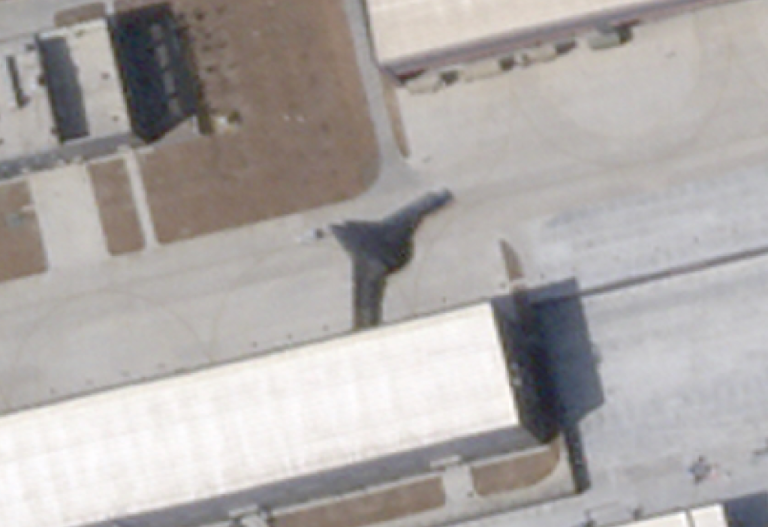
The emergence of such devices is no coincidence.
In recent years, China has been actively developing low-observable unmanned systems. And we’re not talking about lightweight drones, but rather heavy platforms comparable in size to bombers.
This approach offers several advantages at once:
— low visibility —
long
range — long flight duration
In fact, this is an attempt to create a counterpart to American projects such as the RQ-180—but with a broader range of capabilities.
What does that mean?
The main takeaway from these photos isn’t the drones themselves, but the pace of the work.
According to the data, both aircraft are already undergoing flight tests and have been in service for several months.
This means:
— The projects have moved beyond the prototype stage—
active
testing is underway— preparations for mass production may be underway
Conclusion
The story of the “two wings” isn’t just another discovery on a satellite image.
That’s a signal.
China isn’t just experimenting with drones—
it is simultaneously developing several major stealth platforms.
And while such cars used to be unveiled one at a time,
they are now being shown together.