Ukraine Unveils the Katran Venom V2: A Marine Drone That Transforms Into a Mini-Destroyer in the Age of Unmanned Vehicles

The Ukrainian company MAC HUB has unveiled an updated version of its Katran Venom V2 maritime drone—and at first glance, its specifications seem almost absurd. FPV drones, torpedoes, man-portable air defense systems, machine guns, electronic warfare systems, artificial intelligence, signals intelligence, and even automated survivability systems—they’re now trying to fit all of this onto a single unmanned boat.
But the most interesting thing isn’t even the number of weapons.
The Katran Venom V2 is a prime example of how Ukraine is gradually changing the very philosophy of naval warfare. This is because, until very recently, a naval drone was viewed as a relatively simple “suicide boat.” Now, however, Ukrainian developers are attempting to transform unmanned boats into fully-fledged autonomous combat platforms capable of simultaneously serving as strike craft, carriers for FPV drones, air defense systems, reconnaissance vehicles, and elements of network warfare.
And if we look at the evolution of Ukrainian maritime drones over the past three years, it becomes clear that the Black Sea is gradually becoming a testing ground for the navy of the future.
From “Marine Kamikaze” to Unmanned Vessel
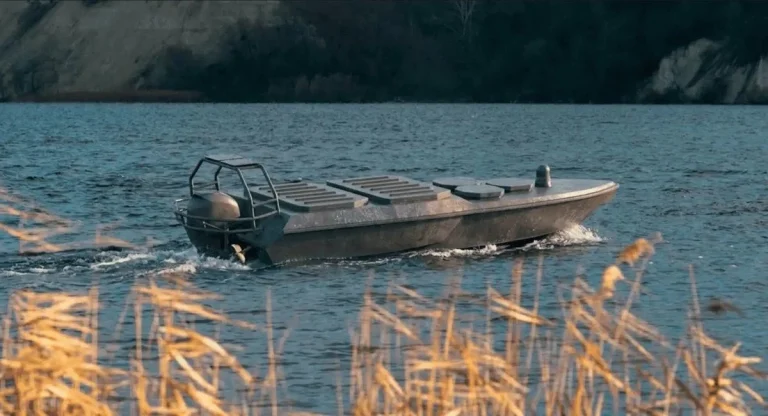
When Ukraine first began using maritime drones on a large scale against Russia’s Black Sea Fleet, many viewed them with near-indifference.
Small boats laden with explosives seemed more like a wartime improvisation than the dawn of a new era. But then came the attacks on Sevastopol, strikes on ships, oil platforms, and infrastructure, and the Russian navy suddenly discovered that its massive warships were becoming extremely vulnerable to cheap unmanned platforms.
That was when the real revolution in marine drones began.
Magura, Sea Baby, Toloka, Mamai, Katran — in just a few years, Ukraine has created an entire ecosystem of maritime drones. What’s particularly interesting is that they are all gradually moving away from the concept of a “disposable kamikaze boat.”
The Katran Venom V2 is perhaps the most radical example of this evolution.
Because it’s no longer just a container for explosives.
In fact, the Ukrainians are trying to build a small, autonomous “unmanned destroyer.”
A small boat with the firepower of a warship
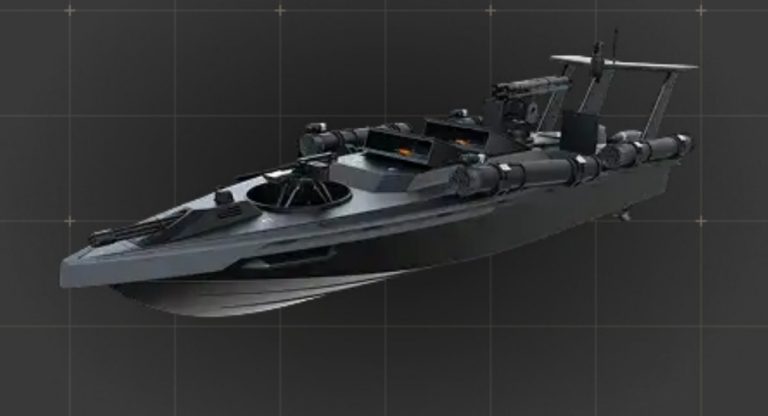
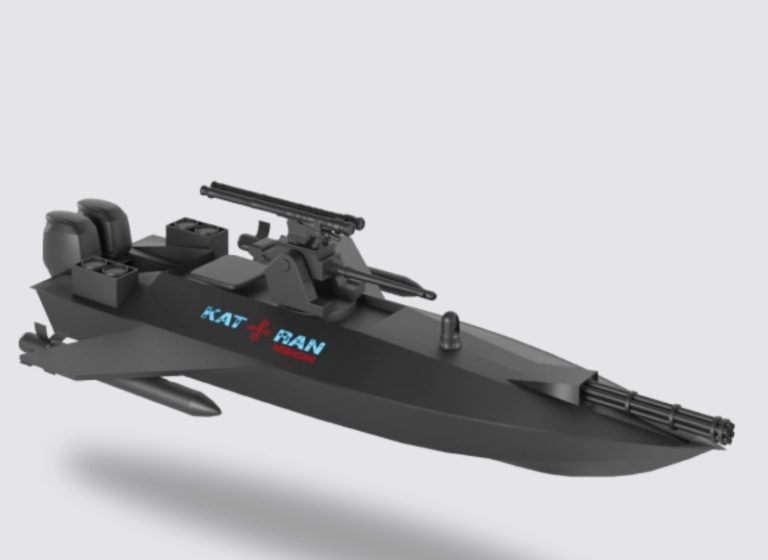
The Venom V2’s arsenal seems almost surreal for a drone of that size.
According to published data, the boat can carry:
— six FPV drones,
— four small torpedoes,
— two FPV attack aircraft,
— a turret with a 12.7-mm Browning M2 machine gun,
— a forward-mounted 7.62-mm Minigun,
— and Piorun man-portable air defense system (MANPADS) launchers.
Initially, many analysts assumed that this was simply a matter of different configuration options—that is, some of the weapons would be installed depending on the mission. But now MAC HUB is effectively hinting that a significant portion of the systems could be used simultaneously.
The stated management structure is particularly telling.
Operating the Katran Venom V2 requires a crew of nine operators:
— a boat pilot,
— a navigator,
— four UAV pilots,
— a weapons operator,
— and a torpedo systems specialist.
And this is an extremely important point.
Because the Venom V2 is no longer just a “drone.”
It is a fully-fledged distributed weapons system.
Essentially, a single unmanned maritime vehicle becomes a mobile platform for a whole range of other unmanned vehicles and strike systems.
Ukraine is gradually building a “paradise on the water”
The most interesting thing about the Katran’s history isn’t even the torpedoes or machine guns themselves.
The platform’s central concept is network warfare.
Ukrainian developers are increasingly moving toward a concept in which a maritime drone serves as a command center for other unmanned aerial vehicles:
FPV drones,
aerial reconnaissance drones,
strike UAVs,
and potentially even underwater drones.
In fact, the Venom V2 is starting to look like a small unmanned aircraft carrier.
That is precisely why the following systems are installed on board:
radio reconnaissance systems,
electronic warfare systems,
laser warning sensors,
smoke screen dispensers,
automatic survivability systems,
and artificial intelligence components.
According to the developers, the built-in AI is capable of automatically detecting targets, classifying them, determining their coordinates, and synchronizing the data with the common combat network.
In other words, we’re no longer just talking about a remotely controlled boat.
Katran is gradually becoming part of a distributed combat system—a network in which numerous drones operate as a single entity.
The Black Sea Is Becoming a Testing Ground for the New Fleet
There is something else that is particularly important in this whole story.
Just ten years ago, almost everyone envisioned the future of naval warfare in terms of massive destroyers, aircraft carriers, and exorbitantly expensive missiles. But Ukraine has effectively begun to dismantle that model.
Because it turned out that:
— a small drone can pose a threat to a frigate,
— an FPV drone is capable of attacking a ship,
— and a cheap speedboat can force an entire fleet to take shelter in ports.
And now this concept is starting to get more complicated.
While the first Ukrainian naval drones were essentially “water kamikazes,” the new platforms are evolving into versatile unmanned vessels:
— with their own air defense systems,
— their own drones,
— electronic warfare systems,
— torpedoes,
— and artificial intelligence.
In fact, Ukraine is gradually moving toward a model in which a swarm of inexpensive autonomous platforms fights in place of a single large ship.
And this is extremely bad news for conventional navies.
Because a modern destroyer costing billions of dollars is starting to look like too expensive and too conspicuous a target in a world where it can be attacked by a dozen drones that cost hundreds of times less.
But the main question is: How well does this actually work?
That said, there are still a lot of unanswered questions surrounding the Katran Venom V2.
Some of the specifications still seem more like a concept for the future than a fully developed system. This is especially true of the simultaneous integration of such a large number of weapons onto a relatively small platform.
In addition, the marine environment poses significant challenges for unmanned aerial vehicles:
storms,
salt water,
communication issues,
electronic warfare,
and limited endurance remain serious challenges.
But even if only half of the promised features actually work, the direction of development itself already seems extremely promising.
Because the Katran Venom V2 is not just a Ukrainian marine drone.
This is an attempt to build a new type of 21st-century warship—one that is inexpensive, unmanned, networked, and mass-produced.
And it seems that this is precisely the direction in which modern naval warfare is gradually heading.