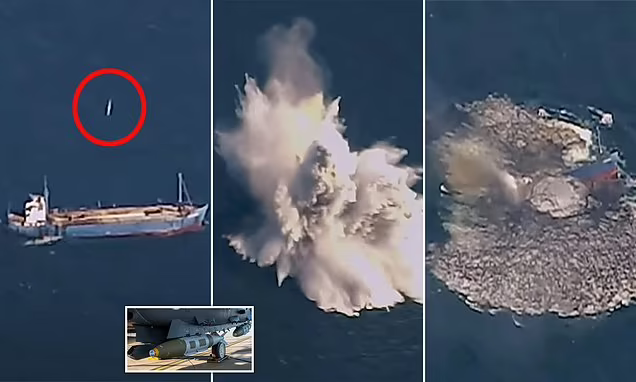
During recent NATO exercises off the coast of Norway, the Americans deployed 2,000-pound (900-kg) GBU-31 JDAM guided anti-ship bombs equipped with the QUICKSINK homing system from a B-2 “Spirit” strategic bomber:
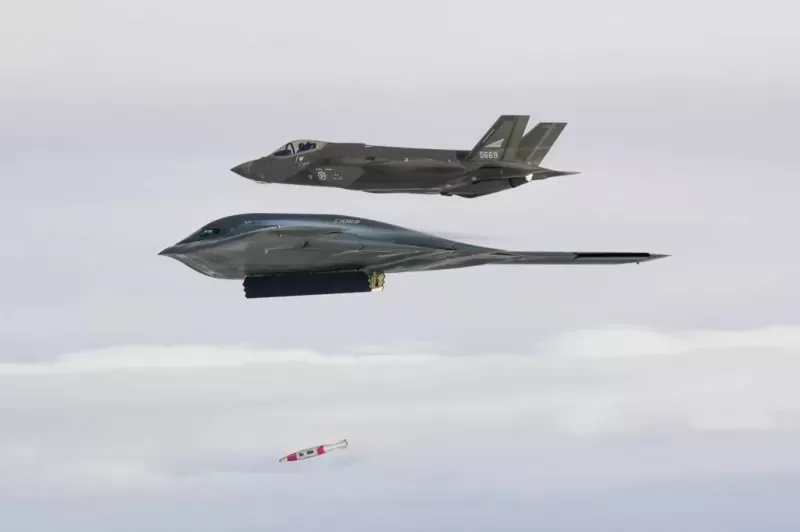
This anti-ship application for the B-2 is actually quite unconventional, and I’m extremely curious—what exactly prompted the Americans to come up with this idea? Theoretically, the GBU-31 JDAM fits perfectly into the internal weapon bays of the F-35 itself, so the desire to carry the bomb on an internal pylon (to avoid compromising the carrier’s stealth) is hardly a motivating factor.
One possible explanation is the specific design of the QUICKSINK self-guidance kit, which, for some reason, prevents it from being installed in the F-35’s bomb bay.
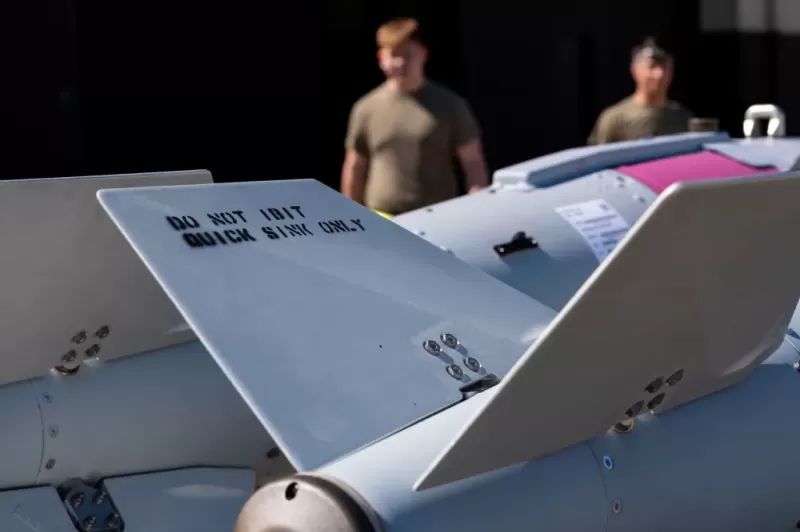
Attentive observers were quick to note that the control surfaces on the bombs shown in the press release bear the inscription “QUICKSINK ONLY”—meaning that the QUICKSINK kit uses non-standard control surfaces from the JDAM. This is likely due to the need for more complex and precise bomb maneuvers to engage a moving, evasive target—such as a warship at sea.
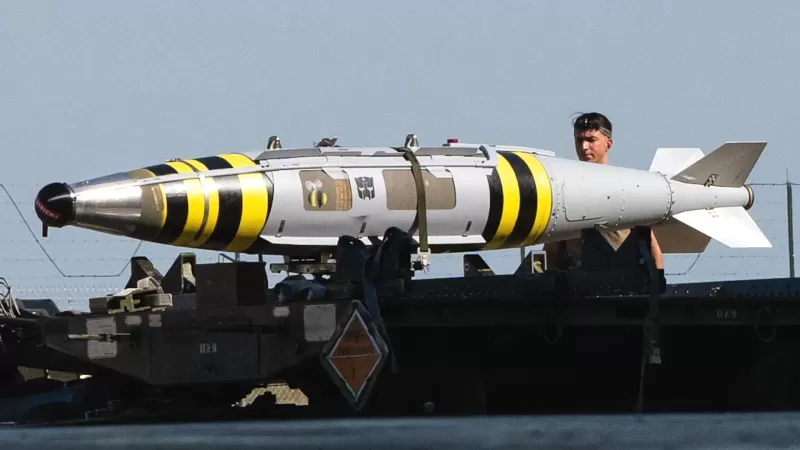
Did you notice the Autobots emblem on the body?
The color scheme of the bombs used in the test is also of interest. One was painted in “bumblebee” colors, with black-and-yellow stripes on its fuselage. In the U.S. Armed Forces’ designation system:
* Black stripes — “penetrating” effect (the munition is designed to detonate after a delay);
* Yellow stripes — the “active” warhead (i.e., containing a charge of actual explosive and equipped with a detonator);
Taken together, these designations apparently indicate that the bomb is intended for underwater detonation near the target’s hull. This mode of operation is considered standard for the QUICKSINK: the bomb enters the water near the target and detonates under the keel, producing a devastating hydrodynamic shock.
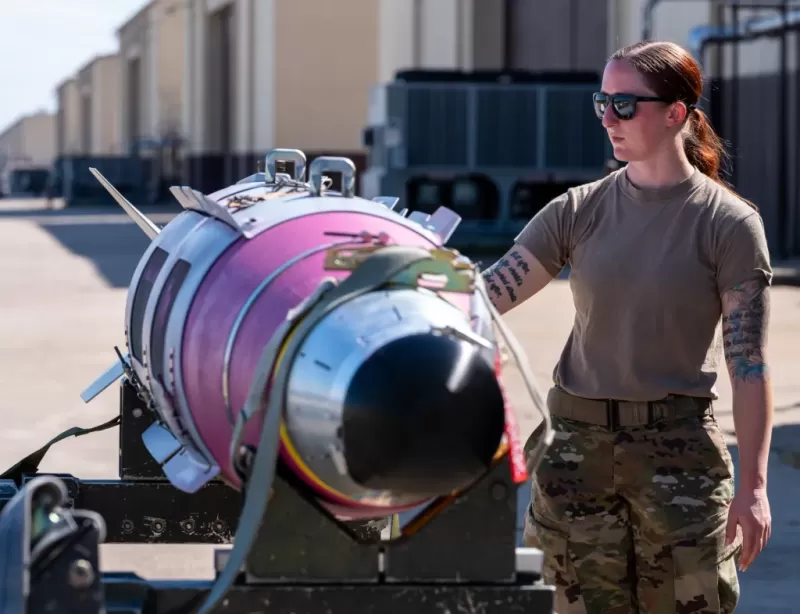
The second bomb was painted an unusual shade of pink. Normally, red tones indicate incendiary or high-explosive ordnance. But in this context, it is unclear exactly what a bomb with such markings was supposed to do in an anti-ship role.
Other possible explanations for the use of the B-2 as a delivery platform include its range (which allows the bomber to strike naval forces at a considerable distance from the coast) and its heavy bomb load (allowing it to drop a number of bombs in a single pass capable of overwhelming virtually any air defense system).
In any case, this unconventional use of stealth bombers deserves attention. Especially in light of the planned replacement of the B-2 with the B-21 “Raider”—which has a lower payload but is significantly heavier. While the use of a small number of B-2s in an anti-ship role is clearly experimental in nature (and cannot be widespread by definition—there are too few aircraft of this type, and it seems highly unlikely that the USAF would agree to deploy them for such missions), the widespread use of the B-21 could well become a significant factor in naval warfare.