Vietnam continues to develop its armored vehicles. The new XTC-03 armored personnel carrier is ready to take on its Western counterparts.

Just the day before yesterday, we reported on the new, entirely Vietnamese-made T-1 tank. As a follow-up to that post, I’d like to share a story about the Far Eastern nation’s wheeled armored vehicles.
The Origins of the Project: From Adaptation to Innovation
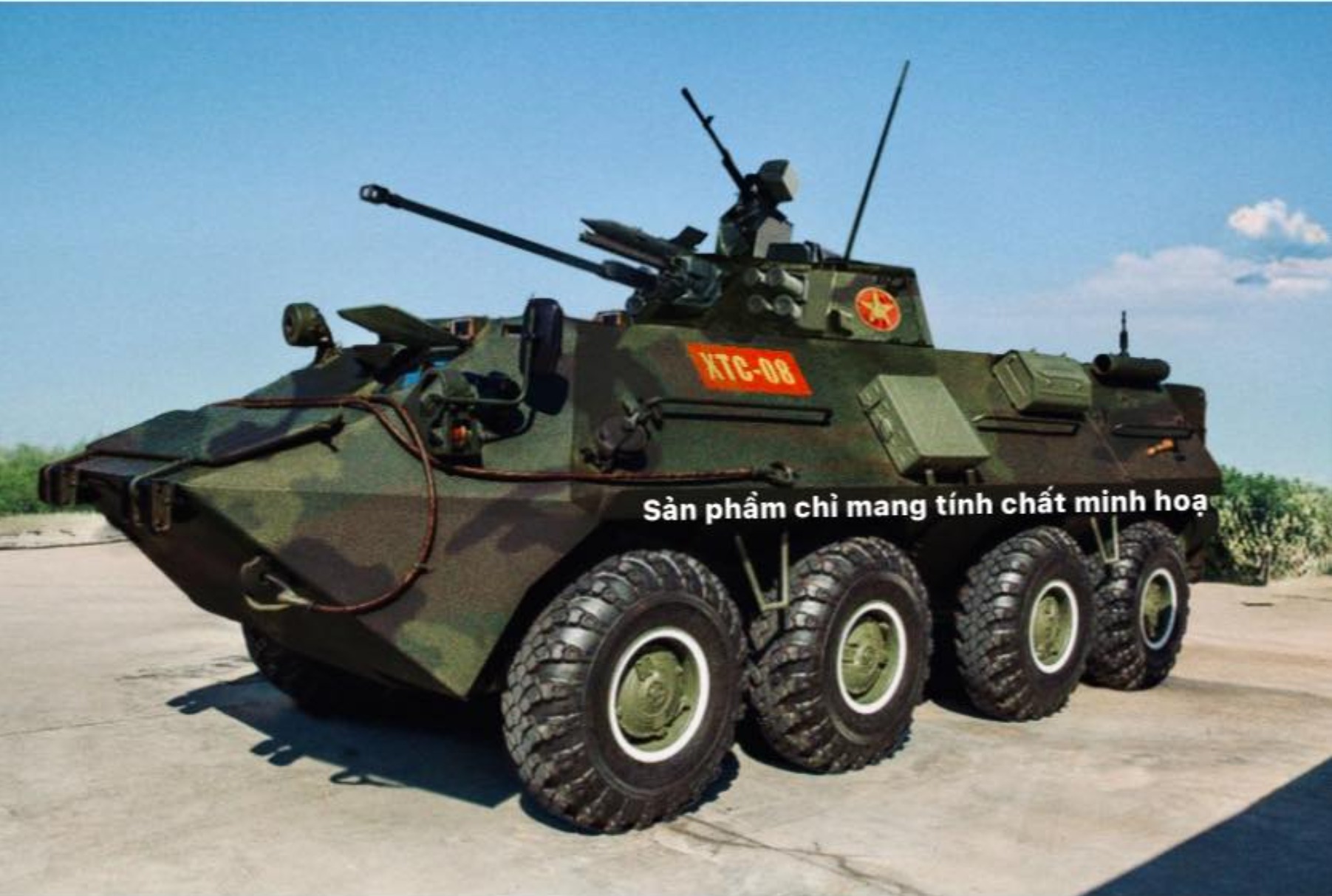
The development of the XTC-03 armored personnel carrier represents an important milestone in the history of Vietnam’s defense industry. As noted by Defense Express, the design of the new vehicle bears a striking resemblance to the Ukrainian BTR-4, particularly in its layout, which features a front-mounted engine and transmission compartment and a rear ramp for troop embarkation. At the same time, experts emphasize that this refers specifically to similarities in architectural solutions, rather than direct copying or licensed production.
Vietnam has extensive experience adapting Soviet-designed military equipment. Based on the BMP-1, PT-76, and “Gvozdika” self-propelled gun, local engineers have already developed their own modifications tailored to the specific conditions of the national theater of operations. The XTC-03 project continues this tradition but takes it to a whole new level—the creation of an original platform from scratch.
Design Solutions and Manufacturing Facilities
The development and assembly of a prototype armored personnel carrier have been entrusted to Plant Z179, which is part of Vietnam’s General Administration of the Defense Industry (GAET). According to official statements by Deputy Minister of National Defense Pham Hoai Nam, design work is scheduled to be completed by March 31, 2026, after which the vehicle will move on to the testing phase.
An important feature of the XTC-03 is its modular approach to armament. The armored personnel carrier is designed to be compatible with various combat modules—ranging from a 12.7 mm large-caliber machine gun to a 30 mm automatic cannon. Judging by the published images, the prototype is equipped with a two-seat turret featuring a replica of the Soviet 2A42 30-mm cannon, equipped with a modern fire control system developed by the Vietnamese company Viettel, which includes a thermal imaging sight for the gunner and an independent panoramic sight for the commander.
Operational Deployment and Tactical Advantages
The XTC-03 was conceived as a versatile platform for the Vietnamese Army’s motorized infantry units. The vehicle is capable of performing a wide range of tasks, from transporting personnel and providing fire support to conducting reconnaissance and patrolling in the challenging conditions of Southeast Asia.
The key tactical advantage of the armored personnel carrier is its amphibious capability. The ability to cross water obstacles by swimming is critically important for Vietnam, with its extensive river network and long coastline. In addition, the 8×8 wheel configuration provides high cross-country mobility and a cruising speed comparable to the best Western models.
Technical Specifications
- Combat weight: approximately 16 metric tons
- Wheel configuration: 8×8
- Crew: 3 people (commander, gunner, driver/mechanic)
- Passenger capacity: up to 8 people
- Powerplant: a diesel engine with an output of over 400 l.s. (according to other sources—351 l.s., V8)
- Maximum speed on the highway: up to 80 km/h
- Overcoming Water Obstacles: By Swimming or Using Rotating Wheels
- Main armament: 30-mm 2A42 automatic cannon (or its Vietnamese copy)
- Fire Control System: Viettel FCS with a thermal imaging channel and an independent commander’s sight
- Protection: armor providing protection against small arms fire and shrapnel (the exact class is not disclosed)

Prospects and Significance for the Region
The introduction of the XTC-03 is not merely a technical innovation, but a strategic step by Hanoi toward technological self-reliance. The ability to develop and manufacture modern armored vehicles independently reduces dependence on foreign suppliers and strengthens the country’s defense sovereignty.
Experts note that the successful implementation of the project could open up opportunities for Vietnam to export military equipment to countries in Southeast Asia and Africa, where there is demand for inexpensive yet effective equipment adapted to harsh climatic conditions.
For now, information regarding the exact timeline for the XTC-03’s entry into service and the planned procurement volumes remains confidential. However, the very fact that a prototype has been demonstrated, along with public statements by Defense Ministry officials, indicates that the program is a high priority. Vietnam’s new “eight-wheeled” vehicle has not yet completed a full cycle of testing, but is already establishing itself as a serious player in the market for modern armored vehicles — and may, in the near future, compete not only with regional counterparts but also with Western ones.