Vitaly Penskoy. A Few Thoughts on Tyrann-5’s Foreign Policy. And Kazan Once Again

Here is the next installment in an interesting series of articles from VK by medieval historian Vitaly Pensky, which I think will be of interest to readers and colleagues.
So, as of yesterday, this was the situation. Koshchak-oglan is in Kazan; he’s got the opposition wrapped around his little finger and is calling the shots left and right, relying on his Crimean brothers from the former court of Safa-Girey, the favor of the “tsarina,” and little Utemish-Girey. “Prince” Khosrov (Shirin) is hatching a plan to personally liberate Kazan from the Crimean yoke and, riding into the city on a white horse, abolish the sciences (crossed out) and take Koshchak’s place himself. Biy Yusuf is preparing a campaign for his son Yunus to claim the Kazan beklerbekate, hoping to involve Moscow in this matter; Moscow is not to send its own army, but rather to dispatch Shah-Ali with his retinue and court, while the Nogais would handle the rest. But Moscow, while agreeing to the Biy’s proposal for appearances’ sake, is meanwhile preparing a military expedition—the Tsar’s campaign against Kazan. Whoever gets there first gets the prize?
Khosrov was the first to act—he was in a hurry, for the prize was too great and his partners too dangerous. But, alas, Sato lacked the strength; he did not want to call on his friends, and his attempt to seize Kazan failed. His attempt to storm the city failed; Koshchak defeated Khosrov’s men, and our prince, along with his followers, fled first to Nogai and then ended up in Moscow.
Next, it was Yunus’s turn. But he wasn’t lucky either. For several days, the Nogais rode around the walls and ramparts of Kazan on hairy mopeds (crossed out) and shouted all sorts of things like, “Rus, surrender! We’ve got beshbarmak, kavardak, and booze with yogurt.” In response, Koshchak and Rasov’s children (friends and comrades-in-arms of our oglan from among all sorts of evil Cheremis) twisted their fingers, made all sorts of nasty gestures, and turned toward Yunus, um, with those mouths that didn’t speak Nogai. And they even mocked the Nogais—saying, “If even the Moscow giaours couldn’t take Kazan, how on earth could you, you crazy cheese-eaters, ever subdue us?”
In short, after wandering in circles for several days and growing tired of the mutton and krut they’d brought with them, Yunus and the Nogais set off for home, driven by the sun, the palm trees, and the wind, lamenting their cruel fate—for the second time, the beklerbek position they had so passionately desired had slipped through their fingers. Yusuf, however, did not lose heart and was hatching a new plan, unwilling to let Ivan into Kazan—now he wanted to play the Syumbike and her son card. “After all,” he reasoned, “Utemish is on the throne, his mother is by his side; they’re both obedient. I’ll tell them what to do, and they’ll do everything as they should, to our mutual joy—just don’t send an army to Kazan.” Although, to be sure, he reluctantly agreed that if my sister still refused to heed my exhortations, then an army could be sent—a kind word and a big club seem more effective and persuasive.
However, Moscow had its own agenda and its own plans. The fact that Khosrow and Yunus had suffered a setback was actually a good thing, and Moscow’s well-wishers in the city on the Volga bombarded the Boyar Duma with messages—saying that if the Russian regiments were to appear at the gates of Kazan, they would immediately open them and gladly welcome the Tsar of Moscow (though, truth be told, Moscow hadn’t yet fully decided whom to place on the throne—Shah-Ali was simply too unattractive, fat, like a wild boar, far too clever, yet unskilled in the art of war and lacking any inclination for it; moreover, he was repulsive in appearance and ill-natured at heart. That is why, for a time, the boyars considered making Ak-Kubek’s son Abdullah/Kai-Bula—the great-grandson of that very Akhmat—tsar. Incidentally, our Kai-Bula’s sister was married to Ak-Mirza, the son of Yusuf).
Without ever fully resolving the issue with the tsar, the boyars decided—it seemed, at any rate—that the campaign would go ahead. As soon as the Volga froze over and the winter road was established, we would set out. No sooner said than done: in the fall, mobilization orders were issued; provisions and fodder were stockpiled, along with sleds and other transport; the military unit was organized, along with its supplies and all necessary tools and ammunition; a conscripted army was assembled to haul the cannons and supply trains, as well as to carry out all manner of engineering work; the metropolitan sent his blessing to the Orthodox army to defeat the enemy—God is with us, and who can be against us? In short, preparations were thorough—this matter was always treated with fierce seriousness in Moscow, and thanks to this, we easily outmaneuvered our reckless opponents in the west, south, and east, who believed that war was nothing more than swinging a saber and galloping about on their little horses to show off.
After all the preparations and the rejection of Yusuf’s proposals (and Moscow’s relations with the arrogant bey were deteriorating—if not day by day, then steadily and inexorably—his claims to at least equality with the tsar were viewed as, to put it mildly, inappropriate—not to mention the memorial gifts, tribute, and other remnants of former privileges, the necessity of sending which the bey constantly emphasized, both directly and through hints)—in December 1549, the Second Campaign against Kazan began.
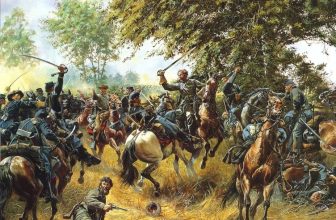
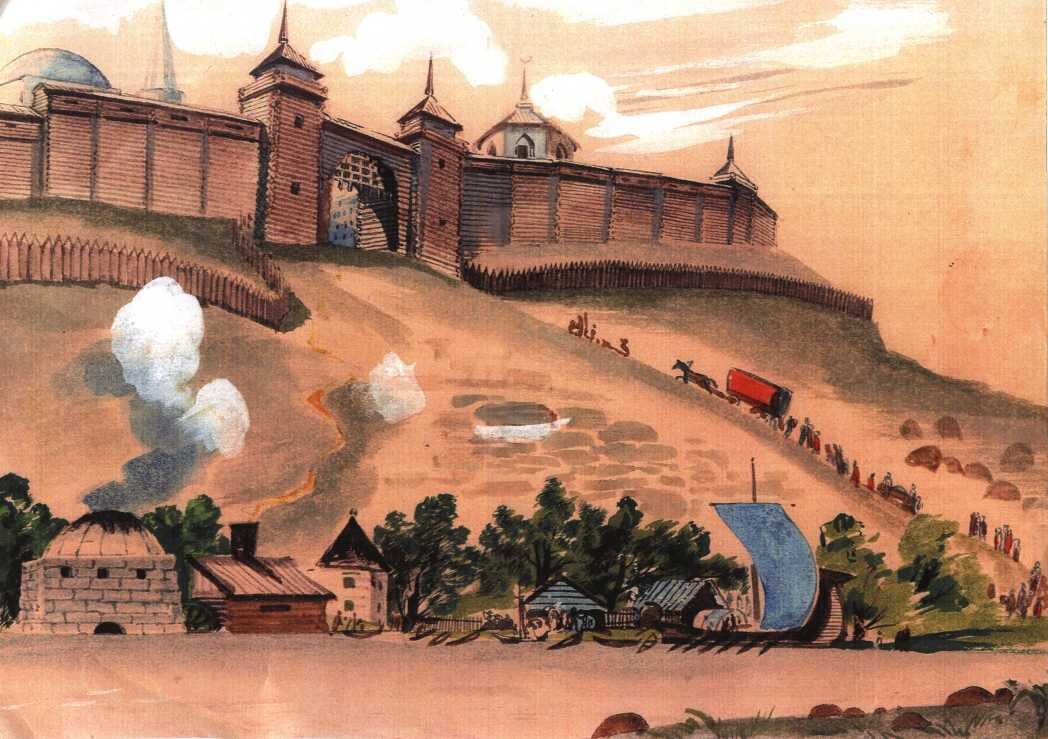
From the very beginning, the campaign went awry—the march to Kazan took place under conditions where the snow was deeper than the roof, and the frosts were more bitter than ever, causing the Tsar’s army to suffer heavy losses from frostbite and exposure, while even greater losses were incurred among the horses and other livestock. However, the sovereign’s “iron hounds,” accustomed to the hardships of the sovereign’s service, driven by a sense of duty and the hope of plunder and the sovereign’s (once again!) favor and a stipend of horses, armor, a fur coat from the tsar’s own shoulder, caftans, bundles of goods, and plain old money—marched on and on until the panorama of the Tatar capital opened up before them—the frozen ramparts, beyond which the spires (?) of minarets were visible, along with numerous plumes of smoke and other signs of settled life. Knock-knock, whoever lives in that little tower, open the gate—the bear is here. They remain silent, refusing to open the gate; they’ve deceived the well-wishers—smack! If you won’t do it willingly, it’ll be business as usual…
After surrounding Kazan and setting up camp, the Russians immediately began siege works—the soldiers took up their tools and began digging trenches and setting up batteries, preparing gabions, fascines, ladders, footbridges, and mantelets, while the boyars’ servants set about plundering the surrounding area, dragging into the camp anything that wasn’t nailed down; and whatever was nailed down, they pried loose and hauled back to the camp—everything comes in handy on a farm, even a piece of string.
It seemed like things were finally moving forward, and soon… Alas, if you want to make God laugh, tell Him your plans. Just like last time, the weather intervened forcefully in the voivodes’ calculations (its own ice age—may it be cast seven coffins deep into the center of the world’s equilibrium!). Suddenly, an “aerial mood” set in—a severe thaw—everything began to flow and melt; water all around, water, and more water—knee-deep and higher; the potions had turned to mush, provisions and fodder were ruined, there was no firewood, and no fire could be lit. The infidel sorcerers and witches had done their work—rumors began to spread among the warriors and the staffs. In desperation (they hadn’t come all this way for nothing!), the commanders gave the order to begin a bombardment, followed by an assault—but it was futile; the siege works had not been completed, so the Tatars were able to repel the attack. After languishing for several weeks outside Kazan, the commanders proposed to Ivan at a council of war (and this proposal could not be refused) that they retreat. The Second Campaign against Kazan, contrary to all expectations, ended in failure.
However, tenacity is a trait common to the Kalitich family. Vasily III laid siege to Smolensk three times before the people of Smolensk surrendered—and is his son any less capable? Where there are two, there will be three; we just need to prepare even better. And on the way back, during a military council, the boyars recalled Vasily III’s unexpected move—to erect a fortress on the approaches to Kazan as an advanced outpost and a base for launching an offensive against the city. Ivan was once again presented with an offer he could not refuse—for even the shrewd Shah Ali supported this idea, as did the Kazan princes and the émigré mirzas who were accompanying the Russian army in the supply train, hoping to ride into Kazan on Russian sabers and spears and form the core of a new administration there from local personnel. At the confluence of the Sviyaga and the Volga, on Mount Kruglaya, a site was chosen for the construction of a fortress—very close to Kazan; it would be possible to literally take it by the throat, while at the same time threatening the local Mordvins and Cheremis, openly hinting that it was time to change masters. And, having accomplished this God-pleasing deed by determining the site for the fortress’s construction, Ivan, the boyars, the voivodes, the wise Shah-Ali with his followers, the princes of Kazan, the mirzas, and the entire Russian army turned back home. The Second Battle of Kazan was over, but the war—and our story—were not yet over…
To be continued.