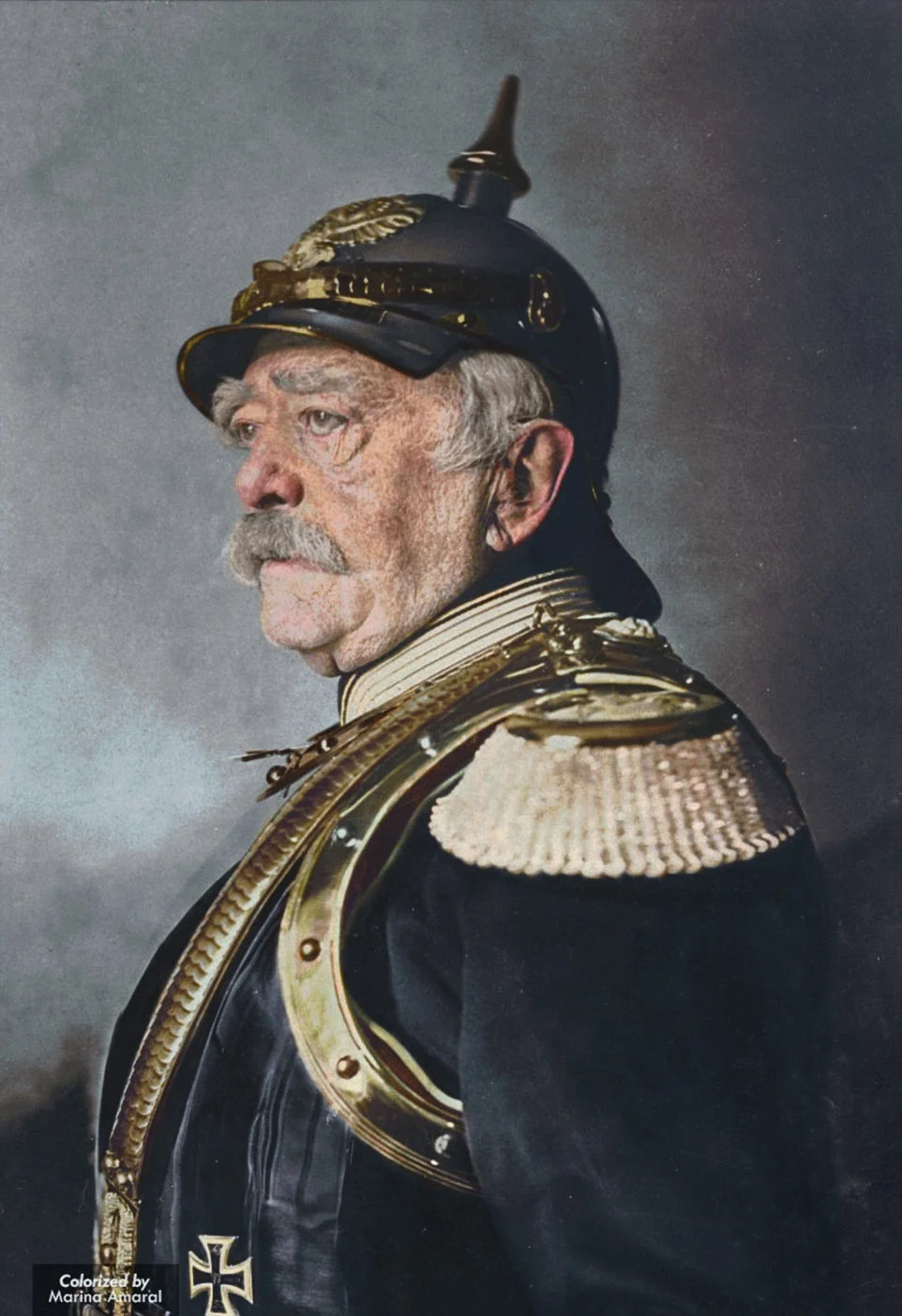
We are accustomed to seeing Otto von Bismarck as a skilled diplomat and a brilliant strategist who wove the most intricate political webs while maintaining a fragile balance of power on the continent. But what if that delicate thread were to snap? What if the “Iron Chancellor” had cast aside all delicacy, replacing it with relentless cruelty and uncompromising determination, recognizing no moral constraints on the path to Germany’s greatness?
Contents:
Disarming France
Let’s imagine that in 1871, Bismarck decided that France needed to be disarmed so that it would not pose a significant threat in the future. To that end, he sets forth the following conditions: The German Empire would annex Alsace-Lorraine and push slightly further inland, taking Nancy; France would demilitarize the territories roughly along the Seine River; Reparations amounting to 5 billion francs; Reduction of the army to 400,000; All factories, whether damaged or rebuilt during the war, would be required to contribute 5% of their output to Germany’s needs; A ban on universal conscription (mobilization limited to contract soldiers); 10% of shipyards and 15% of artillery factories must operate for German needs; France may not enter into military alliances, and may enter into economic alliances only after consulting with Germany. Following this humiliation of the French, Bismarck focuses on widening the gap with other European economies at the expense of French industry. On March 17, 1873, an official alliance was concluded between Russia and Britain in an effort to stabilize the situation even slightly and to enhance their security.
The War Against Austria-Hungary
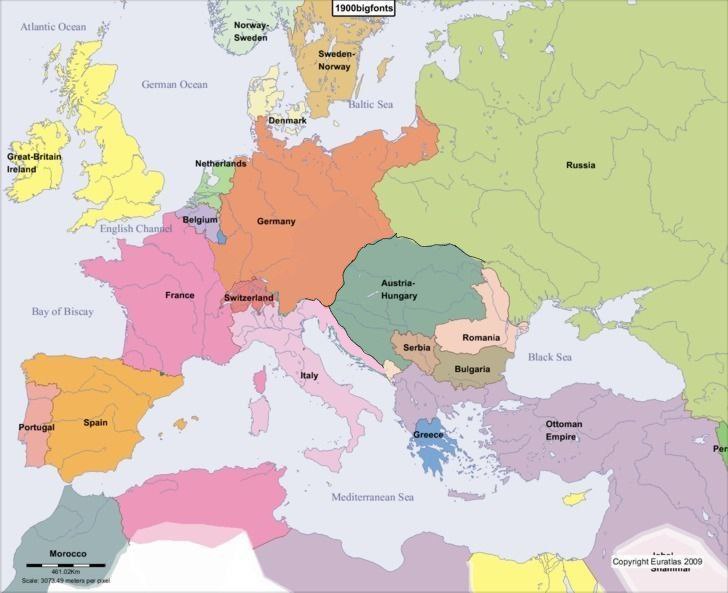
On March 10, 1880, he sent a secret telegram to the Hungarian authorities, proposing that they rise up against the Austrians; in return, Germany would grant them full independence within their existing Austro-Hungarian borders. All other details would be announced in the event of their agreement. On March 12, the German authorities received a reply telegram confirming their agreement. On March 15, a secret telegram was sent to Alexander III proposing to cede Galicia-Lodomeria to them in exchange for non-interference and a non-aggression pact (if Germany attacked Britain, the pact would be nullified). On March 20, Russia sent a reply telegram expressing its consent. This significantly improved their diplomatic relations. On May 1 at 4:00 a.m., Bismarck sent an ultimatum to Austria-Hungary demanding the cession of Bohemia, Tyrol, and Vorarlberg. Austria-Hungary refused, as it was confident it could wage a protracted war and would eventually receive aid from other powers—most likely, in their view, Russia, since they shared a border and Russia wanted to acquire the eastern German territories. As a result, at 7:00 a.m., Bismarck gave the order to advance and addressed his people. The official reason for the war was “the need to unite the German peoples and free them from Austrian oppression.” At 10:00 a.m., the Hungarian uprising began in Budapest. On May 2, Germany captured Salzburg, Bregenz, and Troppau. On May 5, Liberec falls. On May 7, Innsbruck and Linz fall. On May 8, Pilsen falls. On May 10, German forces approach Prague. On May 15, Graz falls, and fighting for Prague begins. On May 17, Prague was captured, and the Tyrol region was also completely taken. On May 23, Hungary occupied all of Transylvania, and Brno was captured. On May 25, the Salzburg region and Upper Austria were completely captured. On May 30, Mödling fell; Austria fought for its survival with all its might, despite its fragmentation. On June 4, Bratislava fell, and Vienna was semi-encircled. June 12 marked the fall of Vienna. On June 15, Austria surrendered. Under the terms of the peace treaty, as promised, Russia was granted Galicia-Lodomeria and Bukovina, while Hungary received all the territories it had possessed as part of Austria-Hungary, plus Croatia and Slavonia, as well as Bosnia and Herzegovina. Dalmatia and the Austrian Littoral were to be ceded to Italy to improve relations and form an alliance. Germany took Vorarlberg, Tyrol, Salzburg, Upper Austria, Bohemia, Moravia, and Silesia. I’ve attached the approximate borders (very, very approximate) as they stood at that time.