So, the year is 1933. Hitler comes to power, and Germany begins military cooperation with Chiang Kai-shek, just as in RI. Germany’s choice of Japan was not set in stone, and the Reich could, in fact, have chosen China. Let’s imagine that in 1936, Chiang Kai-shek realizes he needs to take a tougher stance against the Communists, and that all the money and weapons received from Moscow will slowly but surely weaken the Kuomintang’s position against Mao. Consequently, he decides to sign the Anti-Comintern Pact. Germany begins to see China as a reliable ally: For example, in the future, it would be possible to negotiate over Qingdao, and the Chinese clearly have ambitions to regain control over the former territories of the Chinese Empire—and Germany could help with that. China also had substantial reserves of tungsten, which Hitler purchased from Franco in RI. In RI, Germany supported China very actively: Mackensen and Konstantin Neyrat stated that there were no problems in German-Chinese relations; China stated that Japan had seized its Pacific territories and could not be trusted, and that China was pursuing an anti-communist agenda; Hjalmar Schacht declared that the Anti-Comintern Pact was not directed against China; Germany granted a loan to China and promised not to cooperate with Japan; Hermann Göring, for his part, declared outright that Japan would betray the Reich and could not be trusted under any circumstances, and stated that Germany had chosen China and would make it great. Hitler chose Japan solely because he believed it would be better able to counter communism. As you can see, China had established itself as an active fighter against communism, and Germany chose it.
Contents:
The Second Sino-Japanese War
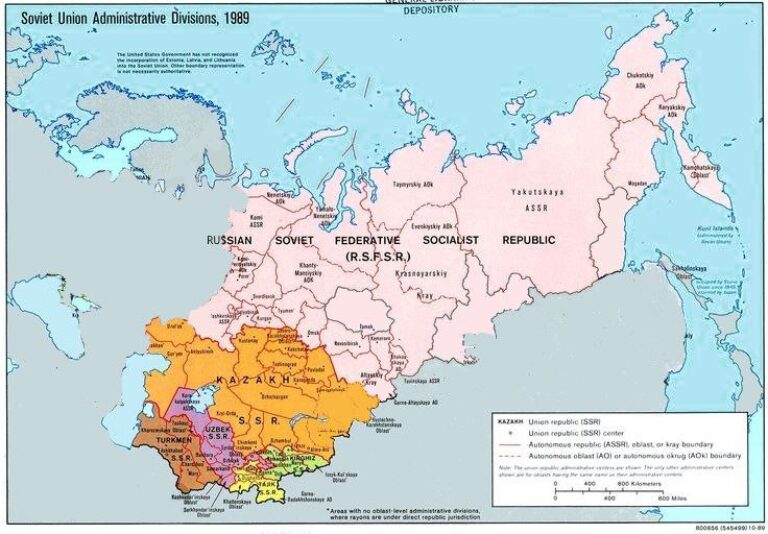
On July 7, the very day the Second Sino-Japanese War began, Hitler declared his support for China, sent China a loan of 50 million marks, and launched an investment project in Chinese industry. In RI, Beijing fell on July 28; here, I’ll assume the date was August 17. On August 21, the Reich imposed an embargo on Japan and began purchasing more resources from China. In RI, Shanghai fell on November 12, but here I’ll assume approximately January 4, 1938, thanks to Germany’s economic, diplomatic, and partly military support. The Japanese offensive stalled, especially after Chinese troops retreated on January 7 to the Yangtze River to strengthen their defenses. A war of position began—one that Japan had tried to avoid by any means necessary. Japan’s resources were dwindling. On April 13, China launched its first major counteroffensive toward Shanghai. It cannot be said that the Chinese achieved complete success—but at least the situation improved: Chinese forces based in Hangzhou advanced as far as Zhejiang, thereby improving their supply lines. This dealt a severe blow to Japanese morale, both among civilians and the military. On May 2, Huzhou was captured there as well, and the Chinese regained access to Lake Taihu. The Japanese began attempting counterattacks—and Chiang Kai-shek took advantage of this, remaining in a purely defensive posture while decimating Japanese manpower. On June 5, in the west, China captured Xinyang and, continuing the offensive, recaptured Zhumaidian. At the same time, the shared support from Germany and the U.S. brought them slightly closer together. A small thing, but a pleasant one. This would play a role later on. So, by June, the Japanese civilian population was already more open to peace. In July, the Japanese launched a massive counteroffensive across all fronts. They recaptured Zhumaidian and seized several other frontline cities, but nothing more. Many soldiers were killed, so the question is: Was this even a victory at all? On July 11, Zhuzhou, north of Nanjing, was captured, and on July 18, Hefei—the Chinese’s greatest victory to date. After that, the front remained more or less stable. On September 1, Suzhou, west of Shanghai, was captured, which signaled the city’s possible fall. On September 8, Wuxi, north of Suzhou, was captured. There was a risk that Japanese forces in Shanghai would be cut off, since the Yangtze River ran even further north, so more troops were deployed there. In response, on October 4, the Chinese advanced to Shanghai. On October 18, Shanghai fell. From this point on, events unfolded more rapidly. As you can see, Nanjing did not fall at all in this scenario, and so a new offensive began from there. Zhejiang was captured in November, Yangzhou at the end of November, and Taizhou in December. The Japanese proposed peace talks, which lasted from December 9 to December 15 but ultimately failed due to Japan’s excessive demands. On January 5, Xi’an was captured in the west, and a large-scale Chinese offensive began. On January 13, Zhoukou fell; on January 18, Zhengzhou fell further north. On February 7, Qingdao was recaptured—the front was on the verge of collapsing. By the end of February, Yantai and Weifang had been recaptured. On March 21, Tianjin was captured, and on April 9, Beijing. Chiang Kai-shek sought to regain Manchuria and therefore continued the offensive. By May 28, approximately 70% of Manchuria and the border cities of Korea were under Chinese control. On May 29, a treaty was signed transferring Qingdao to Germany as a token of gratitude. On June 10, a peace treaty was signed: Japan would withdraw completely from Manchuria but remain in Korea. The border territories of both sides were demobilized.
The Great Patriotic War
And so, it was June 1939: China had won, and Germany was in full swing preparing for war in Europe. The Communists in China had toned down their fervor, since they had virtually no leverage. As you can imagine, Chinese industry had developed significantly during this time, and on July 24, the Tripartite Pact was signed between Italy, Germany, and China (slightly earlier than in RI). On September 1, 1939, Germany invaded Poland. Events unfolded as in RI; the only thing I want to clarify is that China did not enter the war. June 20, 1941. Final preparations for war with the Soviets. China agrees to enter the war only against the USSR. On June 22, Operation Barbarossa begins. At 3:07 a.m., Zhukov received word that the war had begun. Minsk had fallen earlier, on June 26, due to the Soviet forces being stretched thin by the conflict with China as well. Vladivostok was captured on July 2; Khabarovsk, Chita, and Pskov on July 7; Vitebsk on July 15; and Veliky Novgorod on August 3. Kyiv was captured on August 21, meaning the advance was accelerating. Leningrad fell on August 25. Chiang Kai-shek, realizing that war with the Allies was inevitable, struck first against Hong Kong, capturing it on the day of the invasion—August 26. Suez was captured on September 3. Smolensk fell on September 17. By October 24, the entire territory of the Ukrainian SSR, including Crimea, had been completely captured. Rostov fell on October 26. On October 30, the Germans captured Podolsk near Moscow, and the Chinese captured Sakhalin and also fully occupied Mongolia. On November 4, the Germans reached the Moscow Ring Road (MKAD). On November 7, after fierce fighting, the Germans reached the Bolshoi Moskovsky State Circus—10 km from Moscow—but their advance is extremely slow. The U.S. had tried to maintain neutrality up to this point, especially since relations with the Reich were slightly better than in the Realm, but the U.S. ultimately enters the war. A major Lend-Lease program with the USSR begins; the U.S. actively participates in the war, while China actively fights against the Allies in the Pacific. On November 21, Tsimlyansk (modern-day Volgodonsk), just west of Volgograd, was captured, as was the Don Monastery. 6 km to Moscow. On November 30, the Gorky Central Park of Culture and Leisure was captured. 3.5 km to Moscow. On December 9, the Germans approached Stalingrad and captured the Tretyakov Gallery. 2 km to Moscow. In November, the Bolshoi Moskvaretsky Bridge was captured. 1 km to Moscow. On December 17 at 5:00 a.m., Hitler ordered a simultaneous offensive against Moscow and Stalingrad. At 8:00 a.m., St. Basil’s Cathedral was captured. Yes. Red Square is now German. At 10:00, the Germans entered Stalingrad; at 11:00, the assault on the Kremlin began; at 12:00, the Kremlin, Moscow, and Stalingrad fell. A ceasefire was proposed, and Stalin agreed. The Allies did not attend the conference—they continue to fight. That’s AI for you.