What if Hitler had NOT underestimated Operation Overlord? Germany would have focused more attention on the Western Front

History does not record why Hitler suddenly behaved this way. However, there is a conspiracy theory that claims there were secret contacts and even negotiations between Hitler and Stalin—or, more precisely, between their emissaries—beginning in 1944. During these negotiations, Hitler asked Stalin for guarantees of his personal safety. In other words, he wanted to know what he would have to do to ensure that the USSR would allow him to leave unhindered for Argentina—or wherever he wished to go. Conspiracy theorists claim that Stalin provided such guarantees; moreover, he promised to conceal the fact of the Führer’s escape by staging his suicide. In return, he demanded that Hitler strengthen his defenses against the British and Americans as much as possible and prevent them from occupying large territories.
Whether this actually happened in our world or not, no one can say for sure—at least not yet. But in a certain parallel world, it did happen. And in this alternative scenario, we’ll explore what happens next.
Contents:
Fork
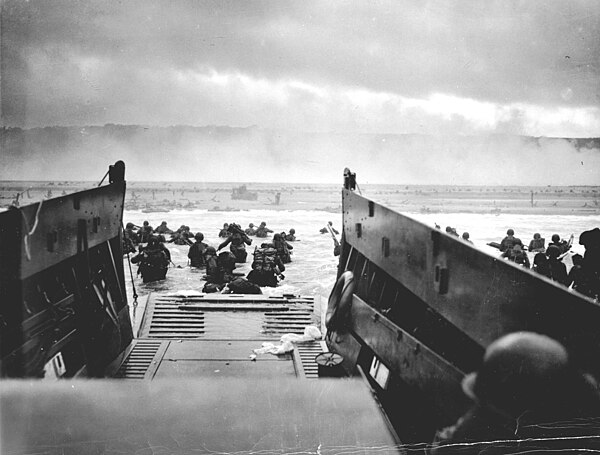
On June 6, 1944, the Normandy landings took place. But what if the landings had failed?
In the Rhineland, approximately 150,000 Allied troops took part in the landing, facing off against approximately 50,000 of Hitler’s forces. Let’s imagine that in June, Hitler had received intelligence about a possible invasion (which is exactly what happened in RI) and had correctly assessed the strength of the Allied forces and their intentions. He would have redirected more airpower to those regions, possibly reducing the number of air wings defending Germany from bombing raids. As a result, the airborne assault would have suffered greatly, and logistics and coordination would have been severely disrupted. Realizing that such a massive landing would take a very long time to prepare, he would have immediately redeployed troops from other sectors of the front to Normandy. As a result, taking into account reserves and troop redeployments, Hitler would have scraped together approximately 100,000 additional troops, who would have been immediately thrown into battle. The air force would have disrupted supplies coming in from the sea, and the Germans would have launched a counterattack, driving the Allies back to their starting positions. A war of attrition would have begun.
Key Events
Meanwhile, the Soviet Union continues its advance from the east, launching Operation Bagration and driving the Germans back significantly. Allied forces in Normandy begin to grow to approximately 1,500,000, compared to 700,000 Germans, some of whom had been redeployed from the east. Consequently, Germany begins to lose ground very slowly but surely. Thanks to the increased focus on Normandy, the Soviet Union is advancing slightly faster.
By August 1, the Baltic encirclement was complete; by September 10, the Soviet forces were already in contact with the Italian-occupied territory of Greece, but the situation in Normandy was not so rosy: Only Normandy, Brittany, Île-de-France, and the Loire Valley had been captured. In RI, by September 10, they had already captured approximately 70% of French territory. The Germans never managed to break the Baltic encirclement. By October 9, Transylvania had already been completely captured, while in France only Paris, Orléans, and Bordeaux had been liberated.
By early November, two-thirds of modern-day Hungary had already been captured. On November 16, preparations began for the anti-Hitler forces, including Soviet troops, to land in Schleswig; the approximate start date was February 22, — They wanted to intensify the offensive and link the Western and Eastern Fronts. Speaking of the Western Front—by this point, all of France except for the Grand Est had already been liberated. The Allied offensive into Belgium had begun. By December 1, the Allies had completely liberated Belgium and set their sights on the final liberation of France.
By early 1945, France had been almost completely liberated, but the Germans had fortified their positions very strongly, while in the east, the Soviet Union had already captured Königsberg. By early February, the Soviet Union had completely liberated Yugoslavia and Hungary. On February 5, the Yalta Conference took place—for the Soviet Union, the outcome of the conference was excellent.
On February 8, the Soviets launched an offensive into eastern Italy from Yugoslavia. The Allies completely liberated France and advanced into the Netherlands. On February 17, the Soviet Union captured northern Poland. On February 22, troops landed in Schleswig, and Hamburg was partially encircled by a rapid blitzkrieg. On March 14, the Soviet Union captured northern Italy, linking the Italian and French fronts—Italy was completely occupied. On March 16, Hamburg fell, and the northern front linked up with the eastern front.
On March 20, the Berlin offensive began; meanwhile, the Allies launched an offensive against Germany, having never fully captured the Netherlands. On April 2, the USSR approached Berlin but had not yet captured it. On April 12, Berlin fell; on April 17, the Soviet Union captured the northern Netherlands from the north, linking up with the Allies there. In the west, Germany held its ground, while the eastern front collapsed. By early May, the Soviet Union had captured half of the territory of Czechoslovakia, while the Allies had taken Frankfurt and the western mountains of Austria. On May 6, Magdeburg and Munich fell under Soviet pressure. On May 9, with the fall of Hanover, the Reich capitulated. So, what is the overall picture? The Soviets control northern Italy; most of Austria; the Czech Republic; and northern, eastern, and parts of central Germany—to put it generally. The resulting postwar spheres of influence: What do you think of a Europe like this?