What If the Romans Had Been More Successful in the East? Part 9. The Second Half of the 19th Century. A Little About Alternative Languages

Contents:
Events
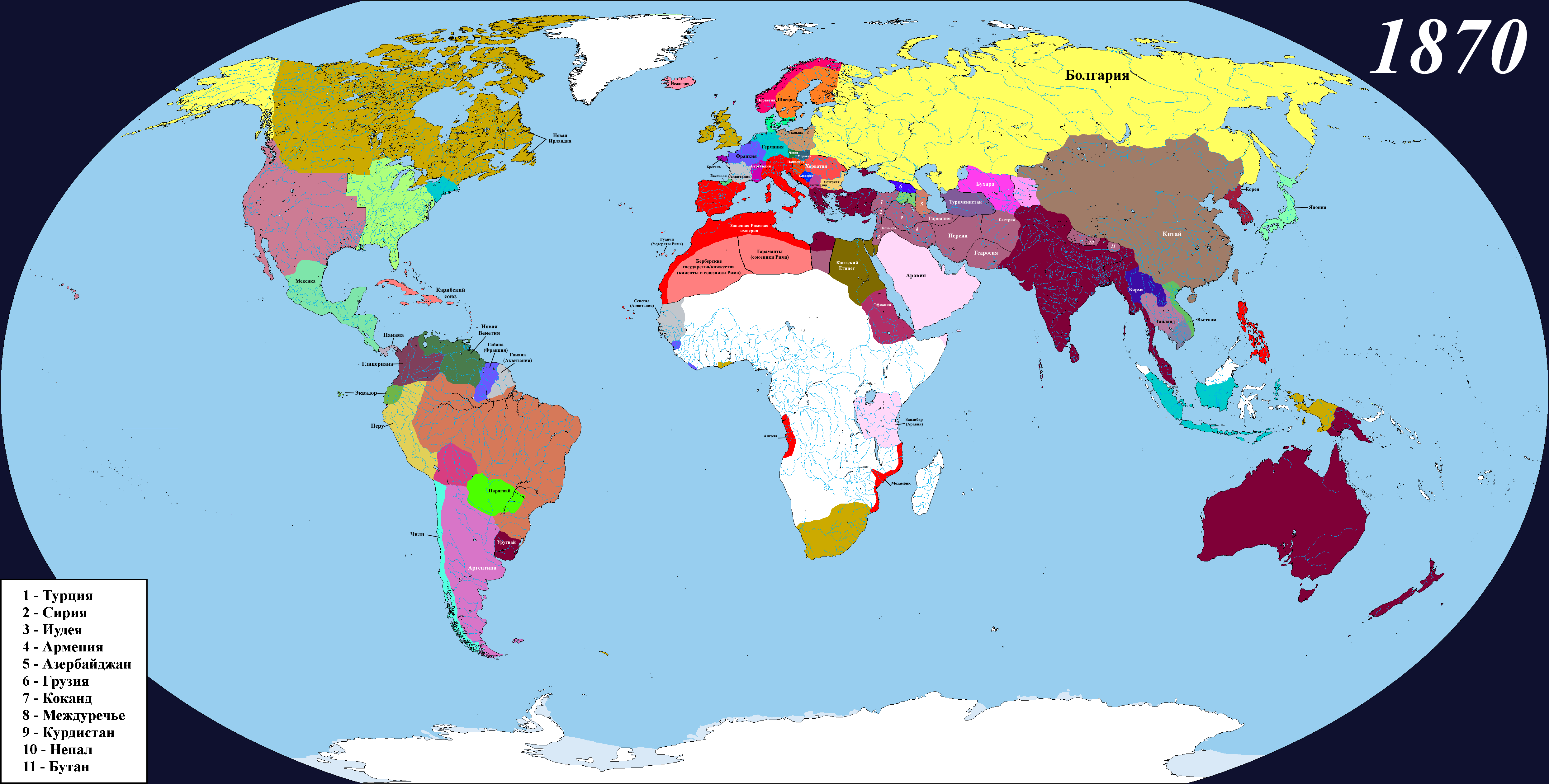
In the mid-19th century, Western Rome ultimately lost control of its colonies. Several independent states emerged in South America, but they had no impact—at least not directly—on global geopolitics during that period.
North America
The most successful of the newly formed states was the Union of the Western Provinces (UWP). After gaining independence, the UWP annexed Mexico’s northern territories, where the population was predominantly of European descent.
The loss of its northern territories led Mexico to reevaluate its domestic policy, and it shifted its focus to retaining control of Central America.
England cedes small territories to Germany in order to make it more difficult for the Western Folk’s troops to advance along the eastern coast.
Eastern Rome
Two generations of Eastern emperors pursued a policy of modernization. Finally, in the early part of the second half of the century, it began to bear fruit.
Taking advantage of their technological edge, the Eastern Romans defeated the Seljuks and the Persians. The defeated states were divided into several parts, each ruled by local puppets or a semi-independent colonial administration.
Several countries—Georgia, Armenia, Azerbaijan, Turkmenistan, and Bukhara—gained independence and served as a buffer between Eastern Rome and Bulgaria.
Europe
Asturia is part of the Western Roman Empire. Supporters of independence lack the influence to bring about change, so they move to the Caribbean islands, where they form the independent Caribbean Union.
Brittany and Vasconia gain independence.
Languages
It’s worth noting that I am not a professional linguist. Furthermore, an alternative scenario would lead to a different evolution of the languages. Therefore, below are the proposed names for the languages and my brief speculations about their evolution.
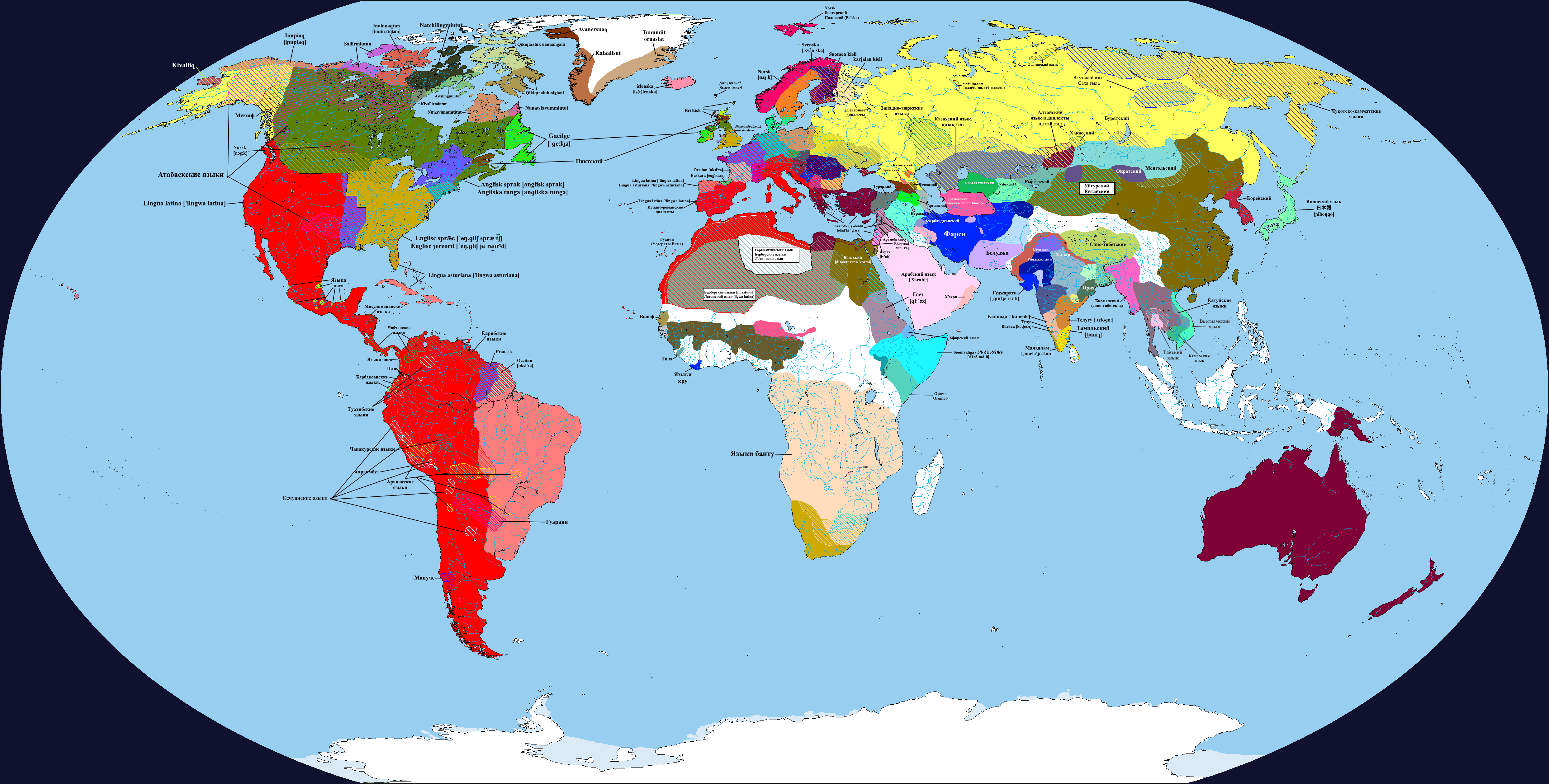
Strictly speaking, there are two varieties of English in the world: Southern and Northern.
Englisc sprǣc or Englisc ȝereord (roughly transliterated into Russian as “english spreach” or “english yereord”)—Southern English. It is the dominant language in the Anglosphere and one of the international languages, on par with Latin, Greek, and Bulgarian. Due to the absence of large-scale Viking invasions, the Norman conquest of England, and related events, it has retained most of its vocabulary.
However, the language was not static. Although most new words were coined based on existing ones (a process known as “calque”), some foreign words still found their way into the language. There was also a vowel shift, though not on as large a scale as in real history. It’s worth noting that such a shift also occurred in German, though not as dramatically as in English.
It’s practically impossible to take every single factor into account, down to the smallest detail, so I won’t try to construct a sentence in alternative English.
Justin B. Ray once pondered this question. And in my opinion, he came up with a pretty interesting take on it, although this is just one of many possible scenarios: http://jbr.me.uk/allo.html
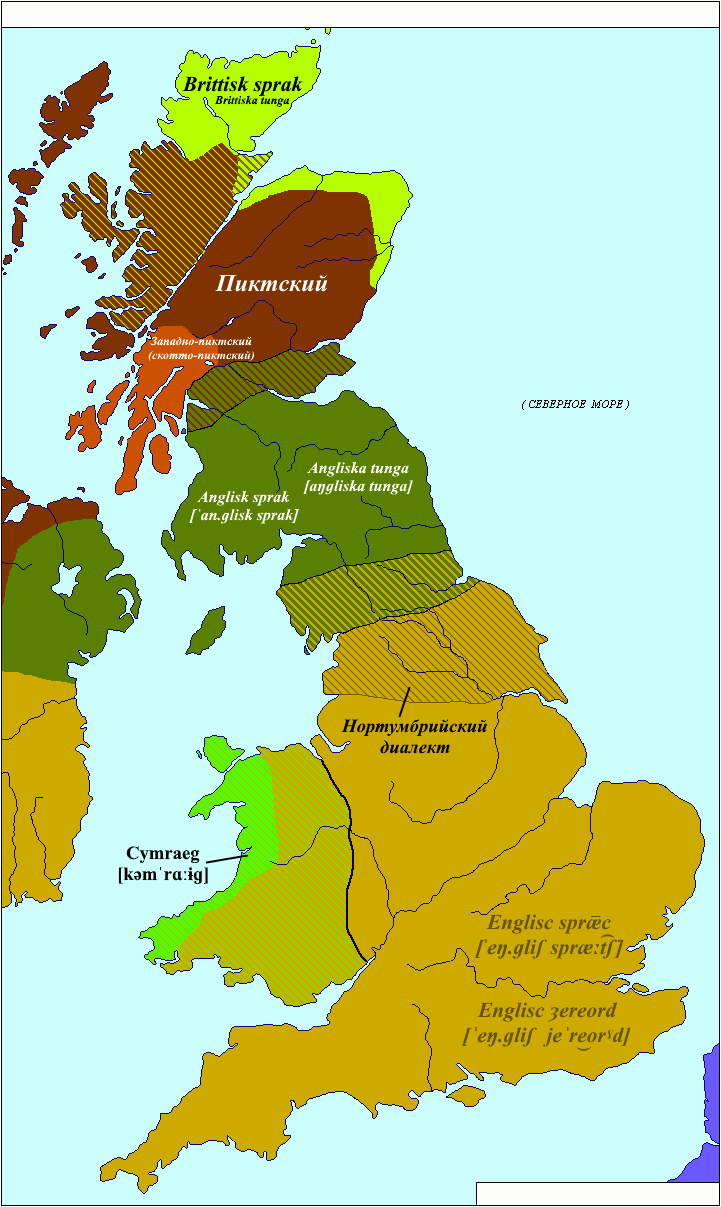
Southern English is based on the West Saxon dialect. The Northumbrian dialect also exists, though it does not play a significant role; it is essentially a transitional form between Southern and Northern English.
Anglisk sprak or Angliska tunga (Anglisk sprak or Angliska tunga) is a Northern variety of the English language. It is most widely spoken in Northern Britain and in the territory of the Republic of Canada. It has been heavily influenced by the Old Norse languages and is considered a West Germanic language, primarily due to its origins. It serves as a sort of “bridge” between Southern English and Icelandic.
Northern British (brittisk sprak or brittiska tunga) – Derived from the Norwegian dialects of Old Norse. As a result of the gradual assimilation of the local population, it underwent some local influence and evolved into a distinct language.
Pictish (self-designation unknown) – In this world, the Picts were much less frequently attacked by the Vikings and were quite capable of fending off the Scots. Later, they conquered the Scots, and in the western part of the Republic of Scotland, the West Pictish language emerged: essentially Pictish, but with a strong Scottish influence.
Latin (Lingua Latina) – The primary language of international communication. A revived language that serves, as it were, as a supra-dialectal standard for other Romance languages. On the one hand, before the invention of mass media and rapid transportation, people lived in their own regions and were isolated from one another; on the other hand, the empire in Spain and Italy remained largely intact, and Latin continued to be the official language.
The development of the Romance languages in this world will, with a very high degree of probability, follow a slightly different path, and they will most likely be more similar to one another than they were in real history.
Bulgarian is an East Slavic language, divided into southwestern, southern, central, and northern dialects. Unlike other languages, the difference between the northern and central dialects has now virtually disappeared. The western and southwestern dialects, however, differ more significantly. The language has also incorporated a number of words from Old Bulgarian and the Alanic language.
Gutisk, Gutish, Gutiska, Gutishka – Predominantly spoken in the Republic of Bulgaria, and also found in Crimea. Approximately one-third of the vocabulary consists of loanwords from other languages: Latin, Greek, Slavic, Turkic, and others. It is subdivided geographically into Thracian-Gothic and Crimean-Gothic.
Gaelige (Gaelic) is an Irish Celtic language. Its speakers settled in these lands after fleeing English rule in their homeland. In their new home, they established ties with the local inhabitants. Gradually, due to their small numbers, the local inhabitants assimilated into the Irish population, and their language became established in this part of Canada (or Vinland).
Polish, Czech, Moravian—these are West Slavic languages. They differ from the actual languages themselves. I’m not sure exactly how much they differ.
Croatian is a South Slavic language. It has been greatly influenced by Latin, Gothic, Vlach, and other languages, but has been most strongly influenced by the East Slavic language Bulgarian.
Pannonian and Slovenian—These are also South Slavic languages, but they were subject to greater Latin influence. Nevertheless, they have retained most of their Slavic vocabulary.