Home » What if the T-80 had been armed with a 152mm cannon and put into production? What could have been the T-94—the production “Object 292”?
Editor choice
What if the T-80 had been armed with a 152mm cannon and put into production? What could have been the T-94—the production “Object 292”?
In the history of Soviet tank building, there were quite a few vehicles that fell just a few years short of transitioning from experimental prototypes to mass-produced tanks. But “Object 292” occupies a truly unique place among them. Unlike numerous paper projects, it existed in metal, drove, and fired. Moreover, its main weapon—the monstrous, by tank standards, 152.4mm LP-83 smoothbore gun—was indeed successfully mounted on a T-80 family chassis.
Trials proved that the concept was fundamentally viable. Designers managed to make a relatively compact Soviet main battle tank withstand the recoil of a gun that outgunned the standard 125mm system. However, all this happened at the worst possible time. The USSR was collapsing, military spending was being slashed, and defense enterprises were no longer fighting for new government contracts, but often simply for survival. As a result, this promising vehicle remained a one-off prototype.
But let’s imagine history took a slightly different turn. The Soviet Union still collapsed, but the economic crisis proved less devastating, and in the early 1990s, the Russian leadership decided to preserve the Leningrad tank-building school and make the T-80 the backbone of the army’s most combat-capable units. Work on “Object 292” receives funding, the autoloader is perfected, and the experimental vehicle is transformed into a production tank.
This is exactly the kind of vehicle that could have been called the T-94.
The Real “Object 292”: The Tank That Actually Fired
The story of the future T-94 did not begin as a fantasy about the return of heavy tanks. By the late 1980s, Soviet designers faced an obvious problem: the potential for further improving the performance of the standard 125mm tank gun was becoming increasingly limited, while the armor protection of Western main battle tanks was continuously improving.
One of the most radical solutions was to increase the caliber.
The Design Bureau of the Kirov Plant, in collaboration with VNII Transmash, began work on a vehicle later designated “Object 292.” A high-powered 152.4mm gun was chosen for it. Initially, a rifled version of the six-inch gun was also considered, and the vehicle’s creators saw this caliber as an opportunity to obtain not only an extremely powerful anti-tank weapon but also a significantly more versatile munition.
A multitude of problems arose. The turret had to be redesigned, the turret ring reinforced, and the issue of accommodating significantly larger rounds had to be resolved. For the prototype, a production T-80BV was ultimately used, and its turret was heavily modified. A new casting appeared around the mantlet, the rear section was altered, special bustles were provided, and the turret’s weight was artificially increased to match that of the prospective combat compartment. The turret ring itself also required reinforcement.
By September 1990, the prototype was practically ready, although a full-fledged loading mechanism was still missing. In 1991, the vehicle underwent firing trials at the Rzhev proving ground. The results were positive: the massive gun had indeed been made to work on the T-80 chassis. Sources emphasize that in terms of ballistic performance, the 152mm system noticeably outperformed the standard 125mm gun, and the dimensions of the LP-83 itself were kept within quite reasonable limits. Moreover, the newly developed combat compartment was intended to be installed on the T-80 without radically altering its chassis.
And this is where real history practically ends.
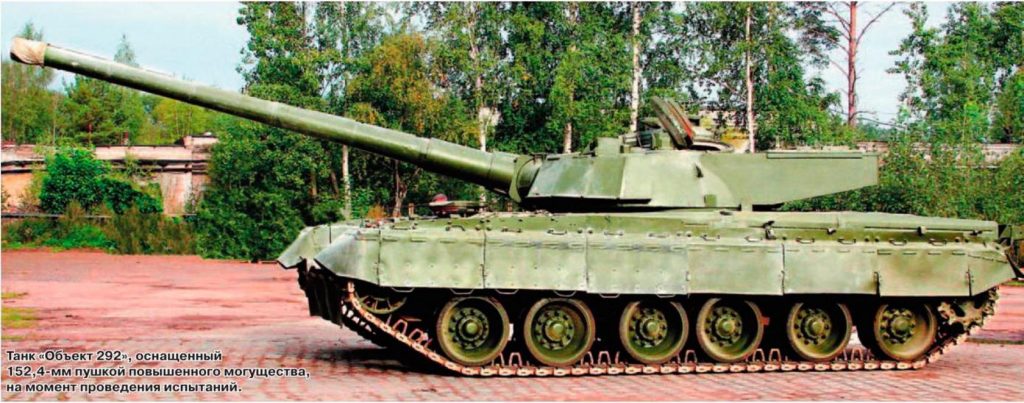
The Real Object 292
Why the Six-Inch T-80 Never Appeared in Our Reality
“Object 292” fell victim not so much to technical problems as to the timing of its birth. The final stage of the program coincided precisely with the early 1990s, when funding for promising developments was sharply cut. Spetsmash was experiencing difficulties, and the enterprises involved in creating the new armament and turret were in a dire situation.
After the collapse of the USSR, the situation worsened even further. Russia inherited several practically competing tank design schools at once, along with a massive number of already produced T-72s, T-80s, and T-64s. At the same time, the army was rapidly shrinking. Under these conditions, adopting a fundamentally new variant of the T-80 with a separate nomenclature of 152mm tank ammunition looked like an unaffordable luxury.
As a result, further development took a completely different path. The much more conservative T-90, which retained the 125mm gun and significant commonality with the T-72 family, became the Russian main battle tank.
However, for our alternate history, it is enough to change just a few decisions.
Historical Divergence: Russia Retains “Object 292”
Let’s imagine that after the successful trials of 1991, the program was not canceled. Moreover, the experience of local wars in the early 1990s prompts the Russian military to pay attention to the immense power of the 152mm munition.
In 1992, the Ministry of Defense makes a compromise decision. Completely re-equipping the army with a new tank is too expensive, but they decide to retain the promising vehicle as a qualitative enhancement tank. The basis is not the T-80BV of the experimental prototype, but the significantly more advanced T-80U.
This path looks the most logical. “Object 292” was initially primarily a testbed for a new combat compartment and armament, whereas a production vehicle had absolutely no reason to inherit all the compromises of the test prototype.
Over the course of 1992–1993, the designers perfect the loading mechanism, create a full-fledged armored rear turret bustle, improve the fire control system, and adapt the vehicle for mass production. Simultaneously, the family of 152mm tank munitions is finally finalized.
And in 1994, the new tank is adopted into service.
Hence its alternate name emerges—the T-94.
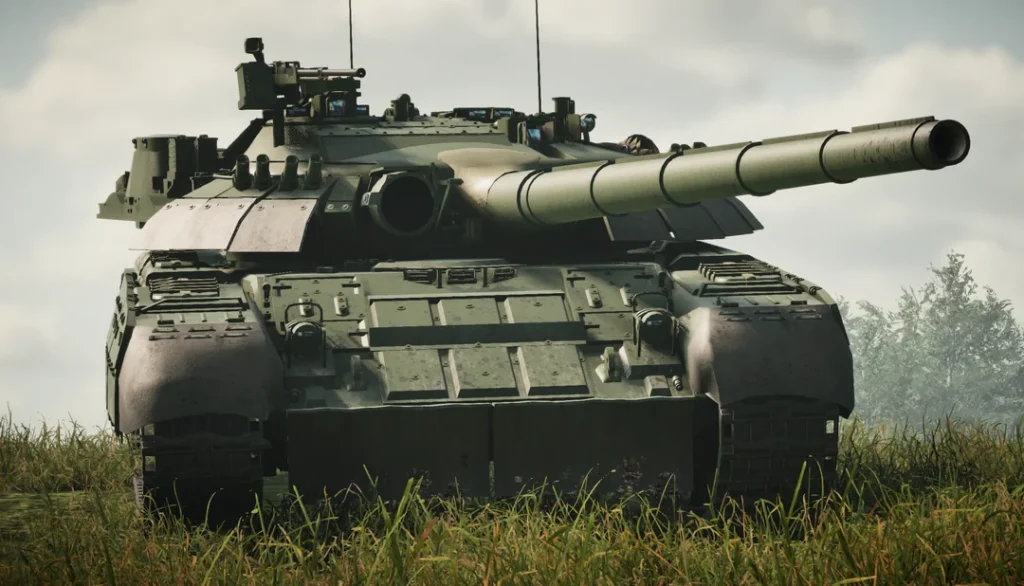
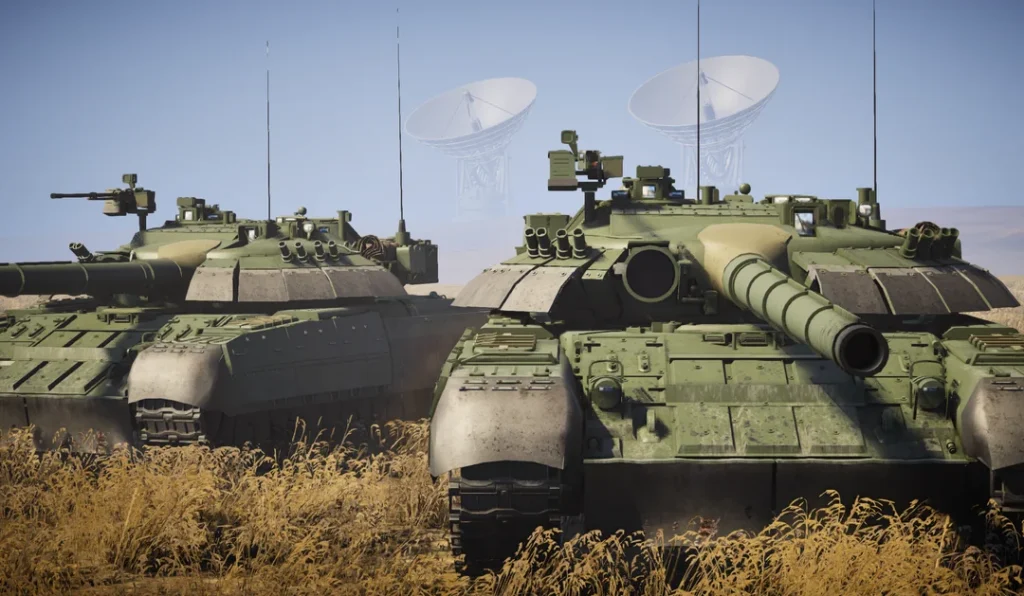
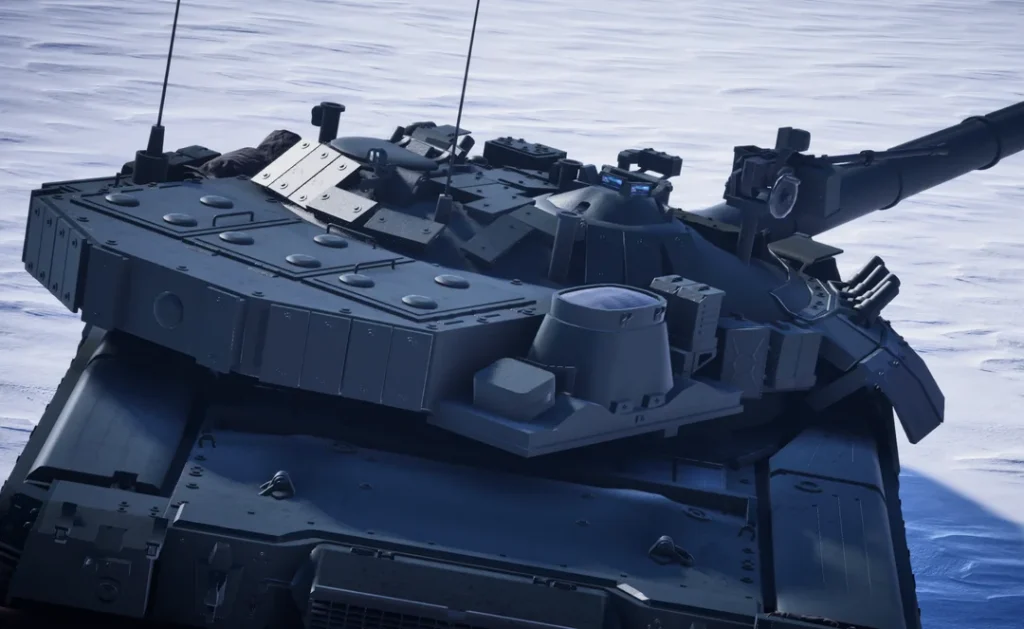
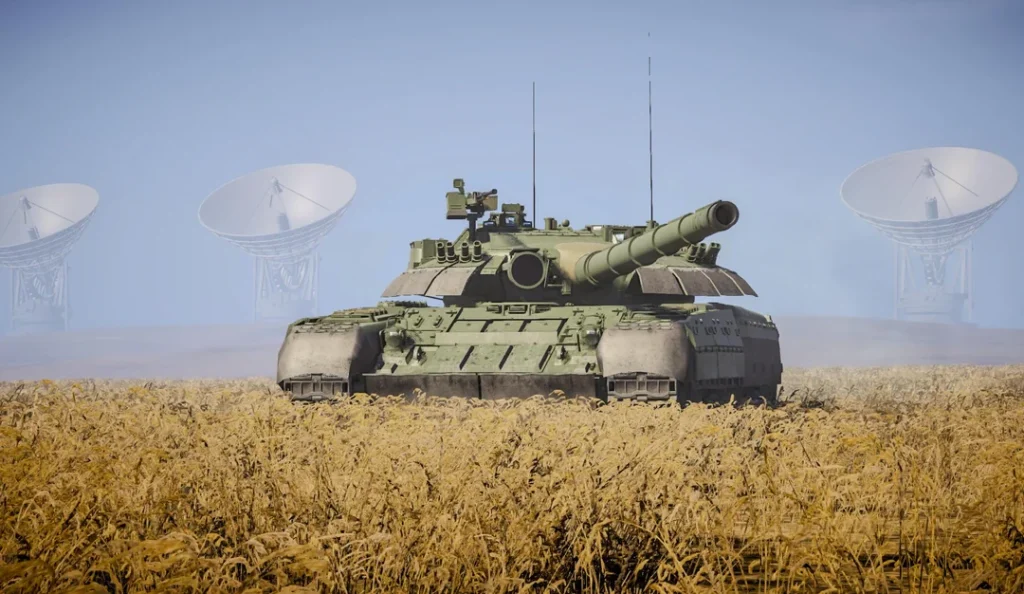
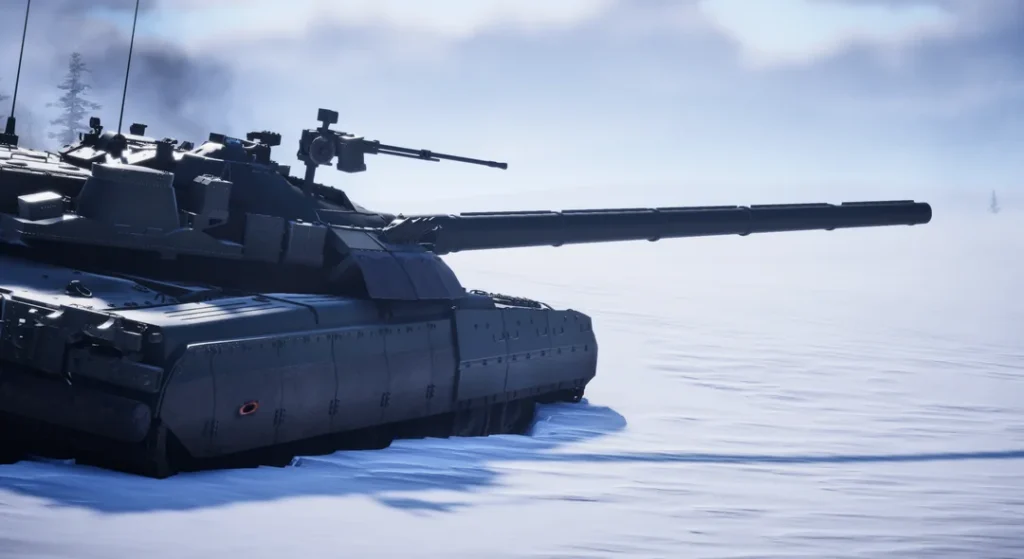
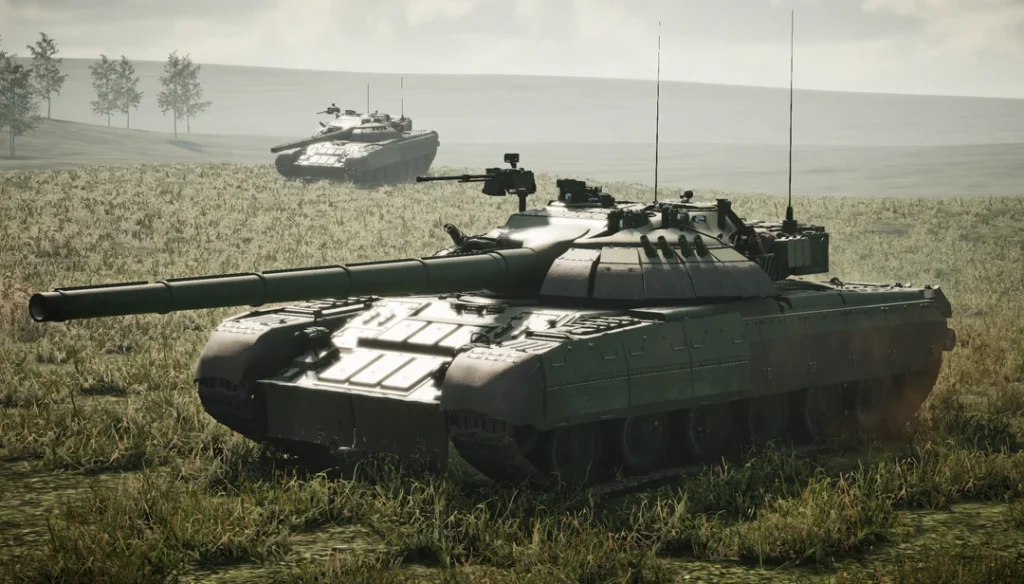
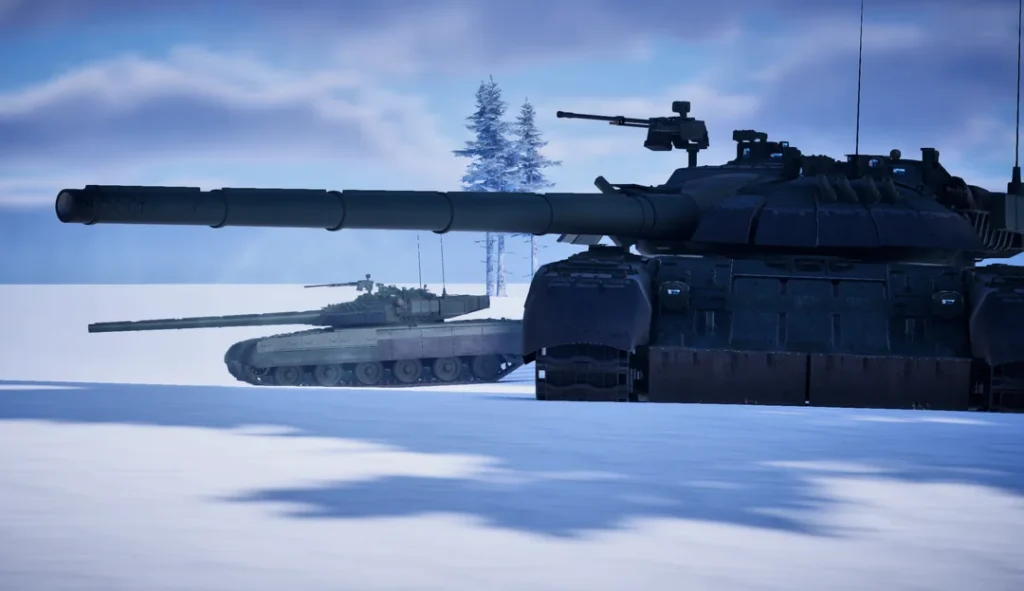
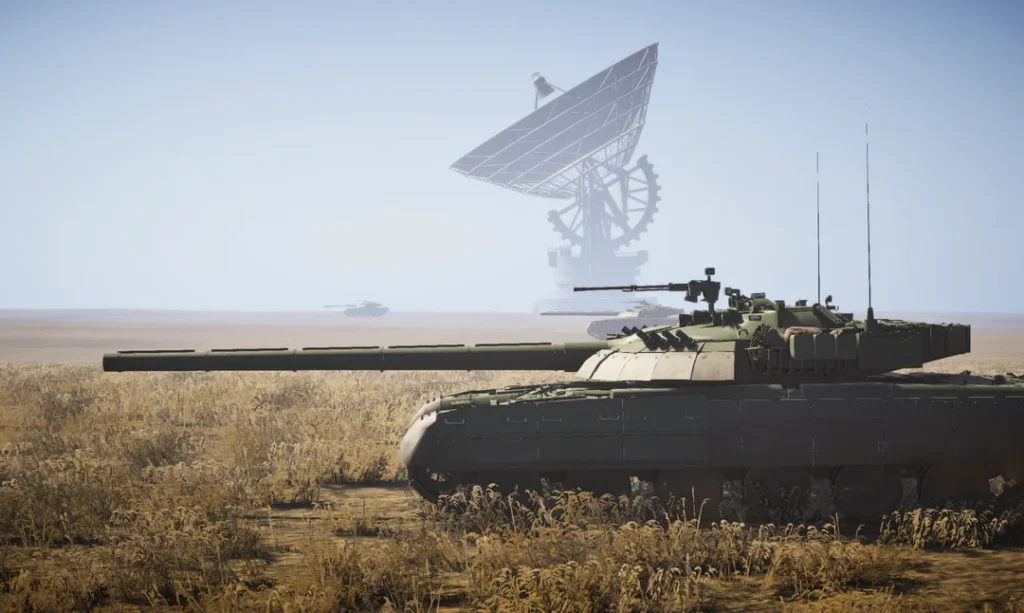
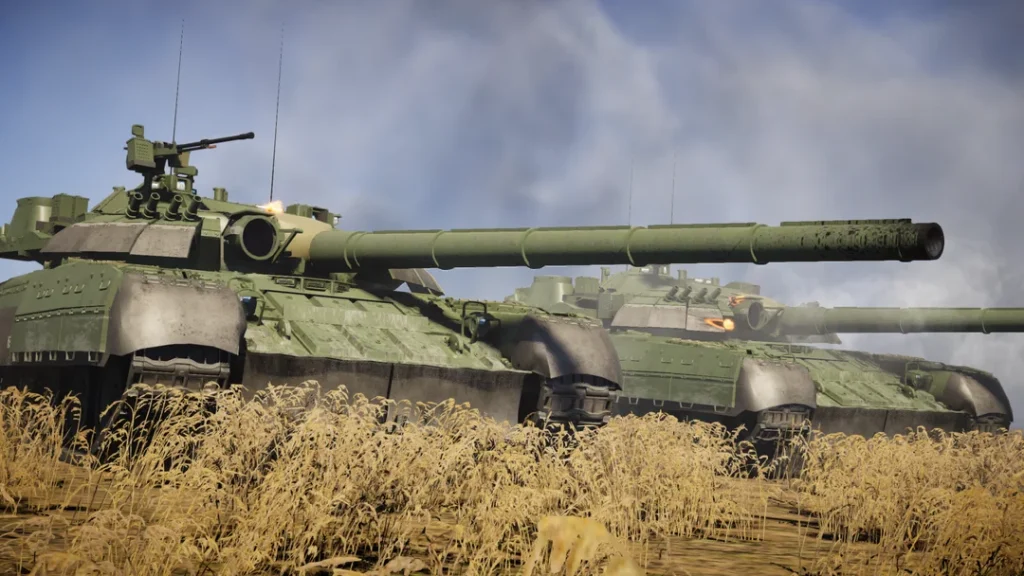
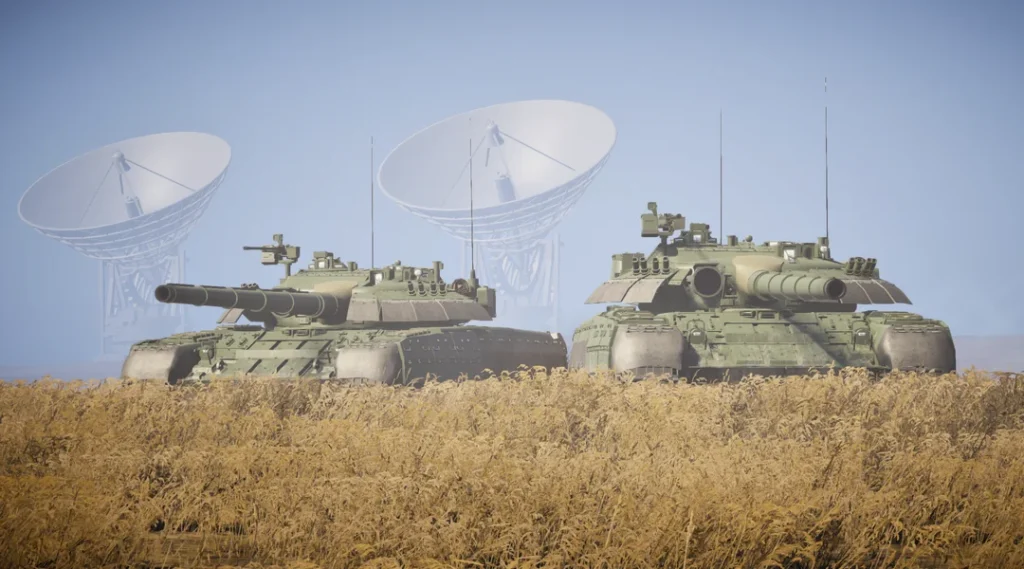
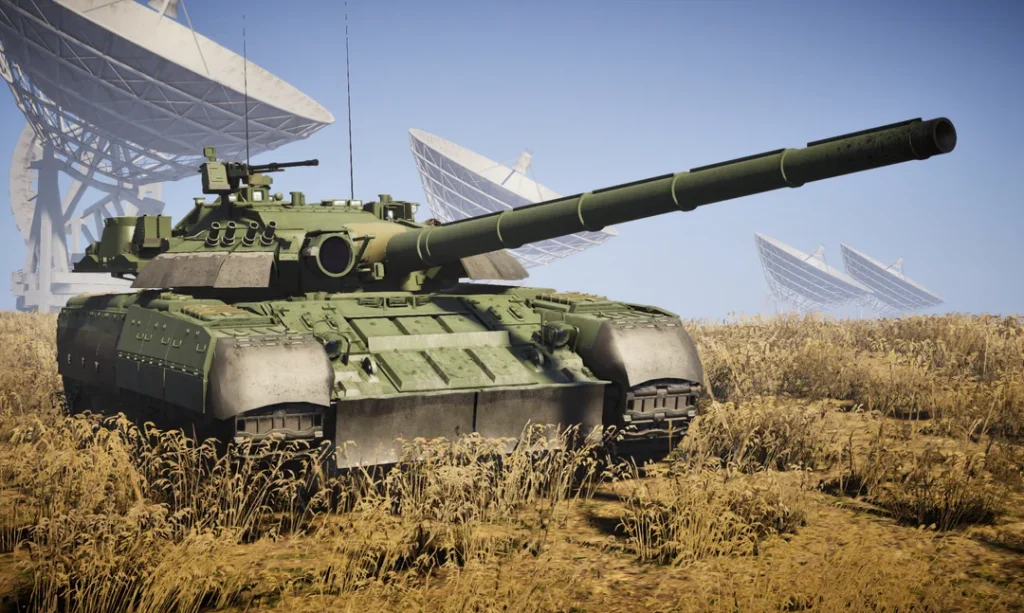
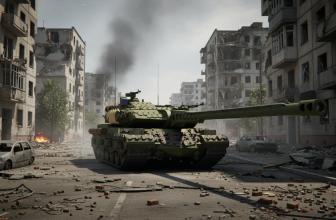
This is exactly the logic used by the concept’s author, JSquares_: his T-94 represents a production evolution of “Object 292” based on the T-80U, which could have begun production around 1994. Externally, the author retained the T-80U hull, creating a new turret that combines elements of the production tank and the experimental “Object 292.”
The T-94: A Familiar T-80 with a Completely Different Turret
Externally, the production T-94 might have turned out to be much less revolutionary than one might think. The lower part of the vehicle would have retained almost entirely the architecture of the T-80U. The same six road wheels per side, gas turbine powerplant, characteristically low hull, and extremely high mobility for a main battle tank.
The main changes would have been concentrated above the turret ring.
The production turret was to be larger and, most notably, longer. Its rear would feature a developed bustle necessary for the mechanized stowage of the massive two-piece 152mm rounds. At the same time, this layout made it possible to partially move the ammunition out of the directly inhabited volume.
This would radically distinguish the T-94 from the classic Soviet T-64, T-72, and T-80, with their ammunition stowed low inside the hull.
The 12.7mm NSVT would be retained on the roof. Explosive reactive armor would be placed on the sides and front of the turret. The hull itself would visually differ almost not at all from a late-model T-80U. It is precisely this combination of a familiar chassis and a completely new combat compartment that makes the alternate T-94 highly convincing.
The Main Argument—152 Millimeters
Of course, the T-94’s raison d’être lay primarily in its gun.
The 152.4mm LP-83 transformed the tank into a vehicle in a completely different weight class in terms of firepower. Here it is important to understand that the transition from 125mm to 152mm cannot be evaluated by a simple comparison of the bore diameter. The dimensions of the round, the mass of the projectile, the potential energy of the armor-piercing fin-stabilized discarding sabot (APFSDS) round, and the destructive power of the high-explosive fragmentation shell all increased dramatically.
In other words, the T-94 gained an advantage not only in tank duels.
For destroying fortifications, the 152mm high-explosive munition was incomparably more effective than the standard 125mm. Where a tank with a standard gun had to fire several shots, a six-inch shell could literally obliterate a firing position along with part of the building.
Against armored vehicles, the bet was placed on an extremely powerful APFSDS. The massive volume of the round allowed for the creation of a long and heavy penetrator, imparting it with very high kinetic energy.
This is exactly where the T-94 could have gained its main advantage over Western tanks of the mid-1990s. Designers would no longer have to squeeze the last few percentage points of armor penetration out of the limited dimensions of a 125mm round.
The trade-off was the ammunition capacity.
The Autoloader Would Have to Be Created Almost from Scratch
On the real prototype, it was the loading mechanism that turned out to be one of the elements that had not been fully perfected by the start of the trials. The 1991 test vehicle was tested without a completed standard autoloader.
For the production T-94, this problem became crucial.
Manually loading a two-piece 152mm round in the cramped combat compartment of a Soviet tank at an acceptable rate of fire is virtually impossible. Therefore, a full-fledged production vehicle would absolutely have to feature mechanized stowage.
The most logical solution appears to be a developed rear turret bustle holding a portion of the ready-to-fire ammunition. Some reconstructions for “Object 292” cite a total ammunition capacity of about 30 rounds and a mechanized stowage for approximately 16 rounds. These figures clearly illustrate the scale of the problem: even with a significantly enlarged turret, the number of rounds ready for immediate use would be considerably smaller than in a standard 125mm tank.
But in actual combat, sixteen ready rounds might prove quite sufficient. Especially when remembering that each of them possessed power unattainable by a conventional tank gun.
What the Production T-94 Could Have Been Like
If you combine the real technical solutions of “Object 292,” the capabilities of the mid-1990s T-80U, and the concept by JSquares_, you get a highly plausible vehicle.
Estimated Specifications of the 1994 T-94: Combat weight: approx. 46–48 tons Crew: 3 Hull length: approx. 7.0 m Width: approx. 3.5–3.6 m Main armament: 152.4mm LP-83 smoothbore gun Loading type: automatic, two-piece ammunition Ammunition capacity: approx. 28–30 rounds Mechanized stowage capacity: approx. 16 rounds Secondary armament: 7.62mm machine gun and 12.7mm NSVT Engine: T-80U family gas turbine engine Power output: 1,250 hp in the most likely production variant Maximum speed: approx. 70 km/h Reverse speed: approx. 11 km/h Power-to-weight ratio: approx. 26 hp/t at a weight of about 48 tons Explosive reactive armor: “Kontakt-5” Fire control system: evolution of the T-80U system Crew: commander, gunner, driver.
Some of these parameters are inevitably reconstructed. The author of the original alternate project himself cites a weight of around 46 tons, a top speed of 70 km/h, a reverse speed of 11 km/h, the 152mm LP-83, and the NSVT on the roof.
Would the T-94 Have Been the Most Powerful Tank of the 1990s?
In terms of firepower—very likely. In terms of overall characteristics—the question is much more complex.
The 152mm gun practically guaranteed the T-94 a colossal reserve of power. But a tank duel is not determined by caliber alone. You need to be the first to detect the enemy, accurately determine the range, manage to aim the gun, and score a hit.
And it was precisely electronics that was one of the traditional areas where post-Soviet tank building in the 1990s experienced particularly severe difficulties.
Therefore, the production T-94 would absolutely have required a modern thermal imaging sight. Without it, the six-inch gun could have turned out to be a sort of giant sledgehammer in the hands of a nearly blind fighter. The most sensible avenue of development would have been upgrading the T-80U’s fire control system with a thermal imaging channel and automatic target tracking.
And here we find a fascinating feature of the alternate T-94: the caliber itself would have created a modernization potential reserve for decades.
To combat new generations of armor, it is not necessary to change the gun. It is enough to perfect the 152mm ammunition.
A Tank or Almost an Assault Gun?
The experience of using the T-94 in local conflicts would have been particularly interesting.
In reality, Russian tanks of the 1990s and 2000s had to fire a great deal not at other tanks, but at buildings, fortified positions, and infantry. And it is precisely here that the 152mm system could unexpectedly have revealed itself even more strongly than in a confrontation with Western MBTs.
A single powerful high-explosive shot effectively turned the T-94 into a well-protected assault gun.
Of course, the reverse problem arose: limited ammunition. In urban combat, where a tank can expend dozens of shells in a short period of time, 28–30 rounds became a serious limitation.
Therefore, the T-94 would most likely never have completely replaced standard 125mm tanks.
This is exactly where an unusual structure for Russian armored forces could have formed: relatively cheap T-72Bs and T-90s would form the backbone of the units, while T-94s would be assigned to separate companies or battalions for qualitative reinforcement.
It would have resulted in a sort of modern successor to the heavy tank concept—not in terms of weight and armor, but primarily in terms of firepower.
Why the T-94 Would Still Have Been Very Expensive
There is a serious economic problem with this beautiful alternate scenario.
Even without the 152mm gun, the T-80 was an expensive vehicle. The gas turbine engine provided excellent dynamics, but it was significantly more complex and demanding than the diesel powerplants of the T-72 family.
The T-94 added to this a new turret, a completely new gun, a separate ammunition production line, a new autoloader, and the need to upgrade manufacturing facilities.
Therefore, mass production in the thousands of vehicles cannot be expected even in a favorable alternate reality.
Production in small batches is much more plausible. For example, between 1994 and 1999, Russia could have built several hundred T-94s, directing them primarily to the most combat-ready formations.
Exports would also have been limited. Countries accustomed to the T-72 would hardly want to switch to a gas turbine engine and a completely new caliber at the same time. However, such vehicles could have interested wealthy buyers who were already operating the T-80.
The T-94M: What It Could Have Become in the 21st Century
The most interesting part would have begun about ten years later.
By the early 2000s, it would have become clear that the T-80 chassis itself was gradually approaching its modernization limit, whereas the 152mm armament still possessed enormous potential.
Enter the T-94M.
It would have received new explosive reactive armor, a modern thermal imaging sight, a commander’s panoramic sight, a digital fire control system, satellite navigation, and new communications equipment. With the development of Russian active protection systems, the logical next step would have been the installation of an APS.
Most importantly—new ammunition.
The 152mm caliber allowed for the creation of extremely powerful, long-rod APFSDS rounds, programmable high-explosive fragmentation munitions, and gun-launched guided missiles. In effect, the Soviet solution from the late 1980s would have provided the Russian tank with a massive development reserve.
And then the T-94 could have remained a most dangerous adversary even a quarter of a century after its introduction.
But Does a Tank Even Need Such a Caliber?
This is ultimately the question that remains paramount.
The 152mm offered fantastic power, but everything comes at a price. Ammunition capacity decreases. The gun becomes heavier. The turret grows larger. The autoloader becomes more complex. Loads on the turret ring and traverse drives increase. The cost of each round goes up.
For destroying most targets, a 152mm munition is simply overkill.
That is why global tank building has stuck to the 120–125mm range for decades. Even the experimental 130mm, 140mm, and larger systems that have appeared in the West have so far failed to completely displace the standard calibers.
But “Object 292” is interesting precisely because the Soviet Union approached this issue not just at the drawing board level.
Such a tank was actually built.
And it actually fired.
The T-94 We Never Had
The T-94 concept by JSquares_ is interesting not merely as a beautiful fantasy. It shows one of the development paths for a vehicle that actually existed. The author retains the T-80U hull, adds a redesigned turret with characteristic elements of “Object 292,” and makes the real 152.4mm LP-83 the centerpiece of the design. This is exactly why the tank depicted looks not like a fantastical machine from a video game, but like a highly plausible Russian MBT of the mid-1990s.
Of course, the name T-94 is fictional. Moreover, in discussions of the concept, it was rightly pointed out that in reality, the vehicle could well have retained the T-80 family designation and been called, for example, yet another deep modification of the T-80. The author himself explicitly explains that he chose the T-94 designation primarily because of the presumed 1994 start of production and to avoid overlapping with existing designations of Soviet and Russian vehicles.
But if you forget about the designation, the technical divergence itself looks surprisingly realistic.
In the early 1990s, Russia really could have obtained a main battle tank with a 152mm gun. This did not require inventing fantastic technologies, creating a 70-ton vehicle, or waiting another twenty years. The gun existed. The tank existed. The firing trials took place. The tests yielded positive results. The designers proved the feasibility of mounting a new combat compartment on the T-80 chassis.
What was lacking was the main thing—money, time, and the country that ordered this vehicle.
And that is why today “Object 292” is perceived almost as a physical monument to a lost branch of Soviet tank development. Just a few more years of stable funding—and the long-barreled six-inch T-80s could indeed have ended up in active service units.
And then the history of Russian tanks in the 1990s and 2000s would have looked completely different.
Sources:
JSquares_ — “152mm of Raw Power! Introducing the T-94 (Production Object 292),” r/SprocketTankDesign. The primary source for alternative exterior designs and concepts for the production T-94. The author views the vehicle as a development of the Object 292 based on the T-80U, with production expected to begin in 1994.
A.S. Efremov — materials on Object 292 presented at BTVT.info. Information on the turret development, turret ring reinforcement, testing, the LP-83, and the possibility of installing a new fighting compartment on the T-80 chassis.
BTVT.info — “The History of Domestic Tank Engineering in the Postwar Period.” Information on the work of the Kirov Plant and VNIITransmash, the creation of Object 292, and the positive results of the 1991 tests.
War Thunder – Historical background on the Object 292. Additional information on the prototype, the 152.4mm LP-83, and prototype testing.