What if the "Whites" had won the Russian Civil War? How would that have changed the world and the course of World War II?

A necessary preface. Dear colleagues, this alternative is not mine, but that of our Western colleague Blackhills, so I don’t fully grasp all the cause-and-effect relationships. So I’m posting it as is. It’s possible I missed something or that the translation wasn’t entirely accurate.
In early 1920, true Russian patriots were finally able to breathe a sigh of relief; the threat posed by the Red hordes had been eliminated.
Denikin’s successful march on Moscow allowed him to capture the country’s largest cities and drive the Bolsheviks underground. However, this victory came at a very high cost, and when Poland entered the war against Russia to secure Ukraine’s independence, the “White government” was forced to retreat to the border established by the Treaty of Brest-Litovsk, while Ukraine and Belarus became independent, pro-Polish states.
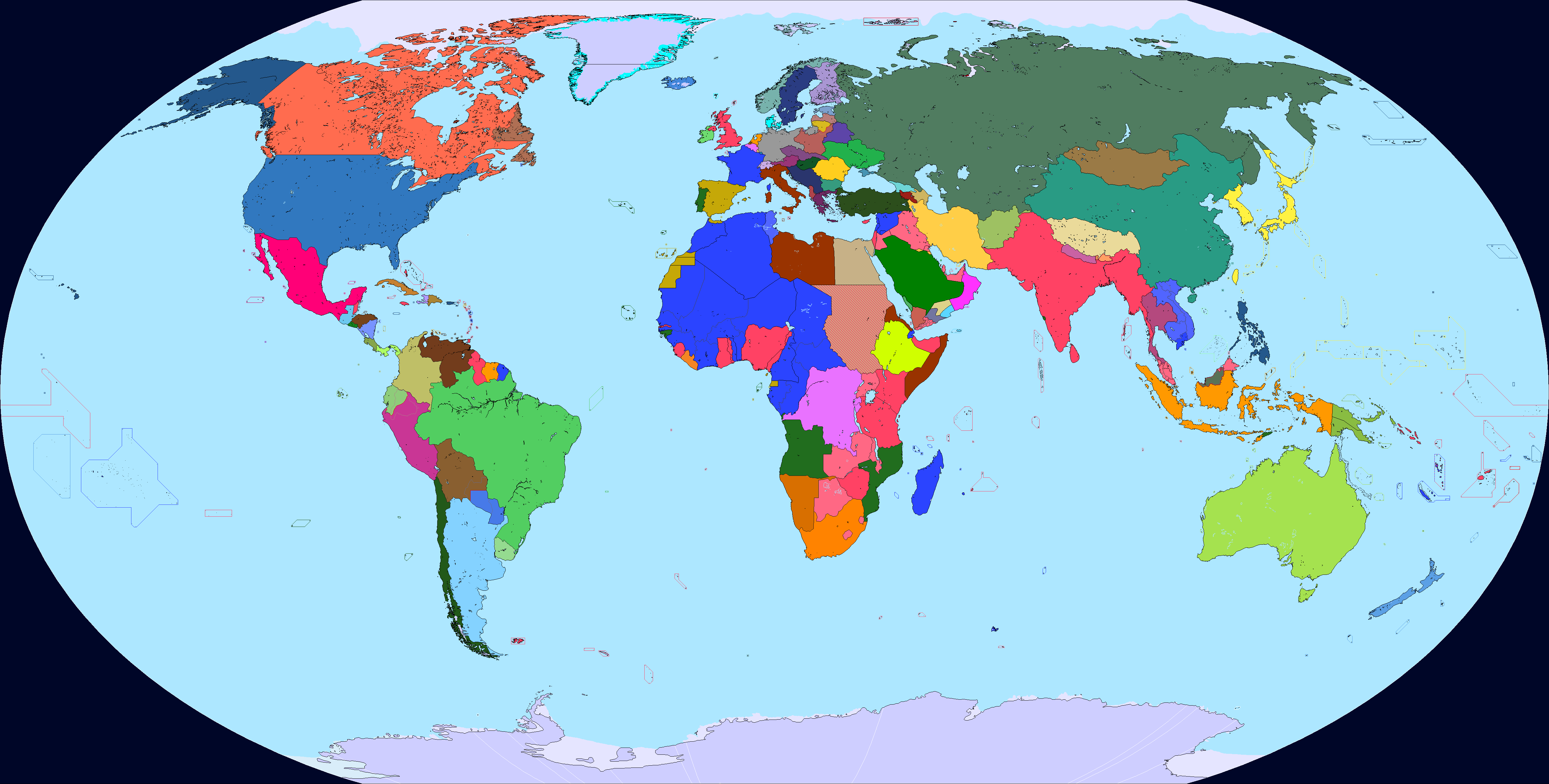
World Map for 1920
By 1942, the following changes had taken place in the world:
With the defeat of the communists in Russia and Hungary, Marxism-Leninism, although still in existence, is no longer the dominant ideology among “leftist” forces, as other ideologies—such as agrarian socialism in Belarus and Ukraine, and democratic socialism in Georgia—have gained greater popularity.
Russia functioned nominally as a parliamentary democracy throughout the 1920s, but political activity was severely restricted, any semblance of left-wing movements was quickly suppressed, and the military was the main driving force in politics. Furthermore, following the defeat of the Bolsheviks, Bogdo Khan remained in power in Mongolia.
With the “Red Threat” still present in Italy, though much weaker, the fascists never came to power. They remained what they had been before: a vocal but ultimately insignificant group in Italian politics.
In the 1920s, Italian politics split into three blocs: the traditional right, led by the liberals; the left, led by the socialists; and the Christian Democrats, positioned between them.
As a result, the situation in Libya became even more unstable than in the Italian Republic. The democratic Italian government did not wish to resort to the harsh measures employed by the fascists. Nor did it show any interest in “revenge for Adwa” or set out to conquer Ethiopia.
In Spain, without the support of Italy and Germany, the right-wing insurgency against the Second Republic was crushed in just under a year. The PSOE government is moving to adopt a Georgian-style socialist project.
In Germany, where the “Red” threat is less pronounced and there is no Italian precedent, local Nazis continue to be a marginal faction.
After the New York Stock Exchange crash in 1930, the Great Depression swept the world. In 1932, following the first elections in Germany, a government was formed consisting of radical Social Democrats and Communists. To stop the new “red” threat, the German military staged a coup. The following year, the same thing happened in Russia, for the same reason: the resurgence of the leftist movement.
The policies of the Russian and German juntas are generally similar; they are increasing government spending on defense. New military factories are being built, and new models of military equipment are being developed. Both countries are clearly preparing for war. By the end of the 1930s, there was an undeclared but very close cooperation between the two countries; both sought to renegotiate the terms of the postwar peace.
In 1942, these countries formed a military alliance and brought smaller states such as Hungary, Yugoslavia, Lithuania, Greece, Turkey, Armenia, Ethiopia, Afghanistan, Thailand, and Japan into their camp.
In 1942, Germany and Russia jointly launched Operation Bellingshausen. Thus began World War II, known throughout the world as the War of Revenge. The war lasted two years and ended in a complete victory for the German-Russian alliance. By 1945, one year after the end of the War of Revenge, the political map of the world looked like this:
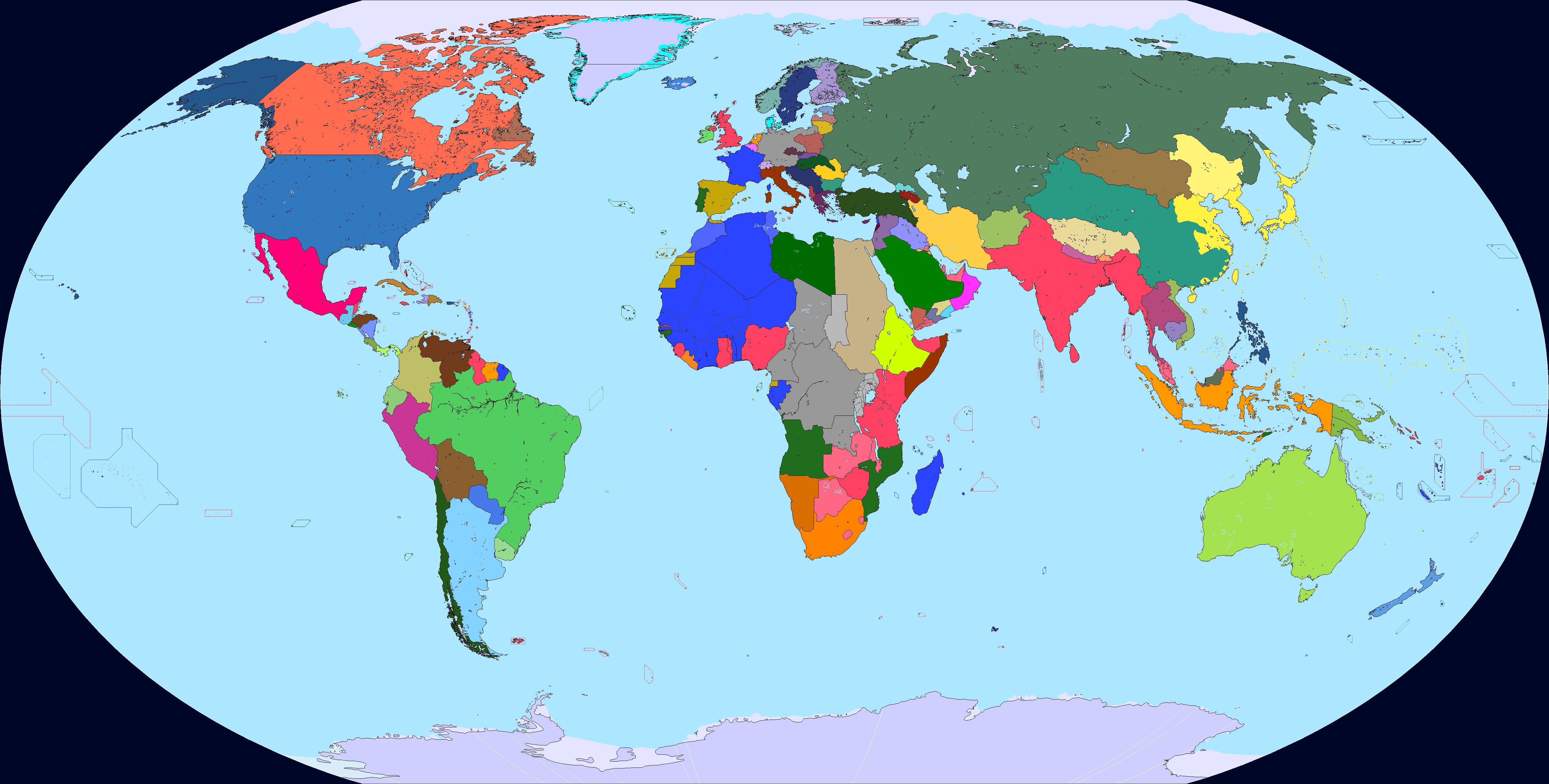
Germany finally feels completely satisfied—at least for now. It now possesses a vast colonial empire, much larger than the one it had before World War I. Support for the regime is at an all-time high, but its opponents (mostly on the left) are biding their time, waiting for the right moment to try to restore some semblance of democracy.
In Russia, the pressure on the regime has been lifted, but it is still in a more precarious position than in Germany. Although Russia regained a significant portion of its lost territories, it was unable to reclaim everything it wanted, as much of what Russia had set its sights on was blocked by its allies in the war of revenge. The Germans opposed the Russians regaining the Baltic states, and the Turks opposed them fully regaining Georgia and Armenia. Furthermore, in Ukraine and Belarus, Russia faced a persistent source of instability, as a certain national identity had already taken shape in these countries, and their populations largely supported the agrarian socialists, who were being oppressed in every way by the authorities in Moscow.
P.S. As you can see, the victory of the German-Russian alliance had absolutely no impact on France. It’s unclear how this happened, since the author didn’t write a single word about the course of the fighting; moreover, there’s not a single word about who was fighting whom. You’ll have to figure that out for yourself. But I did warn you about this at the beginning of the article.
Источник — https://www.alternatehistory.com/forum/threads/map-thread-xxii.542978/page-39#post-24408150