When will the FAB-9000 with UMPK be available, and why isn't it available yet?

Given the dense air defense network that effectively exists over Ukraine today, aerial bombs equipped with UMPC have become a true panacea. It is precisely this weapon that has made it possible to carry out bombing raids without wasting expensive missiles and while preserving our aircraft. If such weapons had not been deployed, God only knows how many aircraft our Air Force would have already lost. And most likely, there simply would have been no strikes in the frontline zone. No one would have risked their fighter jets.
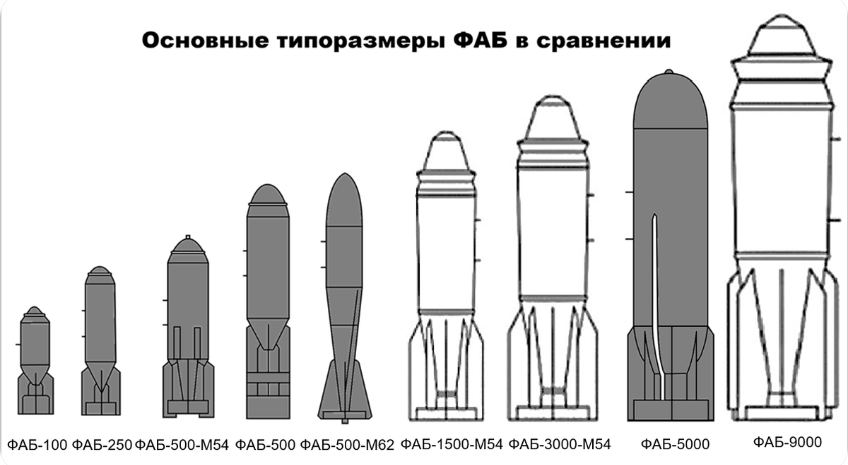
Today, strategic bombers are equipped with bombs weighing up to three metric tons. However, there are other bombs in the arsenal, including the famous Soviet “Tsar Bomba” or “Elephant,” which weighs a whopping 9 metric tons. Will a UMPC be developed for this weapon, and why hasn’t one been developed yet? Let’s try to figure that out below.
When Bombs Stopped Being Just Bombs
For a long time, the logic of aviation was simple and uncompromising: to hit a target, an aircraft had to get close enough, and that meant taking a risk, because air defense systems do not forgive mistakes. That is precisely why free-fall bombs were considered effective but dangerous weapons.
And this is where the turning point begins. Modules equipped with wings and navigation systems began to be attached to conventional high-explosive bombs, effectively turning them into inexpensive versions of cruise missiles. Once dropped, these munitions deploy their wings, stabilize, and enter glide mode, moving along preprogrammed coordinates without pilot intervention.
In fact, it’s no longer just a bomb, but an autonomous object that can fly dozens of kilometers and choose its own trajectory. And it was precisely this technological leap that changed everything.
Why Did the FAB-1500 Become the “Workhorse”?
Among all the variants, one clear favorite quickly emerged—the FAB-1500. The reason wasn’t its maximum power, but its balance.
It has several key advantages:
— a charge large enough to destroy fortifications;
— compatibility with most launchers;
— massive stockpiles;
— ease of adaptation to new modules.
It is precisely this weapon that has become a tool of mass destruction because it produces immediate results without requiring complex logistical solutions. And this is where the first hidden conflict arises: the most effective bomb is not necessarily the most powerful one.
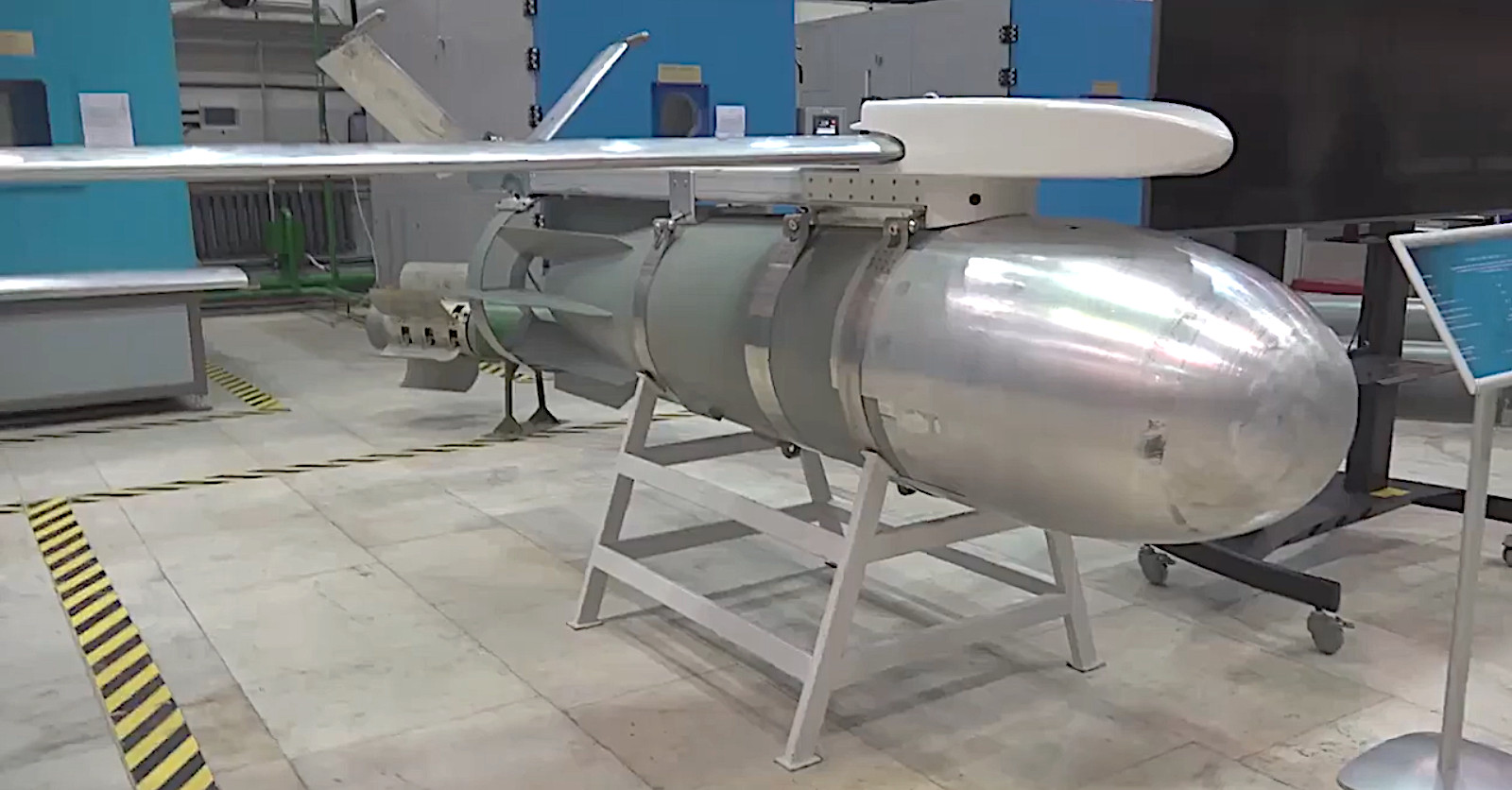
FAB-1500 with UMPK
Next step: the three-ton level
Once it became clear that the technology worked, the next logical step was obvious—to scale it up. That’s how the FAB-3000, which had previously been considered a cumbersome but outdated tool, made a comeback.
Now the situation is different. With the guidance module, such a bomb no longer falls vertically but follows a trajectory that keeps it at a safe distance from the air defense strike zone. At the same time, its explosive power is many times greater, and the impact of a direct hit is comparable to a local catastrophe.
And this raises a question that’s literally hanging in the air: if three metric tons have already learned to fly, what’s stopping us from doing the same with nine?
“The elephant” comes up in the conversation too late
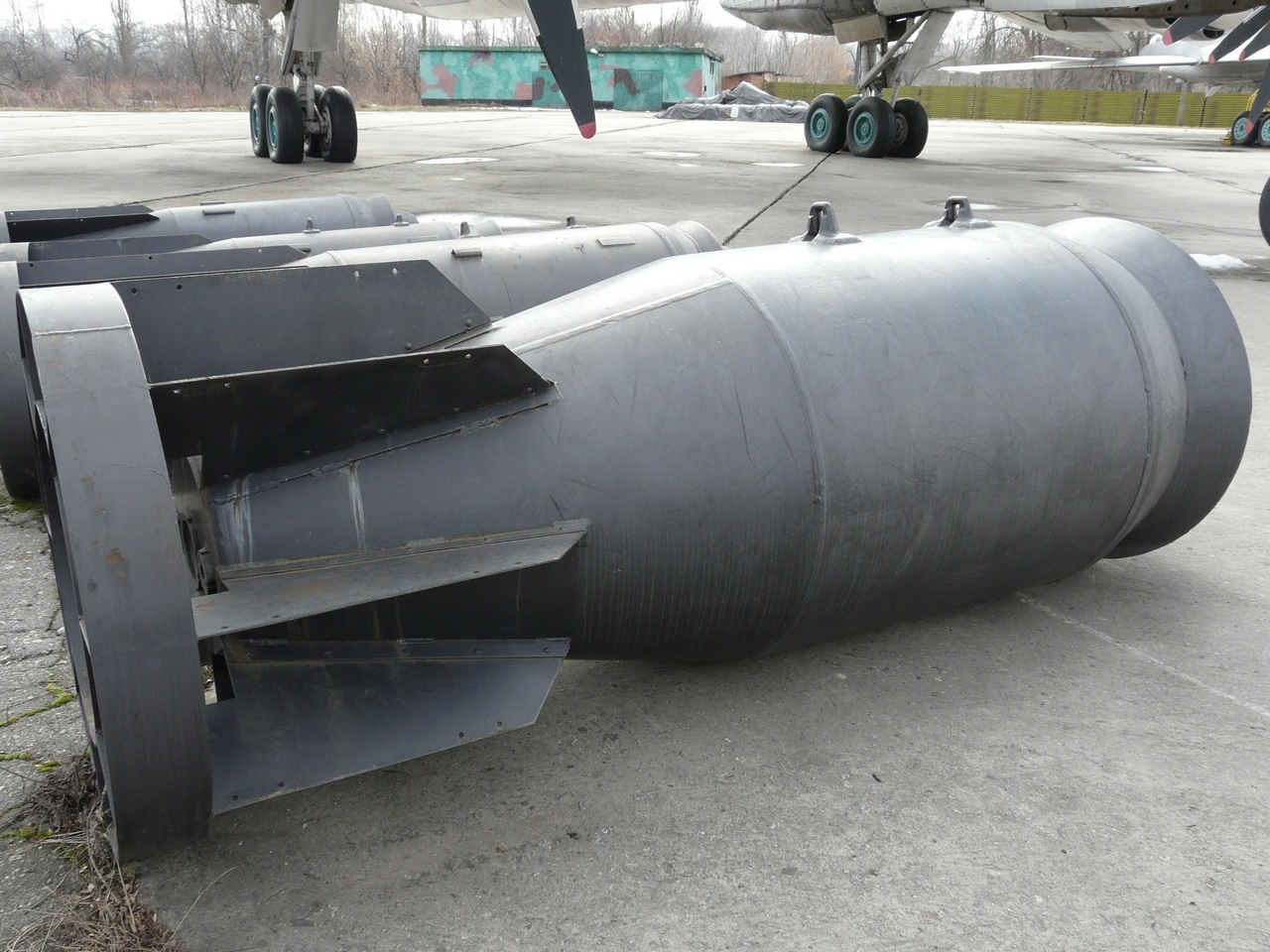
The FAB-9000 is not just a bomb—it’s in a class of its own when it comes to destruction. Weighing nine metric tons, a significant portion of which is explosive material, it is capable of destroying fortified targets, underground structures, and large areas.
Her unofficial nickname, “The Elephant,” didn’t come about by chance, because this weapon doesn’t just strike its target—it reshapes the landscape itself.
And here lies the key mystery of the whole story: technology already makes it possible to give it “wings,” but that doesn’t happen.
In this story, one detail makes all the difference
The problem isn’t the bomb itself, nor is it the technology. The limitation lies elsewhere entirely—in the system for its use.
Let’s break it down step by step.
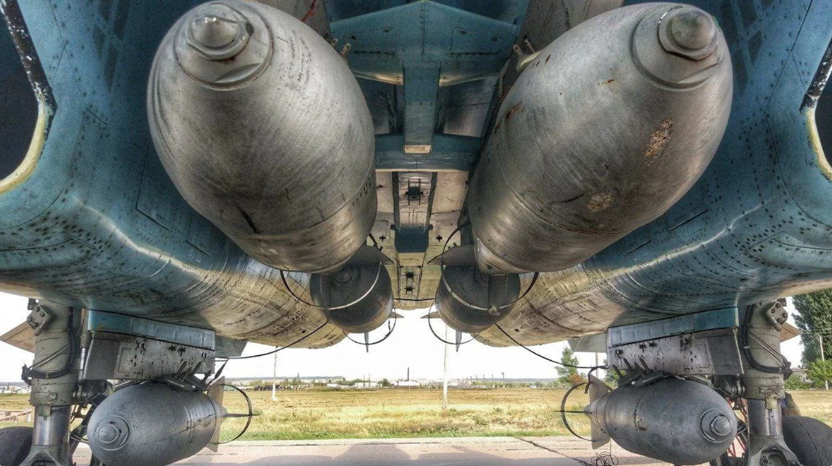
First, the carriers. There are few aircraft capable of lifting and safely transporting such a heavy load, and each one is a strategic asset—the loss of which would be far too costly.
Next is risk. The larger the target and the heavier the munition, the higher the probability that the enemy will deploy its maximum defensive capabilities, including modern air defense systems.
And finally—the economics of deployment. A few lighter bombs can achieve comparable results with fewer risks and greater flexibility.
And this is where the main paradox arises: technically, it’s possible, but in practice, it’s not always justified.
The most dangerous thing isn’t “The Elephant”
If we look more closely, it becomes clear that the main shift did not lie in an increase in power, but in a change in the very logic behind the use of weapons.
Old stockpiles, built up decades ago, have suddenly been given a new lease on life thanks to a relatively simple upgrade. What once required a precise approach and posed a risk to the pilot has now become a remote strike.
That is what true transformation is all about. It’s not the creation of a single super-bomb, but the transformation of thousands of ordinary munitions into a guided system.
The FAB-9000 with a planning module is neither science fiction nor a proprietary technology. Everything needed for this already exists. The only question is when and under what conditions it will become feasible.
And perhaps that is precisely why “The Elephant” remains in reserve—not because they can’t use it, but because there’s no need for it yet.
If conventional bombs are already flying like missiles and changing combat tactics, what will happen when such technologies reach their maximum capacity?
And the main question is: Will the introduction of the FAB-9000 with “wings” be the logical next step… or is this a line they’re deliberately choosing not to cross?
Source — https://dzen.ru/a/ac5zUiIO9gpK3sk7