Why the loss of the F-15 in Iranian airspace was no accident. How the MiG-21, nicknamed "Little Bastard," humiliated the formidable American fighter jet right before the war with Iran

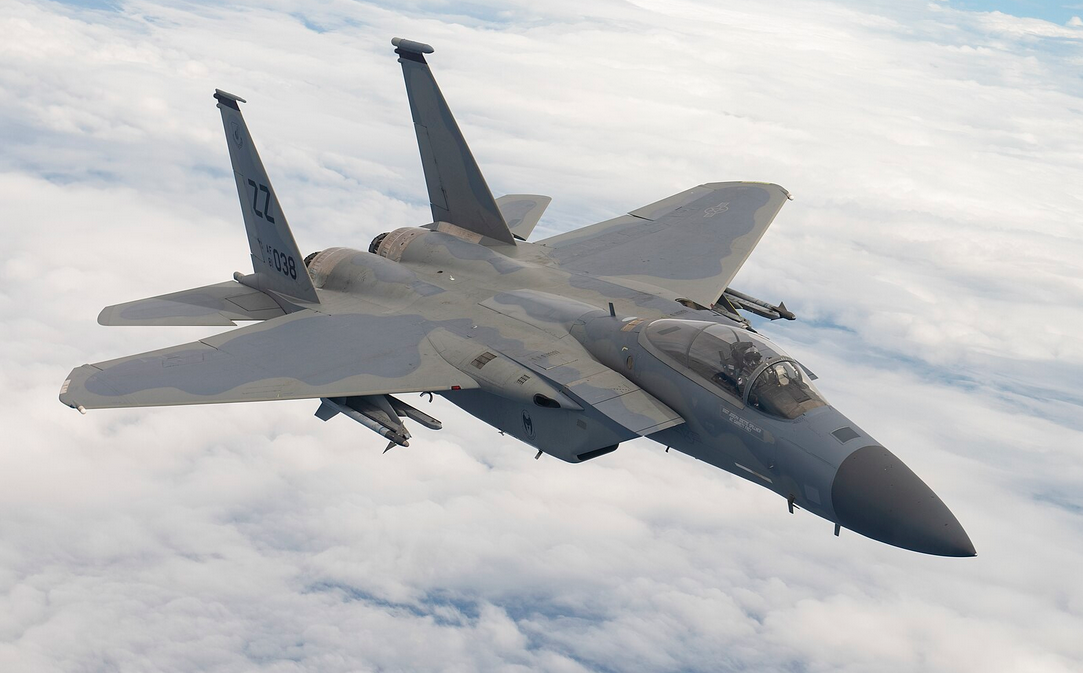
In the world of military aviation, the F-15 Eagle is considered a living legend: it has more than 100 aerial victories and has never been shot down in aerial combat (at least, that was the case until recent events). However, few people remember the story from 2004, when these behemoths flew to India and… lost 9 out of 10 dogfights. And what’s most frustrating is that they were defeated not only by modern Su-30s, but also by the MiG-21s—which the Americans called “flying coffins”—that were already well over 30 years old at the time.
How did an old interceptor manage to take down the “king of the skies”? Why did U.S. pilots demand that this “cheater” aircraft be banned? And what do Iran and the 2026 war have to do with it? Let’s take a closer look at the details of this sensational fiasco.
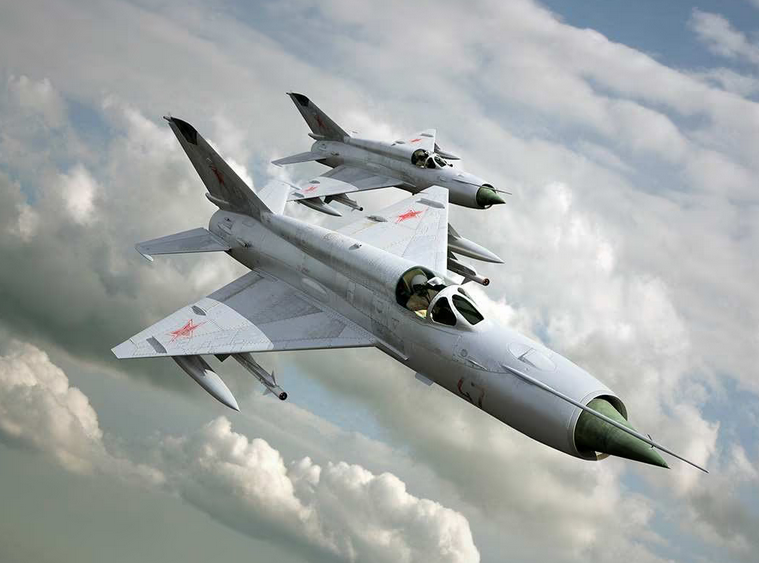
MiG-21
Prologue: The Iranian Shock of 2026
While the whole world has come to regard the F-15 Strike Eagle
as invincible, history has delivered an unpleasant surprise. According to foreign media reports,
during the 2026 conflict, the U.S. lost at least one F-15E
over
Iran (April 2026), and earlier, three aircraft had been shot down… allegedly by its own
ally—a Kuwaiti F/A-18
.
But that was just the tip of the iceberg. The roots of the “Orlovs’” greatest humiliation lie in the sweltering air of the Gwalior Air Base in India. It was there, in 2004, that the
“unbeatable nut” finally cracked.
Chapter 1. “The Spear of India”: How It Happened
In February 2004, the Cope India 04
exercises took place. The U.S. deployed its elite force—six F-15C
fighter jets from the 3rd Wing based at Elmendorf (Alaska). These pilots were training to intercept Soviet bombers over the icy wilderness; they were the best of the best. India, according to American logic, was
supposed to field its own “Soviet junk.”
Imagine the surprise when, after just the first round of fights, the score was not in the visitors’ favor.
According to a report by Military.com:
“The whole world knows: if you cross the U.S. Air Force, you’re a dead man. Dead as a doornail. But someone forgot to send that memo to India. During the exercises, the Indians, flying low-tech Russian and French jets, defeated the Americans in more than 90 percent of the cases.”
Chapter 2. Why Was the MiG “Bizon” So Dangerous?
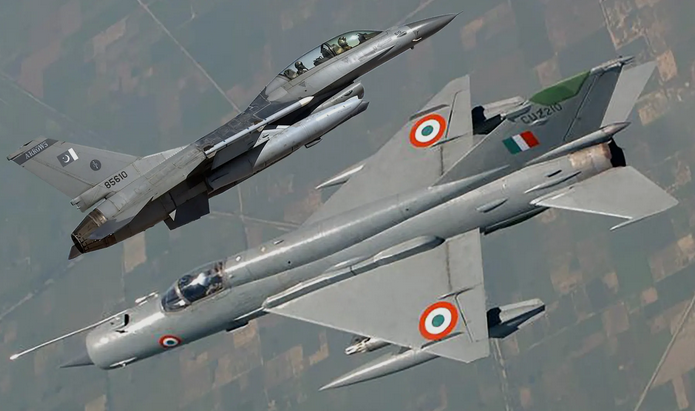
The secret lies not in magic, but in smart modernization and tactics. The MiG-21 “Bison” (export designation MiG-21-93) is not the same “MiG” from the Vietnam War era that the Vietnamese flew. It’s an “old-school killer” with new
goodies. Here’s what turned the “flying iron” into a nightmare for the F-15, according to Air Commodore Harish Nayani, former commander of the Indian Air Force’s No. 3 Squadron (3 Sqn “Cobras”):
-
The “Kopyo” (Phazatron Kopyo) Radar:
The MiG
was upgraded. The radar made it possible to detect targets such as the F-15
against the
background
of the ground, and, most importantly, enabled the use of R-77
medium-range missiles. In 2004, this was a major advantage. Indian MiGs could spot the enemy sooner than the enemy expected. -
The Invisible One:
The F-15
is a massive twin-fuselage flying rock. It can be seen with the naked eye from 20 km away.
Indian Colonel Nayani
recalls: “I saw the F-15
from 20 km away, but it didn’t see me
. It was looking at the radar, not around it. When it got closer, it
was just like shooting at a stationary target. They (the U.S. pilots) were
shocked and embarrassed.”
-
“Jiu-Jitsu” in close-range combat (WVR): The
“Bison’s”
most fearsome weapons are its helmet-mounted sighting system and R-73
missiles.
The F-15
has excellent thrust-to-weight ratio, but the MiG-21
boasts “instantaneous
turn rate” and a compact size. An Indian pilot could look at the “Eagle,” and the missile would fly right where his gaze was directed. It was impossible to intercept it.
Chapter 3. Was There a Boy? An Analysis of the Defeat (Spoiler: Yes, there was)
Of course, as soon as news of the F-15’s defeat spread throughout the Pentagon, people began looking for excuses. Critics claimed that the conditions were “unfair”:
-
Excuse 1: Radar. Supposedly, the Americans didn’t have the latest APG-63(V)2 AESA radars; instead, they were using outdated equipment.
-
Excuse 2: Restrictions.
Americans were prohibited from using the “fire-and-forget” mode for
AIM-120 AMRAAM
missiles
, limiting their range to 37 km and making them semi-active
(requiring the target to be illuminated until impact). The Indians, on the other hand, calmly simulated R-77
launches “from around the corner.” -
Excuse 3: Numbers. India outnumbered the Americans by a ratio of 3 to 1 or even 4 to 1 (up to 18 aircraft against 6 U.S. fighters).
-
Excuse 4: AWACS (airborne early warning and control aircraft).
The Indians had a Soviet Il-76, which could see the entire battlefield and guide
MiGs toward the “Eagles.” The Americans were flying blind, relying on their onboard
radars.
Why is this still a failure?
Even with these caveats, losing 9 out of 10 dogfights against MiG-21s (albeit upgraded ones) is a major blow to a superpower.
As Russia Beyond wrote at the time: “On the one hand, it’s good that the Americans discovered their weaknesses in peacetime. Had the 3rd Wing faced the might of the Russian Air Force during the Cold War, they wouldn’t have flown back to Alaska.”
Moreover, in 2004 and the following year, 2005, the “Bison” also gave the F-16s a run for their money, proving that it wasn’t just a matter of the rules of the game.
Epilogue: What This Disgrace Taught Americans
The U.S. response was swift and costly.
Members of Congress, upon learning of the results of Cope India, threw a fit. It turned out that American pilots had grown accustomed to fighting “by the push of a button,” relying on long-range
radars and AMRAAMs, and when the enemy came within visual range, they
were at a loss.General John Jumper (Chief of Staff of the USAF) called this a “wake-up call.”
The result of this humiliation: The U.S. Air Force lobby secured funding to purchase more F-22 Raptors—an aircraft that was designed precisely to prevent such a nightmare from happening again.
And the
Indian MiG-21 “Bison” fighters
, which are currently (as of 2024–25)
being prepared for decommissioning, have gone down in history as true “eagle charmers.”
The Indian Air Force remains the last operator of these legendary aircraft in the world.
Summary from U.S. pilots:
One of the American pilots (a Red Flag participant) very accurately described what it was like to encounter a MiG-21: “When that little bastard (the MiG) sneaks up on you unnoticed because of the jamming, and you see a missile flying toward you, the only thought you have is: ‘What the hell?! Where did that come from?!’”
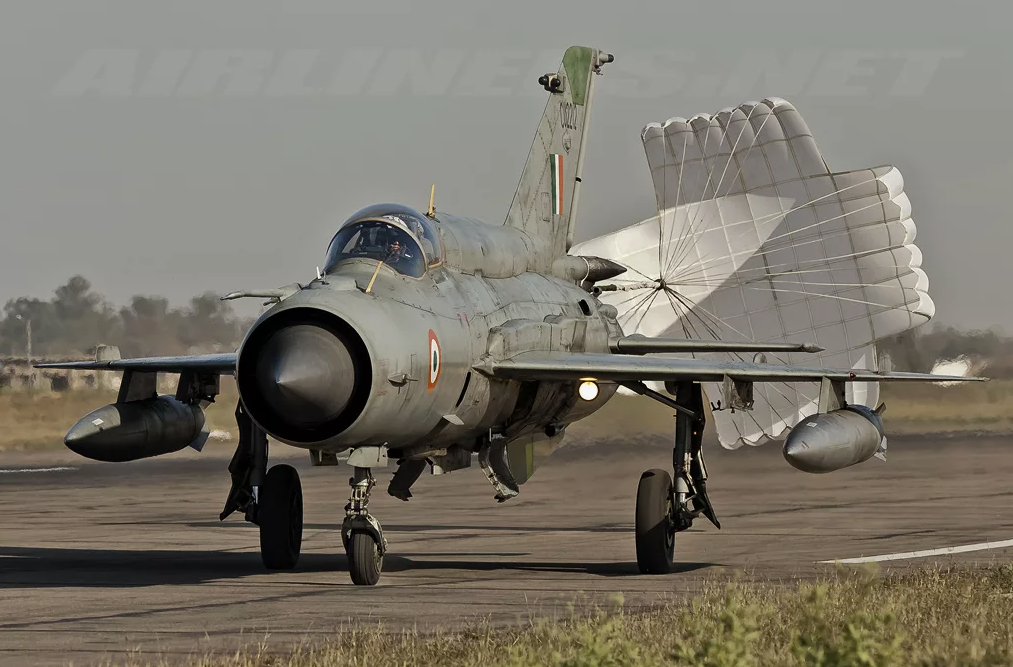
India’s “Little Bastard,” the MiG-21 “Bison”
Source — https://dzen.ru/a/ae7MCf0qmxfypNUJ