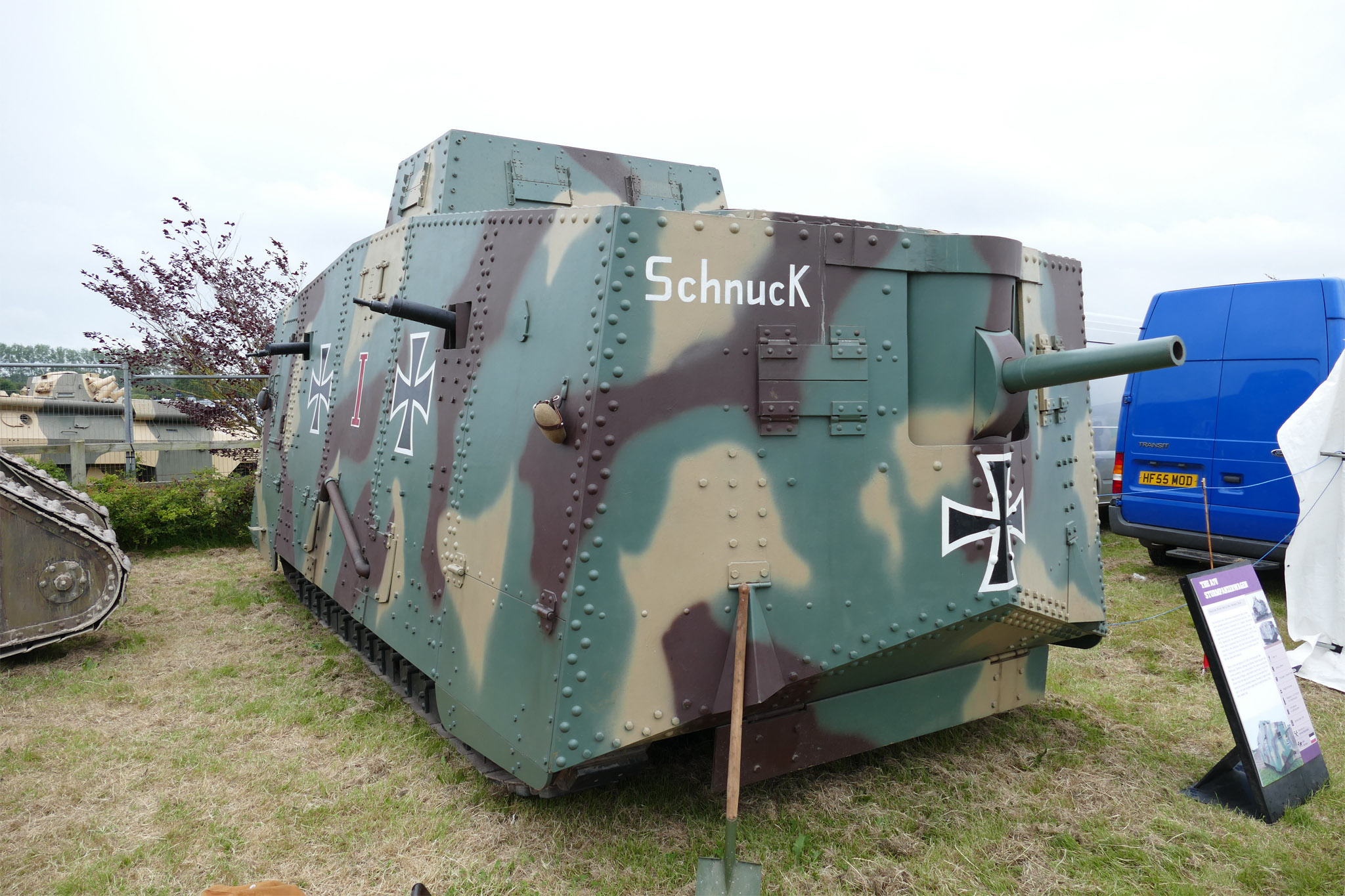
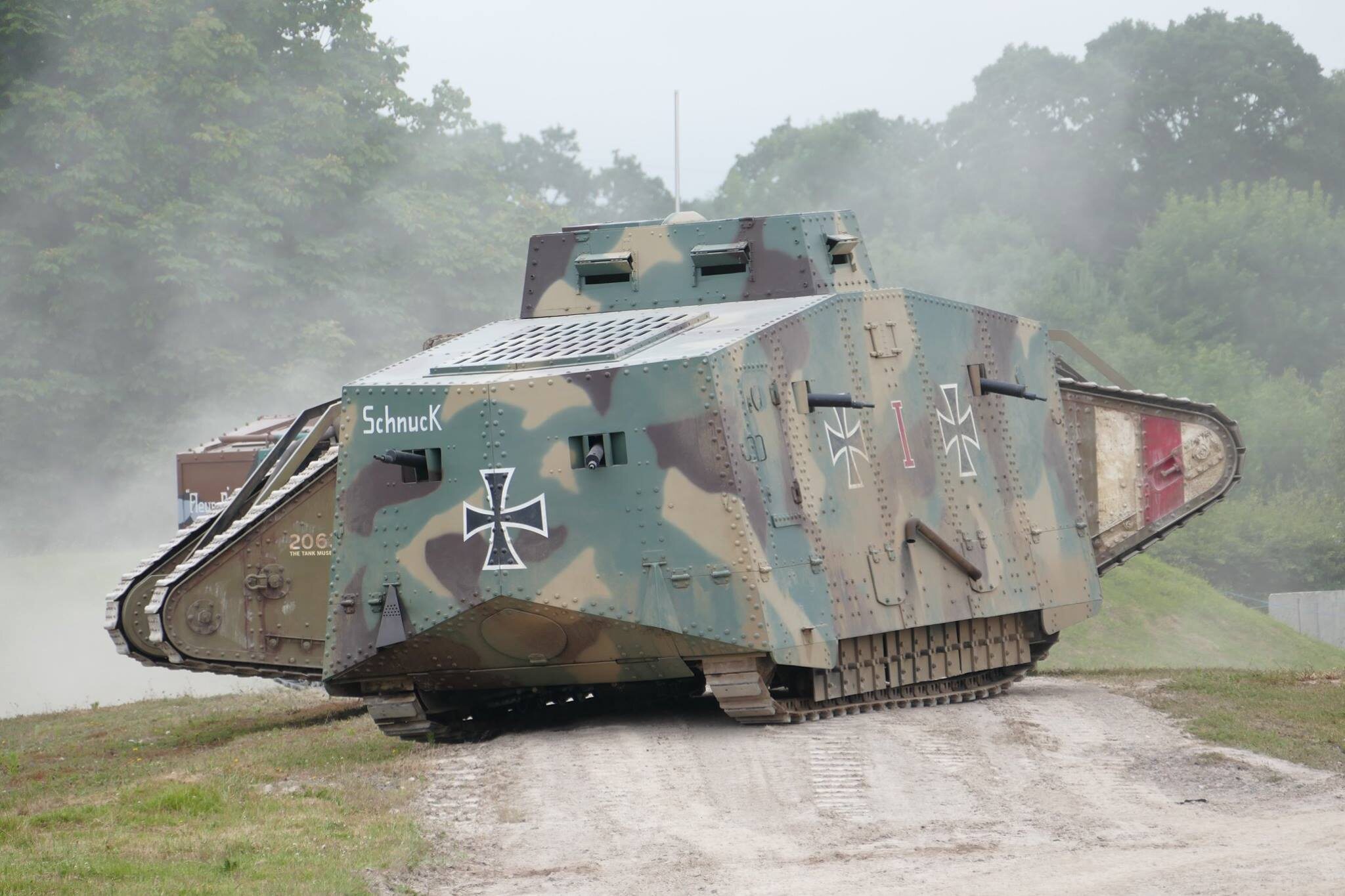
A replica of the German A7V tank, No. 504 “Schnuck,” built in England
During World War I, tanks were seen as a means of overcoming the crisis. It is also no secret that they were initially envisioned as land battleships. A number of countries attempted to build their own land battleships, though efforts soon took a more sensible turn. It became clear that tanks had to be mass-produced, and that armored fortresses could not fight on their own. Otherwise, their fate was all too predictable.
Tankfest 2017: Three World War I tanks in a single shot
Today, such tanks are a rarity, and seeing one in working order is a stroke of luck. At the same time, the topic of World War I is very popular abroad, whether in military history events or film productions. Against this backdrop, producing replica tanks is a logical decision—especially since they’re much easier to operate than the originals. The Sturmpanzerwagen A7V, Germany’s first mass-produced tank, is no exception. Today, there are more replicas of it than there are originals.
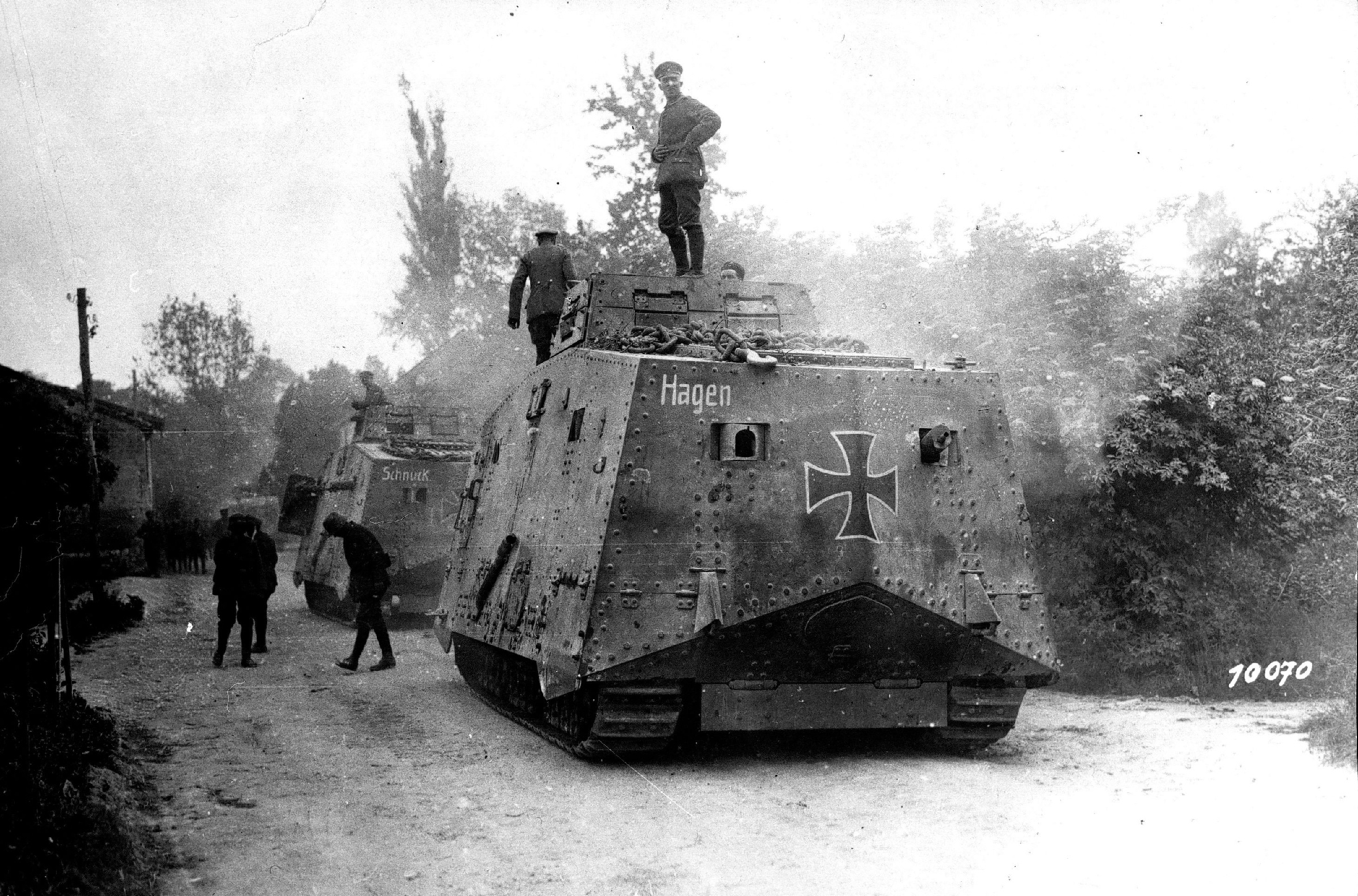
Hagen and Schnuck in the summer of 1918, shortly before the ill-fated battle
The Germans began developing tanks in the fall of 1916, following the famous attack in the Fleur-Courcelet area. Although that battle was quite chaotic, the first use of tanks certainly had a psychological impact. The 7th Directorate (Abteilung 7, Verkehrswesen, abbreviated A7V) began its work in November 1916. However, the German approach was not particularly original. As a basis for their tank, they decided—what a surprise—to use the chassis of a Holt crawler tractor.
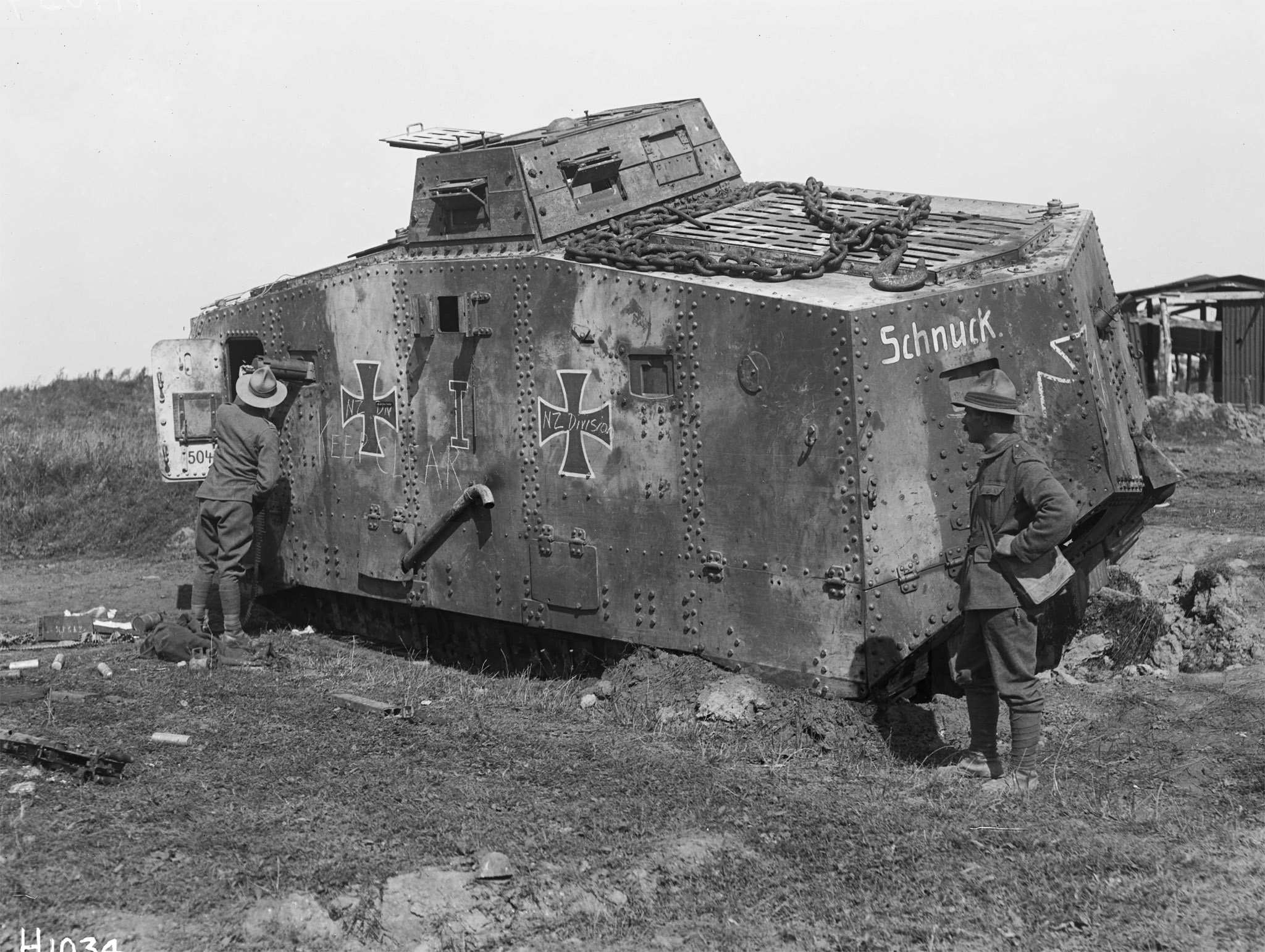
Abandoned on August 31, 1918, Schnuck
It must be said that, at that time, the Germans’ production of armored vehicles closely resembled the most famous sketch from the TV show “Kalambur.” How they managed to do it is unclear, but the fact remains. The Germans produced iron-plated vehicles, albeit in extremely limited numbers. And every time, the result was a monstrous machine—large and heavy. So the tank, which was given the same name as the department that developed it, turned out to be quite unique.
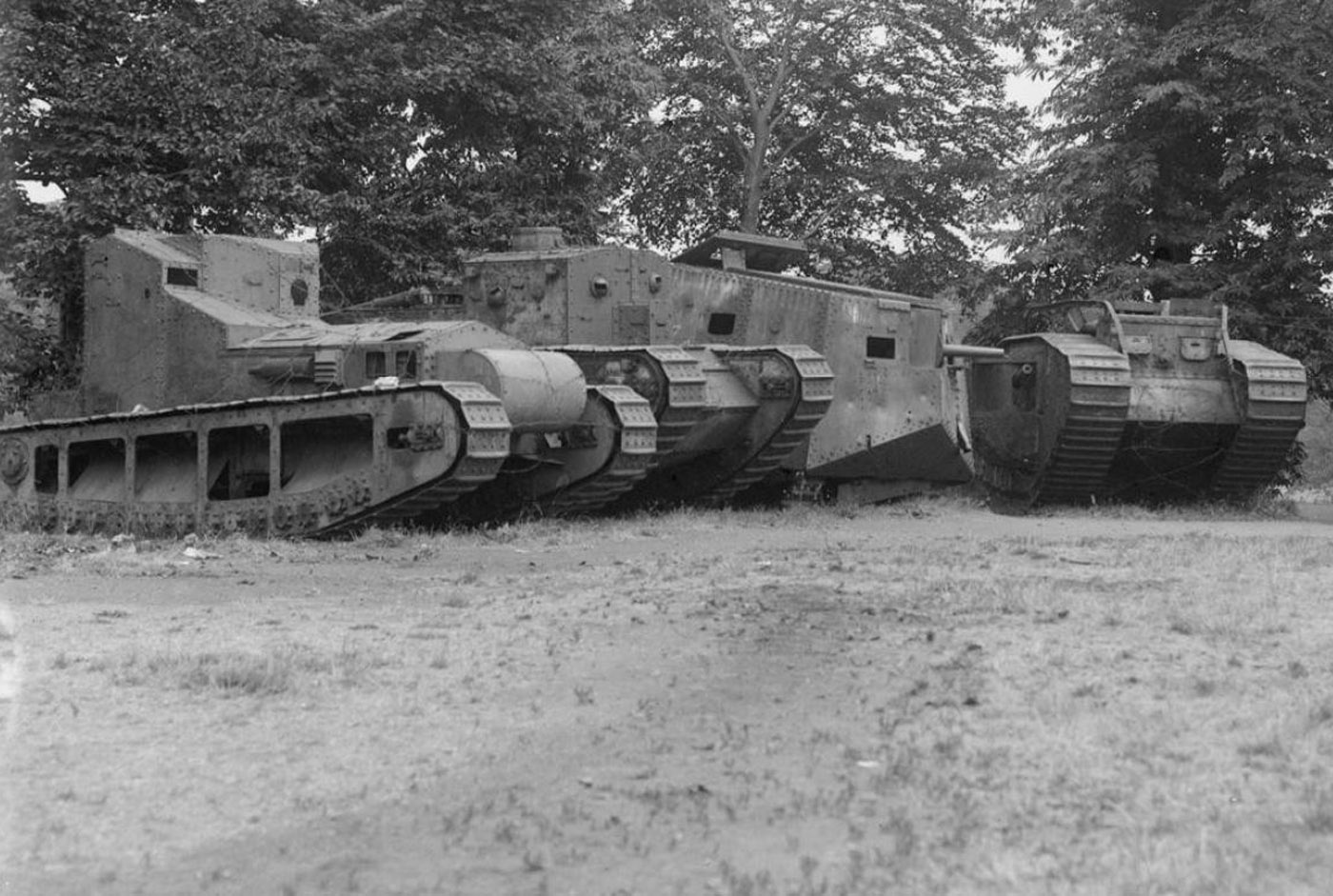
Until 1922, the tank was on display at the Imperial Military Museum. Today, only the gun remains.
It was based on an elongated Holt tractor chassis, modified under the direction of Joseph Folmer. The tank was intended to be quite fast, so it was equipped with no fewer than two Daimler engines, each with 100 horsepower. The engines were mounted in the center of the vehicle, while the driver and commander were positioned above them. It must be said that Folmer’s team built the chassis quickly; however, the original plan was to produce only 10 such chassis specifically for tanks. The rest were to be produced as tractors and weapon carriers.
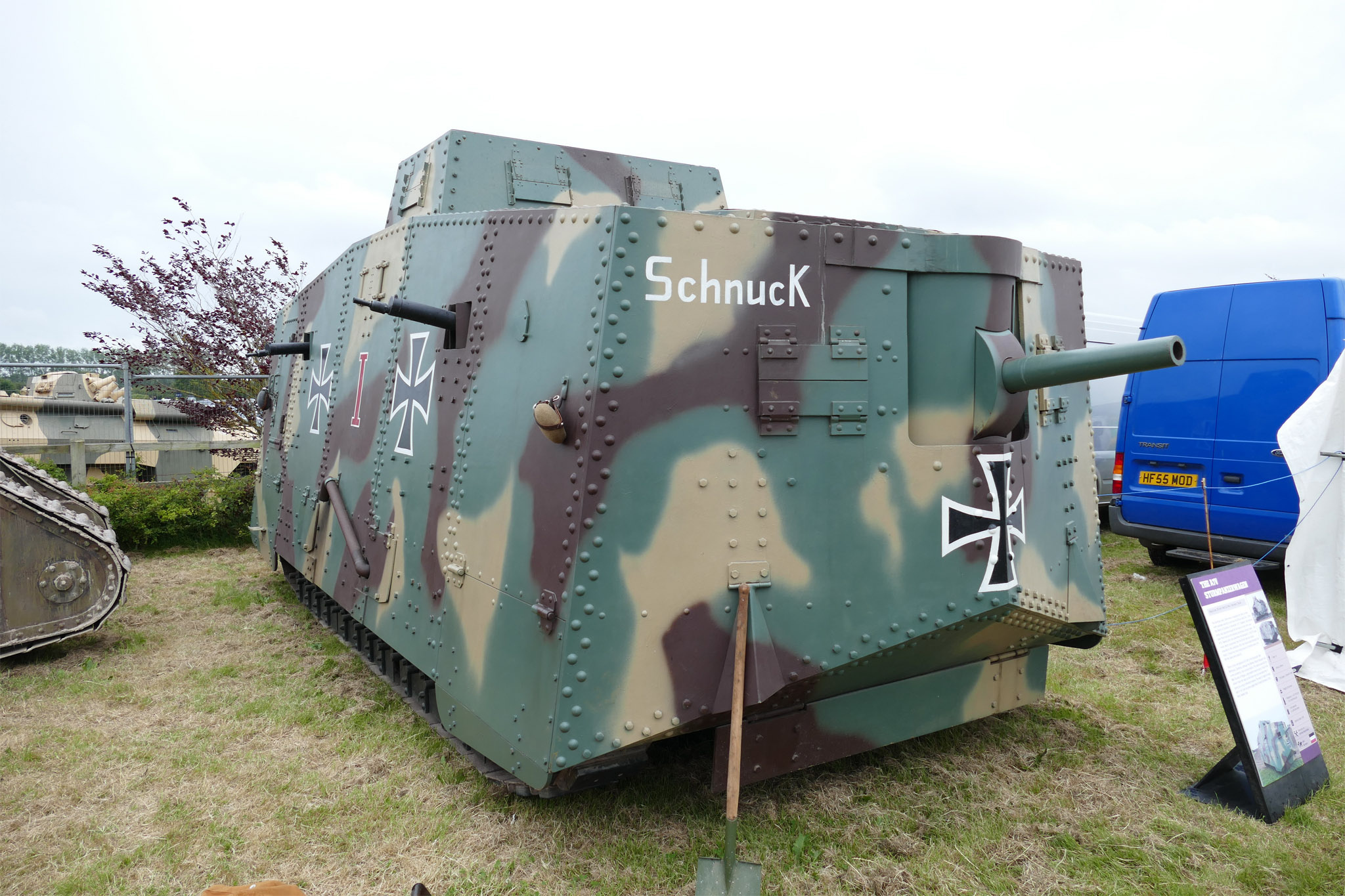
There are currently two known A7V replicas: one in Germany and the other in England.
The Germans studied the lessons of the war very carefully. It was obvious that tanks would come under fire from more than just machine guns. Therefore, the A7V department designed its prototype so that the German “firstborn” also became the world’s first mass-produced tank with light anti-shell armor. The front of the hull was 30 mm thick, and the sides were 20 mm thick. This made it invulnerable to light artillery fire, which proved helpful during subsequent combat operations. Moreover, its speed turned out to be higher than that of the “rhombuses”—10–12 km/h.
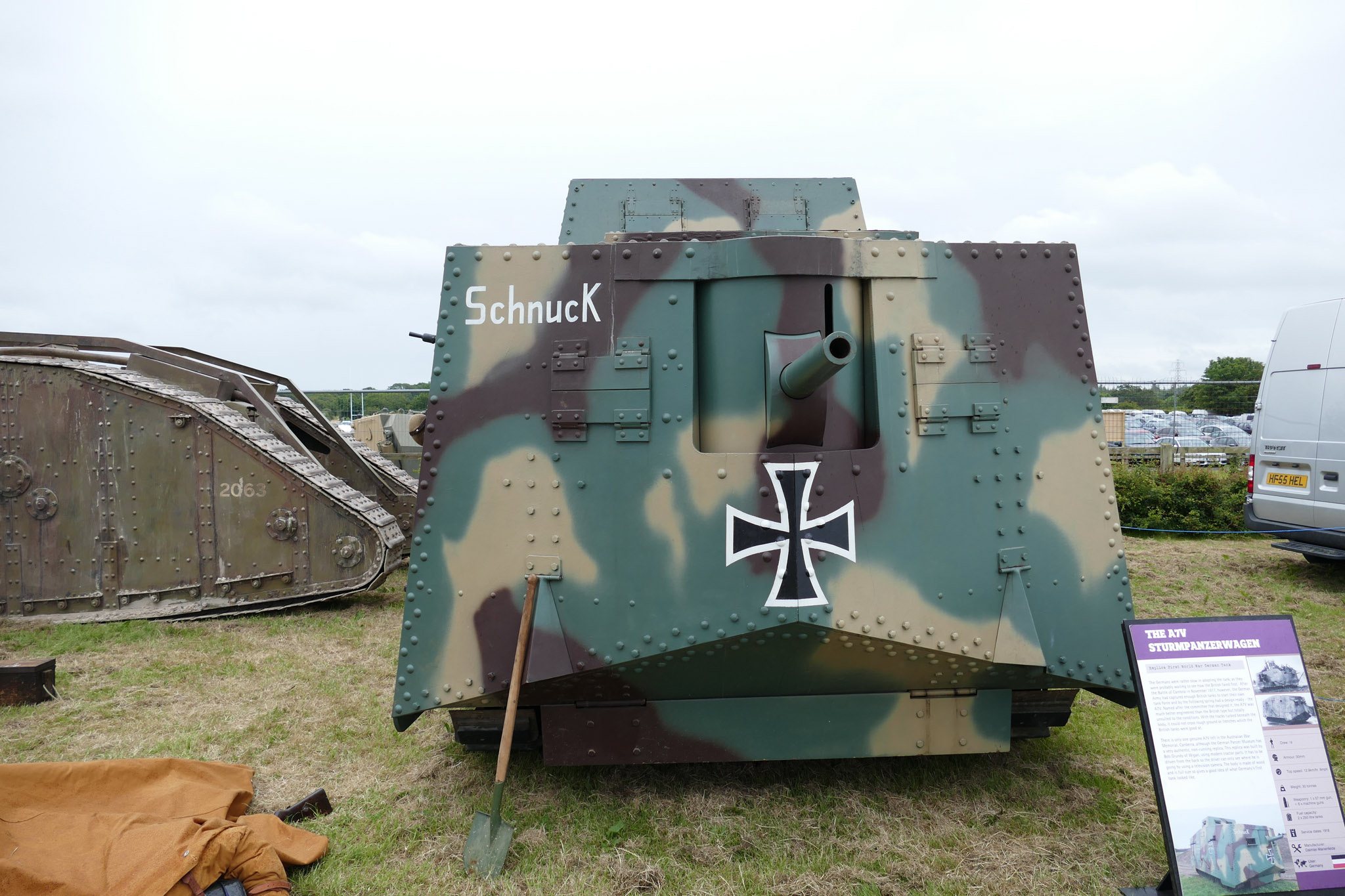
Both tanks have been recreated with Krupp hulls
Another significant difference in the A7V was its armament. Instead of side mounts, the main armament—a 57-mm Maxim-Nordenfeld cannon—was mounted in a turret located at the bow of the hull. A separate issue is what kind of gun this was. The Germans didn’t bother too much and simply used captured guns they had seized on the Eastern Front. The firing arc was 50 degrees horizontally, which, in principle, was sufficient. Six MG 08 machine guns were also positioned along the perimeter.
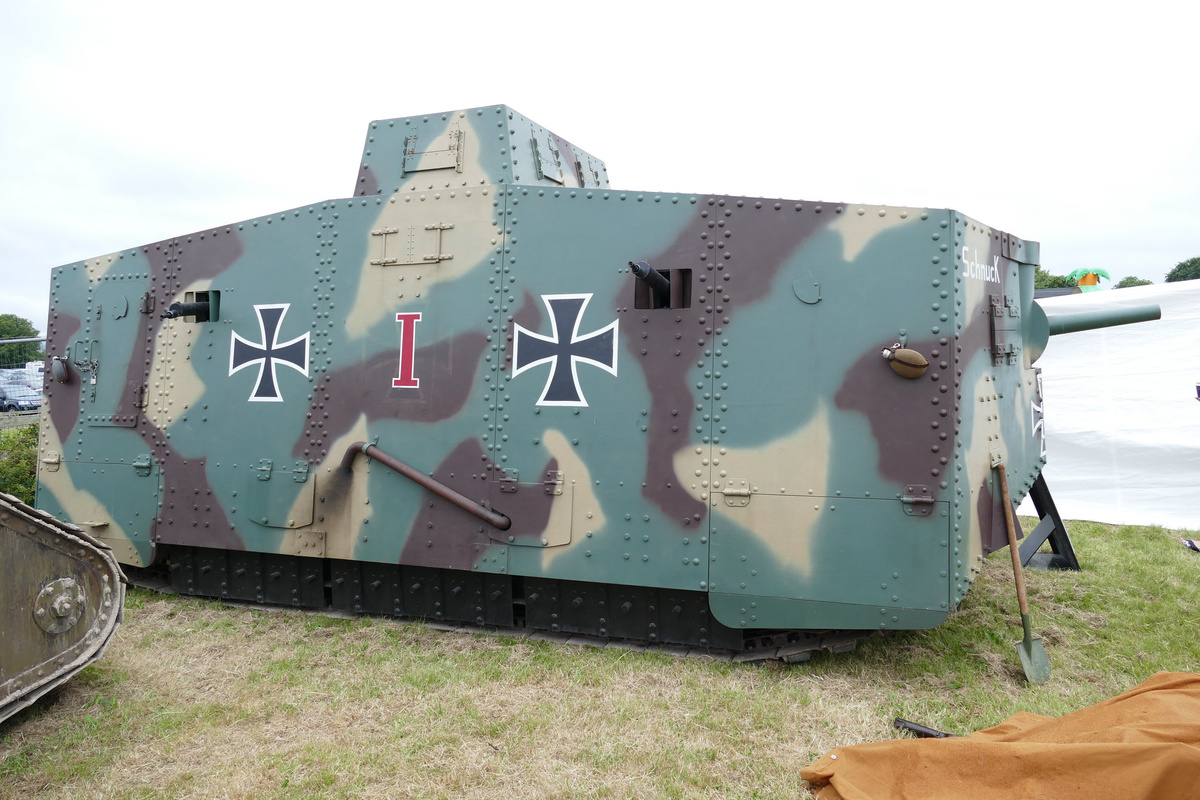
On the outside, the car looks almost perfect
Overall, the A7V didn’t look too bad for a first-generation tank. That said, there were quite a few caveats. For starters, the German high command had a rather peculiar attitude toward tanks, which affected both production volumes and the types of tanks that were ordered. More A7Vs were produced than originally planned, but even so, 20 tanks is very few. The Kaiser’s generals only realized that tanks needed to be produced on a massive scale toward the end of the war, when it was already too late.
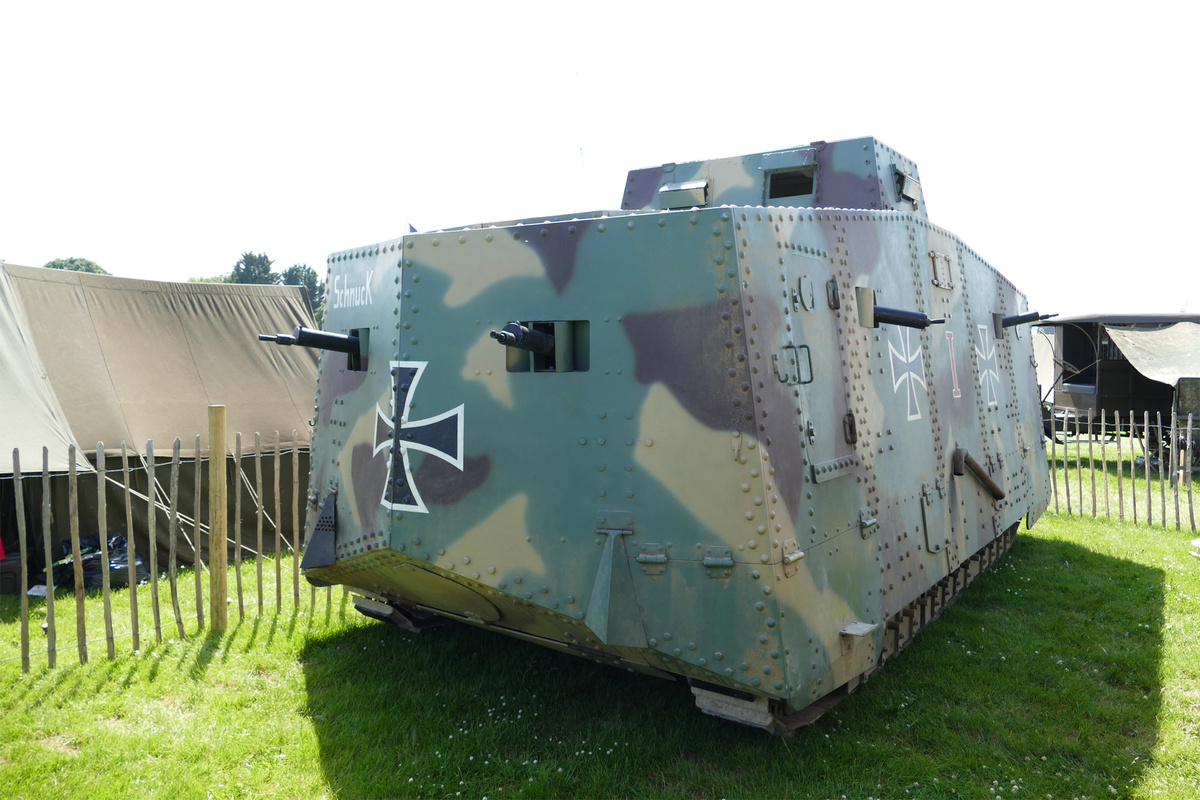
It doesn’t even look much like the original
That said, there were also a number of issues with the A7V itself. It was less of a tank and more of an oversized armored tractor; compared to it, the French Schneider CA 1 and Saint-Chamond looked more sophisticated. It could accommodate as many as 18 people, though their accommodations could hardly be called comfortable. Equally important was the fact that this German prototype lacked outstanding off-road capabilities and had an excessively high center of gravity, which significantly impacted its combat effectiveness.
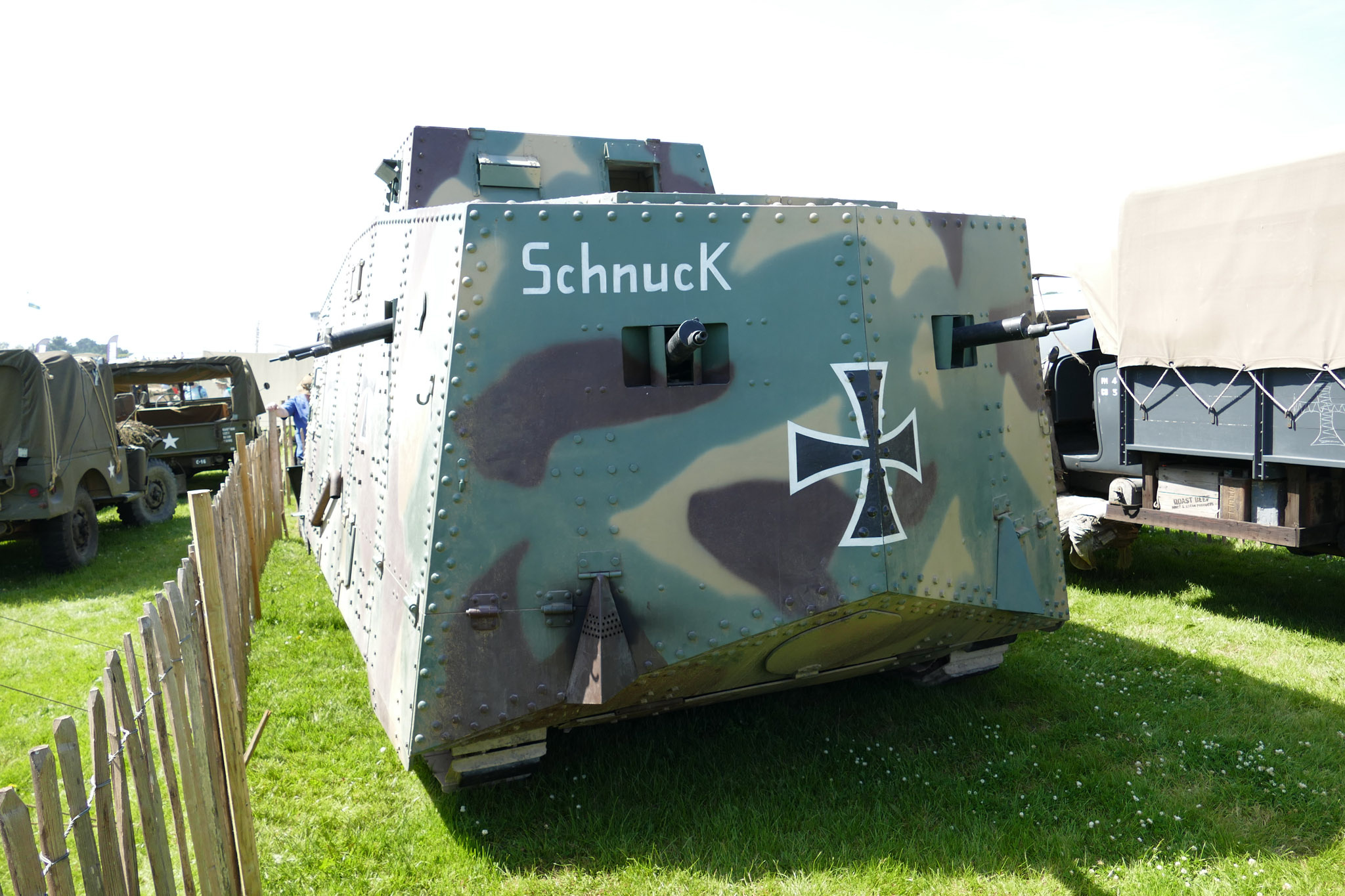
The replica can most often be seen in Bowington
Despite such a small production run, the first German tanks were quite diverse in appearance. And their fates varied as well. In this sense, tank No. 504—which served as the basis for the replica—perfectly illustrates the general situation with German tanks. Originally, the 504 chassis was not intended to be a tank; it was built as an off-road vehicle (Geländewagen). But as it turned out, the 544 chassis, which was intended for a tank, was defective. The hull was already complete, so the utility vehicle was converted into a tank.
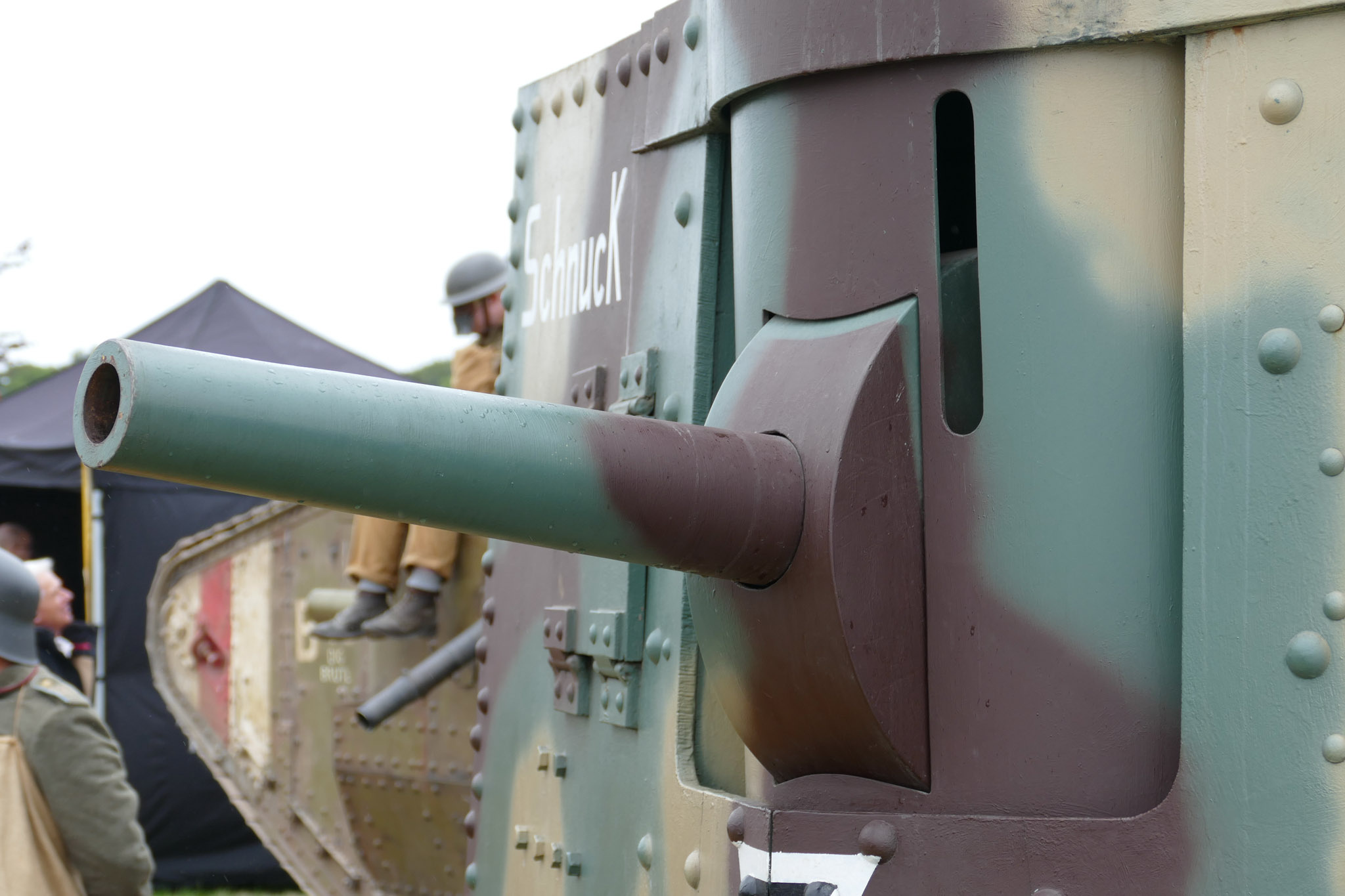
The original cannon was of Russian origin
The vehicle, which was subsequently given the proper name “Schnuck,” was fitted with a Krupp hull. Tank No. 504 was assigned to the 2nd Battalion (Sturmpanzerkraftwagen Abteilung) and saw action on the front in the spring of 1918. In total, Tank No. 504, nicknamed “Schnuck,” took part in four attacks. The first took place on April 24, 1918, near Villers-Bretonneux. Next, on May 31, it took part in an attack in the Reims area. The third attack, on July 15, also took place in the Reims area.
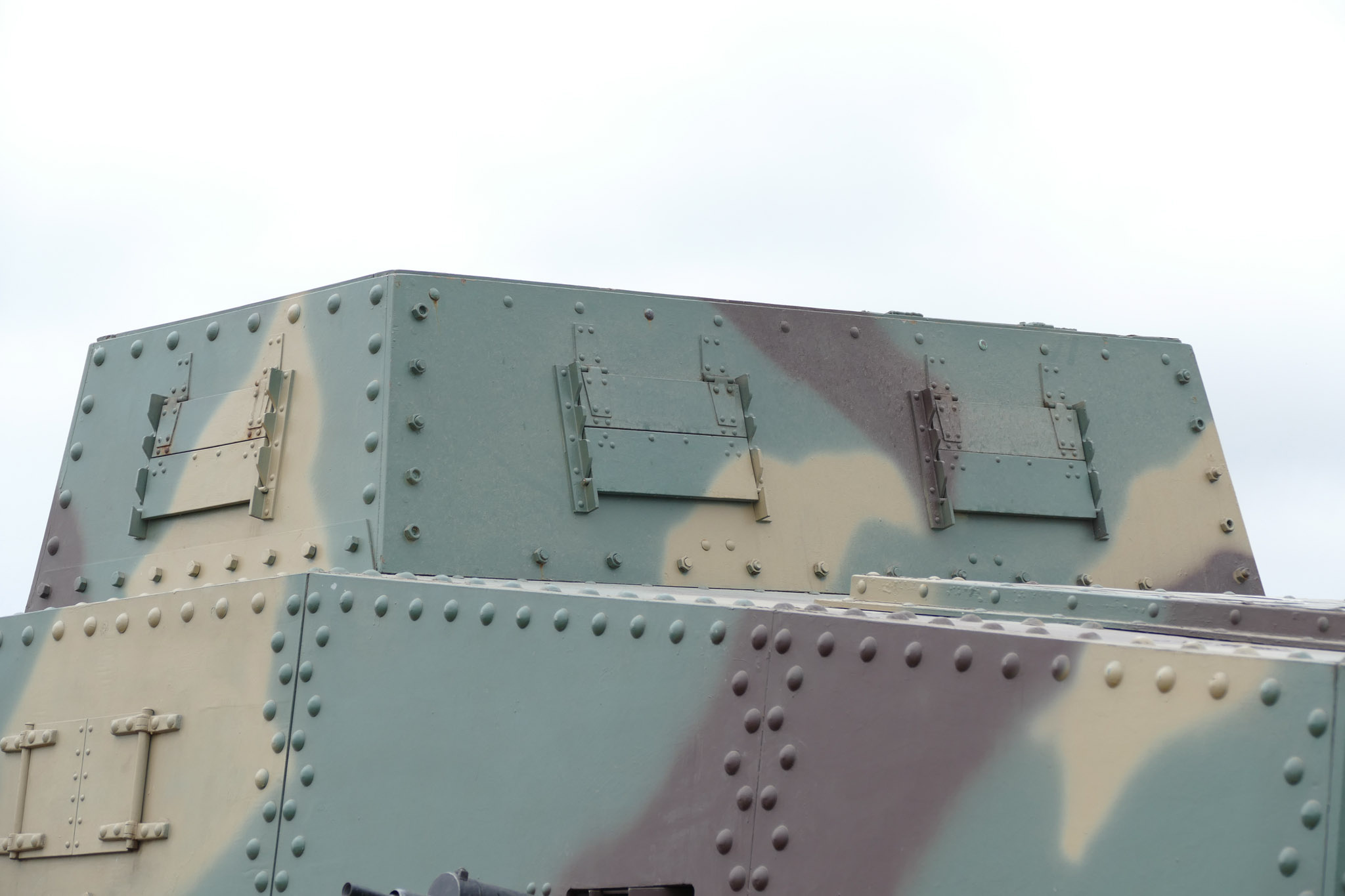
Seating Arrangement for the Commander and Driver-Mechanic
August 31, 1918, marked the final day of the A7V No. 504 “Schnuck”’s service. During an attack on Fremicourt (west of Cambrai), the tank was accidentally hit by friendly artillery fire. The damage was minimal, but the crew fled, after which Schnuck was captured by New Zealand soldiers. Tank No. 528, Hagen, was also captured at the same time. The New Zealanders donated both tanks to the British, after which they ended up at the Imperial War Museum.
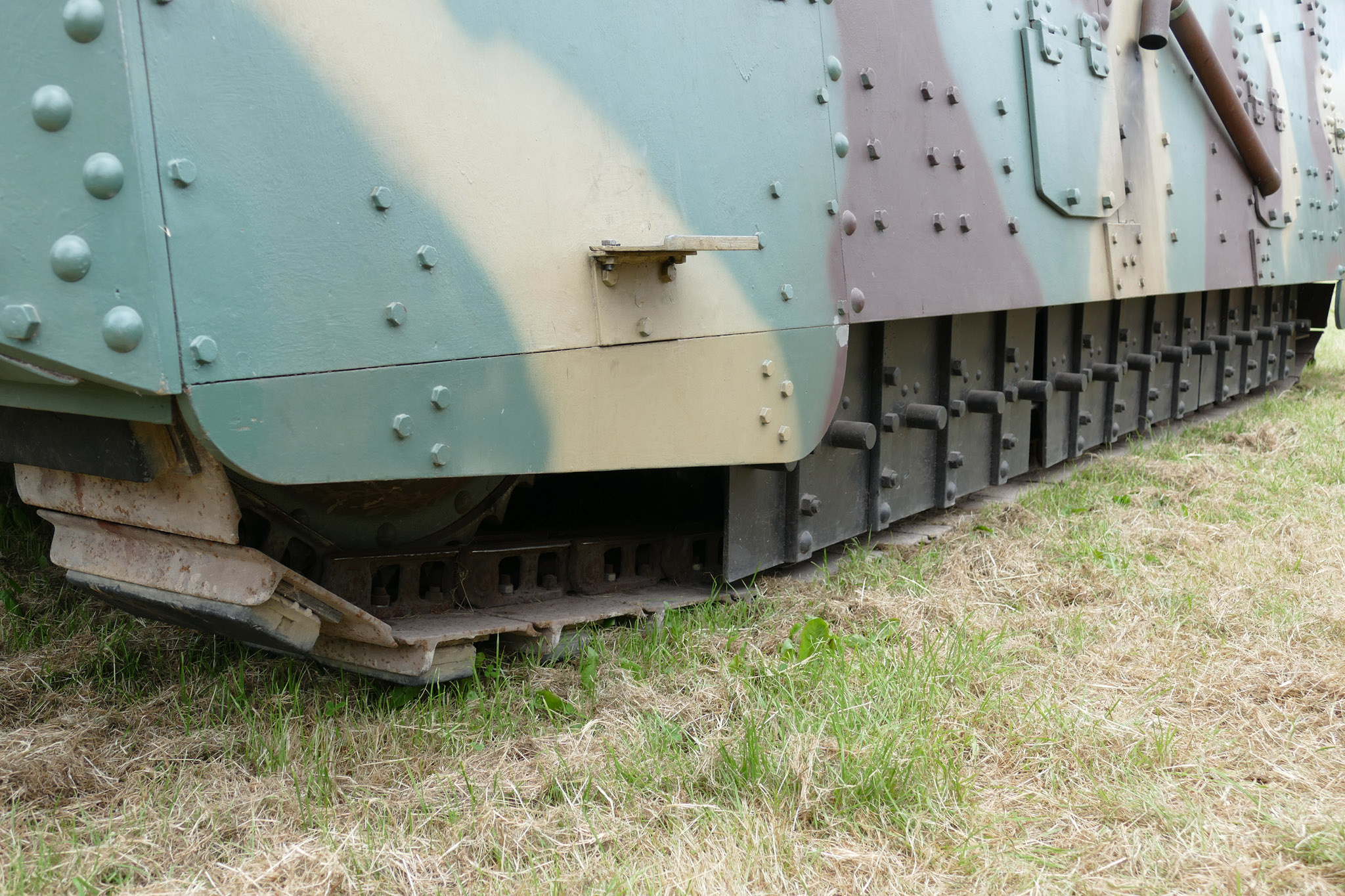
Chassis Protection
The museum grounds were impressive back then. On display were a Tritton Chaser, a prototype of the Medium Mark A Whippet, a Medium Mark C Hornet, one of only two Tank Mark VIIs ever built, an A7V, a Mark IV “tadpole,” a Gun Carrier Mark I GC103, and a Renault FT from the pilot production run. Of all these, only the Renault FT survived, and it eventually ended up at Bovington. The rest were scrapped in 1922; the dismantling of A7V No. 504 “Schnuck” was even filmed in detail. All that remains of the tank is its gun, which is now housed at the Imperial War Museum.
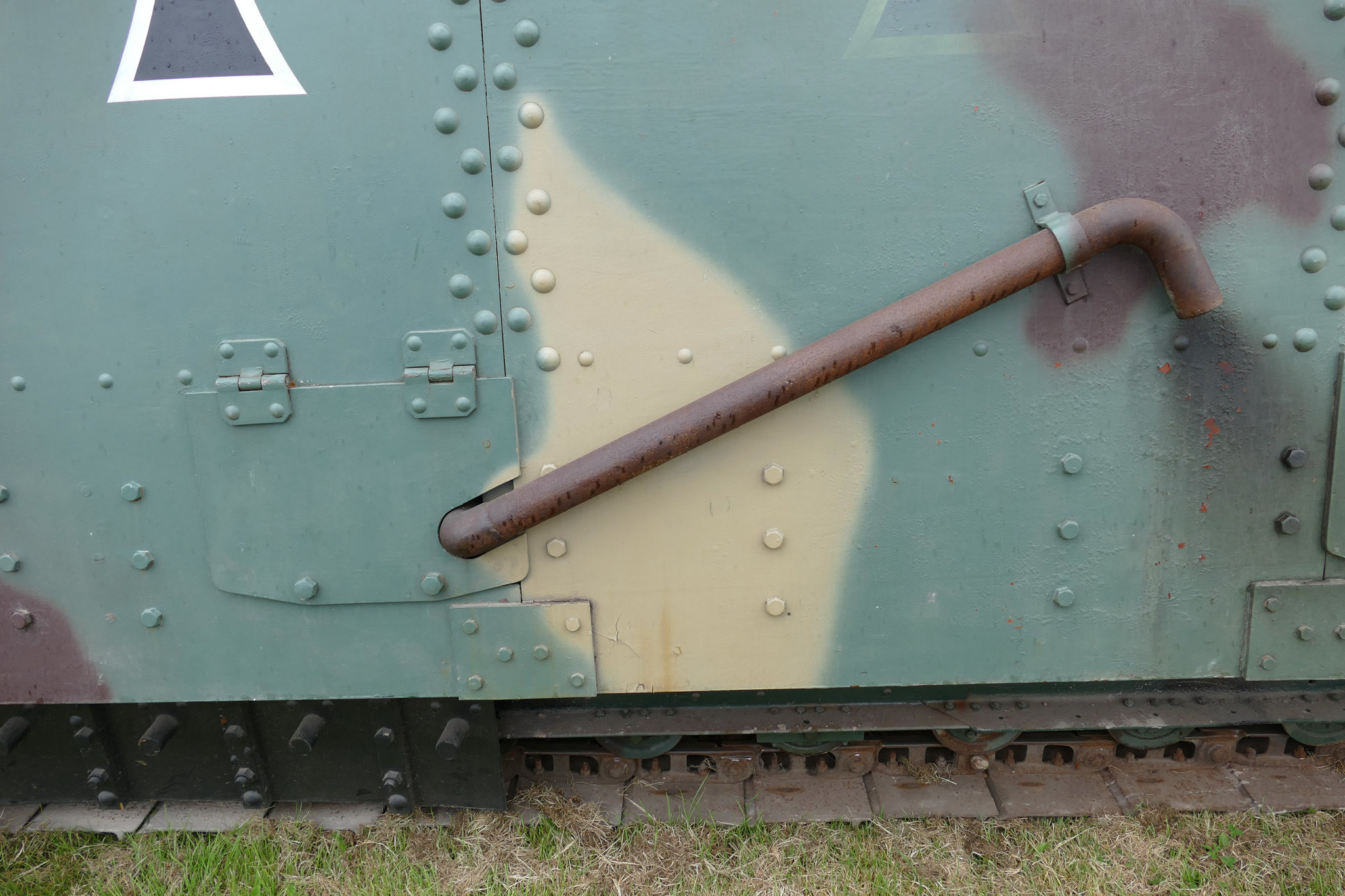
The exhaust pipes were located on both sides of the body. There were as many pipes as there were engines.
Only one tank of this type is known to have survived to the present day. It is the A7V No. 506 “Mephisto,” also with a Krupp hull, which was captured by the Australians on April 24, 1918—the day the A7V No. 504 “Schnuck” made its combat debut. They may have suspected something, which is why they took the tank back with them. Later, it proved useful not only as a museum exhibit. In 1980, using Mephisto as a model, the Germans reconstructed tank No. 563 “Wotan.” However, its hull was still different.
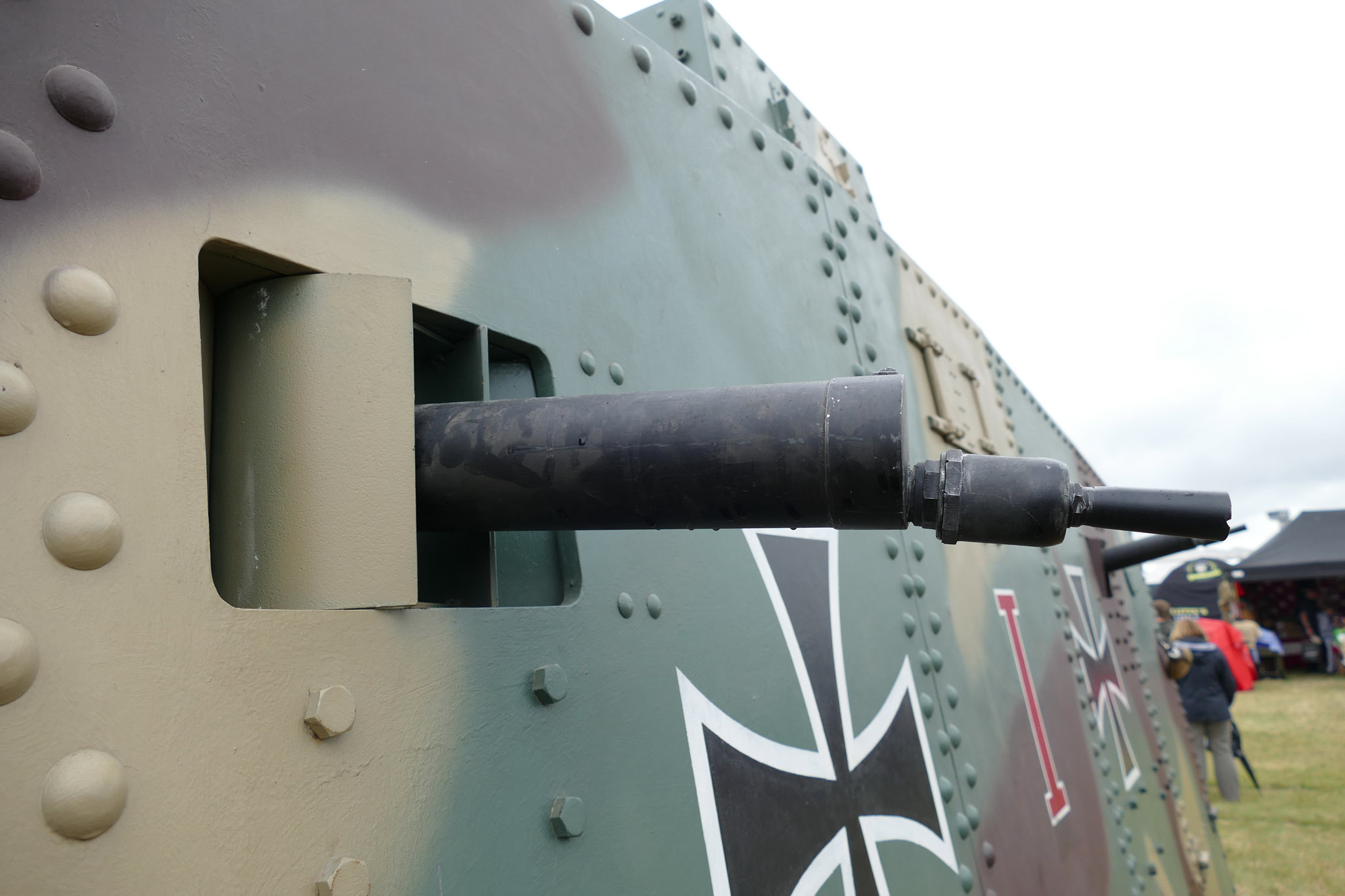
MG 08 Machine Gun Mounts
In this sense, the A7V No. 504 Schnuck replica is more authentic. The hull of this tank is practically identical to that of the Mephisto. Inside, of course, it houses modern components (from a Fordson County tractor), but from the outside, the vehicle looks quite convincing. The vehicle was built by a team led by Bob Grandi over a period of 3.5 years, from 2005 to 2009. The biggest challenge during the restoration was manufacturing the rivets. They were made authentically, and there are several hundred of them.
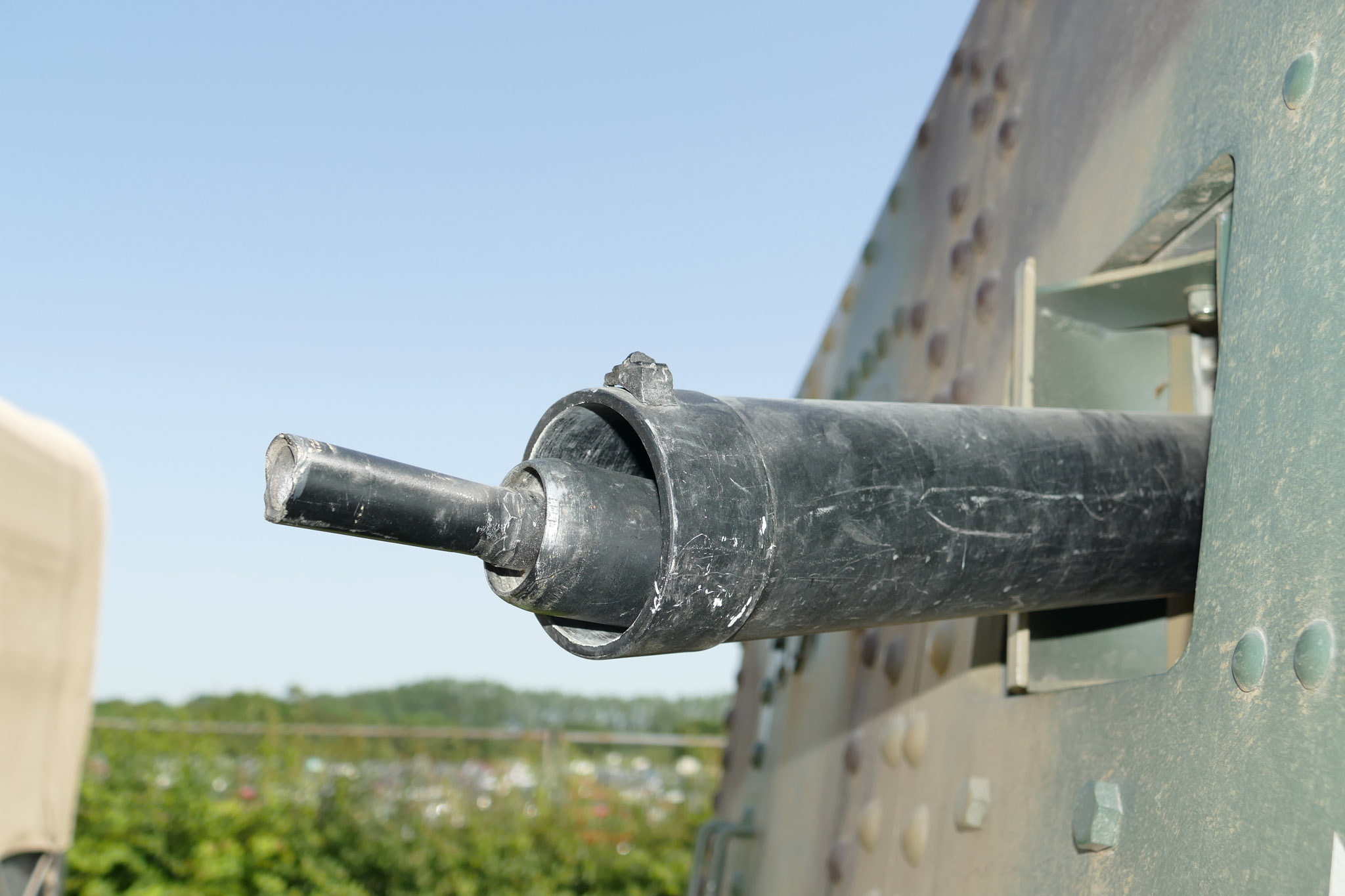
“Bent”
This replica is most often seen at the Tankfest festival, which takes place in June. It is frequently accompanied by another replica—the Mark IV tank. In 2017, they even put together a combo—a joint project featuring three tanks: the A7V, the Mark IV, and the Saint-Chamond. They saw action around the same time, providing an excellent demonstration of different approaches to the same challenge: the design of a heavy tank.