Yuri Pasholok. A Stalingrad Time Capsule from the Bottom of the Don River


A story about a T-34 tank manufactured by the Stalingrad Tractor Plant, from the “Patriot” Park collection
In the museum world, there is a concept known as a “time capsule.” This refers to an exhibit that is not in the best condition but is otherwise quite complete. Such items are quite common among weapons and military equipment. This raises a dilemma: what to do with such equipment. On the one hand, it might seem better to restore it, but on the other, the condition of the metal is such that it’s only suitable for display as a specimen. This is how “time capsules” come to be—valuable precisely in this state.
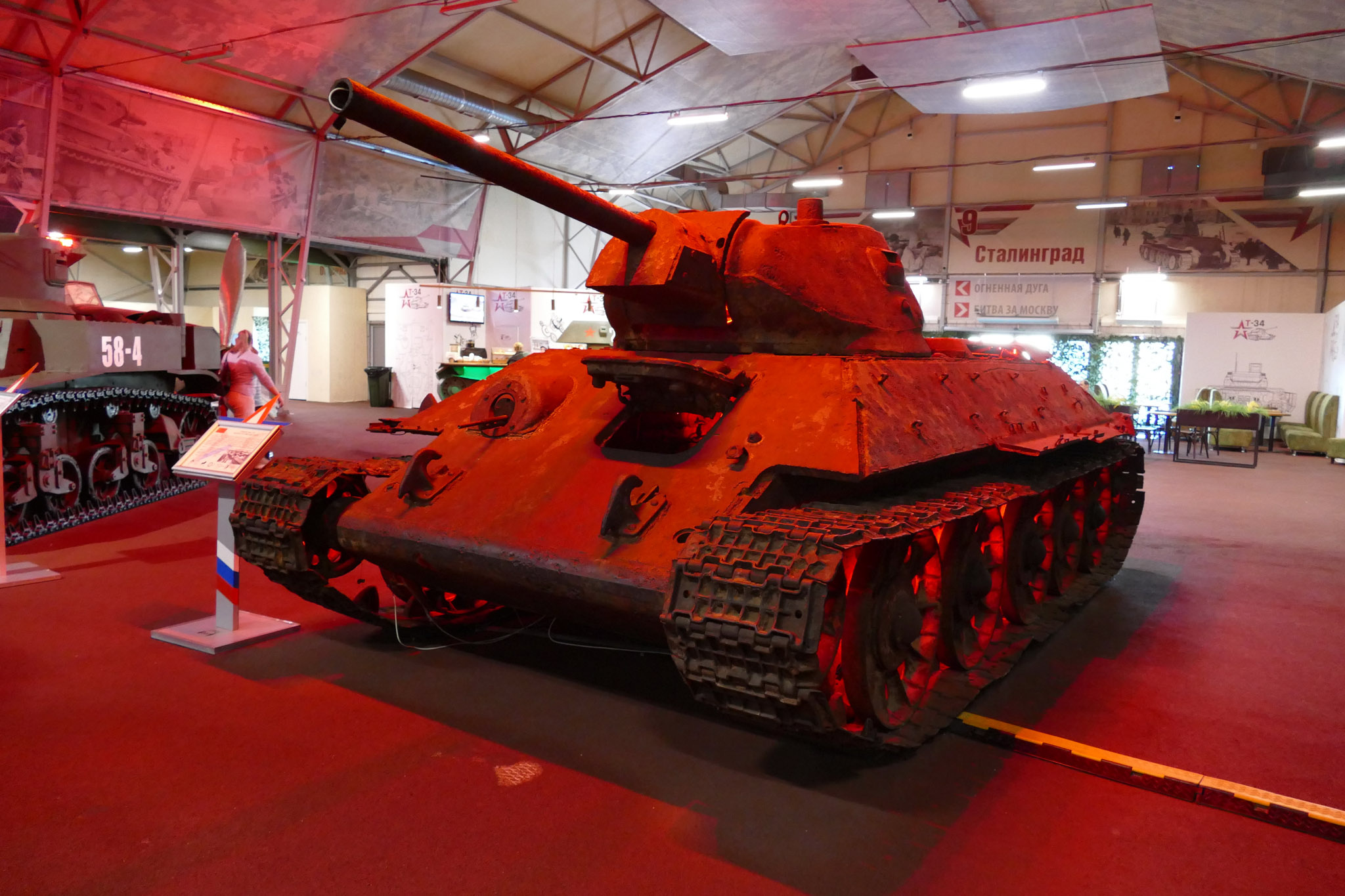
The Current Condition of the T-34
There are also “time capsules” in tank museums. At one time, an exhibition titled “Echoes of War” was created in the museum section of Patriot Park (which was then called the “VKS Sector”). Its name perfectly matched its content. It featured exhibits that the curators decided to preserve exactly as they were. The exhibition is long gone, but some of its exhibits can still be seen in the museum sector. Among them is a Soviet T-34 medium tank, which ended up at the bottom of the Don River in the summer of 1942. Today, it is one of the “stars” of the exhibition dedicated to the battles of 1942.
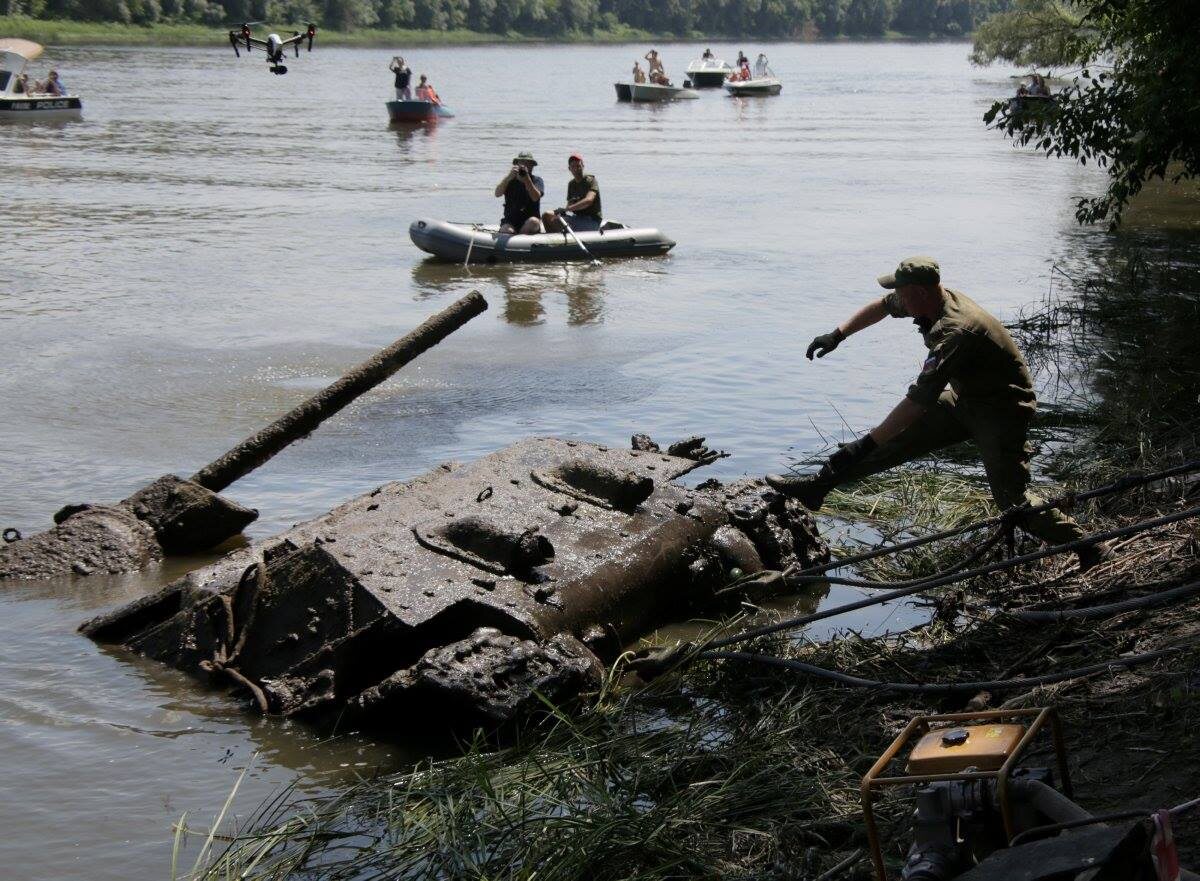
During the ascent
The Stalingrad Tractor Plant, which began operations in 1930, was considered one of the tank-building sites almost from the very beginning. The plan was to produce a tank like the T-19 there, but it was precisely a meeting at the Stalingrad Tractor Plant—where the possibility of its production was discussed—that largely sealed the fate of this vehicle. The decision to proceed with the future T-26 was the right one, but even that turned out to be a very different tank from the one that was mass-produced in Stalingrad. Production of the T-26 never reached full capacity, but the local design bureau did produce a multitude of various projects and prototype tanks.
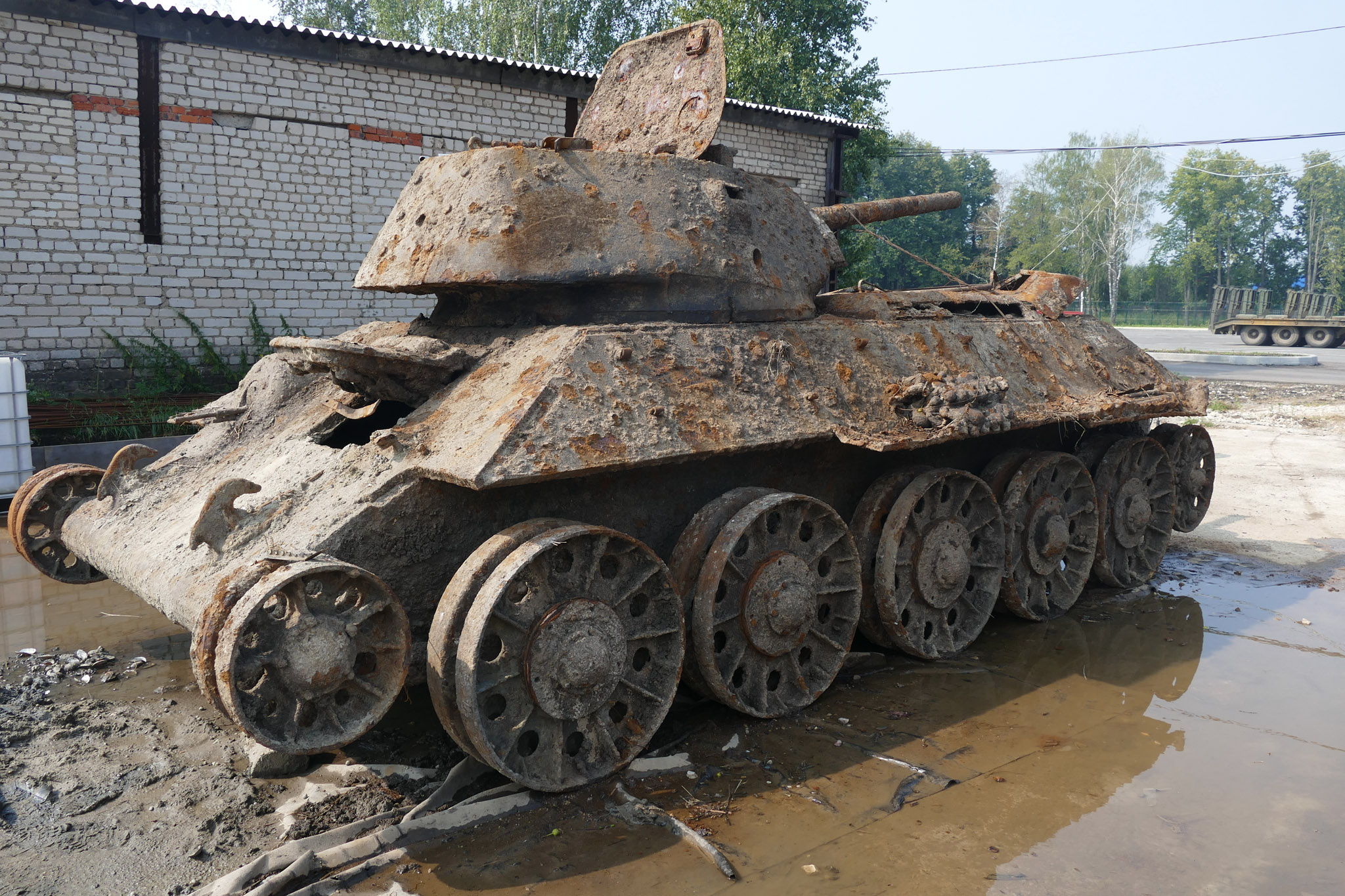
That’s how the tank arrived in Kubinka
The result was that by 1940, the STZ had, so to speak, overreached itself. Instead of the relatively light T-26, it was decided that the Stalingrad Tractor Plant would produce the T-34, a much heavier and more complex tank. And there was no turning back now. Of course, the plant’s main products were tractors—specifically, the STZ-5 and STZ-3 (SHTZ-NATI), which were desperately needed by the Red Army—but tanks turned out to be more important. By July 1, 1941, 294 tanks of this type had been delivered in Stalingrad—which might seem like a lot, but Plant No. 183 had delivered 931 tanks by that same date. And then the war began, which radically changed the situation.
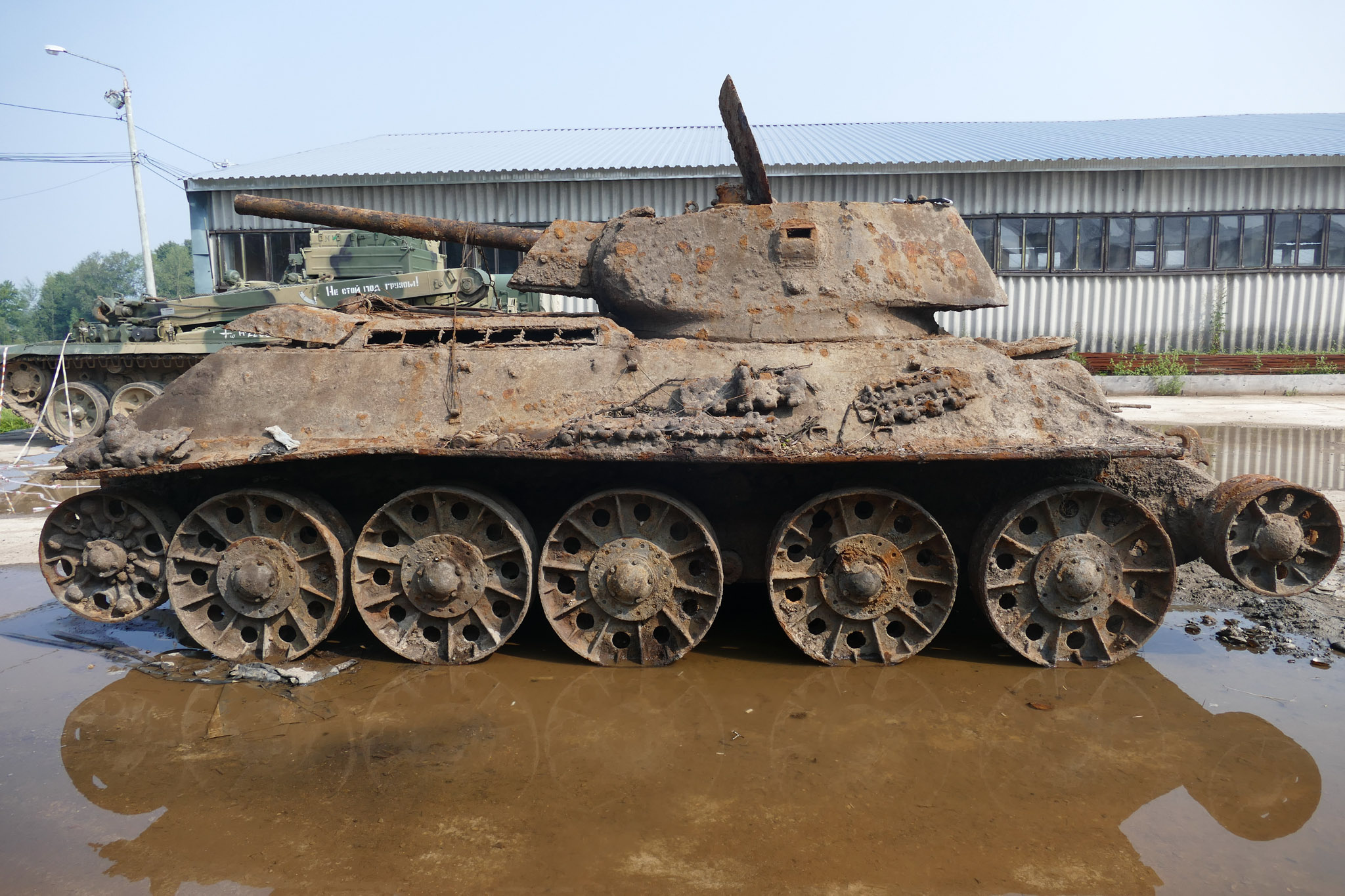
First, we had to wash away the dirt
It must be said that, up to a certain point, STZ’s production was indistinguishable from the tanks produced at Plant No. 183. Their hulls and turrets were identical, which became something of a trap for modelers who like to classify vehicles based on external features. For example, a captured T-34 from the Aberdeen Proving Ground was initially classified as a Kharkiv tank, when in fact it was from Stalingrad. The Stalingrad T-34 began to change during the war—though not immediately. Distinctive features began to emerge closer to 1942, though this was due less to changes in the Stalingrad tanks themselves than to changes in the appearance of tanks produced at Plant No. 183 (as well as the introduction of tanks from Plant No. 112).
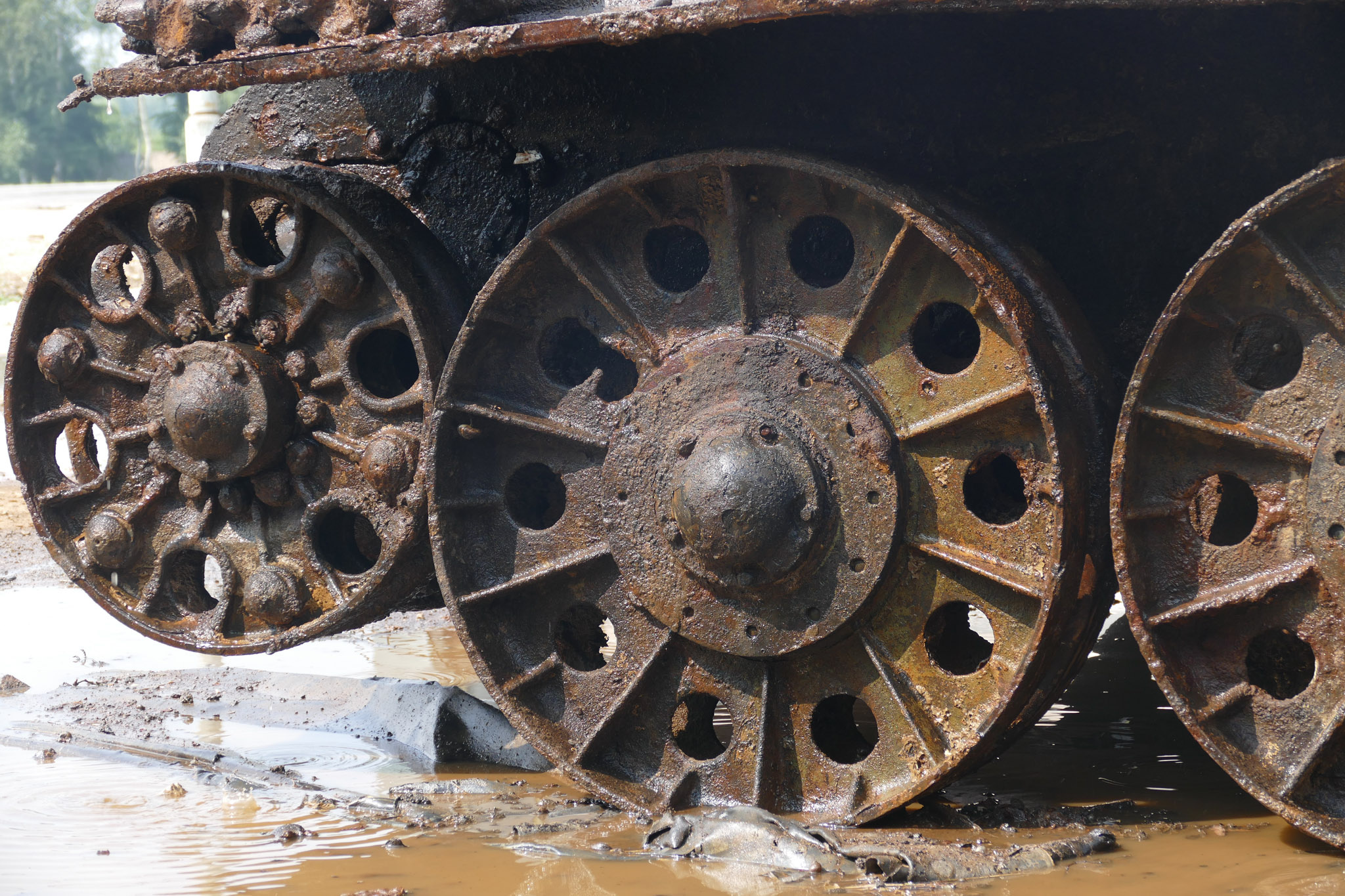
The tank had sustained a number of damages on its starboard side
The main factor, however, was not the change in appearance, but the increase in tank production. In October 1941, due to the evacuation, production of the T-34 at Plant No. 183 was temporarily suspended. As a result, the Stalingrad Tractor Plant (STZ) became the main production site. After resuming operations in October (124 tanks), the plant delivered 200 tanks in November, plus 219 in December 1941. And this was only the beginning. Until March 1942, the Stalingrad Tractor Plant was the main producer of the T-34. Subsequently, Plant No. 183, which had relocated to Nizhny Tagil, ramped up production, delivering 380 tanks in April 1942 and 500 in May. The Stalingrad Tractor Plant, meanwhile, typically produced about 300 tanks per month, with the exception of a record-breaking July 1942 (421 tanks).
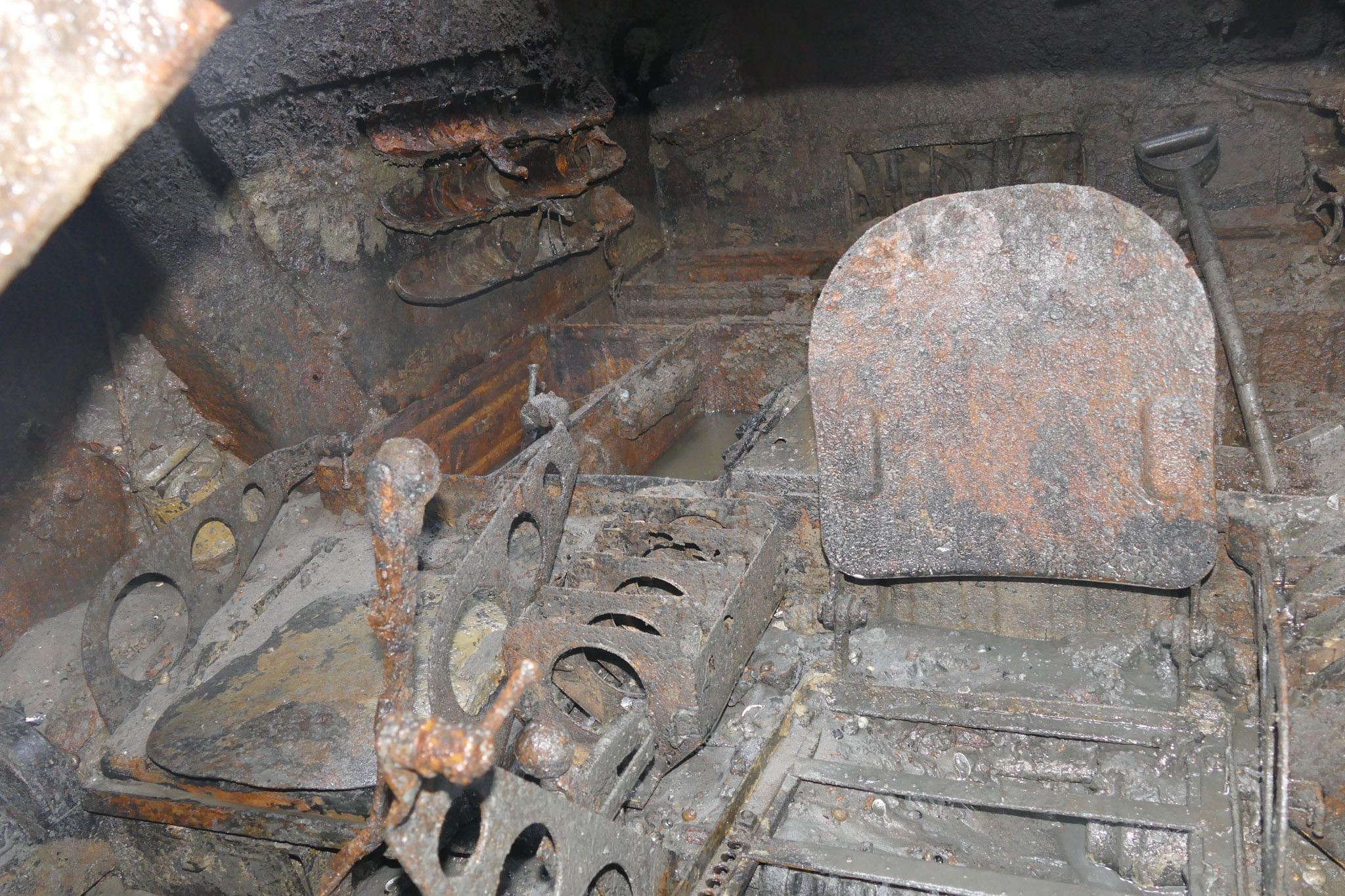
The interior is in fairly good condition
As the primary manufacturer of the T-34, a significant portion of the tanks of this type that saw action near Moscow were produced in Stalingrad. This includes the only T-34 STZ from 1941 that has survived to this day. This tank, which was part of the 17th Tank Brigade (commanded by Hero of the Soviet Union T.S. Pozolotin), was sunk during a battle near the village of Radyukino; it now stands on a pedestal in Medyn. The Stalingrad T-34s played a very important role in the battles of 1942 and are frequently featured in newsreels.
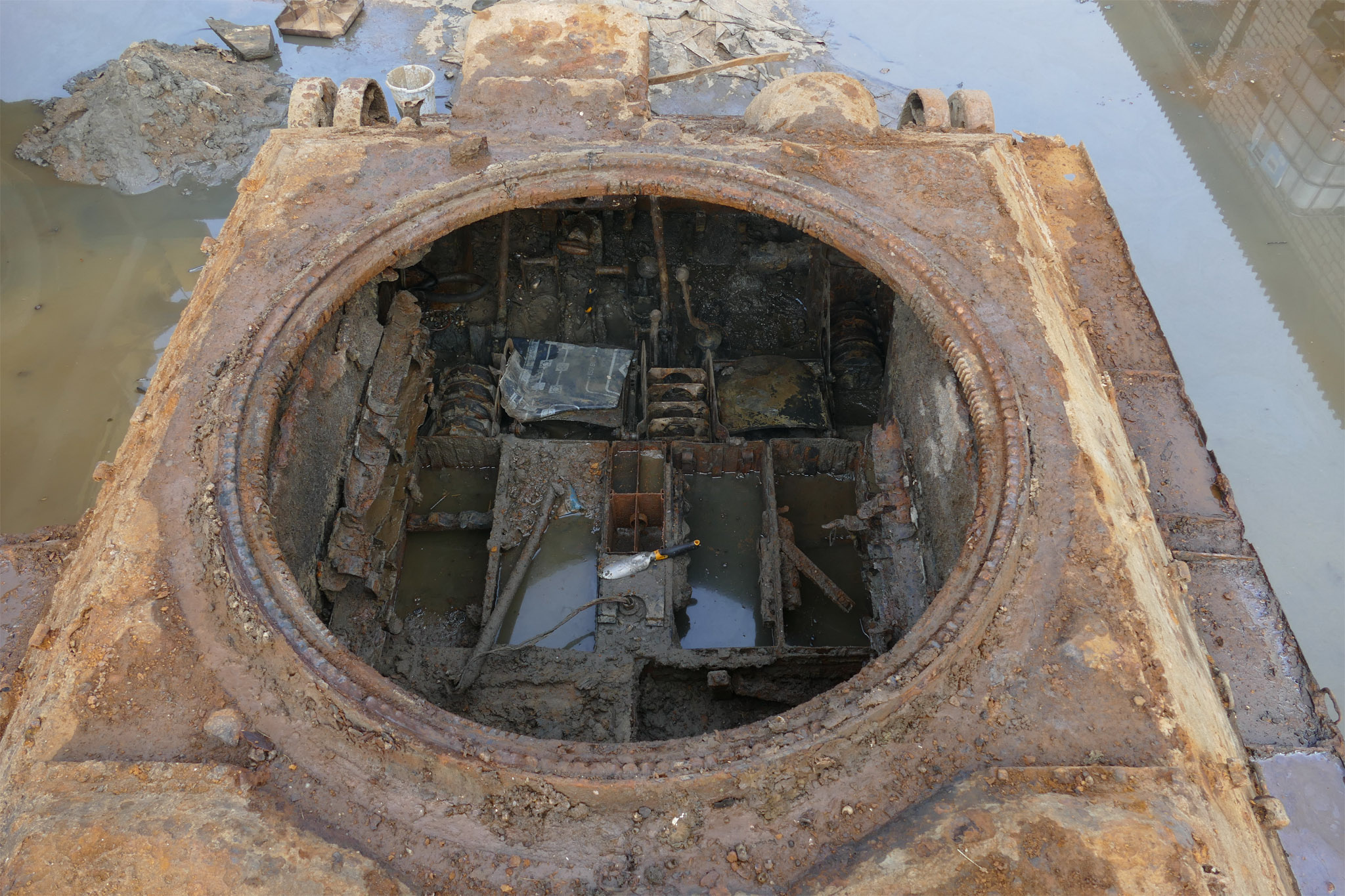
In order to clean it thoroughly, we had to remove the tower
The year 1942 marked not only the peak of T-34 production in Stalingrad, but also the time when STZ-produced tanks became unmistakably identifiable. A distinctive feature was the interlocking weld of the hull plates; by that time, welded turrets remained only on tanks produced by the STZ. However, cast turrets were also mounted on them. A distinctive periscope housing appeared. The elimination of the rear turret hatch for gun extraction led to additional changes. Finally, the F-34 gun mount acquired its very distinctive armor configuration, featuring a pronounced “chin.”
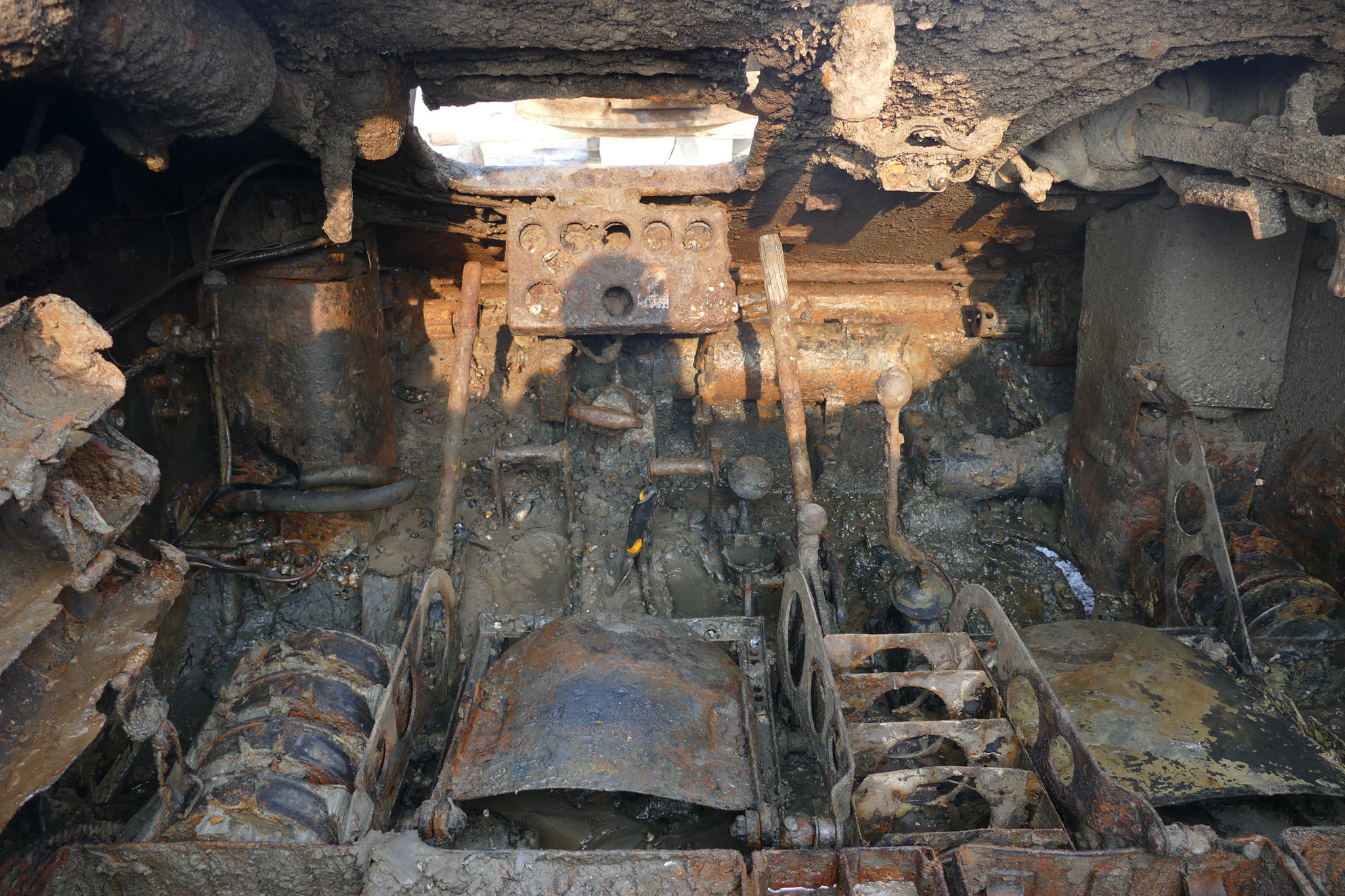
The condition of the interior was the reason for putting the car into storage
In the summer of 1942, the German army launched an offensive aimed at Stalingrad. Soon after, fighting broke out in the city itself. As a result, September 1942 became the last month of T-34 production at the Stalingrad Tank Plant. The last tanks were delivered right in the midst of the urban fighting. In total, 2,499 tanks were produced in Stalingrad in 1942, plus 31 flamethrower tanks. Due to extensive damage to the plant, no more tanks were produced there during the war. Nevertheless, the Stalingrad Tractor Plant was able to resume tractor production and also became a partner of Plant No. 75 in the production of the T-44. In particular, it succeeded in mastering the production of engines.
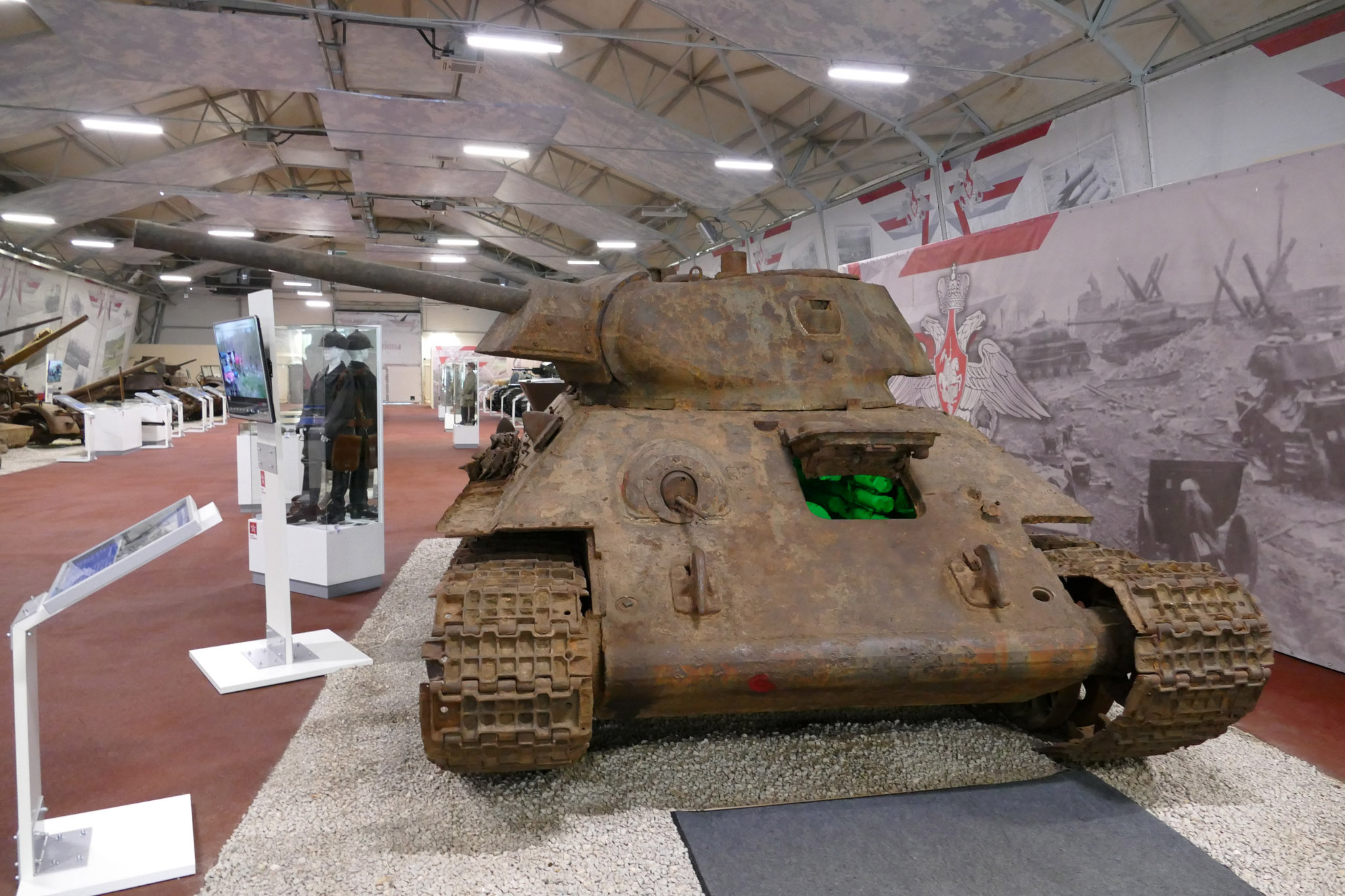
After preservation
Alas, war is merciless to military equipment, and once it ended, the obsolete tanks were no longer needed. The few STZ-series T-34s that survived the war were actively scrapped for scrap metal. Until recently, there were only two “intact”—that is, preserved as a complete “hull-turret-undercarriage” assembly—Stalingrad tanks in Russia. There are also “centaurs”—that is, tanks with a STZ hull and a T-34-85 turret. Because private collectors are assembling tanks from scrap parts, the number of Stalingrad (or, more accurately, “Stalingrad-style”) T-34s is growing. Still, they remain extremely rare.
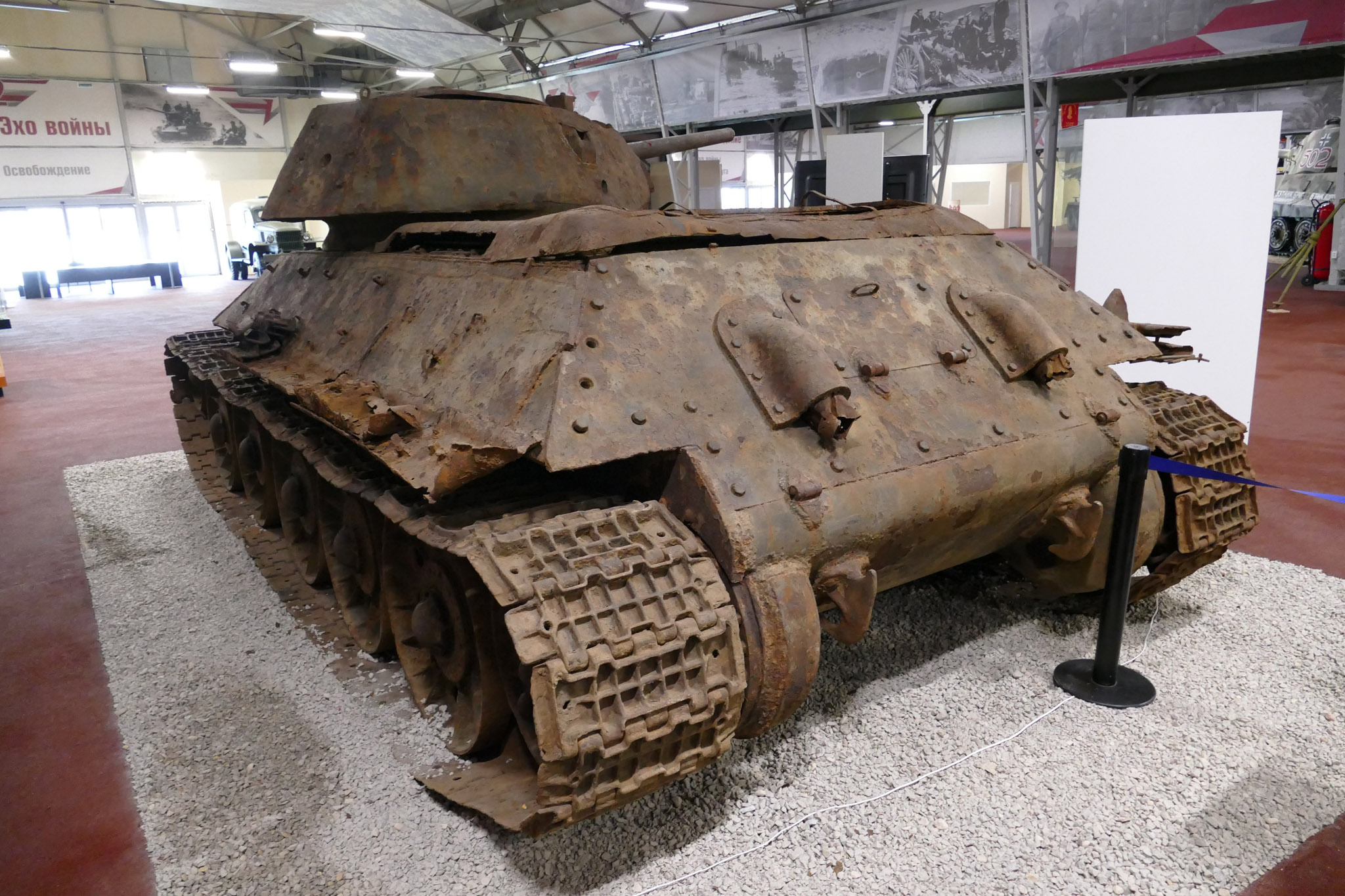
For some time, the tank was one of the main exhibits at the “Echoes of War” exhibition
In this sense, the discovery of the T-34 near the village of Ukrainskaya Builovka in the Voronezh Region was a major event. Several combat vehicles were found in this area, three of which are now on display at the “Patriot” park. They are not only rare examples of military equipment but also living witnesses to the fierce battles that took place in this area during the summer and winter of 1942. Moreover, in the case of the T-34, it remains unclear to this day whose tank it is. No serial numbers were found during the cleanup.
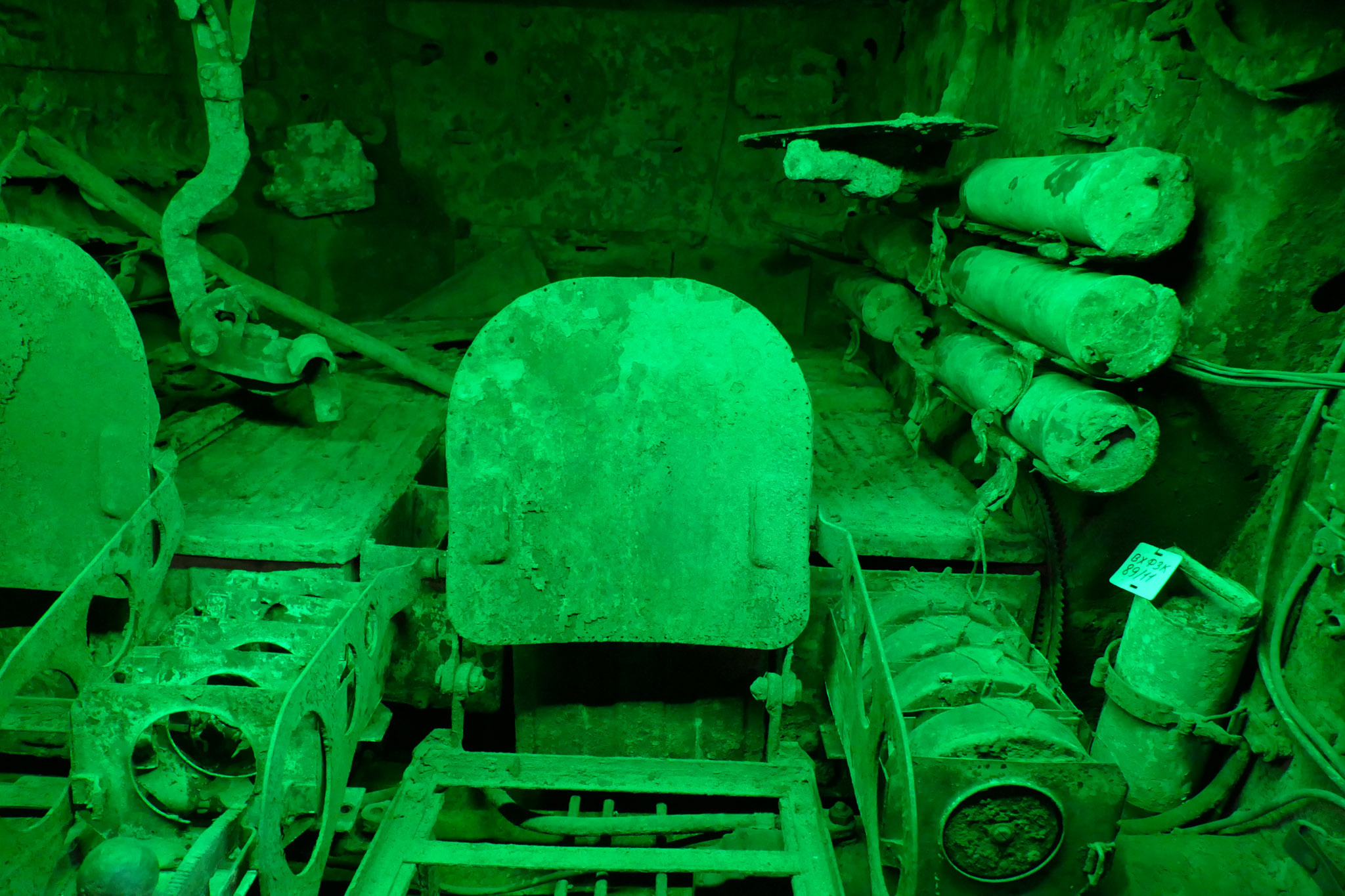
“Swamp” lighting
The tank was recovered from the Don River on July 14, 2016, through the joint efforts of the search department of the “Patriot” Park (A.P. Kalemberg), the “Don” Search Association (V.N. Latartsev), and local units of the Russian Ministry of Defense. An examination of the tank revealed that it had clearly been driven into the river under its own power to prevent it from falling into enemy hands. By the time the T-34 sank, it was waiting to cross the Don River. The vehicle required repairs: one of its road wheels had a hole in it, and there were numerous traces of bullet impacts. The destruction of the crossing left no route for retreat.
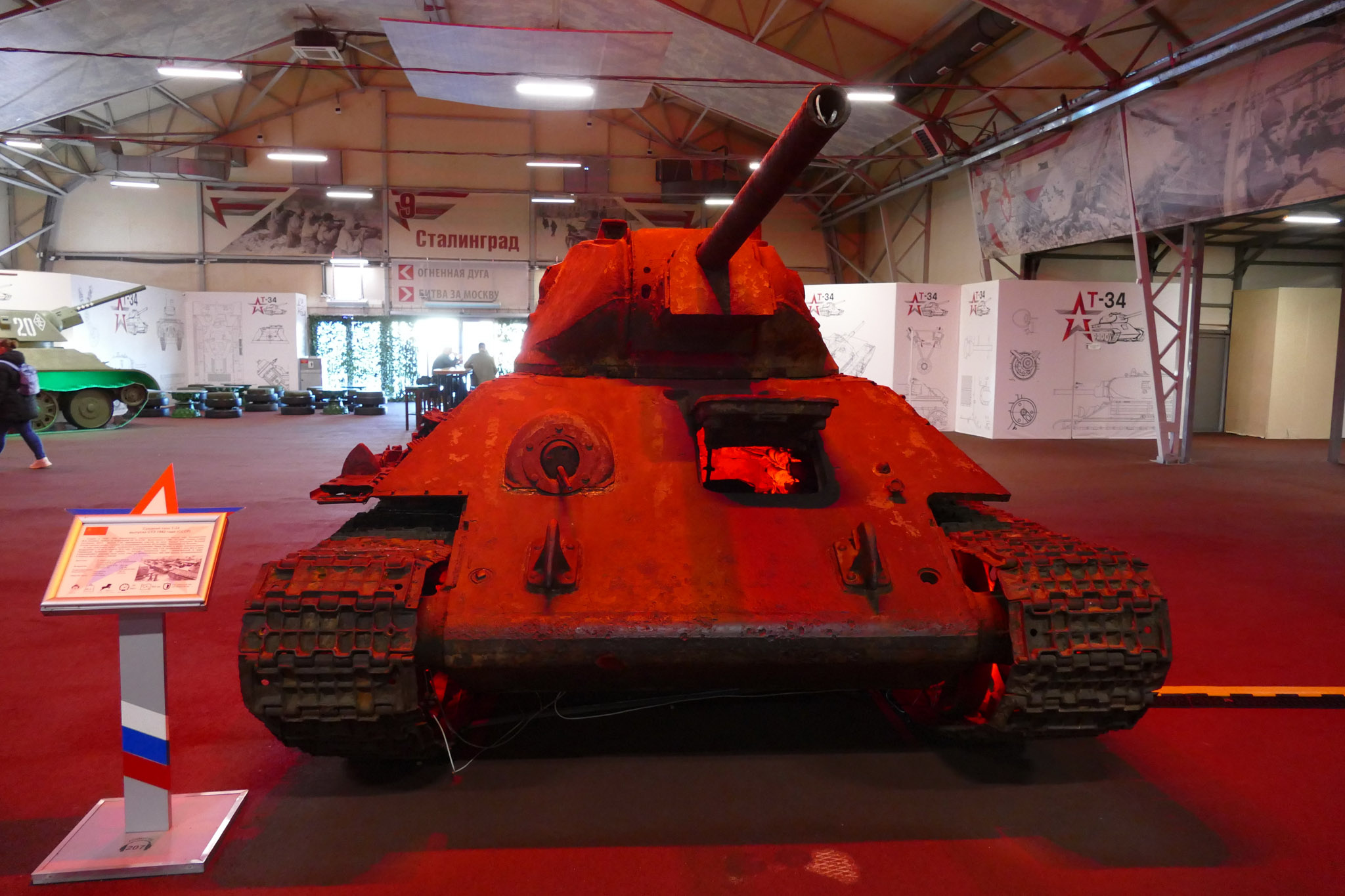
The tank now has red lighting. It gives it a completely different look.
The initial plan was to clear out the tank and then decide whether it made sense to restore it to operational condition. However, even at the recovery site, questions began to arise about how practical this would be. It’s one thing when a tank gets stuck in a swamp, but it’s quite another when it’s in a river. Of course, tanks pulled out of saltwater look even worse, but river water is also a highly corrosive environment. The freshly recovered vehicle looked quite worn out. However, the main problem became apparent later, when the T-34 was sent to Kubinka for restoration.
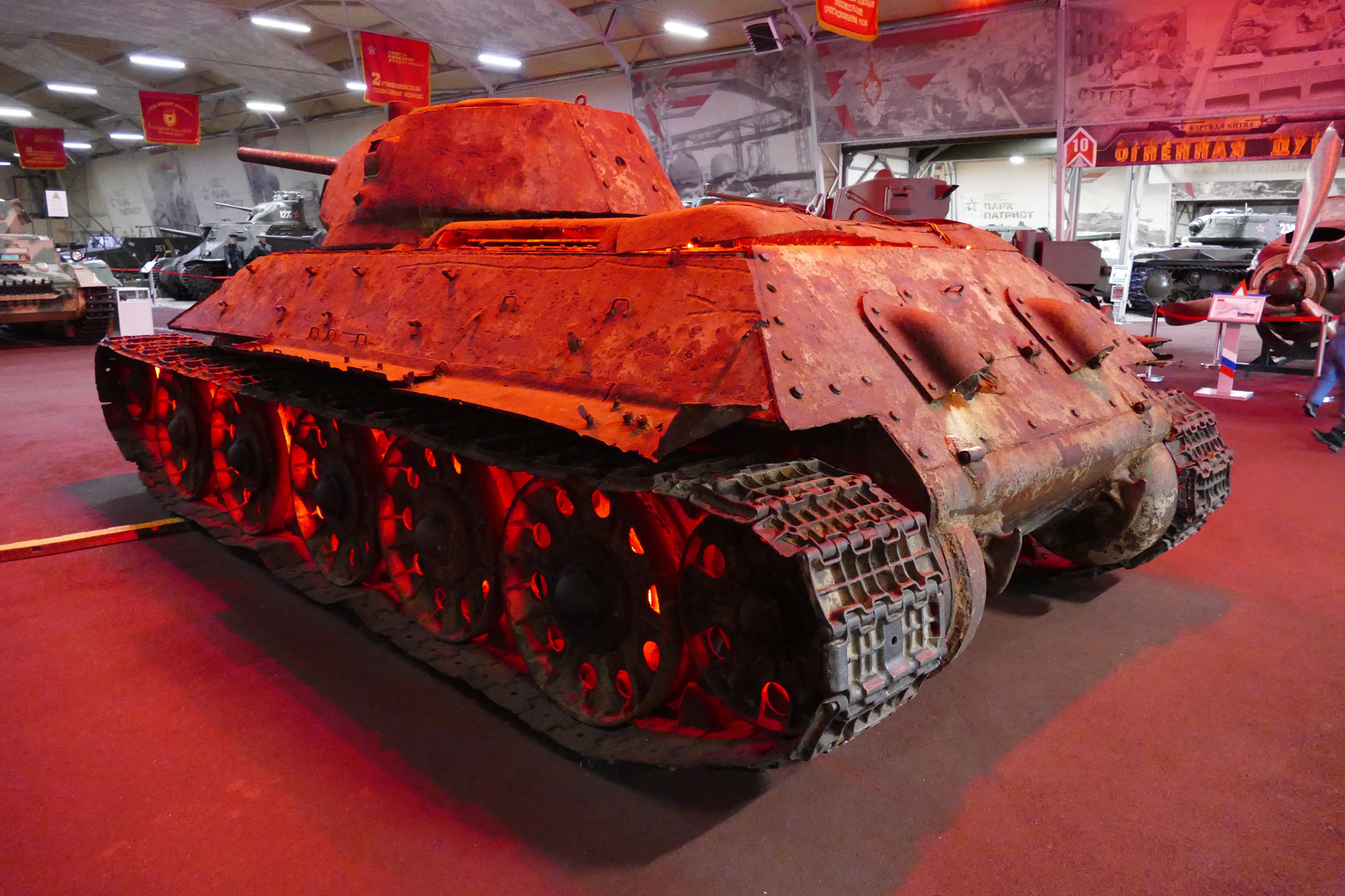
The backlight isn’t as bright from the back
The author of this article wasn’t present during the recovery, but he was there during the clearing process and even helped out a little. Actually, during the clearing, we expected to find the tank’s serial number, which could have helped identify the unit where it had served. But, as already mentioned, no serial number was found. And it’s not certain that it ever existed at all. The biggest problem, however, became apparent during the cleanup. On the one hand, the tank was still complete. On the other hand, the vast majority of its parts were so corroded that they were usable, at best, only as samples. In other words, restoring it to a roadworthy condition (not a restoration—don’t confuse the two) is possible, but only if all the thin-sheet metal parts are completely discarded. That is, turning the tank into a shell stuffed with new components.
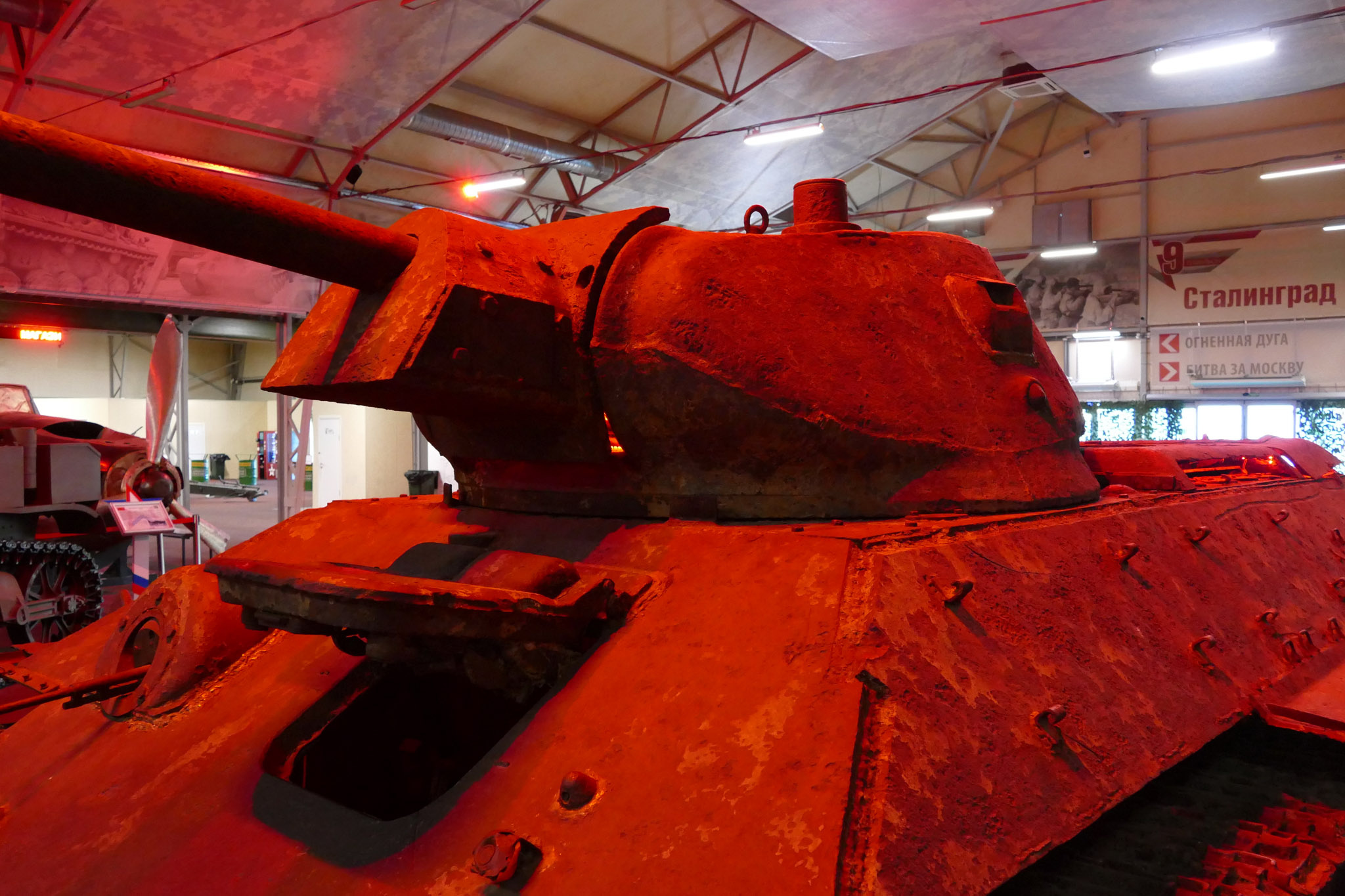
Typical armor plating of a gun shield
The management of Patriot Park made the right decision to preserve the tank in its current condition. The vehicle was cleaned of dirt, preserved, and then sent to TMU No. 12 of the VKS sector, where a new exhibition was being set up at the time. The tank took pride of place at the “Echoes of War” exhibition, where the main exhibits were similar—that is, untouched—examples of weapons and military equipment. These are the result of the efforts of the Patriot Park’s search department. Unfortunately, the exhibition was later closed, and some of the exhibits were removed.
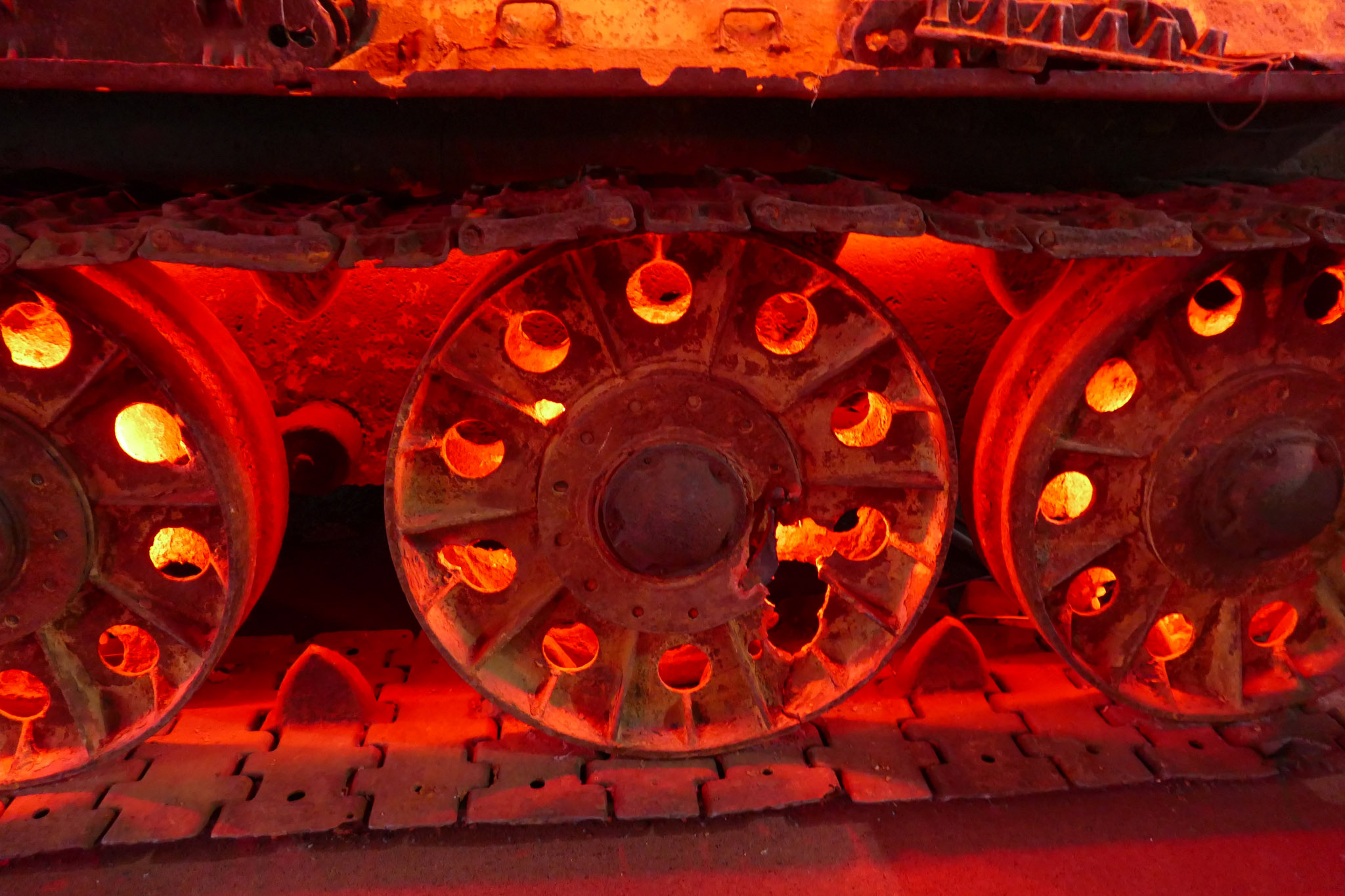
The skates are lit up, so you can see any damage
However, after a brief absence from the museum, the tank has returned. It now occupies one of the central spots in the section of the exhibition dedicated to the battles of 1942. Incidentally, there are two other artifacts here (the Light Tank M3 and the upper section of the StuG 40 Ausf.F/8) that were also recovered from the Don River in the same locations. Lighting has been added to the tank; while it isn’t always appropriate on exhibits, here it fits the theme perfectly. Over time, the tank has taken on even more character, and it attracts everyone’s attention. As an artifact, it is no less interesting than the T-34 “Sniper” standing right next to it.
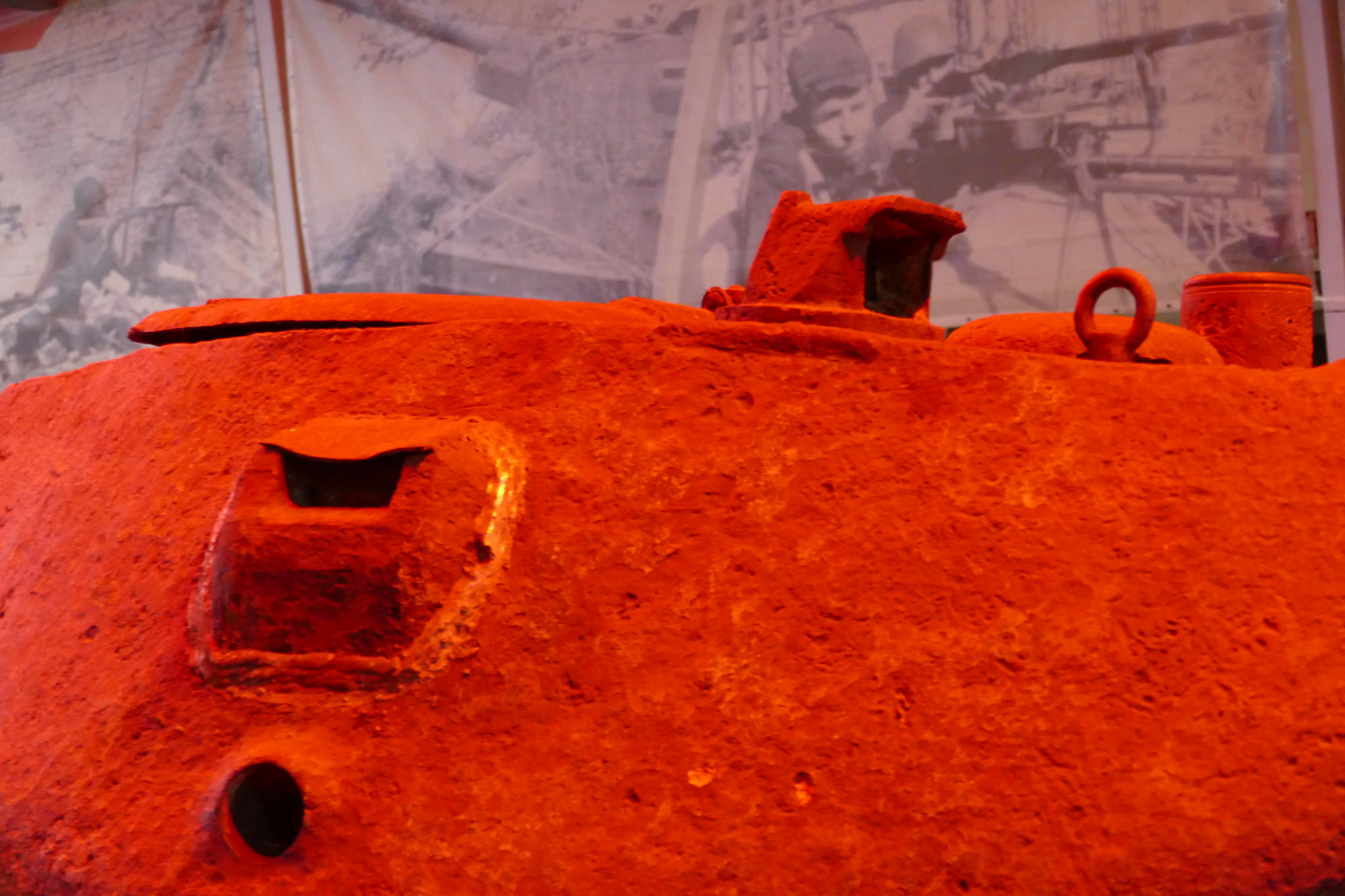
The commander’s sight housing, characteristic of the STZ
Of course, there are those who consider this approach wrong, arguing that the tank should have been restored to working order. But yet another Model 34—of which only the original hull would remain—doesn’t make much sense from a historical perspective. Many museums around the world have vehicles like this, whose restoration isn’t practical. The Vienna Arsenal, for example, houses a Borgward B IV (Sd.Kfz. 301), which could also have been made almost roadworthy. But nothing of the original would remain. That is why the vehicle was preserved as-is. This approach is common in a number of museums, including those in Russia.